
Filter
2062
Text search:
antibiotics
Featured
242
553
Language
Document type
1002
351
304
106
90
66
54
20
17
17
14
10
10
1
Countries
146
61
56
51
50
50
45
36
35
35
30
26
26
26
24
24
23
21
19
19
18
18
14
14
13
13
11
10
9
7
7
7
7
7
7
7
7
6
6
6
6
5
5
5
5
5
5
5
5
4
4
4
4
4
4
3
3
3
3
3
3
3
3
3
2
2
2
2
2
2
2
2
2
2
2
1
1
1
1
1
1
1
1
1
1
1
1
1
1
1
1
1
1
1
1
1
1
1
1
1
1
1
1
1
1
1
1
1
1
1
1
1
1
1
1
Authors & Publishers
Publication Years
Category
756
275
170
82
52
51
27
1
1
Toolboxes
424
99
91
86
84
80
71
52
45
42
41
37
32
29
23
18
17
15
14
11
3
2
1

Drug Advisory Board
These guidelines present evidence-based recommendations and best practice statements on use of medically important antimicrobials in food-producing animals, based on the WHO list of critically important antimicrobials for human medicine (WHO CIA List). These guidelines aim primarily to help preserve
...

Accessed November 2017
A survival guide for clinicans.
3rd edition.
WHO/HTM/HIV/2007.01 WHO/HTM/TB/2007.380
Manual for Early Implementation
5th revised edition.
This document provides a ranking of medically important antimicrobials for risk management of antimicrobial resistance due to non-human use. The current revision took place at the seventh meeting of the AGISAR held in Raleigh, United States of America in 2016.
Application of a One Health approach .
The present guidance was developed with the support of the WHO Advisory Group on Integrated Surveillance of Antimicrobial Resistance (AGISAR) to assist countries and other stakeholders in the establishment and development of programmes of integrated surveillan
...

WHO/CDS/CSR/EDC/99.2 Plague Manual
Epidemiology, Distribution, Surveillance and Control
The intent of these guidelines is to develop a holistic, coordinated, proactive and technology driven strategy for management of biological disasters through a culture of prevention, mitigation and preparedness to generate a prompt and effective response in the event of an emergency. Th
...

PMPB/INS-GUIDE/04
Namibia guideline for submission of applications for registration of pharmaceuticals for human use in common technical document format.

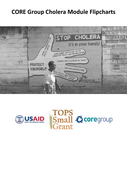
CORE Group has developed a module to improve preparedness for and response of communities in countries at risk of a cholera epidemic. The module consists of four lesson plans with accompanying flipcharts, intended to be delivered through community health workers. The lessons target mothers and careg
...
