
Filter
4838
Text search:
Global
Fund
Featured
326
1416
Language
4488
203
140
102
83
55
35
27
12
9
6
6
4
4
4
4
4
4
4
4
4
4
3
3
3
3
3
3
3
3
3
2
2
2
2
2
2
2
2
2
2
2
2
2
2
1
1
1
1
1
1
1
1
1
1
Document type
2834
955
395
212
192
78
57
54
33
11
8
2
Countries
262
151
125
107
103
103
103
102
101
99
80
79
79
76
69
68
67
67
65
62
59
56
55
47
45
42
42
41
41
39
38
37
37
35
35
34
27
27
24
24
24
23
23
23
22
22
22
19
18
17
17
16
15
15
14
13
13
12
12
11
11
10
10
10
10
10
10
9
9
9
8
7
7
7
7
6
6
6
5
5
5
5
5
4
4
4
4
4
4
4
4
4
4
4
4
4
3
3
3
3
3
3
3
3
3
3
3
3
3
3
2
2
2
2
2
2
2
2
2
2
2
2
2
2
2
1
1
1
1
1
1
1
1
1
1
1
1
1
1
Authors & Publishers
532
226
221
181
172
148
145
131
87
78
47
42
38
37
27
27
26
25
24
23
21
21
21
21
20
18
18
18
18
17
16
16
15
15
15
14
14
14
14
14
13
13
13
13
13
13
12
12
12
11
11
11
11
11
11
10
10
10
10
10
10
10
10
10
9
9
9
9
9
9
8
8
8
8
8
8
8
8
7
7
7
7
7
7
7
7
7
7
7
7
7
7
7
7
7
7
6
6
6
6
6
6
6
6
6
6
6
6
6
6
6
6
6
6
6
6
6
6
6
6
5
5
5
5
5
5
5
5
5
5
5
5
5
5
5
5
5
5
5
5
5
5
5
5
5
5
5
5
5
5
5
5
5
5
5
5
5
5
5
5
5
5
5
5
4
4
4
4
4
4
4
4
4
4
4
4
4
4
4
4
4
4
4
4
4
4
4
4
4
4
4
4
4
4
4
4
4
4
4
4
4
4
4
4
4
4
4
4
4
4
4
4
4
4
4
4
4
4
4
4
4
4
3
3
3
3
3
3
3
3
3
3
3
3
3
3
3
3
3
3
3
3
3
3
3
3
3
3
3
3
3
3
3
3
3
3
3
3
3
3
3
3
3
3
3
3
3
3
3
3
3
3
3
3
3
3
3
3
3
3
3
3
3
3
3
3
3
3
3
3
3
3
3
3
3
3
3
3
3
3
3
3
3
3
3
3
3
3
3
3
3
3
3
3
3
3
3
3
3
3
3
3
3
3
3
3
3
3
2
2
2
2
2
2
2
2
2
2
2
2
2
2
2
2
2
2
2
2
2
2
2
2
2
2
2
2
2
2
2
2
2
2
2
2
2
2
2
2
2
2
2
2
2
2
2
2
2
2
2
2
2
2
2
2
2
2
2
2
2
2
2
2
2
2
2
2
2
2
2
2
2
2
2
2
2
2
2
2
2
2
2
2
2
2
2
2
2
2
2
2
2
2
2
2
2
2
2
2
2
2
2
2
2
2
2
2
2
2
2
2
2
2
2
2
2
2
2
2
2
2
2
2
2
2
2
2
2
2
2
2
2
2
2
2
2
2
2
2
2
2
2
2
2
2
2
2
2
2
2
2
2
2
2
2
2
2
2
2
2
2
2
2
2
2
2
2
2
2
2
2
2
2
2
2
2
2
2
2
2
2
2
2
2
2
2
2
2
2
2
2
2
2
2
2
2
2
2
2
2
2
2
2
2
2
2
2
2
2
2
2
2
2
2
2
2
2
2
2
2
2
2
2
2
2
2
2
2
2
2
2
2
2
2
2
2
2
2
2
2
2
2
2
2
2
2
2
2
2
2
2
2
2
2
2
2
2
2
2
2
2
2
2
2
2
2
2
2
2
2
2
2
2
2
2
2
2
2
2
2
1
1
1
1
1
1
1
1
1
1
1
1
1
1
1
1
1
1
1
1
1
1
1
1
1
1
1
1
1
1
1
1
1
1
1
1
1
1
1
1
1
1
1
1
1
1
1
1
1
1
1
1
1
1
1
1
1
1
1
1
1
1
1
1
1
1
1
1
1
1
1
1
1
1
1
1
1
1
1
1
1
1
1
1
1
1
1
1
1
1
1
1
1
1
1
1
1
1
1
1
1
1
1
1
1
1
1
1
1
1
1
1
1
1
1
1
1
1
1
1
1
1
1
1
1
1
1
1
1
1
1
1
1
1
1
1
1
1
1
1
1
1
1
1
1
1
1
1
1
1
1
1
1
1
1
1
1
1
1
1
1
1
1
1
1
1
1
1
1
1
1
1
1
1
1
1
1
1
1
1
1
1
1
1
1
1
1
1
1
1
1
1
1
1
1
1
1
1
1
1
1
1
1
1
1
1
1
1
1
1
1
1
1
1
1
1
1
1
1
1
1
1
1
1
1
1
1
1
1
1
1
1
1
1
1
1
1
1
1
1
1
1
1
1
1
1
1
1
1
1
1
1
1
1
1
1
1
1
1
1
1
1
1
1
1
1
1
1
1
1
1
1
1
1
1
1
1
1
1
1
1
1
1
1
1
1
1
1
1
1
1
1
1
1
1
1
1
1
1
1
1
1
1
1
1
1
1
1
1
1
1
1
1
1
1
1
1
1
1
1
1
1
1
1
1
1
1
1
1
1
1
1
1
1
1
1
1
1
1
1
1
1
1
1
1
1
1
1
1
1
1
1
1
1
1
1
1
1
1
1
1
1
1
1
1
1
1
1
1
1
1
1
1
1
1
1
1
1
1
1
1
1
1
1
1
1
1
1
1
1
1
1
1
1
1
1
1
1
1
1
1
1
1
1
1
1
1
1
1
1
1
1
1
1
1
1
1
1
1
1
1
1
1
1
1
1
1
1
1
1
1
1
1
1
1
1
1
1
1
1
1
1
1
1
1
1
1
1
1
1
1
1
1
1
1
1
1
1
1
1
1
1
1
1
1
1
1
1
1
1
1
1
1
1
1
1
1
1
1
1
1
1
1
1
1
1
1
1
1
1
1
1
1
1
1
1
1
1
1
1
1
1
1
1
1
1
1
1
1
1
1
1
1
1
1
1
1
1
1
1
1
1
1
1
1
1
1
1
1
1
1
1
1
1
1
1
1
1
1
1
1
1
1
1
1
1
1
1
1
1
1
1
1
1
1
1
1
1
1
1
1
1
1
1
1
1
1
1
1
1
1
1
1
1
1
1
1
1
1
1
1
1
1
1
1
1
1
1
1
1
1
1
1
1
1
1
1
1
1
1
1
1
1
1
1
1
1
1
1
1
1
1
1
1
1
1
1
1
1
1
1
1
1
1
1
1
1
1
1
1
1
1
1
1
1
1
1
1
1
1
1
1
1
1
1
1
1
1
1
1
1
1
1
1
1
1
1
1
1
1
1
1
1
1
1
1
1
1
1
1
1
1
1
1
1
1
1
1
1
1
1
1
1
1
1
1
1
1
1
1
1
1
1
1
1
1
1
1
1
1
1
1
1
1
1
1
1
1
1
1
1
1
1
1
1
1
1
1
1
1
1
1
1
1
1
1
1
1
1
1
1
1
1
1
1
1
1
1
1
1
1
1
1
1
1
1
1
1
1
1
1
1
1
1
1
1
1
1
1
1
1
1
1
1
1
1
1
1
1
1
1
1
1
1
1
1
1
1
1
1
1
1
1
1
1
1
1
1
1
1
1
1
1
1
1
1
1
1
1
1
1
1
1
1
1
1
1
1
1
1
1
1
1
1
1
1
1
1
1
1
1
1
1
1
1
1
1
1
1
1
1
1
1
1
1
1
1
1
1
1
1
1
1
1
1
1
1
1
1
1
1
1
1
1
1
1
1
1
1
1
1
1
1
1
1
1
1
1
1
1
1
1
1
1
1
1
1
1
1
1
1
1
1
1
1
1
1
1
1
1
1
1
1
1
1
1
1
1
1
1
1
1
1
1
1
1
1
1
1
1
1
1
1
1
1
1
1
1
1
1
1
1
1
1
1
1
1
1
1
1
1
1
1
1
1
1
1
1
1
1
1
1
1
1
1
1
1
1
1
1
1
1
1
1
1
1
1
1
1
1
1
1
1
1
1
1
1
1
1
1
1
1
1
1
1
1
1
1
1
1
1
1
1
1
1
1
1
1
1
1
1
1
1
1
1
1
1
1
1
1
1
1
1
1
1
1
1
1
1
1
1
1
1
1
1
1
1
1
1
1
1
1
1
1
1
1
1
1
1
1
1
1
1
1
1
1
1
1
1
1
1
1
1
1
1
1
1
1
1
1
1
1
1
1
1
1
1
1
1
1
1
1
1
1
1
1
1
1
1
1
1
1
1
1
1
1
1
1
1
1
1
1
1
1
1
1
1
1
1
1
1
1
1
1
1
1
1
1
1
1
1
1
1
1
1
1
1
1
1
1
1
1
1
1
1
1
1
1
1
1
1
1
1
1
1
1
1
1
1
1
1
1
1
1
1
1
1
1
1
1
1
1
1
1
1
1
1
1
1
1
1
1
1
1
1
1
1
1
1
1
1
1
1
1
1
1
1
1
1
1
1
1
1
1
1
1
1
1
1
1
1
1
1
1
1
1
1
1
1
1
1
1
1
1
1
1
1
1
1
1
1
1
1
1
1
1
1
1
1
1
1
1
1
1
1
1
1
1
1
1
1
1
1
1
1
1
1
1
1
1
1
1
1
1
1
1
1
1
1
1
1
1
1
1
1
1
1
1
1
1
1
1
1
1
1
1
1
1
1
1
1
1
1
1
1
1
1
1
1
1
1
1
1
1
1
1
1
1
1
1
1
1
1
1
1
1
1
1
1
1
1
1
1
1
1
1
1
1
1
1
1
1
1
1
1
1
1
1
1
1
1
1
1
1
1
1
1
1
1
1
1
1
1
1
1
1
1
1
1
1
1
1
1
1
1
1
1
1
1
1
1
1
1
1
1
1
1
1
1
1
1
1
1
1
1
1
1
1
1
1
1
1
1
1
1
1
1
1
1
1
1
1
1
1
1
1
1
1
1
1
1
1
1
1
1
1
1
1
1
1
1
1
1
1
1
1
1
1
1
1
1
1
1
1
1
1
1
1
1
1
1
1
1
1
1
1
1
1
1
1
1
1
1
1
1
1
1
1
1
1
1
1
1
1
1
1
1
1
1
1
1
1
1
1
1
1
1
1
1
1
1
1
1
1
1
1
1
1
1
1
1
1
1
1
1
1
1
1
1
1
1
1
1
1
1
1
1
1
1
1
1
1
1
1
1
1
1
1
1
1
1
1
1
1
1
1
1
1
1
1
1
1
1
1
1
1
1
1
1
1
1
1
1
1
1
1
1
1
1
1
1
1
1
1
1
1
1
1
1
1
1
1
1
1
1
1
1
1
1
1
1
1
1
1
1
1
1
1
1
1
1
1
1
1
1
1
1
1
1
1
1
1
1
1
1
1
1
1
1
1
1
1
1
1
1
1
1
1
1
1
1
1
1
1
1
1
1
1
1
1
1
1
1
1
1
1
1
1
1
1
1
1
1
1
1
1
1
1
1
1
1
1
1
1
1
1
1
1
1
1
1
1
1
1
1
1
1
1
1
1
1
1
1
1
1
1
1
1
1
1
1
1
1
1
1
1
1
1
1
1
1
1
1
1
1
1
1
1
1
1
1
1
1
1
1
1
1
1
1
1
1
1
1
1
1
1
1
1
1
1
1
1
1
1
1
1
1
1
1
1
1
1
1
1
1
1
1
1
1
1
1
1
1
1
1
1
1
1
1
1
1
1
1
1
1
1
1
1
1
1
1
1
1
1
1
1
1
1
1
1
1
1
1
1
1
1
1
1
1
1
1
1
1
1
1
1
1
1
1
1
1
1
1
1
1
1
1
1
1
1
1
1
1
1
1
1
1
1
1
1
1
1
1
1
1
1
1
1
1
1
1
1
1
1
1
1
1
1
1
1
1
1
1
1
1
1
1
1
1
1
1
1
1
1
1
1
1
1
1
1
1
1
1
1
1
1
1
1
1
1
1
1
1
1
1
1
1
1
1
1
1
1
1
1
1
1
1
1
1
1
1
1
1
1
1
1
1
1
1
1
1
1
1
1
1
1
1
1
1
1
1
1
1
1
1
1
1
1
1
1
1
1
1
1
1
1
1
1
1
1
1
1
1
1
1
1
1
1
1
1
1
1
1
1
1
1
1
1
1
1
1
1
1
1
1
1
1
1
1
1
1
1
1
1
1
1
1
1
1
1
1
1
1
1
1
1
1
1
1
1
1
1
1
1
1
1
1
1
1
1
1
1
1
1
1
1
1
1
1
1
1
1
1
1
1
1
1
1
1
1
1
1
1
1
1
1
1
1
1
1
1
1
1
1
1
1
1
1
1
1
1
1
1
1
1
1
1
1
1
1
1
1
1
1
1
1
1
1
1
1
1
1
1
1
1
1
1
1
1
1
1
1
1
1
1
1
1
1
1
1
1
1
1
1
1
1
1
1
1
1
1
1
1
1
1
1
1
1
1
1
1
1
1
1
1
1
1
1
1
1
1
1
1
1
1
1
1
1
1
1
1
1
1
1
1
1
1
1
1
1
1
1
1
1
1
1
1
1
1
1
1
1
1
1
1
1
1
1
1
1
1
1
1
1
1
1
1
1
1
1
1
1
1
1
1
1
1
1
1
1
1
1
1
1
1
1
1
1
1
1
1
1
1
1
1
1
1
1
1
1
1
1
1
1
1
1
1
1
1
1
1
1
1
1
1
1
1
1
1
1
1
1
1
1
1
1
1
1
1
1
1
1
1
1
1
1
1
1
1
1
1
1
1
1
1
1
1
1
1
1
1
1
1
1
1
1
1
1
1
1
1
1
1
1
1
1
1
1
1
1
1
1
1
1
1
1
1
1
1
1
1
1
1
1
1
1
1
1
1
1
1
1
1
1
1
1
1
1
1
1
1
1
1
1
1
1
1
1
1
1
1
1
1
1
1
1
1
1
1
1
1
1
1
1
1
1
1
1
1
1
1
1
1
1
1
1
1
1
1
1
1
1
1
1
1
1
1
1
1
1
1
1
1
1
1
1
1
1
1
1
1
1
1
1
1
1
1
1
1
1
1
1
1
1
1
1
1
1
1
1
1
1
1
1
1
1
1
1
1
1
1
1
1
1
1
1
1
1
1
1
1
1
1
1
1
1
1
1
1
1
1
1
1
1
1
1
1
1
1
1
1
1
1
1
1
1
1
1
1
1
1
1
1
1
1
1
1
1
1
1
1
1
1
1
1
1
1
1
1
1
1
1
1
1
1
1
1
1
1
1
1
1
1
1
1
1
1
1
1
1
1
1
1
1
1
1
1
1
1
1
1
1
1
1
1
1
1
1
1
1
1
1
1
1
1
1
1
1
1
1
1
1
1
1
1
1
1
1
1
1
1
1
1
1
1
1
1
1
1
1
1
1
1
1
1
1
1
1
1
1
1
1
1
1
1
1
1
1
1
1
1
1
1
1
1
1
1
1
1
1
1
1
1
1
1
1
1
1
1
1
1
1
1
1
1
1
1
1
1
1
1
1
1
1
1
1
1
1
1
1
1
1
1
1
1
1
1
1
1
1
1
1
1
1
1
1
1
1
1
1
1
1
1
1
1
1
1
1
1
1
1
1
1
1
1
1
1
1
1
1
1
1
1
1
1
1
1
1
1
1
1
1
1
1
1
1
1
1
1
1
1
1
1
1
1
1
1
1
1
1
1
1
1
1
1
1
1
1
1
1
1
1
1
1
1
1
1
1
1
1
1
1
1
1
1
1
1
1
1
1
1
1
1
1
1
1
1
1
1
1
1
1
1
1
1
1
1
1
1
1
1
1
1
1
1
1
1
1
1
1
1
1
1
1
1
1
1
1
1
1
1
1
1
1
1
1
1
1
1
1
1
1
1
1
1
1
1
1
1
1
1
1
1
1
1
1
1
1
1
1
1
1
1
1
1
1
1
1
1
1
1
1
1
1
1
1
1
1
1
1
1
1
1
1
1
1
1
1
1
1
1
1
1
1
1
1
1
1
1
1
1
1
1
1
1
1
1
1
1
1
1
1
1
1
1
1
1
1
1
1
1
1
1
1
1
1
1
1
1
1
1
1
1
1
1
1
1
1
1
1
1
1
1
1
1
1
1
1
1
1
1
1
1
1
1
1
1
1
1
1
1
1
1
1
1
1
1
1
1
1
1
1
1
1
1
1
1
1
1
1
1
1
1
1
1
1
1
1
1
1
1
1
1
1
1
1
1
1
1
1
1
1
1
1
1
1
1
1
1
1
1
1
1
1
1
1
1
1
1
1
1
1
1
1
1
1
1
1
1
1
1
1
1
1
1
1
1
1
1
1
1
1
1
1
1
1
1
1
1
1
1
1
1
1
1
1
1
1
1
1
1
1
1
1
1
1
1
1
1
1
1
1
1
1
1
1
1
1
1
1
1
1
1
1
1
1
1
1
1
1
1
1
1
1
1
1
1
1
1
1
1
1
1
1
1
1
1
1
1
1
1
1
1
1
1
1
1
1
1
1
1
1
1
1
1
1
1
1
1
1
1
1
1
1
1
1
1
1
1
1
1
1
1
1
1
1
1
1
1
1
1
1
1
1
1
1
1
1
1
1
1
1
1
1
1
1
1
1
1
1
1
1
1
1
1
1
1
1
1
1
1
1
1
1
1
1
1
1
1
1
1
1
1
1
1
1
1
1
1
1
1
1
1
1
1
1
1
1
1
1
1
1
1
1
1
1
1
1
1
1
1
1
1
1
1
1
1
1
1
1
1
1
1
1
1
1
1
1
1
1
1
1
1
1
1
1
1
1
1
1
1
1
1
1
1
1
1
1
1
1
1
1
1
1
1
1
1
1
1
1
1
1
1
1
1
1
1
1
1
1
1
1
1
1
1
1
1
1
1
1
1
1
1
1
1
1
1
1
1
1
1
1
1
1
1
1
1
1
1
1
1
1
1
1
1
1
1
1
1
1
1
1
1
1
1
1
1
1
1
1
1
1
1
1
1
1
1
1
1
1
1
1
1
1
1
1
1
1
1
1
1
1
1
1
1
1
1
1
1
1
1
1
1
1
1
1
1
1
1
1
1
1
1
1
1
1
1
1
1
1
1
1
1
1
1
1
1
1
1
1
1
1
1
1
1
1
1
1
1
1
1
1
1
1
1
1
1
1
1
1
1
1
1
1
1
1
1
1
1
1
1
1
1
1
1
1
1
1
1
1
1
1
1
1
1
1
1
1
1
1
1
1
1
1
1
1
1
1
1
1
1
1
1
1
1
1
1
1
1
1
1
1
1
1
1
1
1
1
1
1
1
1
Publication Years
1
1381
3143
303
8
1
1
Category
1935
342
232
213
198
68
27
8
3
Toolboxes
525
390
291
212
210
187
180
135
116
104
100
97
93
89
80
52
45
35
34
18
13
13
11
3
2
1
The Infection prevention and control in the context of coronavirus disease 2019 (COVID-19): a living guideline consolidates technical guidance developed and published during the COVID-19 pandemic into evidence-informed recommendations for infection prevention and control (IPC). This living guideline
...
is available both online and PDF.
**This version of the living guideline (version 5.0) **includes the following seven revised statements for the prevention, identification and management of SARS-CoV-2 infections among health and care workers:
a good practice statement on national and subnational testing strategies;
a good practice statement on passive syndromic surveillance of health and care workers;
a good practice statement on prioritizing health and care workers for SARS-CoV-2 testing;
a good practice statement on protocols for reporting and managing health and care worker exposures;
a good practice statement to limit in-person work of health and care workers with active SARS-CoV-2 infections;
a statement on high-risk exposures and quarantine; and,
a conditional recommendation on the duration of isolation for health and care workers.
Understanding the updated section
Prevention of infections in the health care setting includes a multi-pronged and multi-factorial approach that includes IPC and occupational health and safety measures and adherence to Public Health and Social Measures in the community by the health workforce. The underlying infection prevention and control strategy of this section is the notion that early identification of symptomatic cases, testing and quarantining/isolating health and care workers decreases the risk of nosocomial infection to patients and to other health and care workers.
more
This publication provides an overview of UN Women’s commitments to the humanitarian community guided by the “UN Women strategic plan 2022–2025”. It highlights areas where UN Women has a unique advantage in advancing gender equality and the empowerment of women and girls across the humanitari
...
an–development–peace nexus, and in contributing to the Inter-Agency Standing Committee priorities, including localization and accountability to affected people.
The strategy adopts a two-pronged approach:
strengthening accountability towards gender commitments in coordination and implementation of UN-led humanitarian and refugee responses, and
strengthening comprehensive protection and livelihoods support to crisis-affected women and girls.
While taking these approaches, UN Women prioritizes amplifying women’s voices, leadership, and agency as a critical and enabling cross-cutting area.
more
Multiple pandemics, numerous outbreaks, thousands of lives lost and billions of dollars of national income wiped out—all since the turn of this century, in barely 17 years—and yet the world’s investments in pandemic preparedness and response remain woefully inadequate. We know by now that the
...
world will see another pandemic in the not-too-distant future; that random mutations occur often enough in microbes that help them survive and adapt; that new pathogens will inevitably find a way to break through our defenses; and that there is the increased potential for intentional or accidental release of a synthesized agent. Every expert commentary and every analysis in recent years tells us that the costs of inaction are immense. And yet, as
the havoc caused by the last outbreak turns into a fading memory, we become complacent and relegate the case for investing in preparedness on a back burner, only to bring it to the forefront when the next outbreak occurs. The result is that the world remains scarily vulnerable.
more
Trustworthy, evidence-based health guidelines form the basis of national policies affecting both patients and health-care workers. Emphasizing the link between robust evidence and people’s trust in their health systems, Dr Hans Henri P. Kluge, WHO Regional Director for Europe said at the launch ev
...
ent, “Trust and transformation are key words for us, especially when we talk about improving and strengthening our health systems. Transformation should first and foremost serve the interests of patients and health-care workers”.
While it is not always easy to demonstrate the immediate effect of guidelines on people’s health, there is no viable alternative to utilizing guidelines based on the best available evidence.
Yet, developing robust guidelines remains a challenge for most countries. “Guidelines need to be both simple to use and timely, they need to address people’s real needs, especially at the local level, and should ultimately reflect the resources available,” said Dr Natasha Azzopardi-Muscat, Director, Country Health Policies and Systems, WHO/Europe. “This means that any successful guideline needs to be adjusted and adapted to local contexts and realities.”
more
This guide presents a basis for understanding how diarrhoeal diseases are currently influenced by climate and weather, and may be further exacerbated by climate change. It is a technical guide on how to conduct a Vulnerability & Adaptation assessment for diarrhoeal diseases and climate change, and p
...
rovides guidance on how to:
identify populations and regions vulnerable to diarrhoeal diseases and the reasons for their vulnerability;
establish relevant baselines that can be analysed and monitored;
conduct analyses to project how diarrhoeal diseases may be impacted in the future due to climate change; and
identify appropriate responses to mitigate and monitor these risks over time.
more

A major problem facing the world is how to build peace following the ravages of increasingly protracted armed conflict. Armed conflicts leave behind shattered, divided societies that are at risk of repeating cycles of violence, and therefore need concerted peacebuilding efforts. Conflicts also take
...
a heavy toll on people’s mental health and psychosocial well-being. One in five people who live in a war zone will likely develop a mental disorder, and many others suffer from painful everyday stresses associated with multiple losses, family separation, gender-based violence (GBV), disability, climate change and ongoing insecurity, among other issues.
more

Non-communicable diseases (NCDs) are of increasing concern for society and national governments, as well as globally due to their high mortality rate. The main risk factors of NCDs can be classified into the categories of self-management, genetic factors, environmental factors, factors of medical co
...
nditions, and socio-demographic factors.
more
The World Food Programme (WFP) has taken important steps to progress disability inclusion across its programming and operations. In late 2022, WFP commissioned the Nossal Institute, University of Melbourne in partnership with the Faculty of Psychology, Universitas Gadjah Mada, Indonesia to identify
...
pathways for increasing disability inclusion in WFP’s emergency preparedness and response (EPR) programming.
The study explored WFP’s programming in Indonesia and the Philippines, including WFP’s advisory, technical assistance and service provision roles to government and partners and informed the development of this guide (see appendix 2). As general guidance on disability inclusion is increasingly available, the purpose of this guide is to contextualize disability inclusion in WFP’s emergency preparedness and response programming. The guide builds on core reference materials, such as the Inter-Agency Standing Committee (IASC) Guidelines on Inclusion of Persons with Disabilities in Humanitarian Action, 2019. While of wider relevance, this guide is directed at WFP’s EPR programming in Asia and the Pacific.
more
Since the discovery of insulin nearly 100 years ago, advances in diabetes treatments and therapies have transformed the lives of people
with diabetes (PwD), notably reducing the daily burden of its management.
Newer technologies, including those driven by artificial intelligence, have the potentia
...
l to further improve the quality of life of PwD and help
identify and diagnose people at risk of developing Type 2 diabetes and diabetes-related complications early. However, medical and technological advances alone are not enough to fix the diabetes challenge. It is also critical to acknowledge the complexity and the seriousness of diabetes, its impact on the quality of life and well-being of over 32 million PwD in the EU and the financial burden it represents for health systems and society at large.
more
The far-reaching impacts of the COVID-19 pandemic underscore the critical need for evidence-informed, transparent and inclusive decision-making. Policy-makers have grappled with complex choices amidst uncertainty. They have constantly reassessed response measures while navigating their economic impl
...
ications and unintended consequences on societal well-being. Effective communication of the basis for these decisions has also posed a challenge, requiring transparency and public trust.
more
The risk communication and community engagement (RCCE) competency framework is a resource that details the essential behaviours and activities necessary for effective communication and engagement with communities before, during and after public health emergencies. The purpose of this framework is to
...
establish and promote a common understanding of behavioural competencies and how they should be applied for high-performing and community-centred health emergency programmes. It is intended to support the development of standardized training programmes, professional development and talent acquisition and to enhance the capabilities of public health professionals involved in RCCE. Its goal is to inform the establishment of a skilled, well-trained RCCE workforce that consistently understands and executes the necessary behaviours and activities required to conduct RCCE activities with competence and professionalism.
more
Mpox continues to affect people around the world. A new framework released today by WHO will guide health authorities, communities and other stakeholders in preventing and controlling mpox outbreaks, eliminating human-to-human transmission of the disease, and reducing spillover of the virus from ani
...
mals to humans.
Mpox is a viral illness caused by the monkeypox virus (MPXV). It can cause a painful rash, enlarged lymph nodes and fever. Most people fully recover, but some get very sick. The virus transmits from person to person through close, including sexual, contact. It also has animal reservoirs in east, central and west Africa, where spillovers from animals to humans can occasionally occur, sparking further outbreaks.
There are two different clades of the virus: clade I and clade II. Clade I outbreaks are deadlier than clade II outbreaks.
A major emergence of mpox linked to clade II began in 2017, and since 2022, has spread to all regions of the world. Between July 2022 and May 2023, the outbreak was declared a Public Health Emergency of International Concern. While that outbreak has largely subsided, cases and deaths continue to be reported today, illustrating that low-level transmission continues around the world.
Currently, there is also a major outbreak of clade I virus in the Democratic Republic of the Congo (DRC), where cases have been on the rise for decades. Since the beginning of the year, over 6500 cases and 345 deaths have been reported in the DRC. Almost half of these are among children under the age of 15 years.
The Strategic framework for enhancing prevention and control of mpox (2024–2027) provides a roadmap for health authorities, communities, and stakeholders worldwide to control mpox outbreaks in every context, advance mpox research and access to countermeasures, and to minimize zoonotic transmission.
more
World Health Organization. (2022). Toolkit for developing a multisectoral action plan for noncommunicable diseases: module 4: developing an implementation plan.
The document is a policy brief by the NCD Alliance for the 2023 United Nations High-Level Meeting on Universal Health Coverage (UHC). It highlights the importance of integrating non-communicable diseases (NCDs) into UHC efforts, with the goal of ensuring equitable health access worldwide.
The Asthma Control Questionnaire (ACQ)1 was developed and validated to measure the primary clinical goal of asthma management as identified by international guidelines. They indicate that to achieve good control, treatment should minimise day and night time symptoms, activity limitation, airway narr
...
owing and rescue bronchodilator use and thus reduce the risk of life-threatening exacerbations and long-term morbidity. The importance of including all aspects of control in the assessment of individual patients was emphasised by a recent factor analysis which showed that clinical asthma is composed of distinct components which are not closely correlated with each other.6 However, in some studies it may not be possible to collect airway calibre or short-acting β2-agonists data. Previous analysis of non-clinical trial data suggested that when ACQ scores are analysed as group data, the heterogeneity of the way in which individual patients present with inadequate control is lost in the estimation of the mean and the need to measure each individual component of asthma control may become unnecessary. In this analysis, ACQ data from a clinical trial was used to evaluate the measurement properties (reliability, responsiveness, validity and interpretability), of three shortened versions of the ACQ. In addition, we have examined whether the precision and accuracy of estimating the effect of the intervention on asthma control was maintained when the two questions concerning airway calibre and short-acting β2-agonists use were omitted from the trial analysis.
more
Asthma is the commonest chronic childhood disease and encompasses a spectrum of airway diseases with similar symptoms. Inaccurate diagnosis remains common, especially in younger children, with failure to characterize the different “asthmas.” Children worldwide repeatedly suffer symptoms which se
...
verely affect their everyday lives. Children die from asthma, especially in low and middle-income countries (LMICs). In many countries, asthma prevalence is rising. Access to effective care and changing environments are hugely variable and may explain the higher morbidity in inner-city children, in LMICs, and in deprived populations in high-income countries. Despite the disease being eminently controllable, morbidity and mortality persist.
more
This purpose of this guide is to inform robust evaluations of the WHO training package – a package aimed at personnel whose primary role in health-care facilities is environmental cleaning, hereafter referred to as cleaners.
The WHO training package – Environmental cleaning and infection prev
...
ention and control in health-care facilities in low- and middle-income countries – was designed to improve the competencies of cleaners through a practical, educational approach for adult learners in low- and middle-income countries and comprises two volumes: trainer’s guide and modules and resources (1,2). An associated OpenWHO online course describes the essential preparations for trainers to deliver the WHO training package.
more
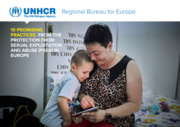
UNHCR invested significantly in risk mitigation, prevention and response to sexual exploitation and abuse (SEA) in the Europe region in 2022-2023, in particular in connection with the Ukraine emergency, where the risks were considered high due to the unprecedented scale and speed of displacement, mo
...
stly women and children, combined with high turnover of humanitarian staff and the range of new and untraditional actors involved in the response. PSEA also remains a priority for UNHCR’s work for other refugees, internally displaced and stateless persons across the region.
This compilation highlights the 10 most promising practices that were initiated by UNHCR and its partners in the Europe region in 2022-2023. These practices are shared with the aim to inspire further work on PSEA in the region and elsewhere and encourage continuous learning and exchange.
more
Follow up to the so called Abuja Declaration ten years later: In April 2001, heads of state of African Union countries met and pledged to set a target of allocating at least 15% of their annual budget to improve the health sector. At the same time, they urged donor countries to "fulfil the yet to be
...
met target of 0.7% of their GNP as official Development Assistance (ODA) to developing countries". This drew attention to the shortage of resources necessary to improve health in low income settings.
more

