
Filter
306
Text search:
self-harm
Featured
48
51
Language
Document type
181
45
36
21
12
6
2
2
1
Countries / Regions
17
17
11
11
7
5
4
4
4
4
4
3
3
3
2
2
2
2
2
2
2
2
1
1
1
1
1
1
1
1
1
1
1
1
1
1
1
1
1
1
Authors & Publishers
Publication Years
Category
65
23
15
11
11
2
Toolboxes
177
15
13
11
10
7
6
6
3
2
2
2
2
1
1
1
PFA for Red Cross and Red Crescent Societies has several parts that can be used separately or together. It comprises this guide, a small booklet on PFA, and four training modules on PFA. This guide has general information about psychological first aid. It can be used on its own for psycho-education
...
This technical package represents a select group of strategies based on the best available evidence to help communities and states sharpen their focus on prevention activities with the greatest potential to prevent suicide
1-13 December 2018 | Geneva, Switzerland UNAIDS Programme Coordinating Board Issue date: 23 November 2018
UNAIDS/PCB (43)/18.32

Millions of children are at increased risk of harm as their lives move increasingly online during lockdown in the COVID-19 pandemic, UNICEF and partners said today.
“The coronavirus pandemic has led to an unprecedented rise in screen time,” said Global Partnership to End Violence Executive Dire
...
This guidance note is meant to assist humanitarian actors, youth-led organizations, and young people themselves across sectors, working at local, country, regional, and global levels in their response to the novel coronavirus pandemic. It begins diagnostically, exploring the impacts of coronavirus d
...
This document presents a brief overview of how UNHCR adapts its activities for mental health and psychosocial support (MHPSS) to the changing context of the pandemic. Staff of UNHCR and partners, in country offices in all regions of the world, have developed innovative field practices to continue pr
...
COVID-19 pandemic has taken the entire world by surprise, creating the greatest global catastrophe since WWII, impacting all spheres of our societies, including health, economy, social protection, as well as security, and human rights. The virus affects people and communities indiscriminately in all
...
More than 700 000 people lose their life to suicide every year. The world is not on track to reach the 2030 suicide reduction targets. WHO advocates for countries to take action to prevent suicide, ideally through a comprehensive national suicide prevention strategy. Governments and communities can
...

What every clinician should know
This report provides updated data on suicide in the Region of the Americas and is issued every five years, this being the fourth edition. In addition to including analysis similar to previous reports (suicide according to age, sex, as well as methods used), this report includes an expanded set of an
...
Compared with other health areas, the mental health impacts of climate change have received less research attention. The literature on climate change and mental health is growing rapidly but is characterised by several limitations and research gaps. In a field where the need for designing evidence-b
...
mhGAP Humanitarian Intervention Guide (mhGAP-HIG) training of health-care providers. Training manual
recommended
The mhGAP Humanitarian Intervention Guide (mhGAP-HIG) Training of Health-Care Providers manual is designed to guide facilitators in training non-specialist health care providers to manage mental, neurological and substance use conditions in humanitarian emergency settings.
The manual covers sugge
...
The mhGAP community toolkit: field test version is an integral part of WHO's Mental Health Gap Action Programme (mhGAP), and aims at scaling up services for people with mental health conditions to achieve universal health coverage.
The toolkit provides guidance for programme managers on how to i
...
The pandemic has emphasized the high risk of avoidable harm to patients, health workers, and the general public, and has identified a range of safety gaps across all core components of health systems at all levels.
The rapid review ‘Implications of the COVID-19 pandemic for patient safety’ ex
...
This Guide responds to requests from practitioners and country teams who have learned about the Nurturing care framework and want to understand how to adapt health and nutrition services to be supportive of nurturing care and strengthen caregivers’ capacity.
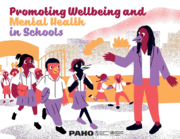
This Handbook is primarily for educators, to help them learn about mental health issues and better support them in educational environments. The Handbook aims to provide training to teachers, administrators, and people involved in the education of primary school children about the implementation of
...
Obesity in all age groups, including children and adolescents, is a public health challenge across all settings. Obesity is now classified as a complex multifactorial chronic disease and not just a risk factor for other noncommunicable diseases and comorbidities. Recognizing the significance of prim
...
