
Filter
1804
Text search:
population
dynamics
Featured
139
469
Language
1720
60
45
36
27
16
15
6
5
5
4
3
3
3
2
2
2
2
2
2
2
2
2
1
1
1
1
1
1
1
1
Document type
921
465
183
78
75
33
19
16
6
5
2
1
Countries
89
60
48
39
38
35
34
33
33
33
32
32
31
30
30
26
25
23
23
23
21
18
17
14
14
13
13
11
11
11
11
11
11
10
10
10
10
10
9
9
9
9
9
9
8
8
7
7
6
6
6
6
6
5
5
5
5
4
4
4
4
4
3
3
3
3
3
3
3
3
3
3
2
2
2
2
2
2
2
2
2
2
2
2
2
2
2
2
2
2
2
2
2
2
1
1
1
1
1
1
1
1
1
1
1
1
1
1
1
1
1
1
1
1
1
1
1
1
1
1
1
1
Authors & Publishers
201
105
59
49
46
34
26
25
24
22
20
15
12
11
11
11
10
10
9
9
8
8
7
7
7
7
7
7
6
6
6
6
6
6
6
5
5
5
5
5
5
5
5
5
5
5
5
5
4
4
4
4
4
4
4
4
4
4
4
4
4
4
4
4
4
4
4
4
4
4
4
4
4
4
3
3
3
3
3
3
3
3
3
3
3
3
3
3
3
3
3
3
3
3
3
3
3
3
3
3
3
3
3
3
3
3
3
3
3
3
3
3
2
2
2
2
2
2
2
2
2
2
2
2
2
2
2
2
2
2
2
2
2
2
2
2
2
2
2
2
2
2
2
2
2
2
2
2
2
2
2
2
2
2
2
2
2
2
2
2
2
2
2
2
2
2
2
2
2
2
2
2
2
2
2
2
2
2
2
2
2
2
2
2
2
2
2
2
2
2
2
2
2
2
2
2
2
2
2
2
2
2
2
2
2
2
2
2
2
2
2
2
2
2
2
2
2
2
2
2
2
2
2
2
2
2
2
2
2
2
2
2
2
2
2
2
2
2
2
2
2
2
2
2
2
2
2
2
2
1
1
1
1
1
1
1
1
1
1
1
1
1
1
1
1
1
1
1
1
1
1
1
1
1
1
1
1
1
1
1
1
1
1
1
1
1
1
1
1
1
1
1
1
1
1
1
1
1
1
1
1
1
1
1
1
1
1
1
1
1
1
1
1
1
1
1
1
1
1
1
1
1
1
1
1
1
1
1
1
1
1
1
1
1
1
1
1
1
1
1
1
1
1
1
1
1
1
1
1
1
1
1
1
1
1
1
1
1
1
1
1
1
1
1
1
1
1
1
1
1
1
1
1
1
1
1
1
1
1
1
1
1
1
1
1
1
1
1
1
1
1
1
1
1
1
1
1
1
1
1
1
1
1
1
1
1
1
1
1
1
1
1
1
1
1
1
1
1
1
1
1
1
1
1
1
1
1
1
1
1
1
1
1
1
1
1
1
1
1
1
1
1
1
1
1
1
1
1
1
1
1
1
1
1
1
1
1
1
1
1
1
1
1
1
1
1
1
1
1
1
1
1
1
1
1
1
1
1
1
1
1
1
1
1
1
1
1
1
1
1
1
1
1
1
1
1
1
1
1
1
1
1
1
1
1
1
1
1
1
1
1
1
1
1
1
1
1
1
1
1
1
1
1
1
1
1
1
1
1
1
1
1
1
1
1
1
1
1
1
1
1
1
1
1
1
1
1
1
1
1
1
1
1
1
1
1
1
1
1
1
1
1
1
1
1
1
1
1
1
1
1
1
1
1
1
1
1
1
1
1
1
1
1
1
1
1
1
1
1
1
1
1
1
1
1
1
1
1
1
1
1
1
1
1
1
1
1
1
1
1
1
1
1
1
1
1
1
1
1
1
1
1
1
1
1
1
1
1
1
1
1
1
1
1
1
1
1
1
1
1
1
1
1
1
1
1
1
1
1
1
1
1
1
1
1
1
1
1
1
1
1
1
1
1
1
1
1
1
1
1
1
1
1
1
1
1
1
1
1
1
1
1
1
1
1
1
1
1
1
1
1
1
1
1
1
1
1
1
1
1
1
1
1
1
1
1
1
1
1
1
1
1
1
1
1
1
1
1
1
1
1
1
1
1
1
1
1
1
1
1
1
1
1
1
1
1
1
1
1
1
1
1
1
1
1
1
1
1
1
1
1
1
1
1
1
1
1
1
1
1
1
1
1
1
1
1
1
1
1
1
1
1
1
1
1
1
1
1
1
1
1
1
1
1
1
1
1
1
1
1
1
1
1
1
1
1
1
1
1
1
1
1
1
1
1
1
1
1
1
1
1
1
1
1
1
1
1
1
1
1
1
1
1
1
1
1
1
1
1
1
1
1
1
1
1
1
1
1
1
1
1
1
1
1
1
1
1
1
1
1
1
1
1
1
1
1
1
1
1
1
1
1
1
1
1
1
1
1
1
1
1
1
1
1
1
1
1
1
1
1
1
1
1
1
1
1
1
1
1
1
1
1
1
1
1
1
1
1
1
1
1
1
1
1
1
1
1
1
1
1
1
1
1
1
1
1
1
1
1
1
1
1
1
1
1
1
1
1
1
1
1
1
1
1
1
1
1
1
1
1
1
1
1
1
1
1
1
1
1
1
1
1
1
1
1
1
1
1
1
1
1
1
1
1
1
1
1
1
1
1
1
1
1
1
1
1
1
1
1
1
1
1
1
1
1
1
1
1
1
1
1
1
1
1
1
1
1
1
1
1
1
1
1
1
1
1
1
1
1
1
1
1
1
1
1
1
1
1
1
1
1
1
1
1
1
1
1
1
1
1
1
1
1
1
1
1
1
1
1
1
1
1
1
1
1
1
1
1
1
1
1
1
1
1
1
1
1
1
1
1
1
1
1
1
1
1
1
1
1
1
1
1
1
1
1
1
1
1
1
1
1
1
1
1
1
1
1
1
1
1
1
1
1
1
1
1
1
1
1
1
1
1
1
1
1
1
1
1
1
1
1
1
1
1
1
1
1
1
1
1
1
1
1
1
1
1
1
1
1
1
1
1
1
1
1
1
1
1
1
1
1
1
1
1
1
1
1
1
1
1
1
1
1
1
1
1
1
1
1
1
1
1
1
1
1
1
1
1
1
1
1
1
1
1
1
1
1
1
1
1
1
1
1
1
1
1
1
1
1
1
1
1
1
1
1
1
1
1
1
1
1
1
1
1
1
1
1
1
1
1
1
1
1
1
1
1
1
1
1
1
1
1
1
1
1
1
1
1
1
1
1
1
1
1
1
1
1
1
1
1
1
1
1
1
1
1
1
1
1
1
1
1
1
1
1
1
1
1
1
1
1
1
1
1
1
1
1
1
1
1
1
1
1
1
1
1
1
1
1
1
1
1
1
1
1
1
1
1
1
1
1
1
1
1
1
1
1
1
1
1
1
1
1
1
1
1
1
1
1
1
1
1
1
1
1
1
1
1
1
1
1
1
1
1
1
1
1
1
1
1
1
1
1
1
1
1
1
1
1
1
1
1
1
1
1
1
1
1
1
1
1
1
1
1
1
1
1
1
1
1
1
1
1
1
1
1
1
1
1
1
1
1
1
1
1
1
1
1
1
1
1
1
1
1
1
1
1
1
1
1
1
1
1
1
1
1
1
1
1
1
1
1
1
1
1
1
1
1
1
1
1
1
1
1
1
1
1
1
1
1
1
1
1
1
1
1
1
1
1
1
1
1
1
1
1
1
1
1
1
1
1
1
1
1
1
1
1
1
1
1
1
1
1
1
1
1
1
1
1
1
1
1
1
1
1
1
1
1
1
1
1
1
1
1
1
1
1
1
1
1
1
1
1
1
1
1
1
1
1
1
1
1
1
1
1
1
1
1
1
1
1
1
1
1
1
1
1
1
1
1
1
1
1
1
1
1
1
1
1
1
1
1
1
1
1
1
1
1
1
1
1
1
1
1
1
1
1
1
1
1
1
1
1
1
1
1
1
1
1
1
1
1
1
1
1
1
1
1
1
1
1
1
1
1
1
1
1
1
1
1
1
1
1
1
1
1
1
1
1
1
1
1
1
1
1
1
1
1
1
1
1
1
1
1
1
1
1
1
1
1
1
1
1
1
1
1
1
1
1
1
1
1
1
1
1
1
1
1
1
1
1
1
1
1
1
1
1
1
1
1
1
1
1
1
1
1
1
1
1
1
1
1
1
1
1
1
1
1
1
1
1
1
1
1
1
1
1
1
1
1
1
1
1
1
1
1
1
1
1
1
1
1
1
1
1
1
1
1
1
1
1
1
1
1
1
1
1
1
1
1
1
1
1
1
1
1
1
1
1
1
1
1
1
1
1
1
1
1
1
1
1
1
1
1
1
1
1
1
1
1
1
1
1
1
1
1
1
1
1
1
1
1
1
1
1
1
1
1
1
1
1
1
1
1
1
1
1
1
1
1
1
1
1
1
1
1
1
1
1
1
1
1
1
1
1
1
1
1
1
1
1
1
1
1
1
1
1
1
1
1
1
1
1
1
1
1
1
1
1
1
1
1
1
1
1
1
1
1
1
1
1
1
1
1
1
1
1
1
1
1
1
1
1
1
1
1
1
1
1
1
1
1
1
1
1
1
1
1
1
1
1
1
1
1
1
1
1
1
1
1
1
1
1
1
1
1
1
1
1
1
1
1
1
1
1
1
1
1
Publication Years
1
598
1090
106
9
Category
621
92
89
77
66
30
11
3
Toolboxes
218
149
138
130
81
79
58
53
51
51
50
46
44
34
27
14
12
12
10
9
8
6
4
1
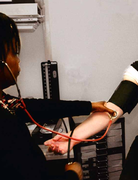
The World Health Report 2008: Primary Health Care - Now more than ever
World Health Organization
(2008)
C_WHO
Primary care - Putting people first: This chapter describes how primary care brings promotion and prevention, cure and care together in a safe, effective and socially productive way at the interface between the population and the health system.
This document provides guidance on the application of non-pharmaceutical countermeasures to minimise the spread of the 2019 novel coronavirus (2019-nCoV) in the population. Some of the measures proposed refer specifically to certain phases of the ep
...
idemic (containment or mitigation phases), and can be adapted depending on the assessed severity/impact of the infection. Other measures are valid for all phases of an epidemic.
The guidance is based on the current knowledge of the 2019-nCoV and evidence available on other viral respiratory pathogens, mainly the Severe Acute Respiratory Syndrome coronavirus (SARS-CoV), the Middle East Respiratory Syndrome-related coronavirus (MERS-CoV) and seasonal or pandemic influenza viruses.
more
Myanmar, as a country going through rapid socio-political transition and institutional development also suffers with a high burden of infectious disease. An ongoing challenge has been to effectively reach its 51 million population, most of whom batt
...
le tuberculosis, acute respiratory infections, diarrhoea and malaria including amongst under-five children.
Limited research data on the occurrence of resistant organisms in the nation have, makes it hard to estimate the exact antimicrobial resistance (AMR) scenario. Limited peer reviewed evidence indicates significant divergence from the average resistance trends in APAC region. Nevertheless, several key steps by Government of Myanmar have been instrumental in paving the way for the country to join other nations in the South East Asia Region to speed up its plan on addressing the AMR crisis. Combating antimicrobial resistance would, however, require highest political commitment, multi-sectoral coordination, sustained investment and technical assistance.
more
Internally displaced persons (IDPs), refugees, migrants and returnees constitute a sizeable population in the WHO Eastern Mediterranean Region. There were 12 million refugees (half are Palestinians) and 13 million IDPs in the Regio
...
n as of 2018. These populations are often vulnerable to poor health due to the conditions they live in and limited access to needed quality health care. In addition, those who can access care, are often faced with financial hardship. There are also 46 million professionals and low-income labour migrants in the Region (of which 22 million are from the Region), with differential access to health services and varied health coverage schemes
more
While the full effects of COVID-19 remain unknown, the pandemic continues to profoundly impact regional migration and mobility dynamics, with deep health, social and economic consequences for the most vulnerable, including migrants, displaced popula
...
tions and their host communities, and returnees.
more
The COVID-19 pandemic poses an additional and critical challenge in a fragile humanitarian context, where the population is already highly vulnerable and lives in often overcrowded settlements where distancing is impossible, and with limited access
...
to basic health services and hygiene. Further spread of COVID-19 in the EHoA region will burden the already complex humanitarian situation with devastating consequences.
more
Shielding is a term used to describe the protection of individuals at high risk of severe COVID-19 illness by separating them from the general population.
This handbook is an adaptation from the WHO Clinical Handbook Health care for women subjected to intimate partner violence or sexual violence developed by the World Health Organization (WHO), UN Women and United Nations Population Fund. The handbook
...
draws on the work from professionals who are dedicated to preventing and responding to Gender Based Violence.
The Handbook guides health care service providers to provide comprehensive services to survivors of intimate partner violence and/or sexual violence. It also guides health professionals with respect to relevant stakeholders for referral purposes. The purpose is to ensure that relevant authorities are informed timeously in order act and ensure that those affected by violence receive speedy service as required.
more
BMJ Global Health, Vol.5 No. 12Spatial subdivision of the camp (‘sectoring’) was able to ‘flatten the curve’, reducing peak infection by up to 70% and delaying peak infection by up to several months. The use of face masks coupled with the efficient isolation of infected individuals reduced t
...
he overall incidence of infection, and sometimes averted epidemics altogether. These interventions must be implemented quickly in order to be maximally effective. Lockdowns had only small effects on COVID-19 dynamics.
Conclusions
Agent-based models are powerful tools for forecasting the spread of disease in spatially structured and heterogeneous populations. Our findings suggest that feasible interventions can slow the spread of COVID-19 in a refugee camp setting, and provide an evidence base for camp managers planning intervention strategies. Our model can be modified to study other closed populations at risk from COVID-19 or future epidemics.
more
9 September 2020
In a snapshot, fair allocation of vaccines will occur in the following way:
An initial proportional allocation of doses to countries until all countries reach enough quantities to cover 20% of their population
This document
...
is also available in Arabic | Chinese | French | Russian | Spanish | Portuguese
A follow-up phase to expand coverage to other populations. If severe supply constraints persist, a weighted allocation approach would be adopted, taking account of a country’s COVID threat and vulnerability.
The document is a final working document and may be adjusted in the future as new information about the vaccines and the epidemiology of COVID-19 becomes available.
more
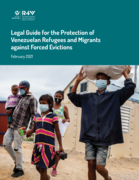
The right to adequate housing, despite having been recognized by multiple international instruments, continues to be a human right that is consistently violated. Around 2O% of the world's population do not have adequate housing . In Latin America, i
...
nformal settlements generally lack the conditions required to live a decent life, and local and national public policies fail to radically transform this situation.
more
Health in All Policies: A Guide for State and Local Governments was created by the Public Health Institute, the California Department of Public Health, and the American Public Health Association in response to growing interest in using collaborative approaches to improve
...
population health by embedding health considerations into decision-making processes across a broad array of sectors. The Guide draws heavily on the experiences of the California Health in All Policies Task Force and incorporates information from the published and gray literature and interviews with people across the country.
The guide was developed through funding from the American Public Health Association and The California Endowment.
more

This National Health Policy has 5 objectives, namely
i. To strengthen the healthcare delivery system to be resilient
ii. To encourage the adoption of healthy lifestyles
iii. To improve the physical environment
iv. To improve the socio-economic status of the
...
population
v. To ensure sustainable financing for health
These objectives shall collectively ensure that there will be improved alignment, complementarity and synergies within and across all public sector ministries as well as with other stakeholders, towards achieving the national health goal.
The policy shall therefore ensure that MDAs and other identifiable organizations work within the principles of the Health-in-All Policy and the One-Health Policy frameworks (WHO), to achieve the desired healthy life status of people living in Ghana.
more
The coronavirus disease 2019 (COVID-19) pandemic has created a global and gendered crisis that is compounding existing inequalities and disproportionately affecting girls and women. Emerging evidence from the COVID-19 crisis in 2020 shows school closures, disruptions in essential services and rising
...
poverty contributed to girls’ increased risk of female genital mutilation (FGM). School closures limited the monitoring and reporting of cases of FGM. Rising household monetary poverty may have contributed to families adopting negative coping mechanisms, including having girls undergo FGM as a precursor to marriage to reduce household costs. A report from the United Nations Population Fund (UNFPA) estimates 2 million additional cases of FGM by 2030 due to the pandemic.
more
The coronavirus disease 2019 (COVID-19) pandemic has created a global and gendered crisis that is compounding existing inequalities and disproportionately affecting girls and women. Emerging evidence from the COVID-19 crisis in 2020 shows school closures, disruptions in essential services and rising
...
poverty contributed to girls’ increased risk of female genital mutilation (FGM). School closures limited the monitoring and reporting of cases of FGM. Rising household monetary poverty may have contributed to families adopting negative coping mechanisms, including having girls undergo FGM as a precursor to marriage to reduce household costs. A report from the United Nations Population Fund (UNFPA) estimates 2 million additional cases of FGM by 2030 due to the pandemic.
more
21 January 2022
The overall threat posed by Omicron largely depends on four key questions: (i) how transmissible the variant is; (ii) how well vaccines and prior infection protect against infection, transmission, clinical disease and death; (iii) how virulent the variant is compared to other varian
...
ts; and (iv) how populations understand these dynamics, perceive risk and follow control measures, including public health and social measures (PHSM).
more
Mosquito-borne diseases are expanding their range, and re-emerging in areas where they had subsided for decades. The extent to which climate change influences the transmission suitability and population at risk of mosquito-borne diseases across diff
...
erent altitudes and population densities has not been investigated. The aim of this study was to quantify the extent to which climate change will influence the length of the transmission season and estimate the population at risk of mosquito-borne diseases in the future, given different population densities across an altitudinal gradient.
The Lancet Planetary Health Volume 5, ISSUE 7, e404-e414, July 01, 2021
more
Published: November 24, 2020 https://doi.org/10.1371/journal.pbio.3000938
Climate change is expected to have complex effects on infectious diseases, causing some to increase, others to decrease, and many to shift their distributions. There have been several important advances in understanding the
...
role of climate and climate change on wildlife and human infectious disease dynamics over the past several years. This essay examines 3 major areas of advancement, which include improvements to mechanistic disease models, investigations into the importance of climate variability to disease dynamics, and understanding the consequences of thermal mismatches between host and parasites. Applying the new information derived from these advances to climate–disease models and addressing the pressing knowledge gaps that we identify should improve the capacity to predict how climate change will affect disease risk for both wildlife and humans.
more
PNAS | March 4, 2014 | vol. 111 | no. 9
Malaria is an important disease that has a global distribution and significant health burden. The spatial limits of its distribution and seasonal activity are sensitive to climate factors, as well as the local capacity to control the disease. Malaria is also
...
one of the few health outcomes that has been modeled by more than one research group and can therefore facilitate the first model intercomparison for health impacts under a future with climate change. We used bias-corrected temperature and rainfall simulations from the Coupled Model Intercomparison Project Phase 5 climate models to compare the metrics of five statistical and dynamical malaria impact models for three future time periods (2030s, 2050s, and 2080s). We evaluated three malaria outcome metrics at global and regional levels: climate suitability, additional population at risk and additional person-months at risk across the model outputs. The malaria projections were based on five different global climate models, each run under four emission scenarios (Representative Concentration Pathways, RCPs) and a single population projection. We also investigated the modeling uncertainty associated with future projections of populations at risk for malaria owing to climate change. Our findings show an overall global net increase in climate suitability and a net increase in the population at risk, but with large uncertainties. The model outputs indicate a net increase in the annual person-months at risk when comparing from RCP2.6 to RCP8.5 from the 2050s to the 2080s. The malaria outcome metrics were highly sensitive to the choice of malaria impact model, especially over the epidemic fringes of the malaria distribution.
more

Over the ages, human societies have altered local ecosystems and modified regional climates. Today the human influence has attained a global scale. This reflects the recent rapid increase in population size, energy consumption, intensity of land use
...
, international trade and travel, and other human activities. These global changes have heightened awareness that the long-term good health of populations depends on the continued stability of biosphere's ecological, physical and socioeconomic systems.
The world's climate system is an integral part of the complex of life-supporting processes. Like other large systems, the global climate system is coming under pressure from human activities.
This book seeks to describe the context and process of global climate change, its actual or likely impacts on health, and how human societies and their governments should respond with particular focus on the health sector.
more
