
Filter
165
Text search:
Pan
American
Health
Organisation
(PAHO),
World
Health
Organisation
(WHO)
Featured
Recommendations
14
New Publications
27
Language
Document type
No document type
51
Studies & Reports
49
Guidelines
23
Manuals
17
Strategic & Response Plan
9
Fact sheets
8
Training Material
4
Situation Updates
2
Resource Platforms
2
Countries / Regions
Latin America and the Carribbean
54
Global
7
Brazil
4
Ghana
2
Haiti
2
Zambia
2
Mozambique
2
Colombia
2
Angola
2
Myanmar / Burma
2
Paraguay
2
Asia
2
Africa
2
Venezuela
2
Nigeria
1
Guinea-Bissau
1
Syria
1
Argentina
1
Chile
1
East and Southern Africa
1
West and Central Africa
1
Jamaica
1
Authors & Publishers
Publication Years
Category
Countries
62
Clinical Guidelines
24
Public Health
15
Women & Child Health
11
Key Resources
7
Capacity Building
2
Pharmacy & Technologies
1
Toolboxes
COVID-19
40
Mental Health
18
Rapid Response
10
HIV
9
Planetary Health
8
NTDs
7
Global Health Education
6
AMR
6
Zika
5
Caregiver
4
Health Financing Toolbox
4
Cholera
2
Natural Hazards
2
TB
2
Specific Hazards
2
Pharmacy
2
NCDs
2
Disability
1
Ebola
1
Polio
1
Conflict
1
Refugee
1
This country profile presents a summary and analysis of Argentina's status with yellow fever. It is part of a series of profiles on this topic, each focusing on a different country in the Region of the Americas. Argentina's geographical location presents a wide territorial extension throughout diffe
...

The chapter Dementia in Latin America and the Caribbean: Prevalence, Incidence, Impact, and Trends over Time, is part of the publication series titled “Decade of Healthy Aging: situation and challenges”. This document aims to provide an outline of the current situation in Latin America and the C
...
The report aims to capture lessons from the COVID-19 pandemic and to highlight the opportunity for more ambitious global action: expanding sustainable access to vaccines for all towards the Immunization Agenda 2030 and pandemic prevention, preparedness and response efforts. The report is organized i
...

Rabies is a global public health problem with important socioeconomic impacts. Human rabies is preventable; almost all cases are transmitted through the bite of a rabid dog. Elimination of human rabies is possible. Technical support and tools are av
...

Advances have been made through expanded interventions delivered through five public health approaches: innovative and intensified disease management; preventive chemotherapy; vector ecology and management; veterinary public
...

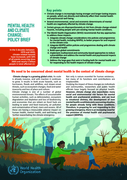
We need to be concerned about mental health in the context of climate change
Cervical intraepithelial neoplasia (CIN) is a premalignant lesion that may exist at any one of three stages: CIN1, CIN2, or CIN3. If left untreated, CIN2 or CIN3 (collectively referred to as CIN2+) can progress to cervical cancer. Instead of screening and diagnosis by the standard sequence of cytolo
...
In 2005, the World Health Organization (WHO) Member States adopted the revised International
...

Guidelines for WHO Representatives and Country
Offices in the Western Pacific Region

WHO would like to express its gratitude and appreciation to all Member States that provided information to the WHO survey on policies and activities at the national level in the area of antimicrobia
...
The response to a cholera outbreak must focus on limiting mortality and reducing the spread of the disease. It should be comprehensive and multisectoral, including epidemiology, case management, water, sanitation and hygiene, logistics, community engagement and risk communication. All efforts must b
...

An estimated 59 000 people die from rabies each year. That’s one person every nine minutes of every day, 40% of whom are children living in Asia and Africa. As dog bites cause almost all human cases, we can prevent rabies deaths by increasing awareness, vaccinating dogs to prevent the disease at i
...
The document introduces a simple classification, minimums standards and a registration form for Foreign Medical Teams (FMTs) that may provide surgical and trauma care arriving within the aftermath of a sudden onset disaster. These can serve as tools to improve the coordination of the foreign medical
...
Meeting Report
Bangkok, Thailand 8-11 August 2016
2nd revised edition. Accessed Apri. 17, 2019
Prevention strategies based on scientific evidence working with families, schools, and communities can ensure that children and youth, especially the most marginalized and poor, grow and stay healthy and safe into adulthood and old age. For every dollar
...
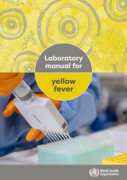
Laboratory manual for yellow fever
recommended
This WHO laboratory manual provides the most up to date methods and procedures for the laboratory identification of yellow fever virus infection in humans. It provides guidance on the establishment and maintenance of an effective laboratory providin
...
