Filter
310
Text search:
National
AIDS
Council,
Zimbabwe
Featured
Recommendations
19
New Publications
70
Language
Document type
No document type
226
Studies & Reports
41
Guidelines
27
Manuals
7
Strategic & Response Plan
5
Situation Updates
4
Countries / Regions
Zimbabwe
36
Zambia
20
South Africa
20
Africa
12
Malawi
11
Uganda
10
Kenya
10
Botswana
10
Lesotho
8
Mozambique
7
Ethiopia
6
Tanzania
6
Namibia
6
Eswatini/ Swaziland
6
Global
5
Nigeria
4
India
4
East and Southern Africa
4
Congo, Democratic Republic of
3
Ghana
3
Russia
3
Guinea
2
Sierra Leone
2
Liberia
2
Senegal
2
Rwanda
2
Ukraine
2
Southern Africa
2
Mali
1
Cameroon
1
Haiti
1
Nepal
1
Pakistan
1
South Sudan
1
Cambodia
1
Indonesia
1
Bangladesh
1
Benin
1
Central African Republic
1
Peru
1
Angola
1
Myanmar / Burma
1
West and Central Africa
1
Middle East and North Africa
1
South–East Asia Region
1
Western and Central Europe
1
Eastern Europe
1
Authors & Publishers
Publication Years
Category
Countries
115
Clinical Guidelines
26
Public Health
20
Women & Child Health
12
Key Resources
7
Pharmacy & Technologies
3
Capacity Building
1
Toolboxes
HIV
94
Disability
25
TB
15
Mental Health
11
COVID-19
8
AMR
7
Caregiver
6
Global Health Education
5
NTDs
5
Planetary Health
4
Natural Hazards
3
Pharmacy
3
Refugee
2
Health Financing Toolbox
2
Cholera
1
Conflict
1
Rapid Response
1
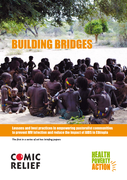
Lessons and best practices in empowering pastoralist communities to prevent HIV infection and reduce the impact of AIDS in Ethiopia. Briefing Paper
These consolidated guidelines on HIV testing services (HTS) bring together existing and new guidance on HTS across different settings and populations.
The World Health Organization (WHO) first released consolidated guidelines on HTS in 2015, in response to requests from Member States,
...
Networking for Policy Change: TB/HIV Participant’s Guide
WHO/HTM/TB/2007.384b
“TB is too often a death sentence for people with AIDS. It does not have to be this
way.”
-Nelson Mandela, International conference on HIV and
...
DHS Further Analysis Reports No. 107 - This report, based largely on the 2014-15 national survey in Rwanda, focuses on changes and trends in reproductive behavior since 2010. In the 4-5 years after the 2010 survey, fertility continued its decline to
...
This implementation brief addresses integration of HIV testing services into family planning (FP) services. It is intended as a practical resource for national health programmes seeking to introduce or scale up HIV testing and linkage to HIV prevent
...
This document is a guide defining requirements for quality and safety for malaria rapid diagnostic testing services to safeguard the quality of the results, the safety of the operators and patients and that of the environment for use by national mal
...
Growing evidence indicates that large proportions of children around the world experience physical, sexual and emotional violence every year, with enormous implications for human rights, public health and economic and social development.1 Over the last five years,
...

This is the ninth paper in our series, “Community Health Workers at the Dawn of a New Era”. Community health workers (CHWs) are in an intermediary position between the health system and the community. While this position provides CHWs with a good platform to improve community health, a major cha
...

Countries are making progress toward the global goal of 95% of people living with HIV knowing their status by 2025. However, considerable gaps remain in achieving these goals globally. Men in high HIV burden settings and men from key populations in all settings are consistently less likely to know t
...

Regional Network for Equity in Health in east and southern Africa (EQUINET): Disussion Paper 111
The health services delivery system in Zambia is pyramid in structure, with primary healthcare (PHC) services at community level, at the base, followed by first and second level hospitals at distric ...
The health services delivery system in Zambia is pyramid in structure, with primary healthcare (PHC) services at community level, at the base, followed by first and second level hospitals at distric ...
Vitamin A supplementation (VAS) programs targeted at children aged 6–59 months are implemented in many countries. By improving immune function, vitamin A (VA) reduces mortality associated with measles, diarrhea, and other illnesses. There is currently a debate regarding the relevance of VAS, but a
...
This report presents the most current data on four specific forms of violence – violent discipline and exposure to domestic abuse during early childhood; violence at school; violent deaths among adolescents; and sexual violence in childhood and adolescence. The statistics reveal that children expe
...

Recently, a renewed interest in large-scale community health worker (CHW) programs has been seen globally. This renewal provides an opportune moment to take stock of issues and challenges such programs face and what can be done to make them as effective as possible. With this in mind, this manual is
...
In a prospective cohort study in Bangwe primary care clinic, Blantyre, Malawi, all adults (18 years or older) presenting with an acute illness were screened for TB symptoms (cough, fever, night sweats, weight loss). Demographic characteristics were linked to exit interview by fingerprint bioidentifi
...

Results and Lessons Learned from CapacityPlus 2009-2015
Policy Brief | April 2015 | This brief accompanies the data sheet, Addressing Risk Factors for Noncommunicable Diseases Among Young People in Africa: Key to Prevention and Sustainable Development, and its data appendix, which provide all available country-specific data on four key NCD risk factors a
...