Filter
329
Text search:
N.
Ford
Featured
Recommendations
26
New Publications
49
Language
Document type
No document type
151
Studies & Reports
73
Guidelines
73
Manuals
21
Strategic & Response Plan
5
Fact sheets
5
Training Material
1
Countries / Regions
South Africa
14
Global
11
Africa
9
Russia
6
Senegal
5
Malawi
5
Middle East and North Africa
5
Burkina Faso
4
Nigeria
4
India
4
Indonesia
4
Myanmar / Burma
4
Latin America and the Carribbean
4
Eastern Europe
4
USA
3
Syria
3
Kenya
3
Benin
3
Brazil
3
Lesotho
3
West and Central Africa
3
Western and Central Europe
3
North America
3
Sierra Leone
2
Liberia
2
Nepal
2
South Sudan
2
Thailand
2
Mozambique
2
Argentina
2
East and Southern Africa
2
Asia
2
Venezuela
2
Guinea
1
Mali
1
Guinea-Bissau
1
Côte d’Ivoire / Ivory Coast
1
Ethiopia
1
Ghana
1
Uganda
1
Haiti
1
Philippines
1
Iraq
1
Tanzania
1
Cambodia
1
Rwanda
1
Sudan
1
Peru
1
Burundi
1
Ukraine
1
Colombia
1
Botswana
1
Angola
1
Sri Lanka
1
Chile
1
Eastern Europe and Central Asia
1
Southern Africa
1
Laos
1
Congo-Brazzaville
1
Timor Leste/ East Timor
1
Authors & Publishers
Publication Years
Category
Countries
74
Clinical Guidelines
36
Public Health
20
Women & Child Health
6
Key Resources
6
Pharmacy & Technologies
6
Capacity Building
3
Toolboxes
HIV
77
Mental Health
34
COVID-19
32
Caregiver
20
TB
19
NCDs
16
Planetary Health
12
NTDs
9
AMR
8
Conflict
4
Global Health Education
4
Disability
3
Natural Hazards
3
Pharmacy
3
Ebola
2
Refugee
2
Specific Hazards
2
Social Ethics
2
Cholera
1
Polio
1
Rapid Response
1
Zika
1
Cardiovascular diseases, principally ischemic heart disease (IHD), are the most important cause of death and disability in the majority of low- and lower-middle-income countries (LLMICs). In these countries, IHD mortality rates are significantly greater in individuals of a low socioeconomic status (
...
The cardiovascular disease continuum begins with risk factors such as diabetes mellitus (DM), progresses to vasculopathy and myocardial dysfunction, and finally ends with cardiovascular death. Diabetes is associated with a 2- to 4-fold increased risk for heart failure (HF). Moreover, HF patients wit
...
Oxfam Briefing Paper
Research Article
Hindawi
BioMed Research International
Volume 2018, Article ID 9619684, 10 pages https://doi.org/10.1155/2018/9619684
Unstable settings present challenges for the effective provision of antiretroviral treatment (ART). In this paper, we summarize the experience and results of providing ART and implementing contingency plans during acute instability in the Central African Republic (CAR) and Yemen.
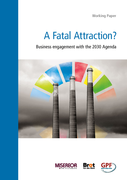
Governments have dedicated a pivotal role to the private sector in the implementation and financing of the 2030 Agenda and the SDGs. This has pushed a turn towards the private sector, the promotion of multi-stakeholder partnerships between public and private actors. However, far too often there is a
...
Peru celebrates 200 years of independence in 2021. Over this period of independent life, and despite the turbulent socio-political scenarios, from internal armed conflict to economic crisis to political instability over the last 40 years, Peru has experienced major changes on its epidemiological and
...
Tuberculosis. Practical guide for clinicians, nurses, laboratory technicians and medical auxiliaries
This Tuberculosis guide has been developed jointly by Médecins Sans Frontières and Partners In Health. It aims at providing useful information to the clinicians and health staff for the comprehensive management of tuberculosis. Forms of susceptible and resistant tuberculosis, tuberculosis in child
...
Interagency Guidelines - This revised Interagency List of Essential Medicines for Reproductive Health presents
the current international consensus on rational selection of essential reproductive health medicines. The list is intended to support decisions regarding the production, quality assurance
...
HIV & AIDS Treatment in Practice
Issue 203
HIV & AIDS Treatment in Practice No. 188

Abbreviated Report of a WHO Consultation
This report provides an update on the key facets of HIV treatment access, including the latest HIV treatment guidelines from World Health Organization (WHO), an overview on pricing for first-line, second-line, and salvage regimens, and a summary of the opportunities for – and threats to – expand
...
This document provides information for WHO Member States, particularly low-income and middle-income countries, to strengthen preparedness and response plans with regard to the social and mental health consequences of biological and chemical attacks.
This Tuberculosis guide has been developed jointly by Médecins Sans Frontières and Partners In Health. It aims at providing useful information to the clinicians and health staff for the comprehensive management of tuberculosis. Forms of susceptible and resistant tuberculosis, tuberculosis in child
...