
Filter
155
Text search:
IASC,
Global
Nutrition
Cluster,
UNICEF
Featured
Recommendations
23
New Publications
41
Language
Document type
No document type
88
Strategic & Response Plan
20
Manuals
17
Guidelines
16
Studies & Reports
12
Situation Updates
1
Fact sheets
1
Countries / Regions
Global
6
Nepal
5
South Sudan
5
Syria
5
Myanmar / Burma
5
Congo, Democratic Republic of
4
Philippines
4
Yemen
4
Ethiopia
3
Ukraine
3
Latin America and the Carribbean
3
Indonesia
2
Papua New Guinea
2
Sudan
2
East and Southern Africa
2
Iran
2
Nigeria
1
Mali
1
Cameroon
1
Ghana
1
Uganda
1
Zimbabwe
1
Haiti
1
India
1
Somalia
1
Pakistan
1
Jordan
1
Afghanistan
1
Kenya
1
China
1
Rwanda
1
Bangladesh
1
Mozambique
1
Brazil
1
Serbia
1
Croatia
1
Burundi
1
West and Central Africa
1
Middle East and North Africa
1
Western Pacific Region
1
Asia
1
Africa
1
Fiji
1
Venezuela
1
Laos
1
Russia
1
Kyrgyzstan
1
Vietnam
1
Turkmenistan
1
Japan
1
Portugal
1
Spain
1
Azerbaijan
1
Bosnia and Herzegovina
1
Authors & Publishers
Publication Years
Category
Countries
39
Key Resources
28
Women & Child Health
18
Public Health
8
Clinical Guidelines
3
Capacity Building
2
General Guidelines
1
Pharmacy & Technologies
1
Toolboxes
COVID-19
32
Conflict
18
Mental Health
12
Disability
10
Natural Hazards
8
Rapid Response
7
Refugee
6
HIV
5
Planetary Health
3
Zika
2
Ebola
1
TB
1
Specific Hazards
1
Global Health Education
1
The 2nd edition is publised in 2017.
Summary of key informant interviews with representatives of organizations providing, funding, or supporting WASH services to refugee populations
The Child Protection handbook provides a synthesis of good practice and learning and enables better advocacy and communication on child protection risks, needs and responses. Standards addressing child protection needs cover core work areas and critical issues. Those addressing strategy relate to ca
...
The Minimum Standards for Protection Mainstreaming are a set of international standards designed to provide practical assistance to humanitarian actors to mainstream protection in the assessment, design, implementation, monitoring and evaluation of humanitarian programmes, projects and activities.
...
Reflections and a call for action after a two-year exploration of emergency response in acute conflicts
There is general consensus that the humanitarian sector is failing to mount timely and adequate responses in the acute phase of conflict-related emergencies, according to the two-year Emergen ...
There is general consensus that the humanitarian sector is failing to mount timely and adequate responses in the acute phase of conflict-related emergencies, according to the two-year Emergen ...
English Analysis on World about Disaster Management and Protection and Human Rights; published on 12 Jan 2021 by IFRC
On 25 August, UN agencies and partners launched a US$187.3 million Flash Appeal to reach 500,000 of the most vulnerable people affected by the 14 August earthquake.
Around 650,000 people are in need of emergency humanitarian assistance in the three most affected departments – Grand’Anse, Nipp
...
Kit sanitaire d’urgence interinstitutions
recommended
Médicaments et dispositifs médicaux pour une population de
10 000 personnes pendant environ 3 mois
Myanmar is prone to various natural hazards that include earthquakes, floods, cyclones, droughts, fires, tsunamis, some of whichhave the potential to impact large numbers of people. In the event that large numbers of people are affected (such as was the case in 2008 following cyclone Nargis), the go
...
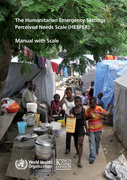
Manual with Scale
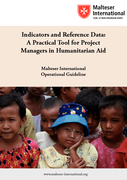
Operational Guideline
These Guidelines comprise a General Guidelines document that provides the basic parameters of DG ECHO humanitarian health assistance, complemented by specific Technical Guidance in annex.
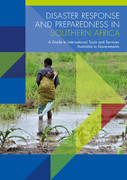
The Guide has been developed to enhance the knowledge capabilities of NDMAs and their local partners. This is accomplished by exposing them to the existing tools and services developed by the international community to facilitate effective disaster response to any scale of disaster (small, medium an
...
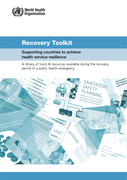
A key purpose of the Recovery Toolkit is to support countries in the reactivation of health services which may have suffered as a result of the emergency. These services include ongoing programmes such as immunization and vaccinations, maternal and child health services, and noncommunicable diseases
...
Version 2 (unedited). The Basic Needs Analysis (BNA) is a multi-sector needs analysis approach that can be applied in both sudden onset and protracted emergencies. The methodology comprises the Guidance (this document) presenting the conceptual BNA framework and related processes, and a Toolbox, whi
...
