
Filter
360
Text search:
Guinea_Bissau
Featured
24
77
Language
Document type
201
78
29
18
10
6
4
4
4
3
1
1
1
Countries / Regions
84
51
49
38
36
33
30
28
22
19
19
19
17
17
17
17
17
16
15
14
11
9
5
4
4
4
4
4
4
3
3
3
3
3
3
2
2
2
2
1
1
1
1
1
1
1
1
1
1
1
1
1
1
1
1
1
1
1
1
1
1
1
Authors & Publishers
Publication Years
Category
98
38
25
20
14
7
4
Toolboxes
64
50
24
22
15
15
14
14
10
10
6
5
4
4
4
3
3
3
3
2
2
1
The funding requested in this supplementary appeal will enable UNHCR to enhance preventive, preparedness and response measures against EVD, participate in the regional and country inter-agency response and ensure continuity of operations, including preparations for the resumption of the voluntary re
...
Policy Brief | April 2015 | This brief accompanies the data sheet, Addressing Risk Factors for Noncommunicable Diseases Among Young People in Africa: Key to Prevention and Sustainable Development, and its data appendix, which provide all available country-specific data on four key NCD risk factors a
...
These statistical profiles present the latest available data on female genital mutilation (FGM) for 31 countries where FGM is concentrated. They provide figures on how widespread the practice of FGM is, when and how it is performed, and what women and men think about the practice. Trends in prevale
...
UNAIDS 2018 reference
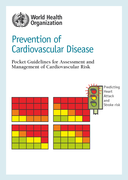
Prevention of Cardiovascular Disease. Pocket Guidelines for Assessment and Management of Cardiovascular Risk
recommended
These pocket guidelines provide evidence-based guidance on how to reduce the incidence of first and recurrent clinical events due to coronary heart disease (CHD), cerebrovascular disease (CeVD) and peripheral vascular disease in two categories of people
WHO Regional EVD Preparedness Meeting Presentations January 14-16, 2015
Oxfam Briefing Paper
An Independent Report
of the West Africa Commission on Drugs
This report is a comprehensive statistical overview of female genital mutilation/cutting (FGM/C) in the 29 countries where the practice is concentrated. Analysis of the data reflects current perspectives on FGM/C, informed by the latest policy, programmatic and theoretical evidence.
Sources: National Commitment and Policy Instrument, 2019
Accessed: 17.11.2019
Strengthening the capacities of SUN Countries by sharing and disseminating good practices in the fight against malnutrition.
This report is a summary of the results of the preparation and implementation of the Learning Route (LR) organized jointly by the SUN (Scaling Up Nutrition) Movement’s S
...

Antibiotic resistance has been recognized as a major global health threat and optimizing prescribing is one of the most effective measures to preserve the effectiveness of antibiotics. The quality of prescribing depends mostly on those prescribers belonging to clinical medical specialties
...

UNICEF zufolge sind weltweit mehr als 200 Millionen Mädchen und Frauen von weiblicher Genitalverstümmelung betroffen – die meisten von ihnen leben in Afrika und im Mittleren Osten sowie in Indonesien. Wenn der Trend sich nicht ändert, sind 30 Millionen Mädchen potentiell gefährdet, vor ihrem
...
