
Filter
560
Text search:
Global
Health
Workforce
Alliance
Featured
Recommendations
53
New Publications
153
Language
Document type
No document type
271
Studies & Reports
123
Guidelines
68
Strategic & Response Plan
57
Manuals
25
Training Material
8
Fact sheets
4
Resource Platforms
2
Situation Updates
1
Infographics
1
Countries / Regions
Global
37
Ethiopia
21
Kenya
20
Liberia
18
Sierra Leone
16
India
13
Uganda
12
Malawi
12
Zambia
11
Nigeria
10
Syria
10
Western and Central Europe
10
Africa
10
South Africa
9
Namibia
9
Myanmar / Burma
8
Bangladesh
7
Lesotho
7
Guinea
6
South–East Asia Region
6
Ghana
5
Nepal
5
Tanzania
5
Rwanda
4
East and Southern Africa
4
Middle East and North Africa
4
Latin America and the Carribbean
4
Asia
4
Burkina Faso
3
Haiti
3
Cambodia
3
Indonesia
3
Yemen
3
West and Central Africa
3
Eastern Europe
3
Russia
3
Senegal
2
Zimbabwe
2
Philippines
2
South Sudan
2
Jordan
2
Afghanistan
2
Lebanon
2
Ukraine
2
Botswana
2
Sri Lanka
2
Congo, Democratic Republic of
1
Mali
1
Cameroon
1
Somalia
1
Iraq
1
Germany
1
Turkey
1
Thailand
1
Mozambique
1
Papua New Guinea
1
Brazil
1
Mexico
1
Western Pacific Region
1
Southern Africa
1
Laos
1
Timor Leste/ East Timor
1
Authors & Publishers
Publication Years
Category
Countries
200
Public Health
55
Clinical Guidelines
40
Women & Child Health
36
Key Resources
18
Capacity Building
7
Pharmacy & Technologies
3
Toolboxes
COVID-19
52
Global Health Education
35
Caregiver
34
Mental Health
28
Planetary Health
28
HIV
27
Disability
26
TB
20
NCDs
16
Ebola
15
Health Financing Toolbox
13
Rapid Response
11
AMR
9
Conflict
7
Polio
5
Refugee
5
Pharmacy
5
NTDs
2
Cholera
1
Zika
1
Social Ethics
1
The aim of the present paper is to review capacity building in public health nutrition (PHN), the need for which has been stressed for many years by a range of academics, national and international organisations. Although great strides have been mad
...
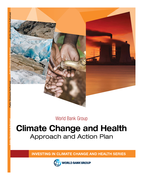
Climate change (CC) impacts on health outcomes, both direct and indirect, are sufficient to jeopardize achieving the World Bank Group’s visions and agendas in poverty reduction, population resilience, and
...
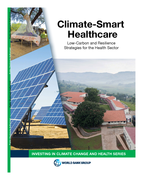
Climate change is damaging human health now and is projected to have a greater impact in the future. Low- and middle-income countries are seeing the worst effects as they are most vulnerable to climate shifts and least able to adapt given weak
...

Antibiotics have been useful in fighting infectious diseases in our country for decades, but because of the overuse and misuse of these agents, an increasing number of organisms are now resistant to them. The Philippines, like other Southeast Asian countries, has already been encountering the many c
...

The Global Vaccine Action Plan (GVAP) 2011-2020, endorsed by Member States during the May 2012 World Health Assembly, has set ambitious targets to improve access to immunization and tackle vaccine-p
...
A global call to action to protect the mental health of health and care workers
Building on the 2021 Interim guidance, this second version and update, incorporates the lessons and feedback from the hepatitis pilots that successfully demonstrated the feasibility of measuring hepatitis B and C impact targets to demonstrate elimination, whilst highlighting challenges caused by hig
...

To complement the Global Strategy progress reporting, this report provides a detailed look at country leadership and action toward the Every Newborn National Milestones by 2020. Countries have taken the initiative to show the way forward and have de
...
The COVID-19 Strategic Preparedness and Response Plan (SPRP) 2021 Monitoring and Evaluation Framework tracks global progress against the COVID-19 SPRP 2021 for the ten pillars of the public health r
...

WHO’s Ambition and Action in Nutrition 2016-2025 is anchored in the six global targets for improving maternal, infant and young child nutrition and the global diet-related NCD targets.
I ...
I ...
Non-Communicable Diseases (NCDs), including mental disorders, currently pose one of the biggest threats to health and development globally, particularly in low and middle income countries2. It is predicted that unless proven interventions are rapidl
...

Improvements in water sanitation and hygiene (WASH) and wastewater management in all sectors are critical elements of preventing infections and reducing the spread of antimicrobial resistance (AMR) as identified in the Global Action Plan to combat A
...
This publication is based on the list of clinical interventions selected from clinical guidelines on prevention, screening, diagnosis, treatment, palliative care, monitoring and end of life care. This publication addresses medical devices for six types of cancer: breast, cervical, colorectal, leukem
...
This document outlines why and how nurses and midwives are important, not only for individual health optimization but also to achieve the thematic priorities of For the Future. More specifically, it provides case studies to showcase the amazing work
...
The Strategic Advisory Group of Experts (SAGE) on Immunization held a meeting on 3-6 October 2022. This report summarizes the discussions, conclusions and recommendations.
It covers the following items:
Global Reports
Immunization Agenda 2030 a
...
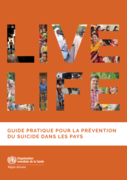
Plus de 700 000 personnes perdent la vie par suicide chaque année. La réduction d’un tiers du taux mondial de mortalité par suicide d’ici à 2030 est à la fois un indicateur et une cible (la seule pour la santé mentale) dans les objectifs de développement durable des Nations Unies et dans
...

Promoting health and preventing disease is a critical component of the effort required to achieve Universal Health Coverage (UHC). to date, efforts to achieve UHC have focused mostly on strengthenin
...
English version - This handbook sets out a the new paradigm for pharmacy practice. Its aim is to guide pharmacy educators in pharmacy practice, to educate pharmacy students and to guide pharmacists in practice to update their skills. The handbook, which brings together practical tools and knowledge,
...

Vaccines are powerful weapons in the fight against pandemic viruses as shown by responses to both the 2009 H1N1 influenza and the COVID-19 pandemics. However, planning for accessing, allocating and deploying vaccines in a pandemic situation is a complex endeavour, beset with multiple challenges at a
...

Cholera is an acute gastrointestinal infection caused by the bacterium Vibrio Cholerae serogroup O1 or O139, and is often linked to unsafe drinking water, lack of proper sanitation and personal hygiene. It adversely affects mostly the poor and vulnerable populations in countries, which are already d
...
