Filter
160
Text search:
C.
J.
Berg
Featured
Recommendations
12
New Publications
24
Language
Document type
No document type
89
Studies & Reports
42
Guidelines
12
Manuals
10
Training Material
2
Strategic & Response Plan
2
Fact sheets
2
Situation Updates
1
Countries / Regions
India
6
Africa
6
Ukraine
4
Russia
4
Philippines
3
Latin America and the Carribbean
3
Western and Central Europe
3
Global
3
Mozambique
2
Chile
2
Liberia
1
Senegal
1
Congo, Democratic Republic of
1
USA
1
Ethiopia
1
Cameroon
1
Uganda
1
Somalia
1
Nepal
1
Pakistan
1
Germany
1
Kenya
1
Indonesia
1
South Africa
1
Bangladesh
1
Benin
1
Argentina
1
Namibia
1
Eswatini/ Swaziland
1
Brazil
1
Colombia
1
Paraguay
1
Asia
1
Venezuela
1
Eastern Europe
1
Kyrgyzstan
1
Authors & Publishers
Publication Years
Category
Countries
36
Clinical Guidelines
17
Women & Child Health
7
Key Resources
4
Public Health
2
Pharmacy & Technologies
1
Toolboxes
Mental Health
42
Planetary Health
22
Disability
9
TB
7
Conflict
6
AMR
6
COVID-19
6
Caregiver
6
Natural Hazards
5
HIV
5
NCDs
5
Ebola
3
Zika
3
Global Health Education
3
Refugee
2
Pharmacy
2
Rapid Response
1
Social Ethics
1
NTDs
1
Health Financing Toolbox
1

The EAPC White Paper addresses the issue of spiritual care education for all palliative care
professionals. It is to guide health care professionals involved in teaching or training of palliative care and spiritual care; stakeholders, leaders and decision makers responsible for training and educati
...

Available in English, French, Spanish and Russian from the website https://apps.who.int/iris/handle/10665/344562
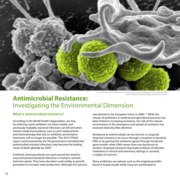
In this edition, the Antimicrobial Resistance chapter discusses the growing, dangerous trend of antimicrobial resistance and the potential catastrophic consequences on global health.
Chapter 1 of Frontier 2017: Emerging Issues of Environmental Concern
The emergence and transmission of zoonotic diseases are driven by complex interactions
between health, environmental, and socio-political systems. Human movement is considered
a significant and increasing factor in these processes, yet forced migration remains an
understudied area of zoonotic res
...
In 2015, 5.9 million children under age five died (1). The major causes of child deaths globally are pneumonia, prematurity, intrapartum-related complications, neonatal sepsis, congenital anomalies, diarrhoea, injuries and malaria (2). Most of these diseases and conditions are at least partially cau
...
En 2015, 5,9 millions d'enfants de moins de cinq ans sont décédés (1). Les principales causes de mortalité infantile dans le monde sont la pneumonie, la prématurité, les complications durant l'accouchement, la septicémie néonatale, les anomalies congénitales, la diarrhée, les tra
...
PROGRAMA NACIONAL DE EPILEPSIA
2019-2020
Download (7.4 MB)
Overview
Epilepsy is one of the most common neurological disorders globally. The WHO epilepsy technical brief aims to strengthen action for epilepsy and complements the Intersectoral global action plan on epilepsy and other neurological disorders 2022–2031.
The technical bri
...
Asthma is the most common chronic disease in children, imposing a consistent burden on health system. In recent years, prevalence of asthma symptoms became globally increased in children and adolescents, particularly in Low-Middle Income Countries (LMICs). Host (genetics, atopy) and environmental fa
...
Cascading risks from rising prices and supply disruptions, April 2022.
Global resource markets are still reeling from the impacts of Russia’s invasion of Ukraine; the two countries are major suppliers of energy, food and fertilizers. Supply disruption and the sudden imposition, in response to the
...
This document is a guide defining requirements for quality and safety for malaria rapid diagnostic testing services to safeguard the quality of the results, the safety of the operators and patients and that of the environment for use by national malaria control programmes, regulators, implementers a
...
Although Shiga toxin-producing Escherichia coli (STEC) have been isolated from a variety of food production animals, they are most commonly associated with ruminants from which we derive meat and milk. Because of the widespread and diverse nature of ruminant-derived food production, coupled with the
...
Lessons from a decade of Progress
Esta guía trata de la primera ayuda psicológica, un modo práctico y humano para ayudar y apoyar a nuestros semejantes en graves situaciones de crisis. Se ha pensado para personas que se tienen la posibilidad de ayudar a
otras que han experimentado un hecho extremadamente angustiante. Proporciona
...
This guideline provides global, evidence-informed recommendations on daily iron supplementation in infants and children, as a public-health intervention for the prevention of anaemia and iron deficiency. It includes recommendations for iron supplementation in countries where malaria is prevalent.

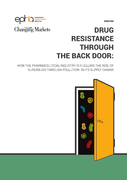
Irresponsible pharmaceutical companies fuel the proliferation of superbugs through supply chain pollution, the European Public Health Alliance (EPHA) reports. The advocacy group uncovered lapses such as dirty production and inadequate waste disposal in the production of antimicrobials in China and I
...