
Filter
3198
Text search:
2022
Featured
338
175
Language
2603
453
407
211
186
170
120
101
88
18
16
12
12
9
9
8
6
5
5
5
5
5
5
5
4
4
3
3
3
3
3
3
3
3
3
2
2
2
2
2
2
1
1
1
1
1
1
1
1
1
1
1
1
1
1
1
Document type
981
480
296
292
280
264
142
117
104
92
58
40
29
12
4
Countries
289
194
97
89
77
54
53
48
48
45
44
43
32
30
29
28
27
26
25
24
23
22
22
21
21
19
17
16
16
16
15
14
14
14
13
13
13
12
12
12
12
12
11
11
10
10
10
10
9
8
8
8
7
7
7
7
7
7
7
7
6
6
6
6
6
6
6
6
5
5
5
5
5
5
4
4
4
4
4
4
4
3
3
3
3
3
3
3
3
3
3
3
3
3
2
2
2
2
2
2
2
2
2
2
2
1
1
1
1
1
1
1
1
1
1
1
1
1
1
1
1
1
1
1
1
1
1
1
1
1
1
1
1
1
Authors & Publishers
648
269
83
76
74
54
47
46
37
29
27
27
23
22
21
21
21
21
21
18
18
17
16
15
14
13
13
12
11
11
11
11
11
10
10
10
10
9
9
9
9
8
8
8
8
8
8
8
8
8
8
8
8
8
8
7
7
7
7
7
7
7
6
6
6
6
6
6
6
6
6
6
6
6
6
6
6
5
5
5
5
5
5
5
5
5
5
5
5
5
5
5
5
5
5
5
5
4
4
4
4
4
4
4
4
4
4
4
4
4
4
4
4
4
4
4
4
4
4
4
4
4
4
4
4
4
4
4
4
3
3
3
3
3
3
3
3
3
3
3
3
3
3
3
3
3
3
3
3
3
3
3
3
3
3
3
3
3
3
3
3
3
3
3
3
3
3
3
3
3
3
3
3
3
3
3
3
3
3
3
2
2
2
2
2
2
2
2
2
2
2
2
2
2
2
2
2
2
2
2
2
2
2
2
2
2
2
2
2
2
2
2
2
2
2
2
2
2
2
2
2
2
2
2
2
2
2
2
2
2
2
2
2
2
2
2
2
2
2
2
2
2
2
2
2
2
2
2
2
2
2
2
2
2
2
2
2
2
2
2
2
2
2
2
2
2
2
2
2
2
2
2
2
2
2
2
2
2
2
2
2
2
2
2
2
2
2
2
2
2
2
2
2
2
2
2
2
2
2
2
2
2
2
2
2
2
2
2
2
2
2
2
2
2
2
2
2
2
2
2
2
2
2
2
2
2
2
2
2
2
2
2
2
2
2
2
2
2
2
2
2
2
2
2
2
2
2
2
1
1
1
1
1
1
1
1
1
1
1
1
1
1
1
1
1
1
1
1
1
1
1
1
1
1
1
1
1
1
1
1
1
1
1
1
1
1
1
1
1
1
1
1
1
1
1
1
1
1
1
1
1
1
1
1
1
1
1
1
1
1
1
1
1
1
1
1
1
1
1
1
1
1
1
1
1
1
1
1
1
1
1
1
1
1
1
1
1
1
1
1
1
1
1
1
1
1
1
1
1
1
1
1
1
1
1
1
1
1
1
1
1
1
1
1
1
1
1
1
1
1
1
1
1
1
1
1
1
1
1
1
1
1
1
1
1
1
1
1
1
1
1
1
1
1
1
1
1
1
1
1
1
1
1
1
1
1
1
1
1
1
1
1
1
1
1
1
1
1
1
1
1
1
1
1
1
1
1
1
1
1
1
1
1
1
1
1
1
1
1
1
1
1
1
1
1
1
1
1
1
1
1
1
1
1
1
1
1
1
1
1
1
1
1
1
1
1
1
1
1
1
1
1
1
1
1
1
1
1
1
1
1
1
1
1
1
1
1
1
1
1
1
1
1
1
1
1
1
1
1
1
1
1
1
1
1
1
1
1
1
1
1
1
1
1
1
1
1
1
1
1
1
1
1
1
1
1
1
1
1
1
1
1
1
1
1
1
1
1
1
1
1
1
1
1
1
1
1
1
1
1
1
1
1
1
1
1
1
1
1
1
1
1
1
1
1
1
1
1
1
1
1
1
1
1
1
1
1
1
1
1
1
1
1
1
1
1
1
1
1
1
1
1
1
1
1
1
1
1
1
1
1
1
1
1
1
1
1
1
1
1
1
1
1
1
1
1
1
1
1
1
1
1
1
1
1
1
1
1
1
1
1
1
1
1
1
1
1
1
1
1
1
1
1
1
1
1
1
1
1
1
1
1
1
1
1
1
1
1
1
1
1
1
1
1
1
1
1
1
1
1
1
1
1
1
1
1
1
1
1
1
1
1
1
1
1
1
1
1
1
1
1
1
1
1
1
1
1
1
1
1
1
1
1
1
1
1
1
1
1
1
1
1
1
1
1
1
1
1
1
1
1
1
1
1
1
1
1
1
1
1
1
1
1
1
1
1
1
1
1
1
1
1
1
1
1
1
1
1
1
1
1
1
1
1
1
1
1
1
1
1
1
1
1
1
1
1
1
1
1
1
1
1
1
1
1
1
1
1
1
1
1
1
1
1
1
1
1
1
1
1
1
1
1
1
1
1
1
1
1
1
1
1
1
1
1
1
1
1
1
1
1
1
1
1
1
1
1
1
1
1
1
1
1
1
1
1
1
1
1
1
1
1
1
1
1
1
1
1
1
1
1
1
1
1
1
1
1
1
1
1
1
1
1
1
1
1
1
1
1
1
1
1
1
1
1
1
1
1
1
1
1
1
1
1
1
1
1
1
1
1
1
1
1
1
1
1
1
1
1
1
1
1
1
1
1
1
1
1
1
1
1
1
1
1
1
1
1
1
1
1
1
1
1
1
1
1
1
1
1
1
1
1
1
1
1
1
1
1
1
1
1
1
1
1
1
1
1
1
1
1
1
1
1
1
1
1
1
1
1
1
1
1
1
1
1
1
1
1
1
1
1
1
1
1
1
1
1
1
1
1
1
1
1
1
1
1
1
1
1
1
1
1
1
1
1
1
1
1
1
1
1
1
1
1
1
1
1
1
1
1
1
1
1
1
1
1
1
1
1
1
1
1
1
1
1
1
1
1
1
1
1
1
1
1
1
1
1
1
1
1
1
1
1
1
1
1
1
1
1
1
1
1
1
1
1
1
1
1
1
1
1
1
1
1
1
1
1
1
1
1
1
1
1
1
1
1
1
1
1
1
1
1
1
1
1
1
1
1
1
1
1
1
1
1
1
1
1
1
1
1
1
1
1
1
1
1
1
1
1
1
1
1
1
1
1
1
1
1
1
1
1
1
1
1
1
1
1
1
1
1
1
1
1
1
1
1
1
1
1
1
1
1
1
1
1
1
1
1
1
1
1
1
1
1
1
1
1
1
1
1
1
1
1
1
1
1
1
1
1
1
1
1
1
1
1
1
1
1
1
1
1
1
1
1
1
1
1
1
1
1
1
1
1
1
1
1
1
1
1
1
1
1
1
1
1
1
1
1
1
1
1
1
1
1
1
1
1
1
1
1
1
1
1
1
1
1
1
1
1
1
1
1
1
1
1
1
1
1
1
1
1
1
1
1
1
1
1
1
1
1
1
1
1
1
1
1
1
1
1
1
1
1
1
1
1
1
1
1
1
1
1
1
1
1
1
1
1
1
1
1
1
1
1
1
1
1
1
1
1
1
1
1
1
1
1
1
1
1
1
1
1
1
1
1
1
1
1
1
1
1
1
1
1
1
1
1
1
1
1
1
1
1
1
1
1
1
1
1
1
1
1
1
1
1
1
1
1
1
1
1
1
1
1
1
1
1
1
1
1
1
1
1
1
1
1
1
1
1
1
1
1
1
1
1
1
1
1
1
1
1
1
1
1
1
1
1
1
1
1
1
1
1
1
1
1
1
1
1
1
1
1
1
1
1
1
1
1
1
1
1
1
1
1
1
1
1
1
1
1
1
1
1
1
1
1
1
1
1
1
1
1
1
1
1
1
1
1
1
1
1
1
1
1
1
1
1
1
1
1
1
1
1
1
1
1
1
1
1
1
1
1
1
1
1
1
1
1
1
1
1
1
1
1
1
1
1
1
1
1
1
1
1
1
1
1
1
1
1
1
1
1
1
1
1
1
1
1
1
1
1
1
1
1
1
1
1
1
1
1
1
1
1
1
1
1
1
1
1
1
1
1
1
1
1
1
1
1
1
1
1
1
1
1
1
1
1
1
1
1
1
1
1
1
1
1
1
1
1
1
1
1
1
1
1
1
1
1
1
1
1
1
1
1
1
1
1
1
1
1
1
1
1
1
1
1
1
1
1
1
1
1
1
1
1
1
1
1
1
1
1
1
1
1
1
1
1
1
1
1
1
1
1
1
1
1
1
1
1
1
1
1
1
1
1
1
1
1
1
1
1
1
1
1
1
1
1
1
1
1
1
1
1
1
1
1
1
1
1
1
1
1
1
1
1
1
1
1
1
1
1
1
1
1
1
1
1
1
1
1
1
1
1
1
1
1
1
1
1
1
1
1
1
1
1
1
1
1
1
1
1
1
1
1
1
1
1
1
1
1
1
1
1
1
1
1
1
1
1
1
1
1
1
1
1
1
1
1
1
1
1
1
1
1
1
1
1
1
1
1
1
1
1
1
1
1
1
1
1
1
1
1
1
1
1
1
1
1
1
1
1
1
1
1
1
1
1
1
1
1
1
1
1
1
1
1
1
1
1
1
1
1
1
1
1
1
1
1
1
1
1
1
1
1
1
1
1
1
1
1
1
1
1
1
1
1
1
1
1
1
1
1
1
1
1
1
1
1
1
1
1
1
1
1
1
1
1
1
1
1
1
1
1
1
1
1
1
1
1
1
1
1
1
1
1
1
1
1
1
1
1
1
1
1
1
1
1
1
1
1
1
1
1
1
1
1
1
1
1
1
1
1
1
1
Publication Years
1
2830
352
12
1
1
1
Category
999
279
261
149
118
80
29
2
Toolboxes
408
320
232
214
208
202
181
152
134
132
108
108
65
58
58
52
47
32
31
15
9
5
2
1
Virtually all (99.9 percent) of Southeast Asia’s 656.1 million people live in areas where particulate pollution exceeds the World Health Organization (WHO) guideline of 5 μg/m³. Despite the lockdowns of the pandemic, pollution continued to rise in much of Southeast Asia in 2020. This pollution c
...
uts short the life expectancy of the average Southeast Asian person by 1.5 years, relative to what it would be if the WHO guideline was met. That’s a total of 959.8 million person-years lost to pollution in the eleven countries that make up this region. Some countries in the region experience greater impacts from pollution.
more
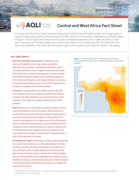
In Central and West Africa, regions together comprising 27 countries and 605 million people, the average person is exposed to particulate pollution levels that are more than 4 times the World Health Organization’s (WHO) guideline of 5 μg/m³1. If these particulate pollution levels persist, averag
...
e life expectancy in the regions would be 1.6 years lower, and a total of 971 million person-years would be lost, relative to if air quality met the WHO guideline. The Democratic Republic of the Congo, Rwanda and Burundi, are the top three most polluted countries in the region.
more
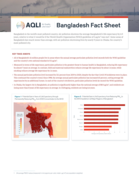
Bangladesh is the world’s most polluted country. Air pollution shortens the average Bangladeshi’s life expectancy by 6.9 years, relative to what it would be if the World Health Organization (WHO) guideline of 5 μg/m³ was met. Some areas of Bangladesh fare much worse than average, with air poll
...
ution shortening lives by nearly 9 years in Dhaka, the country’s most polluted city.
more
Pakistan is the world’s fourth most polluted country. Air pollution shortens the average Pakistani’s life expectancy by 3.8 years, relative to what it would be if the World Health Organization (WHO) guideline of 5 μg/m3 was met.1 Some areas of Pakistan fare much worse than average, with air pol
...
lution shortening lives by almost 7 years in the country’s most polluted regions, like Lahore and Peshawar.
more
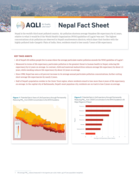
Nepal is the world’s third most polluted country. Air pollution shortens average Nepalese life expectancy by 4.1 years, relative to what it would be if the World Health Organization (WHO) guideline of 5 μg/m3 was met.1 The highest concentrations of air pollution are observed in Nepal’s southwes
...
tern districts, which share their borders with the highly-polluted Indo-Gangetic Plain of India. Here, residents stand to lose nearly 7 years of life expectancy.
more
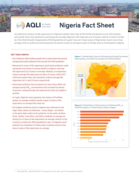
Air pollution’s impact on life expectancy in Nigeria is greater than that of HIV/AIDS and almost on par with malaria and unsafe water and sanitation, shortening the average Nigerian’s life expectancy by 1.8 years, relative to what it would be if the World Health Organization (WHO) guideline of 5
...
μg/m3 was met.1 Some areas of Nigeria fare much worse than average, with air pollution shortening lives by almost 4 years on average in parts of Taraba state in Northeastern Nigeria.
more
Note d'orientation 7 juin 2022.
Ce document a pour but d'encourager les pays à élaborer et à mettre en œuvre des politiques visant à maintenir et à renforcer les programmes et mesures de prévention des infections dans les établissements de
...
soins de santé dans le contexte de la transmission actuelle du SRAS-CoV-2, tout en reconnaissant que les tendances épidémiologiques peuvent varier et que le risque de transmission d'autres agents pathogènes existe.
more

By end of March 2022:
42 COVID-19 detection laboratories were assessed in the 1st Quarter 2022.
23 (55%) Labs are reported fully functional, while 19 (45%) requires assistance to fully
...
operate (i.e., medical supplies, equipment, maintenance, and staffing).
34 (89%) labs have RT-PCR machines, while 4 (11%) doesn’t have.
Most laboratories operate 1 shift of 8 hours 13 (34%), followed by 2 shifts of 16 hours 11 (29%).
Over 1000 testing capacity per day is reported in Tripoli Biotechnical Centre Lab (5,000), Azzawya NCDC Lab (2,500), Tripoli NCDC public health lab (1500), Misrata NCDC Lab (1,300), and Misrata Medical centre Lab (1,300).
The reported needs ranked per priority are equipment, consumables, and staff training; consequently.
more
Economic conditions in Syria are projected to continue to be mired by prolonged armed conflict, turmoil in Lebanon and Turkey, COVID-19, and the war in Ukraine. Subject to extraordinarily high uncertainty, we project that Syria’s real GDP will contract by 2.6 percent in
...
2022 (to US$ 15.5 billion in constant 2015 prices) after declining by 2.1 percent in 2021. Risks to the growth outlook are significant and tilted to the downside.
more
This document provides interim guidance to countries on testing considerations and strategies for suspect cases of severe acute hepatitis of unknown aetiology in children. It is primarily intended for clinical, programmatic, laboratory and diagnostic stakeholders across Member States and national pu
...
blic health authorities involved in the identification and investigation of cases of severe acute hepatitis in children.
This document is part of a package of guidance for this event, which includes suggested minimum reporting variables and a clinical Case Report Form support Member States with case investigation and reporting.
more
Updated 2 June 2022.#
This entry contains the Status Report of WHO Collaborating Centres in the Americas by Country and a new document with information of Collaborating Centres by Outcome of the Strategic Plan of the Pan American Health Organizatio
...
n 2020‑2025.
more
As vacinas COVID-19 são eficazes contra novas variantes? O que significa para uma pessoa estar totalmente vacinada? Essa e outras dúvidas estão entre as dúvidas mais frequentes sobre a vacinação contra a COVID-19. Nesta sexta edição você encontrará respostas para essas e outras perguntas.
...
Available in English, French, Spanish and Portuguese
more
The Interim Guidance for Risk Communication and Community Engagement (RCCE) outlines recommendations, considerations and methods to raise awareness, manage risk perception, maintain trust and proactively support people at risk to make informed decisions to protect themselves and others from monkeypo
...
x. The guidance includes recommendations on identifying and communicating with affected populations and key audiences and avoiding stigma in communications outreach. It also includes key messages about symptoms of monkeypox, transmission, prevention measures, and communicating about uncertainty. This document also provides RCCE guidance for managers and planners of gatherings and events, where close physical contact may create an environment conducive for the transmission of monkeypox. Additionally, this document includes a compendium of recommendations for RCCE methods and resources to support the monkeypox response.
more
WHO Guideline on self-care interventions for health and well-being, 2022 revision: executive summary
recommended
A global shortage of an estimated 18 million health workers is anticipated by 2030, a record 130 million people are in need of humanitarian assistance, and there is the global threat of pandemics such as COVID-19. At least 400 million people worldwide lack access to the most essential health service
...
s, and every year 100 million people are plunged into poverty because they have to pay for healthcare out of their own pockets. There is, therefore, an urgent need to find innovative strategies that go beyond the conventional health-sector response.
more
République Démocratique du Congo: Bulletin de Marché
This WHO Strategic Response Plan (SRP) will be implemented in collaboration with partners providing life-saving support to people affected by the conflict in Ukraine, whether they are inside or outside Ukraine. It is an overarching framework built on the Ukraine Flash Appeal
...
2022 to guide priorities and work, according to access and location, in support of national and local authorities who are leading the readiness, response and early recovery activities. The timeframe of this SRP is six months.
more
WHO invites Member States, health facilities and other entities to participate in the global effort to collect anonymized clinical data relating to suspected or confirmed cases of monkeypox and contribute data to the WHO Global Clinical Platform.
WHO has developed a clinical characterization case
...
report forms (CRF) to standardize data collection of clinical features of monkeypox among outpatient and hospitalized cases.
For onboarding to the WHO Global Clinical Platform for monkeypox, please contact: monkeypox_clinicaldataplatform@who.int
more
Flucht & Gewalt. Psychosozialer Versorgungsbericht Deutschland 2022
Mohammed, L.; Karato, Y.
Bundesweite Arbeitsgemeinschaft der Psychosozialen Zentren für Flüchtlinge und Folteropfer – BAfF e. V.
(2022)
C2
Die Versorgung von schutzbedürftigen Geflüchteten ist eine moralische Verpflichtung, der Deutschland nicht gerecht wird.
Wie groß die Bereitschaft in Deutschland ist, Geflüchtete aufzunehmen, hat die Reaktion der Bevölkerung auf die humanitäre Krise, ausgelöst durch den Angriffskrieg
Russla
...
nds auf die Ukraine, gezeigt. In der Verteidigungs- und Außenpolitik haben
wir einen Paradigmenwechsel gesehen. Notwendig ist ein solcher Paradigmenwechsel
auch bezüglich der Verantwortung gegenüber Überlebenden von Krieg, Folter und
Flucht allgemein.
Gesundheit ist ein Menschenrecht. Doch werden Menschen mit Fluchterfahrung
häufig mit ihren Belastungen alleingelassen, obgleich zahlreiche völkerrechtliche
Übereinkommen Deutschland verpflichten, bei Bedarf eine psychosoziale Beglei-
tung und/oder therapeutische Behandlung bereitzustellen
more
In Danger: UNAIDS Global AIDS Update 2022
recommended
Progress in prevention and treatment is faltering around the world, putting millions of people in grave danger. Eastern Europe and central Asia, Latin America, and the Middle East and North Africa have all seen increases in annual HIV infections over several years. In Asia and the Pacific, UNAIDS da
...
ta now show new HIV infections are rising where they had been falling. Action to tackle the inequalities driving AIDS is urgently required to prevent millions of new HIV infections this decade and to end the AIDS pandemic
more
The Americas region hosts more than 18.4 million refugees, asylum-seekers, displaced and stateless people, representing some 20 per cent of persons of concern to UNHCR worldwide. During the last two years, the coronavirus disease (COVID-19) pandemic has had a disproportionate impact on refugees and
...
migrants in host communities, including loss of livelihoods opportunities, an increase in evictions, engagement in negative coping mechanisms, discrimination and xenophobia. Further compounded by limited access to regularization and documentation in some countries, these impacts have contributed to onward movements of people in search of protection and/or better opportunities elsewhere.
more
