
Filter
2173
Text search:
health-care
waste
Featured
285
665
Language
Document type
1117
375
301
155
115
38
34
20
10
3
3
2
Countries
143
95
87
73
73
72
58
47
43
42
41
39
38
38
36
35
30
29
27
26
23
22
22
20
20
17
16
16
14
14
14
13
12
12
11
11
11
10
9
9
9
9
9
9
8
8
8
8
8
8
7
7
6
6
6
5
5
5
5
5
4
4
4
4
4
4
4
4
4
4
3
3
3
2
2
2
2
2
2
2
2
2
2
2
2
2
2
2
1
1
1
1
1
1
1
1
1
1
1
1
1
1
1
1
1
1
1
1
1
1
1
Authors & Publishers
Publication Years
Category
951
173
136
101
81
44
43
1
1
1
Toolboxes
260
146
121
120
104
99
77
64
61
53
39
38
34
32
30
30
21
19
14
13
11
6
2
1
1
1
One health Response to AMR Containment.
In a significant move for the public health sector, Kerala has become the first state in India to launch an action plan to combat the growing cases of antimicrobial immunity, arising primarily from irrational use of medicines and excessive antibiotics used in
...
The objective of this guideline is to present the complete set of all WHO recommendations and best practice statements relating to abortion. While legal, regulatory, policy and service-delivery contexts may vary from country to country, the recommendations and best practices described in this docume
...
The Infection Prevention and Control (IPC) Assessment Framework (IPCAF) is a tool to support the implementation of the World Health Organization (WHO) Guidelines on core components of IPC programmes at the acute health
...
The WHO Toolkit for the care and support of people affected by complications associated with Zika virus has been developed to serve as a model guide, with the goal of enhancing country preparedness for Zika virus outbreaks. The toolkit is intended to provide a systems approach involving public heal
...

During the past five decades, the incidence of dengue has increased 30-fold. Some 50–100 million new infections are estimated to occur annually in more than 100 endemic countries, with a documented further spread to previously unaffected areas; every year hundreds of thousands of severe cases ari
...
Weekly epidemiological recordRelevé épidémiologique hebdomadaire 29 JULY 2016, 91th YEAR / 29 JUILLET 2016, 91e ANNÉENo 30, 2016, 91, 349–364
The aim of this “model contingency plan” is to assist programme managers and planners in devel-oping a national, context-specific, dengue outbreak response plan in order to: (a) detect a dengue outbreak at an early stage through clearly defined and validated alarm signals; (b) precisely define w
...
The EYE strategy is a comprehensive and long-term strategy built on lessons learned that aims at ending yellow fever epidemics by 2026, and consists of three strategic objectives:
protect at-risk populations;
prevent international spread; and
contain outbreaks rapidly.
This document presents a consolidated summary of urgent activities
required to advance preparedness, as elaborated in each country's
national plan, with a particular focus on Priority 1 countries. It
presents the estimated requirements, needs, and gaps for each of the
Priority 1 countries and a
...
Evaluation report
December 2014
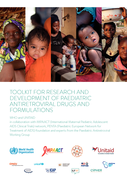
WHO and UNITAID
in collaboration with IMPAACT (International Maternal Pediatric Adolescent AIDS Clinical Trials) network, PENTA (Paediatric European Network for Treatment of AIDS) foundation and experts from the Paediatric Antiretroviral Working Group
Toolkit
HIV Treatment and Care
The aim of the operational framework is to ensure 1) accurate collection, handling, shipment and storage of specimens collected in countries implementing HIV drug resistance surveillance; and 2) the availability of quality-assured HIV genotyping laboratory services producing comparable and reliable
...
