
Filter
1372
Text search:
poverty
map
Featured
91
467
Language
Document type
858
288
81
75
41
10
9
6
3
1
Countries
79
50
45
45
41
37
35
34
34
33
27
26
26
25
25
24
23
23
21
20
19
18
17
14
13
12
12
10
10
9
9
9
9
8
8
8
8
7
7
7
7
7
7
6
6
6
6
6
5
5
5
4
4
4
4
4
3
3
3
3
3
3
3
3
3
2
2
2
2
2
2
2
2
2
2
2
2
2
2
2
2
1
1
1
1
1
1
1
1
1
1
1
1
1
1
1
1
1
1
1
1
1
Authors & Publishers
Publication Years
Category
657
87
61
50
42
16
3
2
2
Toolboxes
91
73
71
65
58
53
48
42
42
32
27
25
23
17
15
14
12
8
5
5
4
3
3
2
1
Children in Kabwe are especially at risk because they are more likely to ingest lead dust when playing in the soil, their brains and bodies are still developing, and they absorb four to five times as much lead as adults. The consequences for children who are exposed to high levels of lead and are no
...
The aim of the people-centred framework is to help countries to develop fully prioritized and budgeted NSPs based on a culture of making full use of the available data, which are aligned with national planning cycles and which provide the basis for a robust national response that can accelerate prog
...
UNICEF’s Global HIV Response 2018 – 2021
Accessed: 02.11.2019
Constituting the fourth part of the World Drug Report 2022, this booklet focuses on the market dynamics of various stimulants – cocaine, amphetamines and “ecstasy” – and of NPS.
The first chapter contains an analysis of the global market for cocaine, starting with a review of cocaine supply
...
Nguyen HH et al. Journal of the International AIDS Society 2018, 21:e25151 http://onlinelibrary.wiley.com/doi/10.1002/jia2.25151/full | https://doi.org/10.1002/jia2.25151
UNAIDS / 2016
Unite for Children
First Edition
From choice, a world of possibilities
Want to change the world? Here's how...
"i asked: 'Why doesn't somebody do something?' Then I realized I was somebody"
Education on the move
UNAIDS | 2016–2021 Strategy
Accessed: 20.11.2019
Guidelines.
The guidelines set out essential actions that humanitarian actors must take in order to effectively identify and respond to the needs and rights of persons with disabilities who are most at risk of being left behind in humanitarian settings.
The recommended actions in each chapter pl
...
Regional Initiative for the Elimination of Mother-to-Child Transmission of HIV and Congenital Syphilis in Latin America and the Caribbean
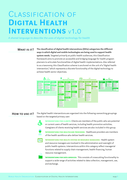
The classification of digital health interventions (DHIs) categorizes the different ways in which digital and mobile technologies are being used to support health system needs. Historically, the diverse communities working in digital health—including government stakeholders, technologists, clinic
...
