
Filter
3595
Text search:
TB
control
Featured
305
1037
Language
2997
306
119
94
34
28
20
17
12
8
8
6
5
4
4
3
3
2
2
2
2
2
1
1
1
1
1
1
1
1
1
1
1
1
1
1
1
1
Document type
2355
426
407
135
115
56
44
26
14
9
6
1
1
Countries
208
128
112
110
82
81
79
76
76
69
68
66
66
62
57
56
54
51
51
50
45
43
38
38
38
38
31
31
30
29
29
27
25
23
22
21
21
19
19
19
18
17
16
14
14
13
13
12
12
11
11
9
9
8
8
7
7
7
7
7
7
6
5
5
5
5
5
5
5
4
4
4
4
4
4
4
4
4
3
3
3
3
3
3
3
2
2
2
2
2
2
2
2
2
2
2
2
2
2
1
1
1
1
1
1
1
1
1
1
1
1
1
1
1
1
1
1
1
1
1
1
1
1
1
1
Authors & Publishers
255
215
177
89
86
80
66
58
40
32
31
29
28
27
27
24
24
24
24
23
22
20
20
20
19
17
17
16
16
16
16
16
15
15
15
14
14
14
14
14
13
12
12
12
11
11
11
11
11
11
11
10
10
10
10
10
10
9
9
9
9
9
9
9
9
9
9
8
8
8
8
8
8
8
8
8
8
8
7
7
7
7
7
7
7
7
7
7
7
7
7
7
7
7
7
6
6
6
6
6
6
6
6
6
6
6
6
6
6
6
6
6
6
6
6
5
5
5
5
5
5
5
5
5
5
5
5
5
5
5
5
5
5
5
5
5
5
5
5
5
5
5
5
4
4
4
4
4
4
4
4
4
4
4
4
4
4
4
4
4
4
4
4
4
4
4
4
4
4
4
4
4
4
4
4
4
4
4
4
4
4
4
4
4
4
4
4
4
4
4
4
4
4
4
4
4
4
3
3
3
3
3
3
3
3
3
3
3
3
3
3
3
3
3
3
3
3
3
3
3
3
3
3
3
3
3
3
3
3
3
3
3
3
3
3
3
3
3
3
3
3
3
3
3
3
3
3
3
3
3
3
3
3
3
3
3
3
3
3
3
3
3
3
3
3
3
3
3
3
3
3
3
3
3
3
3
3
3
3
3
3
3
3
3
3
3
3
3
3
3
3
3
3
3
3
3
2
2
2
2
2
2
2
2
2
2
2
2
2
2
2
2
2
2
2
2
2
2
2
2
2
2
2
2
2
2
2
2
2
2
2
2
2
2
2
2
2
2
2
2
2
2
2
2
2
2
2
2
2
2
2
2
2
2
2
2
2
2
2
2
2
2
2
2
2
2
2
2
2
2
2
2
2
2
2
2
2
2
2
2
2
2
2
2
2
2
2
2
2
2
2
2
2
2
2
2
2
2
2
2
2
2
2
2
2
2
2
2
2
2
2
2
2
2
2
2
2
2
2
2
2
2
2
2
2
2
2
2
2
2
2
2
2
2
2
2
2
2
2
2
2
2
2
2
2
2
2
2
2
2
2
2
2
2
2
2
2
2
2
2
2
2
2
2
2
2
2
2
2
2
2
2
2
2
2
2
2
2
2
2
2
2
2
2
2
2
2
2
2
2
2
2
2
2
2
2
2
2
2
2
2
2
2
2
2
2
2
2
2
2
2
2
2
2
2
2
2
2
2
2
2
2
2
2
2
2
2
2
2
2
2
2
2
2
2
2
2
2
2
2
2
2
2
2
2
2
2
2
2
2
2
2
2
2
2
2
2
2
1
1
1
1
1
1
1
1
1
1
1
1
1
1
1
1
1
1
1
1
1
1
1
1
1
1
1
1
1
1
1
1
1
1
1
1
1
1
1
1
1
1
1
1
1
1
1
1
1
1
1
1
1
1
1
1
1
1
1
1
1
1
1
1
1
1
1
1
1
1
1
1
1
1
1
1
1
1
1
1
1
1
1
1
1
1
1
1
1
1
1
1
1
1
1
1
1
1
1
1
1
1
1
1
1
1
1
1
1
1
1
1
1
1
1
1
1
1
1
1
1
1
1
1
1
1
1
1
1
1
1
1
1
1
1
1
1
1
1
1
1
1
1
1
1
1
1
1
1
1
1
1
1
1
1
1
1
1
1
1
1
1
1
1
1
1
1
1
1
1
1
1
1
1
1
1
1
1
1
1
1
1
1
1
1
1
1
1
1
1
1
1
1
1
1
1
1
1
1
1
1
1
1
1
1
1
1
1
1
1
1
1
1
1
1
1
1
1
1
1
1
1
1
1
1
1
1
1
1
1
1
1
1
1
1
1
1
1
1
1
1
1
1
1
1
1
1
1
1
1
1
1
1
1
1
1
1
1
1
1
1
1
1
1
1
1
1
1
1
1
1
1
1
1
1
1
1
1
1
1
1
1
1
1
1
1
1
1
1
1
1
1
1
1
1
1
1
1
1
1
1
1
1
1
1
1
1
1
1
1
1
1
1
1
1
1
1
1
1
1
1
1
1
1
1
1
1
1
1
1
1
1
1
1
1
1
1
1
1
1
1
1
1
1
1
1
1
1
1
1
1
1
1
1
1
1
1
1
1
1
1
1
1
1
1
1
1
1
1
1
1
1
1
1
1
1
1
1
1
1
1
1
1
1
1
1
1
1
1
1
1
1
1
1
1
1
1
1
1
1
1
1
1
1
1
1
1
1
1
1
1
1
1
1
1
1
1
1
1
1
1
1
1
1
1
1
1
1
1
1
1
1
1
1
1
1
1
1
1
1
1
1
1
1
1
1
1
1
1
1
1
1
1
1
1
1
1
1
1
1
1
1
1
1
1
1
1
1
1
1
1
1
1
1
1
1
1
1
1
1
1
1
1
1
1
1
1
1
1
1
1
1
1
1
1
1
1
1
1
1
1
1
1
1
1
1
1
1
1
1
1
1
1
1
1
1
1
1
1
1
1
1
1
1
1
1
1
1
1
1
1
1
1
1
1
1
1
1
1
1
1
1
1
1
1
1
1
1
1
1
1
1
1
1
1
1
1
1
1
1
1
1
1
1
1
1
1
1
1
1
1
1
1
1
1
1
1
1
1
1
1
1
1
1
1
1
1
1
1
1
1
1
1
1
1
1
1
1
1
1
1
1
1
1
1
1
1
1
1
1
1
1
1
1
1
1
1
1
1
1
1
1
1
1
1
1
1
1
1
1
1
1
1
1
1
1
1
1
1
1
1
1
1
1
1
1
1
1
1
1
1
1
1
1
1
1
1
1
1
1
1
1
1
1
1
1
1
1
1
1
1
1
1
1
1
1
1
1
1
1
1
1
1
1
1
1
1
1
1
1
1
1
1
1
1
1
1
1
1
1
1
1
1
1
1
1
1
1
1
1
1
1
1
1
1
1
1
1
1
1
1
1
1
1
1
1
1
1
1
1
1
1
1
1
1
1
1
1
1
1
1
1
1
1
1
1
1
1
1
1
1
1
1
1
1
1
1
1
1
1
1
1
1
1
1
1
1
1
1
1
1
1
1
1
1
1
1
1
1
1
1
1
1
1
1
1
1
1
1
1
1
1
1
1
1
1
1
1
1
1
1
1
1
1
1
1
1
1
1
1
1
1
1
1
1
1
1
1
1
1
1
1
1
1
1
1
1
1
1
1
1
1
1
1
1
1
1
1
1
1
1
1
1
1
1
1
1
1
1
1
1
1
1
1
1
1
1
1
1
1
1
1
1
1
1
1
1
1
1
1
1
1
1
1
1
1
1
1
1
1
1
1
1
1
1
1
1
1
1
1
1
1
1
1
1
1
1
1
1
1
1
1
1
1
1
1
1
1
1
1
1
1
1
1
1
1
1
1
1
1
1
1
1
1
1
1
1
1
1
1
1
1
1
1
1
1
1
1
1
1
1
1
1
1
1
1
1
1
1
1
1
1
1
1
1
1
1
1
1
1
1
1
1
1
1
1
1
1
1
1
1
1
1
1
1
1
1
1
1
1
1
1
1
1
1
1
1
1
1
1
1
1
1
1
1
1
1
1
1
1
1
1
1
1
1
1
1
1
1
1
1
1
1
1
1
1
1
1
1
1
1
1
1
1
1
1
1
1
1
1
1
1
1
1
1
1
1
1
1
1
1
1
1
1
1
1
1
1
1
1
1
1
1
1
1
1
1
1
1
1
1
1
1
1
1
1
1
1
1
1
1
1
1
1
1
1
1
1
1
1
1
1
1
1
1
1
1
1
1
1
1
1
1
1
1
1
1
1
1
1
1
1
1
1
1
1
1
1
1
1
1
1
1
1
1
1
1
1
1
1
1
1
1
1
1
1
1
1
1
1
1
1
1
1
1
1
1
1
1
1
1
1
1
1
1
1
1
1
1
1
1
1
1
1
1
1
1
1
1
1
1
1
1
1
1
1
1
1
1
1
1
1
1
1
1
1
1
1
1
1
1
1
1
1
1
1
1
1
1
1
1
1
1
1
1
1
1
1
1
1
1
1
1
1
1
1
1
1
1
1
1
1
1
1
1
1
1
1
1
1
1
1
1
1
1
1
1
1
1
1
1
1
1
1
1
1
1
1
1
1
1
1
1
1
1
1
1
1
1
1
1
1
1
1
1
1
1
1
1
1
1
1
1
1
1
1
1
1
1
1
1
1
1
1
1
1
1
1
1
1
1
1
1
1
1
1
1
1
1
1
1
1
1
1
1
1
1
1
1
1
1
1
1
1
1
1
1
1
1
1
1
1
1
1
1
1
1
1
1
1
1
1
1
1
1
1
1
1
1
1
1
1
1
1
1
1
1
1
1
1
1
1
1
1
1
1
1
1
1
1
1
1
1
1
1
1
1
1
1
1
1
1
1
1
1
1
1
1
1
1
1
1
1
1
1
1
1
1
1
1
1
1
1
1
1
1
1
1
1
1
1
1
1
1
1
1
1
1
1
1
1
1
1
1
1
1
1
1
1
1
1
1
1
1
1
1
1
1
1
1
1
1
1
1
1
1
1
1
1
1
1
1
1
1
1
1
1
1
1
1
1
1
1
1
1
1
1
1
1
1
1
1
1
1
1
1
1
1
1
1
1
1
1
1
1
1
1
1
1
1
1
1
1
1
1
1
1
1
1
1
1
1
1
1
1
1
1
1
1
1
1
1
1
1
1
1
1
1
1
1
1
1
1
1
1
1
1
1
1
1
1
1
1
1
1
1
1
1
1
1
1
1
1
1
1
1
1
1
1
1
1
1
1
1
1
1
1
1
1
1
1
1
1
1
1
1
1
1
1
1
1
1
1
1
1
1
1
1
1
1
1
1
1
1
1
1
1
1
1
1
1
1
1
1
1
1
1
1
1
1
1
1
1
1
1
1
1
1
1
1
1
1
1
1
1
1
1
1
1
1
1
1
1
1
1
1
1
1
1
1
1
1
1
1
1
1
1
1
1
1
1
1
1
1
1
1
1
1
1
1
1
1
1
1
1
1
1
1
1
1
1
1
1
1
1
1
1
1
1
1
1
1
1
1
1
1
1
1
1
1
1
1
1
1
1
1
1
1
1
1
1
1
1
1
1
1
1
1
1
1
1
1
1
1
1
1
1
1
1
1
1
1
1
1
1
1
1
1
1
1
1
1
1
1
1
1
1
1
1
1
1
1
1
1
1
1
1
1
1
1
1
1
1
1
1
1
1
1
1
1
1
1
1
1
1
1
1
1
1
1
1
1
1
1
1
1
1
1
1
1
1
1
1
1
1
1
1
1
1
1
1
1
1
1
1
1
1
1
1
1
1
1
1
1
1
1
1
1
1
1
1
1
1
1
1
1
1
1
1
1
1
1
1
1
1
1
1
1
1
1
1
1
1
1
1
1
1
1
1
1
1
1
1
1
1
1
1
1
1
1
1
1
1
1
1
1
1
1
1
1
1
1
1
1
1
1
1
1
1
1
1
1
1
1
1
1
1
1
1
1
1
1
1
1
1
1
1
1
1
1
1
1
1
1
1
1
1
1
1
1
1
1
1
1
1
1
1
1
1
1
1
1
1
1
1
1
1
1
1
1
1
1
1
1
1
1
1
1
1
1
1
1
1
1
1
1
1
1
1
1
1
1
1
1
1
1
1
1
1
1
1
1
1
1
1
1
1
1
1
1
1
1
1
1
1
1
1
1
1
1
1
1
1
1
1
1
1
1
1
1
1
1
1
1
1
1
1
1
1
1
1
1
1
1
1
1
1
1
1
1
1
1
1
1
1
1
1
1
1
1
1
1
1
1
1
1
1
1
1
1
1
1
1
1
1
1
1
1
1
1
1
1
1
1
1
1
1
1
1
1
1
1
1
1
1
1
1
1
1
1
1
1
1
1
1
1
1
1
1
1
1
1
1
1
1
1
1
1
1
1
1
1
1
1
1
1
1
1
1
1
1
1
1
1
1
1
1
1
1
1
1
1
1
1
1
1
1
1
1
1
1
1
1
1
1
1
1
1
1
1
1
1
1
1
1
1
1
1
1
1
1
1
1
1
1
1
1
1
1
1
1
1
1
1
1
1
1
1
1
1
1
1
1
1
1
1
1
1
1
1
1
1
1
1
1
1
1
1
1
1
1
1
1
1
1
1
1
1
1
1
1
1
1
1
1
1
1
1
1
1
1
1
1
1
1
1
1
1
1
1
1
1
1
1
1
1
1
1
1
1
1
1
1
1
1
1
1
1
1
1
1
1
1
1
1
1
1
1
1
1
1
1
1
1
1
1
1
1
1
1
1
1
1
1
1
1
1
1
1
1
1
1
1
1
1
1
1
1
1
1
1
1
1
1
1
1
1
1
1
1
1
1
1
1
1
1
1
1
1
1
1
1
1
1
1
1
1
1
1
1
1
1
1
1
1
1
1
1
1
1
1
1
1
1
1
1
1
1
1
1
1
1
1
1
1
1
1
1
1
1
1
1
1
1
1
1
1
1
1
1
1
1
1
1
1
1
1
1
1
1
1
1
1
1
1
1
1
1
1
1
1
1
1
1
1
1
1
1
1
1
1
1
1
1
1
1
1
1
1
1
1
1
1
1
1
1
1
1
1
1
1
1
1
1
1
1
1
1
1
1
1
1
1
1
1
1
1
1
1
1
1
1
1
1
1
1
1
1
1
1
1
1
1
1
1
1
1
1
1
1
1
1
1
1
1
1
1
1
1
1
1
1
1
1
1
1
1
1
1
1
1
1
1
1
1
1
1
1
1
1
1
1
1
1
1
1
1
1
1
1
1
1
1
1
1
1
1
1
1
1
1
1
1
1
1
1
1
1
1
1
1
1
1
1
1
1
1
1
1
1
1
1
1
1
1
1
1
1
1
1
1
1
1
1
1
1
1
1
1
1
1
1
1
1
1
1
1
1
1
1
1
1
1
1
1
1
1
1
1
1
1
1
1
1
1
1
1
1
1
1
1
1
1
1
1
1
1
1
1
1
1
1
1
1
1
1
1
1
1
1
1
1
1
1
1
1
1
1
1
1
1
1
1
1
Publication Years
653
2536
395
11
Category
1701
249
133
90
67
39
36
2
Toolboxes
863
443
149
136
64
58
57
57
51
45
43
41
34
33
32
32
30
21
14
7
6
5
5
1
1
Prevention, early diagnosis, and effective treatment are essential for the control and elimination of Neisseria gonorrhoeae as a public health problem. Currently, in Latin America and the Caribbean, treatment for gonorrhea infection is largely empir
...
ic and based on clinical diagnosis. In the Americas, the high burden of new N. gonorrhoeae infections (estimated at 11 million new cases a year), the complexity of the disease epidemiology, and in many countries the limited resources, make it difficult to fully understand the burden of disease and the burden of antimicrobial resistance (AMR) in N. gonorrhoeae.
PAHO has developed this document to facilitate the navigation of available guidance and recommendations for N. gonorrhoeae AMR surveillance by public health and health care professionals, at the national and subnational levels, involved in designing, implementing, and/or strengthening AMR surveillance of N. gonorrhoeae and overall surveillance of sexually transmitted infections.
more
The COVID-19 pandemic is rapidly spreading across the world and including countries affected by other infectious disease epidemics, such as HIV, tuberculosis (TB) and malaria. Over the past three decades, the global HIV response has gained experienc
...
e in developing effective prevention approaches. This brief seeks to provide a summary for decision makers and health programme implementers in low- and middle-income countries (LMICs) to help them make the best possible choices in preventing the virus responsible for COVID-19.
more

Cascada de atención de la tuberculosis para la población indígena en Colombia: una investigación operativa
Polanco-Pasaje JE, Rodríguez-Márquez I, Tello-Hoyos KY et al
Revista Panamericana de Salud Pública
(2018)
CC
Esta investigacion construire y evalua la cascada de atención de la tuberculosis pulmonar en la población indígena del departamento del Cauca (Colombia) e identifica las brechas existentes. Este es el primer estudio en Colombia que analiza la cascada de atención de la
...
TB en población indígena. Lo anterior cobra relevancia para la toma de decisiones a nivel local y aporta evidencia sobre este tema.
more

The meningitis road map has been designated as a flagship global strategy of the WHO’s Thirteenth General Programme of Work, 2019–2023 and is an essential component in achieving universal health coverage.
The road map will reinforce and combine with wider initiatives, such as those aimed at s
...
trengthening primary health care and health systems, increasing immunization coverage, improving global health security, fighting antimicrobial resistance and advocating for the rights of persons with disabilities. It will complement other global control strategies, such as those addressing sepsis, pneumonia, tuberculosis and HIV. Implementation will be a challenge for all countries across the world, but especially in resource-poor settings where the burden of meningitis is greatest. The targets for the visionary and strategic goals will be adapted to regional and local contexts.
more
Because of the limited access to more powerful diagnostic tools, there is a paucity of data regarding the burden of fungal infections in Burkina Faso. The aim of this study was to estimate the incidence and prevalence of serious fungal infections in this sub-Saharan country. We primarily used the na
...
tional demographic data and performed a PubMed search to retrieve all published papers on fungal infections from Burkina Faso and its surrounding West African countries. Considering the prevalence of HIV infection (0.8% of the population) and a 3.4% incidence of cryptococcosis in hospitals, it is estimated that 459 patients per year develop cryptococcosis. For pneumocystosis, it is suggested that 1013 new cases occur every year. Taking into account the local TB frequency (population prevalence at 0.052%), we estimate the prevalence of chronic pulmonary aspergillosis at 1120 cases. Severe forms of asthma with fungal sensitization and allergic bronchopulmonary aspergillosis are estimated to affect 7429 and 5628 cases, respectively. Vulvovaginal candidiasis may affect 179,000 women, and almost 1,000,000 children may suffer from tinea capitis. Globally, we estimate that roughly 1.4 million people in Burkina Faso (7.51% of the population) suffer from a serious fungal infection. These data should be used to drive future epidemiological studies, diagnostic approaches, and therapeutic strategies.
more
The guide is suitable and can be used for the following audiences:
1. nurses and other trained healthcare workers who can use this manual as a self-study tool and then incorporate its guidance into their practice;
2. governmental and non-governmental employers of lay and professional
...
TB treatment adherence workers, who can provide training and guidance to their staff using the guidance in this manual;
3. TB clinicians, programme managers, policy makers and other leaders, to make them aware of the full range of interventions required by a person on TB treatment to complete his or her treatment and thus understand the gap that often exists in the support provided to patients;
4. people who, with enhanced capacity and support, can act as peer counsellors and supporters for people affected by TB. This can include family members who, in most contexts, play an important role in offering support to people with TB.
more
Este documento presenta modelos de algoritmos que permiten investigar por métodos bacteriológicos a los pacientes para el diagnóstico de tuberculosis (TB), TB asociada al Virus de Inmunodeficienc
...
ia Humana (TB-HIV) y TB drogorresistente (TBDR).
more
Knowledge, attitudes and practices about human African trypanosomiasis and their implications in designing intervention strategies for Yei county, South Sudan
Bukachi, SA.; Mumbo, AA.; Alak, ACD.; Sebit, W.; Rumunu, J. et al.
PLOS Neclected Tropical Diseases
(2018)
CC
A clear understanding of the knowledge, attitudes and practices (KAP) of a particular community is necessary in order to improve control of human African trypanosomiasis (HAT).New screening and diagnostic tools and strategies were introduced into So
...
uth Sudan, as part of integrated delivery of primary healthcare. Knowledge and awareness on HAT, its new/improved screening and diagnostic tools, the places and processes of getting a confirmatory diagnosis and treatment are crucial to the success of this strategy.
more

In response to the recent publication “Is onchocerciasis elimination in Africa feasible by 2025: a perspective based on lessons learnt from the African control programmes” by Dadzie et al., it is important to clarify and highlight the positive a
...
nd unequivocal research and operational contributions from the American experience towards the worldwide elimination of human onchocerciasis (river blindness).
more
Rabies has an enormous impact on both agriculture and conservation biology, but its greatest burden is undeniably on public health. As such, routine methods for rapid risk assessment after human exposures to rabies as well as applications for laboratory-based surveillance, production of biologicals
...
and management of this infectious disease are critical. Given its mandate to improve human health and control disease among its Member States, WHO has led the production of this fifth edition of Laboratory techniques in rabies.
more
While there has been real progress in addressing the burden of disease in the WHO African region, the COVID-19 pandemic has highlighted the link between health, economics and security, as the region saw decades of progress threatened, including positive trends in decreasing inequality. In the Africa
...
n Region the momentum towards achieving the 2030 SDG disease burden reduction targets (SDG targets 3.3, 3.4 and 3B) has stalled.
The COVID-19 pandemic was also a major threat to gains made, such as the eradication of polio in the region, declared in 2020; reduced numbers of new HIV infections in 2021 compared to 2010; and passing the 2020 milestone of the End TB Strategy, with a 22% reduction in new cases compared with 2015. However, the pandemic also disrupted essential health services in 92% of countries globally, 22.7 million children missed basic immunization, there was an increase in malaria and TB, and global deaths from TB rose for the first time since 2015.
more
En la reunión de alto nivel de las Naciones Unidas del 2018 se fijó el objetivo de tratar al menos a 40 millones de personas con tuberculosis (TB) entre el 2018 y el 2022; sin embargo, en el 2021 ese objetivo solo se había cumplido en un 66%. Las
...
pruebas diagnósticas son fundamentales para lograr el objetivo, pero constituyen un eslabón débil en la continuidad de la atención. Las pruebas de diagnóstico rápido recomendadas por la Organización Mundial de la Salud (PDRO) son sumamente precisas, acortan el tiempo hasta el inicio del tratamiento, influyen en resultados importantes para el paciente y son costo-eficaces. Aunque el objetivo para el año 2025 es que todos los pacientes notificados se hagan inicialmente una PDRO, en el 2021 tan solo el 38% se hizo una PDRO como prueba inicial, y se determinó que el acceso a las pruebas diagnósticas era un problema crítico. Una de las principales consecuencias del uso insuficiente de las PDRO es la gran brecha en la detección de la farmacorresistencia. La presente Norma de la OMS: Acceso universal a las pruebas de diagnóstico rápido de la tuberculosis se basa en las directrices de la OMS y en el manual operativo conexo
more
Antimicrobial resistance (AMR) is occurring everywhere in the world, compromising the ability to treat infectious diseases, as well as undermining many other advances in health and medicine. Underlying factors that drive AMR include; weak or absent surveillance and monitoring systems, inadequate sys
...
tems to ensure quality and uninterrupted supply of medicines, inappropriate and irrational use of medicines including in animal husbandry, poor infection prevention and control practices, and depleted arsenals of diagnostics, medicines and vaccines as well as insufficient research and development of new products.
more
The occurrence of a high percentage of couterfeit medicines on the global medicines market is often attributed to a lack of effective regulation and a weak enforcement capacity. This review, while focusing on counterfeit medicines and medical devices in developing countries, will present information
...
on their impact and how these issues can be addressed by regulation and control of the supply chain using technology appropriate to the developing world.
more
The manual is written for clinicians working at the district hospital (first-level referral care) who diagnose and manage sick adolescents and adults in resource constrained settings. It aims to support clinical reasoning, and to provide an effective clinical approach and protocols for the managemen
...
t of common and serious or potentially life-threatening conditions at district hospitals. The target audience thus includes doctors, clinical officers, health officers, and senior nurse practitioners. It has been designed to be applicable in both high and low HIV prevalence settings.
Volume 2 provides a symptom-based approach to clinical care for acute and subacute conditions (including mental health). It provides short summaries of the management of diseases that affect multiple systems of the body, focusing on communicable diseases. It also includes the chronic or long-term management of HIV, TB, alcohol, and substance use disorders.
more
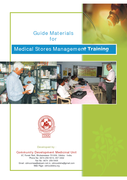
Drugs and medical supplies are dispensed at the cutting edge level of the interface between the public health system and the people. Availability or lack of it brings either credit or discredit to the public health system. The primary reason for holding stocks of medicines and medical supplies in a
...
proper scientific manner is to ensure continuous and uninterrupted availability to prevent stock-outs, especially of critical items of supply while at the same time ensuring that stocks of medicines do not get expired. An efficient inventory management is a pre-requisite for optimal stock management. It enables the management of health facilities to know the current pattern of consumption of drug trends over a period of time and also variances. The environmental control of the drugs and other medical supplies play an important role to keep the products' efficacy intact. Some medicines and vaccines need special storage temperature, otherwise, there may be wastage. The quality of the medicines can be adversely affected by poor storage, transportation and distribution. Thus, maintaining proper storage condition for health commodities is vital for ensuring their quality. So, by this training, CDMU wants to educate different people dealing with medicines and equip them for the roles they have to perform efficiently so that the wastage does not take place or can be minimized.
more
The 2013 RMIS is a nationally representative, household-based survey that provides data on malaria indicators, which are used to assess the progress of a malaria control program. The primary objective of the 2013 Rwanda Malaria Indicator Survey (201
...
3 RMIS) was to provide up-to date information on the prevention of malaria to policymakers, planners, and researchers.
more
Final Draft narrative December 6, 2012 - This strategic plan, developed through the joint collaboration of all stakeholders in the different sectors is aimed at harnessing and bringing together all the stakeholders who have a role in the prevention, detection and management of epidemic and infectiou
...
s diseases in the country. The plan describes the common epidemic and infectious diseases, the measures that need to be undertaken to ensure their control, the key partners and their roles and sets out milestones to monitor progress.
more

A guide to increasing coverage and equity in all communities in the African Region
Expanded Programs on Immunization (EPI) is responsible for vaccines and vaccination to control, eliminate and eradicate vaccine preventable diseases (VPDs). Havi ... ng strong immunization systems to deliver vaccines to those who need them most will play a significant role in achieving the health, equity and economic objectives of several global development goals. more
Expanded Programs on Immunization (EPI) is responsible for vaccines and vaccination to control, eliminate and eradicate vaccine preventable diseases (VPDs). Havi ... ng strong immunization systems to deliver vaccines to those who need them most will play a significant role in achieving the health, equity and economic objectives of several global development goals. more

Review of International, Regional and National Policies and Legal Frameworks that Promote Migrants and Mobile Populations' Access to Health and Malaria Services in the Greater Mekong Subregion (Cambodia, Lao People's Democratic Republic, Myanmar, Thailand and Viet Nam)
Migrants and mobile popul ... ations face many obstacles in accessing equitable essential health care services due to factors such as living and working conditions, education level, gender, irregular migration status, language and cultural barriers, anti-migrant sentiments, and lack of migrant-inclusive health policies among others. Despite significant progress having been made in the context of malaria control in the Greater Mekong Subregion (GMS), human movements can impact malaria transmission patterns and potentially introduce drug-resistant parasites. This legal framework review therefore serves as a guidance document on approaches to address malaria and malaria elimination for migrant and mobile populations (MMPs) in five countries of the GMS. more
Migrants and mobile popul ... ations face many obstacles in accessing equitable essential health care services due to factors such as living and working conditions, education level, gender, irregular migration status, language and cultural barriers, anti-migrant sentiments, and lack of migrant-inclusive health policies among others. Despite significant progress having been made in the context of malaria control in the Greater Mekong Subregion (GMS), human movements can impact malaria transmission patterns and potentially introduce drug-resistant parasites. This legal framework review therefore serves as a guidance document on approaches to address malaria and malaria elimination for migrant and mobile populations (MMPs) in five countries of the GMS. more
