Filter
1756
Text search:
Shelter
Featured
155
528
Language
Document type
1019
273
119
112
78
67
47
27
6
5
2
1
Countries
94
76
54
54
54
52
52
38
32
31
30
29
27
27
26
25
25
25
25
23
23
21
19
18
17
16
16
16
15
14
14
14
13
12
11
11
10
10
10
10
10
9
9
8
7
7
7
7
7
7
7
6
6
6
6
6
6
6
5
5
5
5
5
5
4
4
4
4
3
3
3
3
3
3
3
3
3
3
3
3
3
3
3
3
3
3
2
2
2
2
2
2
1
1
1
1
1
1
1
1
1
1
1
1
1
1
1
1
1
1
1
1
1
1
1
1
1
1
1
Authors & Publishers
Publication Years
Category
631
123
82
62
44
34
9
4
1
Toolboxes
233
178
151
141
118
100
73
70
48
37
33
30
25
15
12
10
9
8
5
4
4
4
3
3
2
1
Reducing the humanitarian impact of the use of explosive weapons in populated areas is a key priority for the United
Nations, the International Committee of the Red Cross (ICRC), civil society and an increasing number of Member States.
The United Nations Secretary-General has expressly called on
...

The roundtable provided a forum that allowed communicators across a number of Federal agencies to share information, strategies, and challenges in developing and providing communication messages and materials to the public in preparation for, and in response to, a radiation
...
The use of explosive weapons, such as bombs, rockets, and mortar and
artillery shells, in cities, towns and villages and in other populated areas
has devastating humanitarian consequences. Explosive weapons act mainly
through the projection of blast and fragmentation wi
...
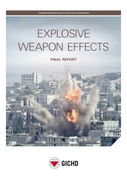
States, the United Nations and civil society organisations continue to raise concerns about the humanitarian impact caused by the use of explosive weapons in populated areas (EWIPA). This issue is currently being examined from political, legal, socio-economic and humanitarian perspectives. The GICHD
...
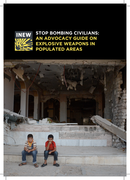
This guide has been produced by the International
Network on Explosive Weapons (INEW) to introduce the
humanitarian advocacy agenda on the use of explosive
weapons in populated areas and to provide ideas for actions
at the national level. It is aimed primarily at NGOs and
campaigners worki
...
The purpose of the WHO Manual for the Public Health Management of Chemical Incidents is to provide a comprehensive overview of the principles and roles of public health in the management of chemical incidents and emergencies. While this information is provided for each phase of the emergency cycle,
...

Recently there have been increased concerns about the development and possible use of nuclear weapons by certain countries or by terrorists. This document provides advice to the general public on how best to act to minimize any health consequences in the event of a nuclear weapon explosi
...
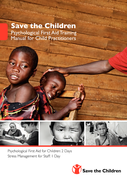
The training manual consists of: (i) Tools for communication, reassurance and comfort for staff working directly with distressed children; (ii) Advice and guidance for staff working with parents and primary care-givers; (iii) Suggestions for ways to support a distressed child. It provides a non-i
...
In 2005, the World Health Organization (WHO) Member States adopted the revised International
Health Regulations (IHR) (2005). The Regulations provide a unique public health framework in the
form of obligations and recommendations that enable countries to better p
...
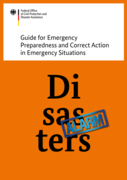
Staying safe in spite of a disaster. What can you do for your safety in the event of a disaster?
In spring 2013, after weeks of rain, whole areas of southern, eastern and northern Germany were beset by catastrophic floods. Settlements vanished in th
...
UNICEF Strategic Plan 2018-2021. Draft Theory of Change Paper
Global Education Review, 3(3).4-27
Children with disabilities in South Africa: The hidden reality is part of a multiple-country study conducted by ACPF. The study seeks to analyse how cultural, social, physical and other societal barriers prevent children with disabilities from enjoying their constitutional rights to equality, freedo
...