
Filter
1756
Text search:
Shelter
Featured
155
528
Language
Document type
1019
273
119
112
78
67
47
27
6
5
2
1
Countries
94
76
54
54
54
52
52
38
32
31
30
29
27
27
26
25
25
25
25
23
23
21
19
18
17
16
16
16
15
14
14
14
13
12
11
11
10
10
10
10
10
9
9
8
7
7
7
7
7
7
7
6
6
6
6
6
6
6
5
5
5
5
5
5
4
4
4
4
3
3
3
3
3
3
3
3
3
3
3
3
3
3
3
3
3
3
2
2
2
2
2
2
1
1
1
1
1
1
1
1
1
1
1
1
1
1
1
1
1
1
1
1
1
1
1
1
1
1
1
Authors & Publishers
Publication Years
Category
631
123
82
62
44
34
9
4
1
Toolboxes
233
178
151
141
118
100
73
70
48
37
33
30
25
15
12
10
9
8
5
4
4
4
3
3
2
1
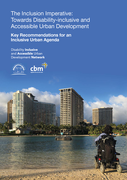
Key Recommendations for an Inclusive Urban Agenda
02 - Series on Disability-Inclusive Development
This consultative version of the guideline is the product of literature reviews, discussions and contributions from diverse stakeholders, as well as UNISDR-nominated experts appointed specifically for the development of the Words into Action guideline for Build back better in recovery, rehabilitatio
...
The aim of this publication is to provide practical guidance for public information officers on the preparation for and response to a nuclear or radiological emergency, and to fulfil in part functions assigned to the IAEA in the Convention on Assistance in the Case of a
...
The aim of this publication is to provide practical guidance for the first responders who will respond during the first few hours to a radiological emergency and for the national officials who would support this early response. This publication provides guidance in the form of action guides, instruc
...

Following a radiation incident such as an improvised nuclear device (IND) detonation, state and local response authorities will need to establish one or more population monitoring and decontamination facilities to assess
people for radioactive exposure, contamination, and the need for
decontamin
...
In this paper, we review the most significant health and environmental facts and explain why — from a medical perspective — a proper understanding of what nuclear weapons will do invalidates all arguments for continued possession of these weapons and requires that they urgently be pro
...
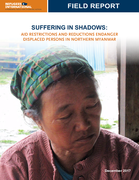
In northern Myanmar, nearly 100,000 people continue to live in displacement camps in Kachin and northern Shan States. Most were first displaced by fighting between the Myanmar military and the Kachin Independence Army in 2011, and many have been displaced multiple times, including in recent months.
...
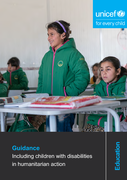
Guidance | Preparedness - Response and early recovery - Recovery and reconstruction
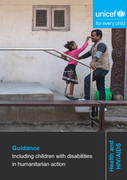
Guidance | Preparedness - Response and early recovery - Recovery and reconstruction
A fact sheet from the National Academies and the U.S. Department of Homeland Security
Effective risk communication requires the alignment of complex factors including trust between the communicator and the audience(s), audience involvement, and emotional responses to risk. Risk communication is especially challenging now as new media changes the landscape for both
communicators and
...
PART 2: The convention on the Rights of Persons with Disbilities, Chapter 15
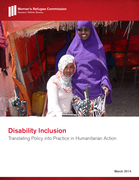
The report provides lessons and recommendations for other organizations and the wider humanitarian community on engaging persons with disabilities at all levels of humanitarian work. It draws on consultations with over 700 displaced persons—including persons with disabilities, their families, and
...
Project on Minimum Standards and Non-Binding Guidelines for First Responders Regarding Planning, Training, Procedure and Equipment for Chemical, Biological, Radiological and Nuclear (CBRN) Incidents
A manual for people working in environments contaminated by landmines and other explosive hazards including improvised explosive devices.
The purpose of this interim guidance is to provide information and insight to assist public policy and
health system leaders in preparing for and responding to an MCE caused by terrorist use of explosives
(TUE). This document provides practical information to promote comprehensive mass casualty ca
...
