Filter
3243
Text search:
young
men
Featured
209
949
Language
Document type
2185
483
241
97
91
53
36
30
13
7
2
1
1
Countries
138
117
107
84
77
70
67
66
66
66
63
63
62
59
59
58
55
54
40
38
36
36
35
35
32
31
31
29
27
26
24
23
23
20
18
18
17
17
15
15
14
14
13
13
13
11
10
10
10
10
9
9
9
9
9
8
8
8
8
7
7
7
6
6
6
6
5
5
5
4
4
4
4
4
4
4
4
3
3
3
3
3
3
3
3
3
3
3
3
2
2
2
2
2
2
2
2
2
2
2
2
2
2
2
2
1
1
1
1
1
1
1
1
1
1
1
1
1
1
1
1
1
1
1
1
1
1
1
1
1
1
1
Authors & Publishers
Publication Years
Category
1420
180
153
141
88
77
3
2
2
1
Toolboxes
514
277
170
150
116
83
79
65
54
53
42
40
33
25
25
22
14
10
9
8
7
5
5
2
Published:December 21, 2018
DOI:https://doi.org/10.1016/S2352-3018(18)30289-3
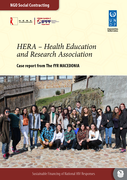
Case report from The fYR MACEDONIA
NGO Social Contracting
Sustainable Financing of National HIV Responses
Global AIDS Update 2017
Joint United Nations Programme on HIV/AIDS (UNAIDS)
Summary Report
Accessed: 19.10.2019
The synthesis looked across the evaluations and reviews as mentioned above to draw lessons and conclusions across the different contexts. The synthesis aims to identify:
recurrent issues, patterns and trends, and promising initiatives and lessons learned from existing programming including main
...
UNAIDS 2017 / Reference
Generating evidence for policy and action on HIV and social protection
Regional indicators to measure progress towards zero discrimination
UNAIDS 2018 | Guidance
A resource for improving menstraul hygiene around the world.
Comprehensive guidance with examples of good practice, information for colleagues and pupils in class and tips on how to break the taboo


Guidance
Indicators for monitoring the 2016 Political Declaration on Ending AIDS
UNAIDS Joint United Nations Programme on HIV/AIDS
UNHCR and partners informed and counselled over 2,000 foreigners, including over 900 on asylum in Serbia. Five new asylum-seekers gave UNHCR project lawyers power of attorney to represent them in substantive asylum procedures. UNHCR partners supported authorities with 2,200 interpretation or cultura
...
Pre-exposure prophylaxis (PrEP)
Policy Brief
November 2015

Accessed on 01.03.2020
Since its inception in 1995, the Multiple Indicator Cluster Surveys, known as MICS, has become the largest source of statistically sound and internationally comparable data on women and children worldwide. In countries as diverse as Costa Rica, Mali and Qatar, trained field
...
Johnson CC et al. Journal of the International AIDS Society 2017, 20:21594 http://www.jiasociety.org/index.php/jias/article/view/21594 | https://doi.org/10.7448/IAS.20.1.21594
Live Life positively
Know your HIV status
Accessed: 03.03.2020
Accessed: 10.03.2020

This guideline document lays out the indicators for monitoring the 2016 Political Declaration on ending AIDS. The Global AIDS Monitoring (GAM) process has been often referenced as a benchmark for successful international accountability mechanisms.
The progressive development of peoples is an object of deep interest and concern to the Church. This is particularly true in the case of those peoples who are trying to escape the ravages of hunger, poverty, endemic disease and ignorance; of those who are seeking a larger share in the benefits of ci
...

In the time of coronavirus disease (COVID-19), sex and drug use will continue, regardless of physical distancing orders and policies. People who previously met in community gathering venues such as bars and clubs may now meet in different sites, ones that are “hidden” or less accessible. This, i
...
Bull World Health Organ 2018;96:450–461 | doi: http://dx.doi.org/10.2471/BLT.17.206466
The aim of our study was to determine whether an intervention designed
to involve the male partners of pregnant women in Burkina Faso in facility-based maternity care influences care-seeking and healthy practi
...


3 June 2021. After 40 years of AIDS, charting a course to end the pandemic.
The report shows that countries with progressive laws and policies and strong and inclusive health systems have had the best outcomes against HIV. In those countries, people living with and affected by HIV are more likely t
...

Unhealthy diets and excess body weight are leading risk factors for death and disability in the WHO European Region. Addressing malnutrition in all its forms is essential to ensure health and well-being for all and, consequently, sustainable development. It requires coherent and innovative actions c
...

This publication provides managers with guidance on how to create basic HIV prevention cascades as a starting point to enhance their ability to monitor and improve their programming and to facilitate comparisons of programme effectiveness across sites.
The Interim Guidance for Risk Communication and Community Engagement (RCCE) outlines recommendations, considerations and methods to raise awareness, manage risk perception, maintain trust and proactively support people at risk to make informed decisions to protect themselves and others from monkeypo
...
Despite its rich culture, great economic potential, high level of education and last but not least its sheer size – it is the largest state whose borders lie entirely within Europe and is 1.7 times the size of the Federal Republic of Germany – Ukraine seems far away in perception and awareness.
...
Sexual and reproductive health is health issues that have to do with your body, sex, relationships, and having and giving birth to children. This includes having the information you need to be able to make your own decisions about your body, when to have sex, and whether or not to become a parent. T
...
Surveillance Report

The revision of the SRHR Policy is based on the results of the analysis of the implementation process of the past policy, which has provided evidence to
ensure that the revised policy is relevant and effective. The revision has also been done with the participation of all national stakeholders who
...
There is increasing interest in understanding the role of air pollution as one of the greatest threats to human health worldwide. Nine of 10 individuals breathe air with polluted compounds that have a great impact on lung tissue. The nature of the relationship is complex, and new or updated data are
...
The "Cystic Fibrosis Fact Sheet" by the National Heart, Lung, and Blood Institute provides an overview of cystic fibrosis (CF), a chronic and often fatal genetic disorder affecting the respiratory and digestive systems. The document outlines the causes, genetic inheritance patterns, and symptoms of
...
As Russia's invasion of Ukraine progresses, the civilian population and the Armed Forces face enormous challenges. It is unsurprising that people's mental health deteriorate in such conditions. This Issue Brief provides publications and informative resources highlighting the impact on Mental Health.
...
To give you a better idea of when and how psychotherapy can help you, we have written this brochure titled Paths to Psychotherapy. While it is therefore primarily intended for people who have never been treated by a psychotherapist, the brochure can also enable those who have previously had psychoth
...
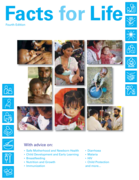
Facts For Life
recommended
Handbook on pregnancy, childbirth, childhood illnesses, child development and the care of children. The handbook, Facts for Life, provides vital messages and information for mothers, fathers, other family members and caregivers and communities to use in changing behaviours and practices that can sav
...

Managers Who Lead empowers health managers at all levels of an organization to lead teams to face challenges and achieve results. It answers questions such as: How can I lead and manage more effectively? How do I create a shared vision and a clear path for achieving it? What can I do to improve work
...
Training On The Misp For Sexual And Reproductive Health In Crisis Part 2

Volume I, 2005-06
A Training Curriculum for Multidisciplinary Healthcare Teams. This innovative training package aims to empower multidisciplinary health workers to have the confidence and skills to provide comprehensive, youth-friendly HIV services that support adolescents’ healthy development, psychosocial well b
...
The curriculum, which complements the national pediatric ART training, was finalized in 2011 and was subsequently implemented nationally. The training curriculum includes a 15-module Trainer Manual, a Participant Manual, and accompanying PowerPoint slides.



Lunsar, Port Loko District, Sierra Leone

Fifth interim report to the SMAC program, DFID Freetown
Key strategies for preventing further infection are isolation of the patient in an Ebola care facility, “safe burial”, and quarantine of those exposed to Ebola cases. Equally important is social recognition that isolation, safe burial and
...
‘Do not underestimate the capacity of the community; they are smarter and more capable than you think’

The 65-page report names more than 15 commanders and officials from both the government Sudan People’s Liberation Army (SPLA) and the rebel SPLA-in Opposition and their allies who have used child soldiers. The report is based on interviews with 101 child soldiers who were either forcibly recruited
...



Saudi Journal of Biological Sciences. http://dx.doi.org/10.1016/j.sjbs.2016.03.006
Open Access

FOLLOW-UP TO THE 2011 POLITICAL DECLARATION ON HIV/AIDS: INTENSIFYING EFFORTS TO ELIMINATE HIV/AIDS | Reporting Period: January – December 2014
Overcoming Barriers to TB Control
Training Curriculum
August 2011
Tackling Tuberculosis in Under-Served Populations: A Resource for TB Control Boards and their partners
Towards gender - transformative HIV and TB responses
DHS Analytical Studies No. 40
Statistics and Monitoring Section / Policy and Practice
Further analysis of the 2011 Nepal Demographic and Health Survey
2006-07 Swaziland Demographic and Health Survey

Original publication developed by CBM. CBM is an international Christian disability & development organisation committed to improving the quality of life of persons with disabilities in the poorest parts of the world. www.cbm.org
The report provides lessons and recommendations for other organizations and the wider humanitarian community on engaging persons with disabilities at all levels of humanitarian work. It draws on consultations with over 700 displaced persons—including persons with disabilities, their families, and
...

Survey finding report
2016 Update
Key population

The five thematic discussion papers in this collection were prepared by members of the Global Prevention Coalition Steering Group and other experts from various institutions and countries. Contributors are listed in alphabetical order. The five papers are meant to inform country consultations and th
...
The primary objective of the 2015-16 MDHS project is to provide up-to-date estimates of basic demographic and health indicators. Specifically, the MDHS collected information on fertility levels, marriage, fertility preferences, awareness and use of family planning methods, breastfeeding practices, n
...