Filter
727
Text search:
transgender
women
Featured
61
199
Language
Document type
435
123
106
22
13
10
7
6
4
1
Countries
60
22
20
17
17
17
17
12
11
11
8
8
8
7
7
7
7
6
5
5
5
5
4
4
4
4
4
4
3
3
3
3
3
3
3
3
3
3
2
2
2
2
2
2
2
2
2
1
1
1
1
1
1
1
1
1
1
1
1
1
1
1
1
1
1
1
1
1
1
1
1
1
Authors & Publishers
Publication Years
Category
220
50
47
20
9
7
1
1
Toolboxes
323
41
24
23
18
15
14
10
6
5
4
4
3
3
2
1
1
1
Reporting Period 2010-2011


The Republic of the Union of Myanmar’s National Strategic Plan on HIV/AIDS 2016–2020 is the strategic guide for the country’s response to HIV at national, state/regional and local levels. The framework describes the current dynamics of the HIV epidemic and articulates a strategy to optimize in
...

The National Strategic Plan for HIV/AIDS and STIs 2017-2024 spells out the objectives and targets that we have jointly committed to achieve. The plan describes the strategies and activities that will need to be implemented on the ground across India's 36 States and Union Territories with the help of
...

The purpose of the PAS III is to guide Pakistan’s overall national response for HIV and AIDS through 2020, through focused interventions with set targets, costs, roles and responsibilities. The successful implementation of PAS III involves multiple stakeholders to achieve priority outcomes outline
...
This publication provides guidance to governments, civil society organizations (nongovernmental organizations and community-based organizations) and other partners implementing HIV prevention, care and treatment programs with key populations. This guide is designed to assist these programs in the de
...

This paper provides information to assist World Bank and GFDRR staff in affecting disability-inclusive DRM. It is based upon desk reviews of existing practice, as well as consultations with experts in the field of disability-inclusive DRM. The paper:
- Illustrates promising practices related to ...
- Illustrates promising practices related to ...
National Tuberculosis Control Program; Mycobacterial Disease Control National AIDS/STD Program
These guidelines are applicable to all biomedical, social and behavioural science research for health conducted in India involving human participants, their biological material and data.
The purpose of such research should be: i. directed towards enhancing knowledge about the human condition while
...
ECDC MISSION REPORT 19–21 September 2016 ; 14–15 November 2016
Report of the Global Thematic Consultation on Population Dynamics
A comprehensive summary of mental health research, providing a unique handbook of key facts and figures, covering all key areas of mental health
Framework of Indictors and Targets
Self-care interventions are among the most promising and exciting new approaches to improve health and well-being, both from a health systems perspective and for people who use these interventions. The World Health Organization (WHO) uses the following working definition of self-care: Self-care is t
...
This operational guidance on MHPSS provides a practical orientation and tools for UNHCR country operations. It covers specific points of good practice to consider when developing MHPSS programming and offers advice on priority issues and practical difficulties, while also providing some background i
...
This paper was commissioned by the German Federal Ministry for Economic Cooperation and Development (BMZ) in 2015, and produced by the Deutsche Gesellschaft für Internationale Zusammenarbeit (GIZ) GmbH, in cooperation with German civil society actors and freelance psychologists working in the field
...
Joint Action for Results
UNAIDS Outcome Framework: Business Case 2009–2011

Republic of Armenia
Reporting period: January-December 2015
Accessed: 29.09.2019
Endorsed by the CCM Georgia on April 15th 2015
Accessed: 26.09.2019

Country Progress Report
Reporting Period
January – December, 2014
Accessed: 26.09.2019
Evaluation report
December 2014
“Follow the Voice of Life”
AIDSTAR-One | Case study series October 2011

Zero new HIV infections
Zero Discrimination
Zero AIDS related deaths
Accessed: 04.10.2019
In the framework of the United Nations Sustainable Development Goals Issue-based Coalition on Health and Well-being for All at All Ages in Europe and Central Asia
Global AIDS Update 2017

STAATSKOERANT, 5 MEI 2015 No. 38763
No. 38763 GOVERNMENT GAZETTE, 5 MAY 2015
General Notice
Notice 295 of 2015
Department of basic education
National education policy act, 1996 (Act No 27 of 1996)
Call for written submissions from stakeholder bodies and members of the public on Departmen
...
dos Santos et al. BMC Public Health 2014, 14:80 http://www.biomedcentral.com/1471-2458/14/80
UNAIDS 2018 / Reference
PLOS ONE | www.plosone.org
May 2013 | Volume 8 | Issue 5 | e63476
Directions in Development
Human Development
Practical Guidance for collaborative interventions
UNAIDS/10.03E / JC1767E (English original, March 2010) ISBN 978 92 9 173849 6

Guidelines
June 2017
HIV strategic information for impact
Information Note
Advice for countries using or planning
to introduce dual HIV/syphilis RDT in antenatal services and other testing sites.
WHO/RHR/17.01
PLOS ONE | https://doi.org/10.1371/journal.pone.0192765 February 23, 2018
April 2013
Policy
Brief
It's time to deliver differently.
Accessed: 13.11.2019

The report showed commitments made three decades ago to protect the rights of children remain unfulfilled for millions. Violence still affects countless children. Discrimination based on age, gender, disability, sexual orientation and religion harms children worldwide.
Key factors include a lack
...
Policy Brief
Consolidated Guidelines
Updated 2016
WHO/HIV/2017.05
Clinical Guidance across the continuum of care
Chapter 8_ARV Guidelines
Social network-based HIV testing is an approach for engaging sexual and drug injecting partners and social contacts of key population members with HIV and of those who are HIV-negative and at ongoing risk in voluntary HTS.
By addressing people’s confidentiality concerns and broadening the reach
...
A guide for civil society
Accessed: 30.01.2020

Agenda item 5, UNAIDS/PCB (43)/18.
11-13 December 2018 | Geneva, Switzerland
UNAIDS Programme Coordinating Board
Issue date: 23 November 2018
Operational Guideline
Guidelines
HIV testing services
July 2015
Advance Copy
Accessed: 08.03.2020
Policy
June 2015
Training Menus, Facilitation Tips, and Participatory Training Modules
In March 2020 the IASC Reference Group on Mental Health and Psychosocial Support uniting 57 humanitarian organizations as member issued the Interim Briefing Note Addressing Mental Health and Psychosocial Aspects of COVID-19 Outbreak. This document has proven to be very useful in the response and has
...
Prevention, early diagnosis, and effective treatment are essential for the control and elimination of Neisseria gonorrhoeae as a public health problem. Currently, in Latin America and the Caribbean, treatment for gonorrhea infection is largely empiric and based on clinical diagnosis. In the Americas
...
ACT Alliance appeal: Global Response to the COVID-19 Pandemic – ACT201 - Sub-Appeal - ACT 201-BGD -
The European Commission against Racism and Intolerance (ECRI) was established by the Council of Europe. It is an independent body which ensures respect for human rights in the fight against racism, discrimination (based on "race", ethnic/national origin, colour, nationality, religion, language, sexu
...
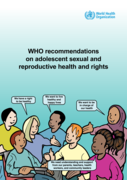
Framework for Action
Key Messages and Recommendations.
The Report, Todos y todas sin excepción, produced by the Global Education Monitoring (GEM) Report and the Regional Bureau for Education in Latin America and the Caribbean (OREALC /UNESCO Santiago), along with the Laboratory of Education, Research and Innovation in
...
World Report 2021, Human Rights Watch’s 31st annual review of human rights practices and trends around the globe, reviews developments in more than 100 countries.
In his introductory essay, Executive Director Kenneth Roth calls on the incoming US administration to more deeply embed respect for
...
The Quality Criteria for Health National Adaptation Plans (HNAPs) presents examples of good practice in HNAP development to assist countries in developing a comprehensive, feasible and implementable plan. The criteria are also intended to guide countries in setting the foundation for a long-term ite
...
The purpose of the toolkit is to bring together existing learning and guidance as a starting point for stakeholders to begin SRH preparedness work. Within the SRH sector the field of preparedness is relatively new and growing. More collective effort is required to further evaluate the impact of prep
...
These guidelines provide new and updated recommendations on the use of point-of-care testing in children under 18 months of age and point-of-care tests to monitor treatment in people living with HIV; the treatment monitoring algorithm; and timing of antiretroviral therapy (ART) among people living w
...
Preliminary overview of refugees and migrants self-reported impact of COVID-19
The study surveyed over 30,000 refugees and migrants living in 170 countries. Many of the respondents had fled war or dire economic conditions in their home country only to be faced with the additional challenges posed b
...
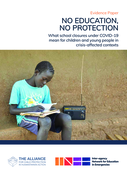
What school closures under COVID-19 mean for children and young people in
crisis-affected contexts
In the present report, the Special Rapporteur on the sale and sexual exploitation of children, including child prostitution, child pornography and other child sexual abuse material, Mama Fatima Singhateh, focuses on the impact of the coronavirus disease (COVID-19) p
...
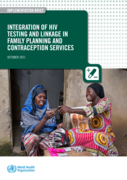
This implementation brief addresses integration of HIV testing services into family planning (FP) services. It is intended as a practical resource for national health programmes seeking to introduce or scale up HIV testing and linkage to HIV prevention, sexually transmitted infection, and antiretrov
...
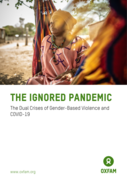
24 Nov. 2021
Action against gender-based violence being pushed to the outlying margins of the global COVID-19 response
A new Oxfam report shows an undeniable increase in gender-based violence (GBV) during the COVID-19 pandemic around the world to which too many governments and donors are not doi
...
(Last Update: July 2022)
Building on our decades of commitment to human rights in medicine and healthcare, we have published a new report on emerging threats in health-related human rights both globally and in the UK.
'Health and human rights in the new world (dis)order' outlines a shifting rights landscape in which new
...
This joint publication by UNAIDS and WHO emphasizes the importance of integrating HIV prevention, testing, treatment and care and mental health services for people living with HIV. It provides a compilation of tools, best practices, recommendations and guidelines that facilitate the integration of i
...
WHY THIS GUIDE?
Because, in the face of crises and emergencies, it is vital to include a human rights perspective in responses. Vulnerable groups face major obstacles to accessing and benefiting from prevention, mitigation, and health care policies due to structural barriers of inequality. To offer
...
This report presents the key findings of the NFHS-5 in West Bengal, followed by detailed tables and an appendix on sampling errors. At the time of finalization of this report, wealth quintiles for the country as a whole were not ready. Therefore, on finalization of the national report, the breakup o
...
Getting on track to end AIDS as a public health threat by 2030. This new Road Map charts a way forward for country-level actions to achieve an ambitious set of HIV prevention targets by 2025. Those targets emerged from the 2021 Political Declaration on HIV and AIDS, which the United Nations General
...
As part of the UN’s data strategy—which seeks to nurture data as a strategic asset for insight, impact and integrity—UNAIDS plays an indispensable role in generating data for effective action against the AIDS pandemic. It leads the
world’s most extensive data collection on HIV epidemiology,
...

The MHPSS MSP is an easy-to-follow intersectoral package, which spells out the activities and actions that all humanitarian actors should put in place in all emergencies for an effective MHPSS response. It speaks to different actors at the global, regional, national, and local levels to plan, coordi
...

This document aims to assist countries to take the first step towards better considering gender and equity issues in their efforts to tackle antimicrobial resistance (AMR), to inform the implementation of strategies in national action plans and contribute to improved reach and effectiveness of AMR e
...
The chapter Closing the Gap: The Health Disparities of Older LGBTI People in the Americas, is part of the publication series titled ‘Decade of Healthy Aging: situation and challenges’. In order to outline the current knowledge available on the situation of health and well-being of older persons
...
This report explores the extent to which evidence, policy, normative guidance and commitments on HIV and gender-based violence, and their interlinkages, is being translated into action on the ground in fragile settings. These issues are explored through the lens of training of peace support operatio
...
PEPFAR Malawi’s Country Operational Plan 2022 (COP22) embodies joint priorities from national and subnational dialogues building on the 2020-2025 National Strategic Plan for HIV/AIDS. The interagency team has developed a person-centered, district-tailored and Malawi Population-Based HIV Impact Ass
...
Chapter 1 provides new data on the latest developments in the global treatment effort, highlighting positive trends as well as aspects that require improvement. Chapter 2 summarizes the impact of the scale-up in reducing AIDS-related mortality and new HIV infections. Chapter 3 examines the sequence
...
These consolidated guidelines on HIV testing services (HTS) bring together existing and new guidance on HTS across different settings and populations.
The World Health Organization (WHO) first released consolidated guidelines on HTS in 2015, in response to requests from Member States, national pr
...
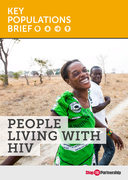
Key populations brief
Accessed November 2017
Health, Rights and Drugs
recommended
Harm Reducation, Decriminalization and Zero Discrimination for People who use Drugs
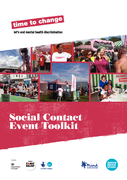
This toolkit will help you to plan and run an event that helps to change the way that people in your community think about, and behave towards, people with mental health problems
Volume 2 · Supplement 4 · November 2016
ISSN 2055-66-40 – Print
Foreword
| ISSN 2055-66-59 – Online
www.viruseradication.com
Meeting Report
Bangkok, Thailand 8-11 August 2016