
Filter
2308
Text search:
sexual
violence
against
children
Featured
185
674
Language
Document type
1505
369
170
90
69
33
30
23
8
8
1
1
1
Countries
85
83
82
66
59
54
52
50
48
48
46
45
43
40
39
38
36
35
35
34
33
30
26
25
24
24
23
20
20
20
17
16
16
16
16
16
15
14
13
12
12
11
11
10
10
10
10
9
9
9
8
8
8
8
7
6
6
6
5
5
5
5
5
4
4
4
4
3
3
3
3
3
3
3
3
3
3
2
2
2
2
2
2
2
2
2
2
2
2
2
2
1
1
1
1
1
1
1
1
1
1
1
1
1
1
1
1
1
1
1
1
1
1
1
1
1
1
1
Authors & Publishers
Publication Years
Category
954
219
77
70
58
50
2
2
2
Toolboxes
305
248
161
147
147
127
44
38
36
28
22
22
11
10
5
4
4
3
3
3
1
1
1
1
1
The right to adequate housing, despite having been recognized by multiple international instruments, continues to be a human right that is consistently violated. Around 2O% of the world's population do not have adequate housing . In Latin America, informal settlements generally lack the conditions r
...
This global progress report attempts to lay the groundwork for the kind of accelerated action needed. Section 1 presents key data, trends and developments in women’s, children’s and adolescents’ health and well-being. That is followed in Secti
...
RESULTS: Between 76 and 97% of the PHCS offered RMCAH services before the lockdown. Except in antenatal, delivery and adolescent care, there was a decline of between 2 and 6% in all the services during the lockdown and up to 10% decline after the lockdown with variation across and within States. Dur
...
Expanded IMPACT Program in Zimbabwe
Lea Toto and APHIAplus Nuru ya Bonde programs in Kenya Yekokeb Berhan Program for Highly Vulnerable Children in Ethiopia
This evaluation report of UNICEF’s Psychosocial Support Response for Syrian Children in Jordan was conducted by
Antares Foundation team (Albertien van der Veen, Reem AbuKishk, Shadi Bushnaq, Orso Muneghina, Reem Rawdha
and Tineke van Pietersom)
...

The objective of Critical Considerations and Actions for Achieving Universal Access to Sexual and Reproductive Health in the Context of Universal Health Coverage through a Primary Health Care Approach is to provide guidance to WHO Member States for
...
In 2015, 5.9 million children under age five died (1). The major causes of child deaths globally are pneumonia, prematurity, intrapartum-related complications, neonatal sepsis, congenital anomalies, diarrhoea, injuries and malaria (2). Most of these
...

This study examines the ability of political, legal, health, and communities to respond to gender-based violence in Kigali, Rwanda.

Conflict, climate crisis and COVID-19 pose great threats to the health of women and children.
his publication provides an overview of social inequalities in several indicators related to the health of women, children, and adolescents in a region deemed as one with high levels of inequality: Latin America and the Caribbean (LAC). In order for
...
2018 monitoring report: current status and strategic priorities
The report sets out the status of women’s, children’s and adolescents’ health, and on health systems and social and environmental determinants. Regional dashboards on 16 key ...
The report sets out the status of women’s, children’s and adolescents’ health, and on health systems and social and environmental determinants. Regional dashboards on 16 key ...
Guidelines on post-exposure prophylaxis for HIV and the use of co-trimoxazole prophylaxis for HIV-related infections among adults, adolescents, and children: recommendations for a public health approach : December 2014 supplement to the 2013 Consoli
...

The coronavirus disease 2019 (COVID-19) pandemic has created a global and gendered crisis that is compounding existing inequalities and disproportionately affecting girls and women. Emerging evidence from the COVID-19 crisis in 2020 shows school closures, disruptions in essential services and rising
...
The coronavirus disease 2019 (COVID-19) pandemic has created a global and gendered crisis that is compounding existing inequalities and disproportionately affecting girls and women. Emerging evidence from the COVID-19 crisis in 2020 shows school closures, disruptions in essential services and rising
...


La pandemia por COVID-19 tiene impactos a corto, mediano y largo plazo en la niñez; uno de ellos es exponerlos a un posible aumento de violencia, abuso y explotación. El presente documento tiene como objetivo proponer al Gobierno de México, a través de la Secretaría de Gobernación, una serie d
...
Guidance on Disability Inclusion for GBV Partners in Lebanon

Guidance on Disability Inclusion for GBV Partners in Lebanon
In its resolution 34/16, the Human Rights Council decided to focus its next full-day meeting on “Protecting the rights of the child in humanitarian situations” and invited the Office of the High Commissioner to prepare a report on that issue, in close collaboration with relevant stakeholders. Th
...
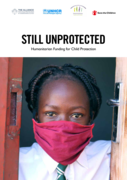
Children living in humanitarian crises face an increased risk of abuse. While the threats of harm are increasing, the established systems in place to protect them are breaking down. Faced with the COVID-19 pandemic and its impacts, vulnerable famili
...

The growing problem of child marriage among Syrian girls in Jordan
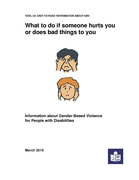
Guidance on Disability Inclusion for GBV Partners in Lebanon
Situation Overview & Humanitarian Needs | July – September 2017

The guidebook can be used by any care giver who comes in contact with children on a daily basis and who have the primary or secondary responsibility of taking care of the children. Parents, teachers
...
The guidebook can be used by any care giver who comes in contact with children on a daily basis and who have the primary or secondary responsibility of taking care of the children. Parents, teachers
...
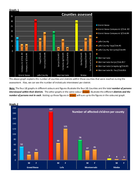
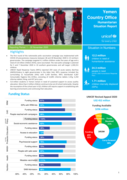


- Twenty-two joint integrated rapid response mechanism (IRRM) missions were conducted in 11 counties and reached 305,887 people including 65,432 children under 5 years of age.
- UNICEF’s Integrated Community Mobilization Network reached 345,2 ...
- UNICEF’s Integrated Community Mobilization Network reached 345,2 ...
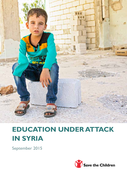
All photos in this report were taken by Ahmad Baroudi/Save the Children

This report makes clear that there is a path to end AIDS. Taking that path will help ensure preparedness to address other pandemic challenges, and advance progress across the Sustainable Development Goals. The data and real-world examples in the report make it very clear what that path is. It is not
...
This document is one of eight PDF documents that comprise the Guidance on Child-focused Victim
Assistance. All are available in PDF at
Psycho-Social Rehabilitation and Occupational Integration of Child Survivors of Trafficking and Other Worst Forms of Child Labour |
Menstrual Hygiene Management
recommended
Operational Guidelines.
Guidelines for the development of educational programmes for MHM, including tips on the topics to address and methods to assess girls’ practices in a respectful way with practical tools
Child marriage is a widespread practice across Turkana, a nomadic pastoralist region in Kenya. This report explores the issue through the voices of those girls affected by it.

Previous pandemics have demonstrated that more people could die from the indirect consequences of an outbreak than from the disease itself. As the fight against the pandemic is pushing millions into poverty and hunger, COVID-19 will likely be no dif
...
UNICEF Strategic Plan 2018-2021. Draft Theory of Change Paper
Non-discrimination disability and ethnic rights
This report is a comprehensive statistical overview of female genital mutilation/cutting (FGM/C) in the 29 countries where the practice is concentrated. Analysis of the data reflects current perspectives on FGM/C, informed by the latest policy, programmatic and theoretical evidence.
Thirty years ago, the United Nations General Assembly adopted the Convention on the Rights of the Child at a moment of rapid global change marked by the end of apartheid, the fall of the Berlin Wall and the birth of the World Wide Web. These developments and more brought momentous and lasting evolut
...

The pandemic presents tough choices for governments, local communities, health and school systems, as well as families and businesses: How to re-open safely? How to safeguard people’s lives and protect their livelihoods? Where to allocate scarce resources? How to protect those unable to protect th
...

The package provides practical, concise yet crucial information about the impact of COVID-19 on daily teaching practices as well as tips and suggestions to improve safety, well-being and learning, with students in face-to-face or remote settings.
The package speaks directly to the teachers. It ca
...

This brief summarizes current evidence and guidance for maintaining safe and effective care across the spectrum of maternal, newborn and infant care while protecting mother and child and health care providers during COVID-19. Furthermore, implications of the principle of “do no harm” are reviewe
...
Every year, around 830 000 children die from unintentional or "accidental" injuries. The vast majority of these injuries occur in low-income and middle-income countries. However, dozens of prevention strategies and programmes exist. If they were int
...
A step-by-step guide for child protection programmes to the design and implementation of KAP survey methods.
This guide focuses on the evaluation of psychosocial programs that are aligned with two main goals: - To promote psychosocial wellbeing by promoting an environment that provides appropriate care, opportunities for development and protects children f
...
Adolescence is a critical stage in life for physical, cognitive and emotional development, shaping future health and well-being. Comprehensive measurement of adolescent health is essential to prioritize health issues, guide interventions and track progress. However, global, regional and national ado
...
La Convención sobre los Derechos del Niño de las Naciones Unidas es el tratado más ampliamente ratificado de la historia. Los Objetivos de Desarrollo Sostenible (ODS) han sido acordados por todos los gobiernos. La Convención y los ODS van de la mano.
No podremos alcanzar los ODS sin hacer reali
...
Eine kinderrechtliche Analyse basierend auf einer Befragung der 16 Bundesländer

This guidance aims to support national clusters to implement their commitments on AAP and core people-related issues both before the beginning of a response (preparedness) and thereafter, throughout the Humanitarian Programme Cycle (HPC)
December 2020 — May 2021
This report presents the findings from a ‘deep dive’ undertaken by UNICEF East Asia and the Pacific Regional Office to consider the experiences in Cambodia, Indonesia, the Lao People’s Democratic Republic, Malaysia, Myanmar, the Philippines and the Pacific. The target audience for this report
...
A step-by-step guide for child protection programmes to the design and implementation of KAP survey methods. In particular, this guide will help to strengthen the quality of our research, monitoring and evaluation work, and enable Save the Children
...

The NDMS&IP focuses on mainstreaming disability to promote equitable access to services in the six thematic areas of health, education, livelihoods, empowerment, and social inclusion and cross-cutting issues.
The first part of the NDMS&IP outlines incongruences between national and sectoral policie
...
Case Study on Improving HIV Testing and Services for Children Orphaned or made Vulnerable by HIV (OVC)
The toolkit aims to provide researchers with guidance for improving the quality of studies that use administrative data to better ascertain child maltreatment incidence, response and service delivery. However, these are complex studies to conduct, and the toolkit is not meant to be comprehensive. Re
...
2015-16 Demographic and Health Survey and Malaria Indicator Survey
16 January 2008
Global Health Advocacy and Activism Department of Global Health, George Washington University
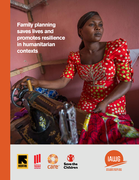
Globally, it is estimated that 128.6 million people are currently in need of humanitarian assistance. Of these individuals, approximately one-fourth are women and girls of reproductive age. Although family planning is one of the most life-saving, empowering, and cost-effective interventions for wome
...
These guidelines provide a framework for effective action to facilitate access to safe and ethical
testing services for different population groups. The implementation of the a comprehensive
approach, known as HIV Testing Services (HTS) is cardinal as an effective package of services
that diminis
...
Around the world, more than 2 billion people lack access to safely managed water, sanitation and hygiene services, with conflicts and climate change exacerbating the issue.
Unsafe and insufficient WASH facilities, especially in rural and remote areas, can lead to increased health complications fo
...
Extra Curricular Life Skills Training Manual For Adolescents 13 to 18 Years of Age
“Protecting Our Peers From HIV Infection”
The Youth Health and Development Programme Government of the Republic of Namibia and UNICEF Programme of Cooperation 1997-2001
November 1999

In 2014, the Ministry of Health (MOH) in Malawi conducted a nationwide assessment of emergency obstetric and newborn care (EmONC) services. This cross-sectional facility-based survey used 10 data collection modules. Data collection began on 23rd September 2014 and concluded on 17th October 2014, in
...
Accessed: 26.10.2019

El informe se encamina a documentar si los gobiernos:
• tienen planes de acción, políticas y leyes nacionales en consonancia con aquellos cuya eficacia se ha comprobado en el contexto de INSPIRE;
• están contando los incidentes violentos mortales y no mortales con exactitud;
• han establ
...
Globally, 85,000 women and girls were killed intentionally in 2023. 60 per cent of these homicides—51,000—were committed by an intimate partner or other family member. 140 women and girls die every day at the hands of their partner or a close relative, which means one woman or girl is killed eve
...
National Child Traumatic Stress Network National Center for PTSD | The field of school safety and emergency management has evolved significantly over the past decade. Tragically, acts of violence, natural disasters, and terrorist attacks have taught
...
Abuses by ArmThis report is based on research in Catatumbo in April 2019. We interviewed more than 80 people, including abuse victims, their relatives, community leaders, church representatives, human rights officials, local authorities, judicial officials, and members of humanitarian and human righ
...
Guidance on Disability Inclusion for GBV Partners in Lebanon

The report underscores that sexual and reproductive health and rights are often the first to be sacrificed during epidemics and that the gains of the past decade must be protected. The report also makes it clear that scarce resources must be focused
...
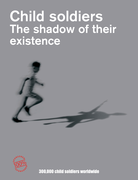
This report outlines the known problems of child soldiers and the different forms of recruiting. The report zooms in on the Colombia situation and the motives with which Colombian children join these armed groups. Finally there's a list of actions t
...
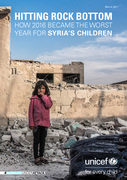
How 2016 became the worst year for Syria's children
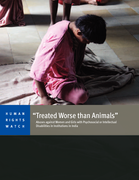
Abuses against Women and Girls with Psychosocial or Intellectual Disabilities in institutions in India

It is the policy of the GoR to ensure that children’s rights are met through the provision of basic needs and services for all children in the country, and protect them from abuse and exploitation
...
Sexual and Reproductive Health

As part of our commitment to the fight against NCDs, Nigeria was signatory to the political declaration at the UN General Assembly High Level Meeting on NCDs in September 2011. Thus, the purpose of this document is to deve
...
