
Filter
8419
Text search:
rights
Featured
742
1945
Language
7782
348
291
203
149
106
93
55
28
17
14
14
14
14
13
12
12
11
11
10
9
9
9
9
9
8
8
8
8
8
7
7
7
7
7
6
6
6
6
5
5
5
5
5
4
4
4
4
4
3
3
3
3
3
3
3
3
3
2
2
1
1
1
1
1
1
1
1
1
1
1
1
1
Document type
4568
1424
1007
469
301
277
157
85
46
31
29
10
4
3
1
Countries
375
214
201
155
147
141
138
132
131
130
123
123
122
113
113
106
97
95
86
85
80
76
72
69
68
65
65
64
64
62
56
52
50
49
47
44
42
41
41
40
39
38
37
35
34
34
33
29
29
29
29
25
24
24
24
23
23
22
20
19
19
19
16
16
15
15
14
13
12
12
12
11
11
10
10
9
9
9
9
9
9
9
8
8
8
8
8
7
7
7
7
6
6
6
6
6
6
6
5
5
5
5
5
5
5
5
5
5
5
4
4
4
4
4
3
3
3
3
3
3
3
3
3
2
2
2
2
2
2
2
2
2
2
2
2
2
2
2
2
1
1
1
1
1
1
1
1
1
1
1
1
1
Authors & Publishers
1391
563
330
329
255
204
201
177
97
97
70
67
63
59
45
45
43
38
38
37
35
33
32
31
31
30
29
27
26
26
26
25
25
24
24
24
24
23
23
23
23
22
22
19
19
19
19
19
18
18
17
17
17
16
16
16
15
15
15
14
14
14
14
14
14
14
14
14
14
13
13
13
13
13
13
13
13
13
13
12
12
12
12
11
11
11
11
11
11
10
10
10
10
10
10
10
10
10
10
9
9
9
9
9
9
9
9
9
9
9
9
9
9
9
9
9
9
8
8
8
8
8
8
8
8
8
8
8
8
8
8
8
7
7
7
7
7
7
7
7
7
7
7
7
7
7
7
7
7
7
7
7
7
7
7
7
7
6
6
6
6
6
6
6
6
6
6
6
6
6
6
6
6
6
6
6
6
6
6
6
6
6
6
5
5
5
5
5
5
5
5
5
5
5
5
5
5
5
5
5
5
5
5
5
5
5
5
5
5
5
5
5
5
5
5
5
5
5
5
5
5
5
5
5
5
5
5
5
5
5
5
5
5
5
5
5
5
5
5
5
5
5
5
5
5
5
4
4
4
4
4
4
4
4
4
4
4
4
4
4
4
4
4
4
4
4
4
4
4
4
4
4
4
4
4
4
4
4
4
4
4
4
4
4
4
4
4
4
4
4
4
4
4
4
4
4
4
4
4
4
4
4
4
4
4
4
4
4
4
4
4
4
4
4
4
4
4
4
4
4
4
4
4
4
4
4
4
4
4
4
4
4
4
4
4
4
4
4
4
4
4
3
3
3
3
3
3
3
3
3
3
3
3
3
3
3
3
3
3
3
3
3
3
3
3
3
3
3
3
3
3
3
3
3
3
3
3
3
3
3
3
3
3
3
3
3
3
3
3
3
3
3
3
3
3
3
3
3
3
3
3
3
3
3
3
3
3
3
3
3
3
3
3
3
3
3
3
3
3
3
3
3
3
3
3
3
3
3
3
3
3
3
3
3
3
3
3
3
3
3
3
3
3
3
3
3
3
3
3
3
3
3
3
3
3
3
3
3
3
3
3
3
3
3
3
3
3
3
3
3
3
3
3
3
3
3
3
3
3
3
3
3
3
3
3
3
3
3
3
3
3
3
3
3
3
3
3
3
3
3
2
2
2
2
2
2
2
2
2
2
2
2
2
2
2
2
2
2
2
2
2
2
2
2
2
2
2
2
2
2
2
2
2
2
2
2
2
2
2
2
2
2
2
2
2
2
2
2
2
2
2
2
2
2
2
2
2
2
2
2
2
2
2
2
2
2
2
2
2
2
2
2
2
2
2
2
2
2
2
2
2
2
2
2
2
2
2
2
2
2
2
2
2
2
2
2
2
2
2
2
2
2
2
2
2
2
2
2
2
2
2
2
2
2
2
2
2
2
2
2
2
2
2
2
2
2
2
2
2
2
2
2
2
2
2
2
2
2
2
2
2
2
2
2
2
2
2
2
2
2
2
2
2
2
2
2
2
2
2
2
2
2
2
2
2
2
2
2
2
2
2
2
2
2
2
2
2
2
2
2
2
2
2
2
2
2
2
2
2
2
2
2
2
2
2
2
2
2
2
2
2
2
2
2
2
2
2
2
2
2
2
2
2
2
2
2
2
2
2
2
2
2
2
2
2
2
2
2
2
2
2
2
2
2
2
2
2
2
2
2
2
2
2
2
2
2
2
2
2
2
2
2
2
2
2
2
2
2
2
2
2
2
2
2
2
2
2
2
2
2
2
2
2
2
2
2
2
2
2
2
2
2
2
2
2
2
2
2
2
2
2
2
2
2
2
2
2
2
2
2
2
2
2
2
2
2
2
2
2
2
2
2
2
2
2
2
2
2
2
2
2
2
2
2
2
2
2
2
2
2
2
2
2
2
2
2
2
2
2
2
2
2
2
2
2
2
2
2
2
2
2
2
2
2
2
2
2
2
2
2
2
2
2
2
2
2
2
2
2
2
2
2
2
2
2
2
2
2
2
2
2
2
2
2
2
2
2
2
2
2
2
2
2
2
2
2
2
2
2
2
2
2
2
2
2
2
2
2
2
2
2
2
2
2
2
1
1
1
1
1
1
1
1
1
1
1
1
1
1
1
1
1
1
1
1
1
1
1
1
1
1
1
1
1
1
1
1
1
1
1
1
1
1
1
1
1
1
1
1
1
1
1
1
1
1
1
1
1
1
1
1
1
1
1
1
1
1
1
1
1
1
1
1
1
1
1
1
1
1
1
1
1
1
1
1
1
1
1
1
1
1
1
1
1
1
1
1
1
1
1
1
1
1
1
1
1
1
1
1
1
1
1
1
1
1
1
1
1
1
1
1
1
1
1
1
1
1
1
1
1
1
1
1
1
1
1
1
1
1
1
1
1
1
1
1
1
1
1
1
1
1
1
1
1
1
1
1
1
1
1
1
1
1
1
1
1
1
1
1
1
1
1
1
1
1
1
1
1
1
1
1
1
1
1
1
1
1
1
1
1
1
1
1
1
1
1
1
1
1
1
1
1
1
1
1
1
1
1
1
1
1
1
1
1
1
1
1
1
1
1
1
1
1
1
1
1
1
1
1
1
1
1
1
1
1
1
1
1
1
1
1
1
1
1
1
1
1
1
1
1
1
1
1
1
1
1
1
1
1
1
1
1
1
1
1
1
1
1
1
1
1
1
1
1
1
1
1
1
1
1
1
1
1
1
1
1
1
1
1
1
1
1
1
1
1
1
1
1
1
1
1
1
1
1
1
1
1
1
1
1
1
1
1
1
1
1
1
1
1
1
1
1
1
1
1
1
1
1
1
1
1
1
1
1
1
1
1
1
1
1
1
1
1
1
1
1
1
1
1
1
1
1
1
1
1
1
1
1
1
1
1
1
1
1
1
1
1
1
1
1
1
1
1
1
1
1
1
1
1
1
1
1
1
1
1
1
1
1
1
1
1
1
1
1
1
1
1
1
1
1
1
1
1
1
1
1
1
1
1
1
1
1
1
1
1
1
1
1
1
1
1
1
1
1
1
1
1
1
1
1
1
1
1
1
1
1
1
1
1
1
1
1
1
1
1
1
1
1
1
1
1
1
1
1
1
1
1
1
1
1
1
1
1
1
1
1
1
1
1
1
1
1
1
1
1
1
1
1
1
1
1
1
1
1
1
1
1
1
1
1
1
1
1
1
1
1
1
1
1
1
1
1
1
1
1
1
1
1
1
1
1
1
1
1
1
1
1
1
1
1
1
1
1
1
1
1
1
1
1
1
1
1
1
1
1
1
1
1
1
1
1
1
1
1
1
1
1
1
1
1
1
1
1
1
1
1
1
1
1
1
1
1
1
1
1
1
1
1
1
1
1
1
1
1
1
1
1
1
1
1
1
1
1
1
1
1
1
1
1
1
1
1
1
1
1
1
1
1
1
1
1
1
1
1
1
1
1
1
1
1
1
1
1
1
1
1
1
1
1
1
1
1
1
1
1
1
1
1
1
1
1
1
1
1
1
1
1
1
1
1
1
1
1
1
1
1
1
1
1
1
1
1
1
1
1
1
1
1
1
1
1
1
1
1
1
1
1
1
1
1
1
1
1
1
1
1
1
1
1
1
1
1
1
1
1
1
1
1
1
1
1
1
1
1
1
1
1
1
1
1
1
1
1
1
1
1
1
1
1
1
1
1
1
1
1
1
1
1
1
1
1
1
1
1
1
1
1
1
1
1
1
1
1
1
1
1
1
1
1
1
1
1
1
1
1
1
1
1
1
1
1
1
1
1
1
1
1
1
1
1
1
1
1
1
1
1
1
1
1
1
1
1
1
1
1
1
1
1
1
1
1
1
1
1
1
1
1
1
1
1
1
1
1
1
1
1
1
1
1
1
1
1
1
1
1
1
1
1
1
1
1
1
1
1
1
1
1
1
1
1
1
1
1
1
1
1
1
1
1
1
1
1
1
1
1
1
1
1
1
1
1
1
1
1
1
1
1
1
1
1
1
1
1
1
1
1
1
1
1
1
1
1
1
1
1
1
1
1
1
1
1
1
1
1
1
1
1
1
1
1
1
1
1
1
1
1
1
1
1
1
1
1
1
1
1
1
1
1
1
1
1
1
1
1
1
1
1
1
1
1
1
1
1
1
1
1
1
1
1
1
1
1
1
1
1
1
1
1
1
1
1
1
1
1
1
1
1
1
1
1
1
1
1
1
1
1
1
1
1
1
1
1
1
1
1
1
1
1
1
1
1
1
1
1
1
1
1
1
1
1
1
1
1
1
1
1
1
1
1
1
1
1
1
1
1
1
1
1
1
1
1
1
1
1
1
1
1
1
1
1
1
1
1
1
1
1
1
1
1
1
1
1
1
1
1
1
1
1
1
1
1
1
1
1
1
1
1
1
1
1
1
1
1
1
1
1
1
1
1
1
1
1
1
1
1
1
1
1
1
1
1
1
1
1
1
1
1
1
1
1
1
1
1
1
1
1
1
1
1
1
1
1
1
1
1
1
1
1
1
1
1
1
1
1
1
1
1
1
1
1
1
1
1
1
1
1
1
1
1
1
1
1
1
1
1
1
1
1
1
1
1
1
1
1
1
1
1
1
1
1
1
1
1
1
1
1
1
1
1
1
1
1
1
1
1
1
1
1
1
1
1
1
1
1
1
1
1
1
1
1
1
1
1
1
1
1
1
1
1
1
1
1
1
1
1
1
1
1
1
1
1
1
1
1
1
1
1
1
1
1
1
1
1
1
1
1
1
1
1
1
1
1
1
1
1
1
1
1
1
1
1
1
1
1
1
1
1
1
1
1
1
1
1
1
1
1
1
1
1
1
1
1
1
1
1
1
1
1
1
1
1
1
1
1
1
1
1
1
1
1
1
1
1
1
1
1
1
1
1
1
1
1
1
1
1
1
1
1
1
1
1
1
1
1
1
1
1
1
1
1
1
1
1
1
1
1
1
1
1
1
1
1
1
1
1
1
1
1
1
1
1
1
1
1
1
1
1
1
1
1
1
1
1
1
1
1
1
1
1
1
1
1
1
1
1
1
1
1
1
1
1
1
1
1
1
1
1
1
1
1
1
1
1
1
1
1
1
1
1
1
1
1
1
1
1
1
1
1
1
1
1
1
1
1
1
1
1
1
1
1
1
1
1
1
1
1
1
1
1
1
1
1
1
1
1
1
1
1
1
1
1
1
1
1
1
1
1
1
1
1
1
1
1
1
1
1
1
1
1
1
1
1
1
1
1
1
1
1
1
1
1
1
1
1
1
1
1
1
1
1
1
1
1
1
1
1
1
1
1
1
1
1
1
1
1
1
1
1
1
1
1
1
1
1
1
1
1
1
1
1
1
1
1
1
1
1
1
1
1
1
1
1
1
1
1
1
1
1
1
1
1
1
1
1
1
1
1
1
1
1
1
1
1
1
1
1
1
1
1
1
1
1
1
1
1
1
1
1
1
1
1
1
1
1
1
1
1
1
1
1
1
1
1
1
1
1
1
1
1
1
1
1
1
1
1
1
1
1
1
1
1
1
1
1
1
1
1
1
1
1
1
1
1
1
1
1
1
1
1
1
1
1
1
1
1
1
1
1
1
1
1
1
1
1
1
1
1
1
1
1
1
1
1
1
1
1
1
1
1
1
1
1
1
1
1
1
1
1
1
1
1
1
1
1
1
1
1
1
1
1
1
1
1
1
1
1
1
1
1
1
1
1
1
1
1
1
1
1
1
1
1
1
1
1
1
1
1
1
1
1
1
1
1
1
1
1
1
1
1
1
1
1
1
1
1
1
1
1
1
1
1
1
1
1
1
1
1
1
1
1
1
1
1
1
1
1
1
1
1
1
1
1
1
1
1
1
1
1
1
1
1
1
1
1
1
1
1
1
1
1
1
1
1
1
1
1
1
1
1
1
1
1
1
1
1
1
1
1
1
1
1
1
1
1
1
1
1
1
1
1
1
1
1
1
1
1
1
1
1
1
1
1
1
1
1
1
1
1
1
1
1
1
1
1
1
1
1
1
1
1
1
1
1
1
1
1
1
1
1
1
1
1
1
1
1
1
1
1
1
1
1
1
1
1
1
1
1
1
1
1
1
1
1
1
1
1
1
1
1
1
1
1
1
1
1
1
1
1
1
1
1
1
1
1
1
1
1
1
1
1
1
1
1
1
1
1
1
1
1
1
1
1
1
1
1
1
1
1
1
1
1
1
1
1
1
1
1
1
1
1
1
1
1
1
1
1
1
1
1
1
1
1
1
1
1
1
1
1
1
1
1
1
1
1
1
1
1
1
1
1
1
1
1
1
1
1
1
1
1
1
1
1
1
1
1
1
1
1
1
1
1
1
1
1
1
1
1
1
1
1
1
1
1
1
1
1
1
1
1
1
1
1
1
1
1
1
1
1
1
1
1
1
1
1
1
1
1
1
1
1
1
1
1
1
1
1
1
1
1
1
1
1
1
1
1
1
1
1
1
1
1
1
1
1
1
1
1
1
1
1
1
1
1
1
1
1
1
1
1
1
1
1
1
1
1
1
1
1
1
1
1
1
1
1
1
1
1
1
1
1
1
1
1
1
1
1
1
1
1
1
1
1
1
1
1
1
1
1
1
1
1
1
1
1
1
1
1
1
1
1
1
1
1
1
1
1
1
1
1
1
1
1
1
1
1
1
1
1
1
1
1
1
1
1
1
1
1
1
1
1
1
1
1
1
1
1
1
1
1
1
1
1
1
1
1
1
1
1
1
1
1
1
1
1
1
1
1
1
1
1
1
1
1
1
1
1
1
1
1
1
1
1
1
1
1
1
1
1
1
1
1
1
1
1
1
1
1
1
1
1
1
1
1
1
1
1
1
1
1
1
1
1
1
1
1
1
1
1
1
1
1
1
1
1
1
1
1
1
1
1
1
1
1
1
1
1
1
1
1
1
1
1
1
1
1
1
1
1
1
1
1
1
1
1
1
1
1
1
1
1
1
1
1
1
1
1
1
1
1
1
1
1
1
1
1
1
1
1
1
1
1
1
1
1
1
1
1
1
1
1
1
1
1
1
1
1
1
1
1
1
1
1
1
1
1
1
1
1
1
1
1
1
1
1
1
1
1
1
1
1
1
1
1
1
1
1
1
1
1
1
1
1
1
1
1
1
1
1
1
1
1
1
1
1
1
1
1
1
1
1
1
1
1
1
1
1
1
1
1
1
1
1
1
1
1
1
1
1
1
1
1
1
1
1
1
1
1
1
1
1
1
1
1
1
1
1
1
1
1
1
1
1
1
1
1
1
1
1
1
1
1
1
1
1
1
1
1
1
1
1
1
1
1
1
1
1
1
1
1
1
1
1
1
1
1
1
1
1
1
1
1
1
1
1
1
1
1
1
1
1
1
1
1
1
1
1
1
1
1
1
1
1
1
1
1
1
1
1
1
1
1
1
1
1
1
1
1
1
1
1
1
1
1
1
1
1
1
1
1
1
1
1
1
1
1
1
1
1
1
1
1
1
1
1
1
1
1
1
1
1
1
1
1
1
1
1
1
1
1
1
1
1
1
1
1
1
1
1
1
1
1
1
1
1
1
1
1
1
1
1
1
1
1
1
1
1
1
1
1
1
1
1
1
1
1
1
1
1
1
1
1
1
1
1
1
1
1
1
1
1
1
1
1
1
1
1
1
1
1
1
1
1
1
1
1
1
1
1
1
1
1
1
1
1
1
1
1
1
1
1
1
1
1
1
1
1
1
1
1
1
1
1
1
1
1
1
1
1
1
1
1
1
1
1
1
1
1
1
1
1
1
1
1
1
1
1
1
1
1
1
1
1
1
1
1
1
1
1
1
1
1
1
1
1
1
1
1
1
1
1
1
1
1
1
1
1
1
1
1
1
1
1
1
1
1
1
1
1
1
1
1
1
1
1
1
1
1
1
1
1
1
1
1
1
1
1
1
1
1
1
1
1
1
1
1
1
1
1
1
1
1
1
1
1
1
1
1
1
1
1
1
1
1
1
1
1
1
1
1
1
1
1
1
1
1
1
1
1
1
1
1
1
1
1
1
1
1
1
1
1
1
1
1
1
1
1
1
1
1
1
1
1
1
1
1
1
1
1
1
1
1
1
1
1
1
1
1
1
1
1
1
1
1
1
1
1
1
1
1
1
1
1
1
1
1
1
1
1
1
1
1
1
1
1
1
1
1
1
1
1
1
1
1
1
1
1
1
1
1
1
1
1
1
1
1
1
1
1
1
1
1
1
1
1
1
1
1
1
1
1
1
1
1
1
1
1
1
1
1
1
1
1
1
1
1
1
1
1
1
1
1
1
1
1
1
1
1
1
1
1
1
1
1
1
1
1
1
1
1
1
1
1
1
1
1
1
1
1
1
1
1
1
1
1
1
1
1
1
1
1
1
1
1
1
1
1
1
1
1
1
1
1
1
1
1
1
1
1
1
1
1
1
1
1
1
1
1
1
1
1
1
1
1
1
1
1
1
1
1
1
1
1
1
1
1
1
1
1
1
1
1
1
1
1
1
1
1
1
1
1
1
1
1
1
1
1
1
1
1
1
1
1
1
1
1
1
1
1
1
1
1
1
1
1
1
1
1
1
1
1
1
1
1
1
1
1
1
1
1
1
1
1
1
1
1
1
1
1
1
1
1
1
1
1
1
1
1
1
1
1
1
1
1
1
1
1
1
1
1
1
1
1
1
1
1
1
1
1
1
1
1
1
1
1
1
1
1
1
1
1
1
1
1
1
1
1
1
1
1
1
1
1
1
1
1
1
1
1
1
1
1
1
1
1
1
1
1
1
1
1
1
1
1
1
1
1
1
1
1
1
1
1
1
1
1
1
1
1
1
1
1
1
1
1
1
1
1
1
1
1
1
1
1
1
1
1
1
1
1
1
1
1
1
1
1
1
1
1
1
1
1
1
1
1
1
1
1
1
1
1
1
1
1
1
1
1
1
1
1
1
1
1
1
1
1
1
1
1
1
1
1
1
1
1
1
1
1
1
1
1
1
1
1
1
1
1
1
1
1
1
1
1
1
1
1
1
1
1
1
1
1
1
1
1
1
1
1
1
1
1
1
1
1
1
1
1
1
1
1
1
1
1
1
1
1
1
1
1
1
1
1
1
1
1
1
1
1
1
1
1
1
1
1
1
1
1
1
1
1
1
1
1
1
1
1
1
1
1
1
1
1
1
1
1
1
1
1
1
1
1
1
1
1
1
1
1
1
1
1
1
1
1
1
1
1
1
1
1
1
1
1
1
1
1
1
1
1
1
1
1
1
1
1
1
1
1
1
1
1
1
1
1
1
1
1
1
1
1
1
1
1
1
1
1
1
1
1
1
1
1
1
1
1
1
1
1
1
1
1
1
1
1
1
1
1
1
1
1
1
1
1
1
1
1
1
1
1
1
1
1
1
1
1
1
1
1
1
1
1
1
1
1
1
1
1
1
1
1
1
1
1
1
1
1
1
1
1
1
1
1
1
1
1
1
1
1
1
1
1
1
1
1
1
1
1
1
1
1
1
1
1
1
1
1
1
1
1
1
1
1
1
1
1
1
1
1
1
1
1
1
1
1
1
1
1
1
1
1
1
1
1
1
1
1
1
1
1
1
1
1
1
1
1
1
1
1
1
1
1
1
1
1
1
1
1
1
1
1
1
1
1
1
1
1
1
1
1
1
1
1
1
1
1
1
1
1
1
1
1
1
1
1
1
1
1
1
1
1
1
1
1
1
1
1
1
1
1
1
1
1
1
1
1
1
1
1
1
1
1
1
1
1
1
1
1
1
1
1
1
1
1
1
1
1
1
1
1
1
1
1
1
1
1
1
1
1
1
1
1
1
1
1
1
1
1
1
1
1
1
1
1
1
1
1
1
1
1
1
1
1
1
1
1
1
1
1
1
1
1
1
1
1
1
1
1
1
1
1
1
1
1
1
1
1
1
1
1
1
1
1
1
1
1
1
1
1
1
1
1
1
1
1
1
1
1
1
1
1
1
1
1
1
1
1
1
1
1
1
1
1
1
1
1
1
1
1
1
1
1
1
1
1
1
1
1
1
1
1
1
1
1
1
1
1
1
1
1
1
1
1
1
1
1
1
1
1
1
1
1
1
1
1
1
1
1
1
1
1
1
1
1
1
1
1
1
1
1
1
1
1
1
1
1
1
1
1
1
1
1
1
1
1
1
1
1
1
1
1
1
1
1
1
1
1
1
1
1
1
1
1
1
1
1
1
1
1
1
1
1
1
1
1
1
1
1
1
1
1
1
1
1
1
1
1
1
1
1
1
1
1
1
1
1
1
1
1
1
1
1
1
1
1
1
1
1
1
1
1
1
1
1
1
1
1
1
1
1
1
1
1
1
1
1
1
1
1
1
1
1
1
1
1
1
1
1
1
1
1
1
1
1
1
1
1
1
1
1
1
1
1
1
1
1
1
1
1
1
1
1
1
1
1
1
1
1
1
1
1
1
1
1
1
1
1
1
1
1
1
1
1
1
1
1
1
1
1
1
1
1
1
1
1
1
1
1
1
1
1
1
1
1
1
1
1
1
1
1
1
1
1
1
1
1
1
1
1
1
1
1
1
1
1
1
1
1
1
1
1
1
1
1
1
1
1
1
1
1
1
1
1
1
1
1
1
1
1
1
1
1
1
1
1
1
1
1
1
1
1
1
1
1
1
1
1
1
1
1
1
1
1
1
1
1
1
1
1
1
1
1
1
1
1
1
1
1
1
1
1
1
1
1
1
1
1
1
1
1
1
1
1
1
1
1
1
1
1
1
1
1
1
1
1
1
1
1
1
1
1
1
1
1
1
1
1
1
1
1
1
1
1
1
1
1
1
1
1
1
1
1
1
1
1
1
1
1
1
1
1
1
1
1
1
1
1
1
1
1
1
1
1
1
1
1
1
1
1
1
1
1
1
1
1
1
1
1
1
1
1
1
1
1
1
1
1
1
1
1
1
1
1
1
1
1
1
1
1
1
1
1
1
1
1
1
1
1
1
1
1
1
1
1
1
1
1
1
1
1
1
1
1
1
1
1
1
1
1
1
1
1
1
1
1
1
1
1
1
1
1
1
1
1
1
1
1
1
1
1
1
1
1
1
1
1
1
1
1
1
1
1
1
1
1
1
1
1
1
1
1
1
1
1
1
1
1
1
1
1
1
1
1
1
1
1
1
1
1
1
1
1
1
1
1
1
1
1
1
1
1
1
1
1
1
1
1
1
1
1
1
1
1
1
1
1
1
1
1
1
1
1
1
1
1
1
1
1
1
1
1
1
1
1
1
1
1
1
1
1
1
1
1
1
1
1
1
1
1
1
1
1
1
1
1
1
1
1
1
1
1
1
1
1
1
1
1
1
1
1
1
1
1
1
1
1
1
1
1
1
1
1
1
1
1
1
1
1
1
1
1
1
1
1
1
1
1
1
1
1
1
1
1
1
1
1
1
1
1
1
1
1
1
1
1
1
1
1
1
1
1
1
1
1
1
1
1
1
1
1
1
1
1
1
1
1
1
1
1
1
1
1
1
1
1
1
1
1
1
1
1
1
1
1
1
1
1
1
1
1
1
1
1
1
1
1
1
1
1
1
1
1
1
1
1
1
1
1
1
1
1
1
1
1
1
1
1
1
1
1
1
1
1
1
1
1
1
1
1
1
1
1
1
1
1
1
1
1
1
1
1
1
1
1
1
1
1
1
1
1
1
1
1
1
1
1
1
1
1
1
1
1
1
1
1
1
1
1
1
1
1
1
1
1
1
1
1
1
1
1
1
1
1
1
1
1
1
1
1
1
1
1
1
1
1
1
1
1
1
1
1
1
1
1
1
1
1
1
1
1
1
1
1
1
1
1
1
1
1
1
1
1
1
1
1
1
1
1
1
1
1
1
1
1
1
1
1
1
1
1
1
1
1
1
1
1
1
1
1
1
1
1
1
1
1
1
1
1
1
1
1
1
1
1
1
1
1
1
1
1
1
1
1
1
1
1
1
1
1
1
1
1
1
1
1
1
1
1
1
1
1
1
1
1
1
1
1
1
1
1
1
1
1
1
1
1
1
1
1
1
1
1
1
1
1
1
1
1
1
1
1
1
1
1
1
1
1
1
1
1
1
1
1
1
1
1
1
1
1
1
1
1
1
1
1
1
1
1
1
1
1
1
1
1
1
1
1
1
1
1
1
1
1
1
1
1
1
1
1
1
1
1
1
1
1
1
1
1
1
1
1
1
1
1
1
1
1
1
1
1
1
1
1
1
1
1
1
1
1
1
1
1
1
1
1
1
1
1
1
1
1
1
1
1
1
1
1
1
1
1
1
1
1
1
1
1
1
1
1
1
1
1
1
1
1
1
1
1
1
1
1
1
1
1
1
1
1
1
1
1
1
1
1
1
1
1
1
1
1
1
1
1
1
1
1
1
1
1
1
1
1
1
1
1
1
1
1
1
1
1
1
1
1
1
1
1
1
1
1
1
1
1
1
1
1
1
1
1
1
1
1
1
1
1
1
1
1
1
1
1
1
1
1
1
1
1
1
1
1
1
1
1
1
1
1
1
1
1
1
1
1
1
1
1
1
1
1
1
1
1
1
1
1
1
1
Publication Years
1
2616
4991
760
42
2
2
4
1
Category
2574
623
575
457
325
181
91
12
4
3
Toolboxes
843
743
733
587
360
347
299
294
236
204
187
174
167
146
118
114
105
81
68
49
35
31
29
5
2

The study analyses the current situation of children with disabilities in relation to realizing their rights and accessing basic services, as well as their life experiences in their communities. It also focuses on identifying the barriers created by
...
society that prevent children with disabilities from enjoying their human rights. This includes identifying negative attitudes; environmental and communication barriers; gaps in policies or their effective implementation.
The report reveals that children with disabilities in Myanmar are less likely to access services in health or education; rarely have their voices heard in society; and face daily discrimination as objects of pity. It also highlights how inadequate policies and legislation contribute to the challenges these children face.
The information available in this publication should be useful for policy makers, development partners and Disabled Persons Organisations to promote the realization of the rights of all children with disabilities. more
The report reveals that children with disabilities in Myanmar are less likely to access services in health or education; rarely have their voices heard in society; and face daily discrimination as objects of pity. It also highlights how inadequate policies and legislation contribute to the challenges these children face.
The information available in this publication should be useful for policy makers, development partners and Disabled Persons Organisations to promote the realization of the rights of all children with disabilities. more
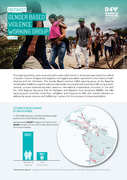
The ongoing political, socio-economic and human rights events in Venezuela have led to the outflow of almost 4 million refugees and migrants, the biggest population movement in the history of Latin America and the Caribbean. The Gender-Based Violenc
...
e (GBV) working group of the Regional Coordination Platform supports national stakeholders to prevent and respond to GBV using a multisectoral, survivor-centered approach based on international humanitarian principles. In line with the 2019 Regional Response Plan for Refugees and Migrants from Venezuela (RMRP), the GBV working group prioritizes prevention, mitigation and response to GBV, with special emphasis on addressing sexual violence and trafficking in persons for the purpose of sexual exploitation.
more
States have a moral and legal obligation—under the Universal Declaration of Human Rights, human rights treaties, the 2030 Agenda for Sustainable Development and other international obligations—t
...
o remove discriminatory laws and to enact laws that protect people from discrimination
more
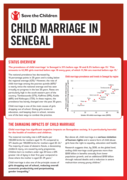
Accessed on 02.02.2020
Child marriage is a serious Violation of human Rights and a severe form of child abuse, and disproportionately affects girls.
COVID-19 и права меньшинств: обзор и перспективные практики
COVID-19 and minority rights: overview and perspective practices
at the World Trade Organization (WTO) Trade Related Aspects of Intellectual Property Rights (TRIPs) Council
23 Febur. 2021
The purpose of the toolkit is to bring together existing learning and guidance as a starting point for stakeholders to begin SRH preparedness work. Within the SRH sector the field of preparedness is relatively new and growing. More collective effort is required to further evaluate the impact of prep
...
aredness efforts and push the field forward. This effort is a first attempt at a draft guidance for SRH preparedness, and is intended for field testing. The toolkit recognizes the longstanding work of the field of emergency and disaster risk management, and endeavors to bridge that work with the human rights-oriented and peoplecentered field of sexual and reproductive health.
more
Interim guidance 2 February 2021 . Available in Arabic, Chinese, English, French, Ukranian, Russian
Health workers are at the front line of the COVID-19 outbreak response and as such are exposed to different hazards that put them at risk. Occupational hazards include exposure to SARS-CoV-2 and othe
...
r pathogens, violence, harassment, stigma, discrimination, heavy workload and prolonged use of personal protective equipment (PPE). This document provides specific measures to protect occupational health and safety of health workers and highlights the duties, rights and responsibilities for health and safety at work in the context of COVID-19.
more
The Department of Health (DOH) has developed a National Integrated Sexual and Reproductive Health and Rights (SRHR) Policy.1 This policy addresses the many cross-cutting issues relating to SRH service provision, drawing together the principles,
...
rights, and guidance for planning and implementation that underpin the provision of quality, comprehensive, and integrated SRHR services in South Africa. The National Integrated SRHR Policy is supported by several clinical and service delivery guidelines covering related programmatic
areas, including the National Contraception Clinical Guidelines.
more
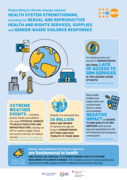
Health systems strengthening, including for sexual and reproductive health and rights services
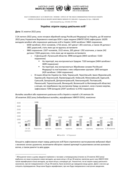
ate: 31 October 2022
From 24 February 2022, when the Russian Federation’s armed attack against Ukraine started, to 30 October 2022, the Office of the UN High Commissioner for Human Rights (OHCHR) recorded 16,295 civilian casualties in the country
...
: 6,430 killed and 9,865 injured. This included:
- a total of 6,430 killed (2,511 men, 1,716 women, 167 girls, and 201 boys, as well as 34 children and 1,801 adults whose sex is yet unknown)
- a total of 9,865 injured (2,107 men, 1,515 women, 205 girls, and 292 boys, as well as 242 children and 5,504 adults whose sex is yet unknown)
- In Donetsk and Luhansk regions: 8,996 casualties (3,833 killed and 5,163 injured)
more
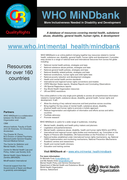
WHO MiNDbank is an online platform bringing together country and international resources, covering mental health, substance abuse, disability, general health, human rights and development. It is part of WHO’s QualityRights campaign to end violatio
...
ns against people with mental disabilities. MiNDbank aims to facilitate dialogue, advocacy and research, to promote reform in these areas in line with international human rights and best practice standards.
more
Humanitarian crises can affect women, men, girls and boys in radically different ways. To address the different impacts of conflict and disasters on each group and promote the potential for positive transformation of gender norms, Oxfam calls for humanitarian agencies to analyse, plan, and respond t
...
o crises in ways that address practical gender needs and promote women’s rights. Oxfam is committed to promoting gender equality and preventing gender-based violence, through the implementation of its Minimum Standards for Gender in Emergencies. In addition, the promotion of gender equality must be central to the broader efforts to protect civilians and manage and prevent conflict and armed violence.
more
This new online platform brings together key international resources and national policies, strategies, laws and service standards for mental health, substance abuse, general health, disability, human rights and development.
Find out more: http://w
...
ww.mindbank.info/
more
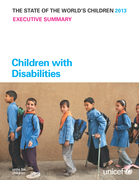
The State of the World’s Children 2013: Children with Disabilities examines the barriers – from inaccessible buildings to dismissive attitudes, from invisibility in official statistics to vicious discrimination – that deprive children with disabilities of their
...
rights and keep them from participating fully in society. The report also lays out some of the key elements of inclusive societies that respect and protect the rights of all children, regardless of disability, and progress in helping all children to flourish and make their contribution to the world.
more
VADEMECUM | This Vademecum is intended to provide a benchmark for aid workers—whether working in the field or at a strategic level—in particular concerning the formulation and implementation of programmes of prevention or response to humanitarian crises. It is not solely a theoretical document b
...
ecause, in addition to guiding principles, it also provides concrete examples of how to ensure protection of the rights of people with disabilities, including in terms of humanitarian aid. This Vademecum has been drafted in adherence to the UN Convention on the Rights of Persons with Disabilities, which has been in force since 2006 and which reaffirms the importance of protecting the safety of people with disabilities in dangerous situations.
more
he WHO global disability action plan 2014-2021 is a significant step towards achieving health and well-being and human rights for people with disabilities. The action plan was endorsed by WHO Member States in 2014 and calls for them to remove barrie
...
rs and improve access to health services and programmes; strengthen and extend rehabilitation, assistive devices and support services, and community-based rehabilitation; and enhance collection of relevant and internationally comparable data on disability, and research on disability and related services. Achieving the objectives of the action plan better enables people with disabilities to fulfil their aspirations in all aspects of life.
more
Save the Children in Albania is establishing and strengthening structures and mechanisms which monitor and advocate for children’s rights, promote ways to protect children from all forms of exploitation and violence and also empower and support ch
...
ildren and their representatives to meaningfully advocate for implementation of their rights and influence decisions that bring about changes in their future lives.
more
A policy brief on child marriage in Zambia. Child marriage is a human rights violation, and endangers young people' personal development and well-being; thus reducing opportunities to realize their full potential. Protecting girls from child marriag
...
e is a national priority and key towards sustainable development.
more

A guidance document in simple language for health personnel, setting out their rights and responsibilities in conflict and other situations of violence. It explains how responsibilities and rights f
...
or health personnel can be derived from international humanitarian law, human rights law and medical ethics.The document gives practical guidance on:
- The protection of health personnel, the sick and the wounded; - Standards of practice; - The health needs of particularly vulnerable people; - Health records and transmission of medical records; - "Imported" health care (including military health care);
- Data gathering and health personnel as witnesses to violations of international law; - Working with the media
more
This guide presents information about the 2030 Agenda, how it connects to the UN Convention on the Rights of Persons with Disabilities, and explores potential entry points for persons with disabilities to influence and participate in their implement
...
ation, follow-up and review
more
This guide presents information about the 2030 Agenda, how it connects to the United Nations Convention on the Rights of Persons with Disabilities (UN CRPD) and explores ways for persons with disabilities to be influential and participate in how the
...
y are achieved.
more
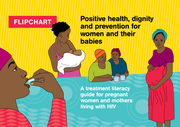
A treatment literacy guide for pregnant women and mothers living with HIV
Positive Health, Dignity and Prevention for Women and their Babies is intended for use by networks of women living with HIV, women’s groups, peer educators and others wishing to help guide women living with HIV t ... hrough the decisions they will need to take before, during and after their pregnancy. It is not intended as a substitute for going to a health facility and seeking information from a healthcare worker.
The facilitator’s manual and flipchart are intended to be used by leaders of support groups, peer educators or lay counsellors to facilitate small groups or community sessions with women living with HIV. Together, they provide accurate and comprehensive information to enable pregnant women and mothers living with HIV to know their rights and make informed decisions about their health, and the health of their baby. more
Positive Health, Dignity and Prevention for Women and their Babies is intended for use by networks of women living with HIV, women’s groups, peer educators and others wishing to help guide women living with HIV t ... hrough the decisions they will need to take before, during and after their pregnancy. It is not intended as a substitute for going to a health facility and seeking information from a healthcare worker.
The facilitator’s manual and flipchart are intended to be used by leaders of support groups, peer educators or lay counsellors to facilitate small groups or community sessions with women living with HIV. Together, they provide accurate and comprehensive information to enable pregnant women and mothers living with HIV to know their rights and make informed decisions about their health, and the health of their baby. more
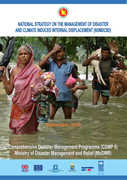
National strategy on the management of disaster and climate induced internal displacement (NSMDCIID)
This strategy has been developed with a view to managing climate-induced internal displacement (CIID) in a comprehensive and rights-based manner. It is part of the action plan for the Government of Bangladesh (GoB) to implement the Sendai Framework.
...
The strategy focuses solely on internal displacements caused by climate-related disasters and not cross-border displacement issues. It aims to chalk out a comprehensive strategy covering all three phases of displacements: (i) pre-displacement; (ii) displacement phase; and (iii) post-displacement. The multidimensional characteristics of the Strategy require participation of all relevant ministries with a target to integrate the concerns of CIIDPs into the existing programmes of all these ministries. more
The strategy focuses solely on internal displacements caused by climate-related disasters and not cross-border displacement issues. It aims to chalk out a comprehensive strategy covering all three phases of displacements: (i) pre-displacement; (ii) displacement phase; and (iii) post-displacement. The multidimensional characteristics of the Strategy require participation of all relevant ministries with a target to integrate the concerns of CIIDPs into the existing programmes of all these ministries. more
This module has been developed to provide training and guidance to improve the quality of care and human rights conditions in inpatient, outpatient and community based mental health and related services, following the conduct of a comprehensive asse
...
ssment using the WHO QualityRights assessment toolkit.
more
Gender-based violence is a life-threatening, global health and human rights issue that violates international human rights law and principles of gender equality. It is also a threat to lasting peace
...
and an affront to our common humanity. United Nations Member States have called for urgent action to end GBV in emergencies, recognizing that in crises, the risk of GBV is heightened, particularly for women and adolescent girls.
more
Continuing a worrying decade-long rising trend, the number of people forced to flee due to persecution, conflict, violence, human rights violations and events seriously disturbing public order climbed to 89.3 million by the end of 2021. This is more
...
than double the 42.7 million people who remained forcibly displaced at the end of 2012 and represents a sharp 8 per cent increase of almost 7 million people in the span of just 12 months. As a result, above one per cent of the world’s population – or 1 in 88 people – were forcibly displaced at the end of 2021. This compares with 1 in 167 at the end of 2012. During 2021, some 1.7 million people crossed international borders seeking protection and 14.4 million new displacements within their countries were reported. This is a dramatic increase from the combined 11.2 million a year earlier.
more
Amnesty International is a global movement of more than 7 million people who campaign for a world where human rights are enjoyed by all.
Our vision is for every person to enjoy all the rights
ensh
...
rined in the Universal Declaration of Human Rights and other international human rights standards. We are independent of any government, political ideology, economic interest or religion and are funded mainly by our membership and public donations.
more
A toolkit to equip young people with the skills to become powerful advocates for Youth Sexual Reproductive Health and Rights (YSRH&R)
Accessed: 17.11.2019
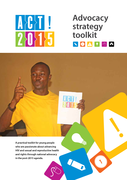
Act 2015 - Advocacy strategy toolkit
UNAIDS; IPPF (International Planned Parenthood Federation); Youth Rise (for reducing drug related harm); et al.
(2014)
C2
A practical toolkit for young people who are passionate about advancing HIV and sexual and reproductive health and rights through national advocacy in the post-2015 agenda.
Guidelines.
The guidelines set out essential actions that humanitarian actors must take in order to effectively identify and respond to the needs and rights of persons with disabilities who are most at risk of being left behind in humanitarian sett
...
ings.
The recommended actions in each chapter place persons with disabilities at the centre of humanitarian action, both as actors and as members of affected populations. They are specific to persons with disabilities and to the context of humanitarian action and build on existing and more general standards and guidelines.
These are the first humanitarian guidelines to be developed with and by persons with disabilities and their representative organizations in association with traditional humanitarian stakeholders. Based on the outcomes of a comprehensive global and regional multi-stakeholder consultation process, they are designed to promote the implementation of quality humanitarian programmes in all contexts and across all regions, and to establish and increase both the inclusion of persons with disabilities and their meaningful participation in all decisions that concern them.
more
How we respond both now and going forward will help mitigate the impact of COVID-19, and to the extent possible preserve children’s rights to Survive, Learn, and Be Protected. We will focus our efforts on the most critical work essential to mainta
...
ining these commitments to the extent possible.
more
The COVID-19 pandemic has been a formative experience for all humanity and a health emergency of global proportions, presenting a huge challenge to national leaders, health systems, and citizens. The findings of a new report by the OSCE Office for Democratic Institutions and Human
...
Rights (ODIHR) shows that it has also been a test to our democracies and the respect for human rights to which countries across the OSCE committed many years ago.
more
In recognition that Female Genital Mutilation (FGM) is not only a harmful practice but a violation of human rights, Kenya has adopted a robust legal framework. The country has ratified several international legal instruments that have become part of
...
the Kenyan law as provided for in Article 2 of the constitution.
more
very woman has the right to the highest attainable standard of health, which includes the right to dignified, respectful health care.
Many women experience disrespectful and abusive treatment during childbirth in facilities worldwide. Such treatment not only violates the
...
rights of women to respectful care, but can also threaten their rights to life, health, bodily integrity, and freedom from discrimination. This statement calls for greater action, dialogue, research and advocacy on this important public health and human rights issue
Available in different langugages
more

English Analysis on Brazil about Health, Protection and Human Rights and Epidemic; published on 26 May 2021 by SSHAP
Female genital mutilation (FGM), a violation of girls’ and women’s human rights, is becoming less common, and opposition to the practice is growing — in the last two decades, the proportion of girls and women who want the practice to stop has
...
doubled.
However, progress is not universal. In some countries, FGM is as common today as it was three decades ago. Even in places where the practice is on the decline, progress would need to be at least 10 times faster to meet the 2030 target for elimination. Additionally, an alarming trend is emerging: around 1 in 4 girls and women who have undergone FGM, or 52 million worldwide, were cut by health personnel. This proportion is twice as high among adolescents, indicating growth in the medicalization of the practice.
This brochure explores the global FGM trends — progress made in the past three decades, shifts in attitudes, and changes in the circumstances surrounding the practice.
more

The Return Counselling Toolkit is a capacity-building instrument aimed at providing a harmonized and coherent approach to return counselling, based on key migrant-centred principles while protecting migrants’ rights. Mindful of the specific needs
...
and rights pertaining to children, this additional module on counselling children and families further complements the first five modules of the Return Counselling Toolkit. It provides specialized guidance on how to prepare and deliver return counselling to accompanied, unaccompanied and separated children while upholding child rights and safeguards.
more
Sexual exploitation, sexual abuse and sexual harassment (SEAH) violate the rights and wellbeing of the people we serve and the people with whom we serve. Such behaviours are directly in opposition to WHO’s values and our abiding responsibility to
...
do no harm. WHO uses the umbrella term “sexual misconduct” to encompass the full spectrum of prohibited and unwanted behaviour of a sexual nature (including rape and sexual assault) as described in WHO’s 2023 Policy for preventing and addressing sexual misconduct (1). This is because all such acts are prohibited – whether perpetrated by WHO’s own personnel or by implementing partners – and therefore constitute misconduct. The term sexual misconduct is also easier to communicate and translate, as
victims and survivors do not always understand the complicated acronyms and definitions used by the United Nations (UN) and the humanitarian sector. However, we use the terms sexual misconduct and SEAH interchangeably as required when we interact with UN and other stakeholders.
more
WHOs Special Initiative for Mental Health has supported the availability of mental health services for more than 40 million more people. Learn about WHOs Special Initiative for Mental Health, which seeks to increase access to quality and affordable care for mental health conditions in 12 countries
...
for 100 million more people. The initiative is advancing policies, advocacy and human rights, and scaling-up quality interventions and services for people with mental, neurological and substance use conditions.
more
Specific action sheets offer useful guidance on mental health and psychosocial support and cover the following areas coordination assessment monitoring and evaluation protection and human rights standards human resources community mobilisation and s
...
upport health services education dissemination of information food security and nutrition shelter and site planning and water and sanitationthe guidelines include a matrix with guidance for emergency planning actions to be taken in the early stages of an emergency and comprehensive responses needed in the recovery and rehabilitation phases
more
IASC Guidelines on Mental Health and Psychosocial Support in Emergency Settings. Checklist
recommended
Armed conflicts and natural disasters cause significant psychological and social suffering to affected populations. The psychological and social impacts of emergencies may be acute in the short term, but they can also undermine the long-term mental health and psychosocial well-being of the affected
...
population. These impacts may threaten peace, human rights and development. One of the priorities in emergencies is thus to protect and improve people’s mental health and psychosocial well-being.
more
EngenderHealth's tool kit of related job aids is designed to help users support individuals in making informed and voluntary family planning decisions. The first volume in the series "Realizing Rights in Sexual and Reproductive Health Services," Cho
...
ices in Family Planning: Informed and Voluntary Decision Making is intended for use by a wide range of audiences in different family planning settings, including service providers, trainers, managers of service programs, managers and members of community-based organizations, policymakers, and donors.
more
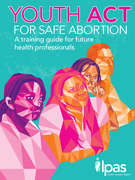
This guide is a resource for future health professionals who want to learn about and engage in abortion issues. Abortion is a critical but often neglected area of women’s rights, women’s health and health science education. The guide ences stude
...
nts was developed for health sciences students -including students in medicine, nursing, midwifery, pharmacology, public health and other related fields
more
Swahili Version of Administration of parenteral antibiotics.Translation and voice over thanks to Alex Mureithi and Zawadi Machibya and their colleagues at the BBC Swahili Service.
This film shows how to give antibiotics correctly during pregnancy. It explains the “6
...
rights” of drug administration – the right drug, the right patient, the right dose, the right time, the right route, and the right paperwork.
The film is for use in health worker training
more
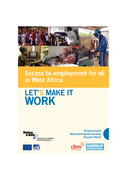
This Making It Work multi-stakeholder initiative documents good practice for inclusive employment of people with disabilities, in order to promote effective implementation Article 27 of the Convention on the Rights of Persons with Disabilities in se
...
ven West African countries. “The objective was to make recommendations for public and private employers, microfinance institutions, governments and their partners in order that they become agents of change and commit themselves to inclusive policies promoting access to decent jobs for people with disabilities in West Africa” - See more at: http://www.asksource.info/node/70240#sthash.yBjlgAds.dpuf
more
The African report on children with disabilities: promising starts and persisting
by Mark Nunn, Annalies Borrel, Allison deFranco et al.
The African Child Policy Forum (ACPF)
(2014)
CC
This pan-African report describes and analyses the cultural, social, physical and other societal barriers preventing children with disabilities in Africa from realising their full human potential. It also describes the opportunities, initiatives and good practices that exist, that indicate the progr
...
ess, albeit insufficient, that has been made towards realising the rights for children with disabilities in Africa. Recommendations and priorities for action are presented which promote inclusive and accessible laws, policies, and programmes for children with disabilities throughout Africa
more
This case study explores how the Talent Youth Association, supported by Link Up, promotes the integration of comprehensive sexuality education in school curricula in Ethiopia in order to enable young people to understand and claim their sexual and reproductive health and
...
rights
more
Frameworks for Victim Assistance: Monitor key findings and observations
International Campaign to Ban Landmines
(2013)
C3
For close to 15 years, the Monitor has tracked the impact of victim assistance on the lives of victims of landmines, cluster munitions,
and other explosive remnants of war (hereafter “mine/ERW victims”). Over this time, the international communi
...
ty has strengthened its resolve to promote the rights and address the needs of victims through programs and services that are accessible and adequate in quantity, quality, availability, and consistent with the high standards set by human rights as well as other international humanitarian law.
more
This document provides a guidance on the importance of consulting with children with disabilities. It provides practical suggestions for consulting with children and young people with disabilities in a variety of situations. It aims to equip individuals working on child
...
rights with the knowledge and skills necessary to communicate with children with a variety of disabilities.
more
Botswana CPD.
The 6th Government of Botswana/UNFPA Country Programme (2017-2021) is focusing on a transformative development agenda that is universal, inclusive, human rights-based, integrated and anchored in the principle of equality and leaving
...
no one behind, while reaching the furthest left behind first. The country programme will contribute directly to the three outcomes of the United Nations Sustainable Development Framework (2017-2021).
more
This study of Adolescent Boys and Young Men highlights the importance of engaging adolescent boys and young men in sexual and reproductive health and rights (srhr) and gender equality. This paper establishes a conceptual framework for engaging adol
...
escent boys and young men. It reviews current research on boys’ and young men’s specific risks and realities in relation to their general health status, violence, sexuality and sexual and reproductive health, media violence, sexual exploitation, and other vulnerabilities.
more
International technical guidance on sexuality education. An evidence-informed approach.
UNESCO
(2018)
CC
This revised and fully updated edition of the
International technical guidance on sexuality education
benefits from a new review of the current evidence, and reaffirms the position of sexuality education within a framework of human rights and gen
...
der equality. It promotes structured learning about sex and relationships in a manner that is positive, affirming, and centered on the best interest of the young person. By outlining the essential components of effective sexuality education programmes, the Guidance enables national authorities to design comprehensive curricula that will have a positive impact on young people’s health and well-being.
more
Many groups in sub-Saharan Africa have historically linked persons with disabilities with witchcraft as a component of a wider link between accusations of witchcraft and socially marginalized populations. It is commonly assumed that traditional prejudices towards persons with disabilities are recedi
...
ng in light of urbanization, education, mass media and efforts to confront such prejudice and stigma by governments,
disability advocates and civil society. Ratification of the UN Convention on the Rights of Persons with Disabilities (CRPD) by many African countries is considered an additional impetus for change.
Working Paper Series: No. 30
more
The State of the World’s Children 2013: Children with Disabilities examines the barriers – from inaccessible buildings to dismissive attitudes, from invisibility in official statistics to vicious discrimination – that deprive children with disabilities of their
...
rights and keep them from participating fully in society. The report also lays out some of the key elements of inclusive societies that respect and protect the rights of all children, regardless of disability, and progress in helping all children to flourish and make their contribution to the world.
more
Epilepsy is one of the world’s most common chronic neurological disorders. Roughly 50 million people
suffer from it, 5 million of them in the Region of the Americas . Nevertheless, it is estimated that over
50% of these people in Latin America and the Caribbean have no access to services. Furthe
...
rmore,
the stigma attached to people with epilepsy is a barrier to the exercise of their human rights and social
integration.
more
CBR Training Manual
recommended
LIGHT FOR THE WORLD is a European confederation of national development NGOs committed to saving eyesight, improving the quality of life and advocating for the rights of person with disabilities in the underprivileged regions of our world. The guide
...
lines reflect both the ongoing developments within CBR during recent years and the strategic debates between CBR practitioners from around the world as to the very ideology behind CBR. The goal of the new CBR guidelines is to assist with the development of CBR practice in the many countries around the world where it is practiced.
more
Refugees1 with disabilities have specific needs and face particular forms of discrimination. As highlighted in the Executive Committee Conclusion No. 110 (LXI)–2010, it is important for UNHCR to ensure that the rights of persons with disabilities
...
who are of concern to the Office are met without discrimination. This places an onus on offices to develop a thorough
understanding of the circumstances of persons with disabilities under their care. This note provides staff with guidance on a range of issues to consider in meeting these responsibilities.
more
Sustainable Development Goals (SDG) Academy
recommended
Welcome to the SDG Academy!
The SDG Academy creates and curates free, graduate-level courses on sustainable development for students around the world.
From sustainable cities to human rights to climate action, each of our courses addresses the
...
fundamental challenge facing our world today: How do people, communities, governments and companies not only coexist, but also cooperate and collaborate, to save the one planet we have?
As a massive open online education platform, SDG Academy's courses are fully interactive, so you can meet, debate and learn from both our global faculty of sustainable development experts and your fellow students.
Learn more here about the SDG Academy – an initiative of the Sustainable Development Solutions Network – and the SDG Academy student experience.
more
Children with disabilities in South Africa: The hidden reality is part of a multiple-country study conducted by ACPF. The study seeks to analyse how cultural, social, physical and other societal barriers prevent children with disabilities from enjoying their constitutional
...
rights to equality, freedom and human dignity. It also seeks to establish opportunities and practices that could be used to address these barriers to enhance disabled children’s participation in society.
more
salud pública de méxico / vol. 50, suplemento 2 de 2008, pp.167-177.
In response to the emerging global concern regarding health and people with intellectual disabilities (ID), several developed countries have established national initiatives to address the unique health needs of this population
...
segment. However, most people with ID reside in countries with developing economies, such as many Latin American countries, yet there is virtually no information on the health of people with ID in these regions. Countries with developing economies face distinct challenges in promoting health among this population segment that may preclude adoption or adaptation of policies and practices developed in regions with established economies. This paper will address the issue of health promotion among people with ID in Latin America, an area that is undergoing significant reforms in both health care and disability rights
more
This annual report outlines achievements and challenges of delivering these partnerships. NUDOR takes this opportunity to thank all organizations, individuals and decision makers who have supported NUDOR to contribute to the promotion, respect and realization of the
...
rights of persons with disabilities.
more
NUDOR’s first strategic plan (2010-2016) focused on establishing NUDOR as a viable, well-run organisation. Significant progress has been made towards these aims and therefore the strategy and has been reviewed by NUDOR board, secretariat and member organisations. The updated strategic plan now cov
...
ers the period 2015 – 2020 for which three strategic aims have been agreed.
1. Representation and accountability: NUDOR will be accountable to and effectively represent members’ interests through the delivery of projects and priorities agreed by member organisations, and by facilitating joint working amongst members.
2. Capacity building and resource mobilization: NUDOR and its member organisations are strengthened to fulfil its mandates by developing its technical skills, research and insight, sustainability and outreach.
3. Advocacy and influencing: NUDOR will work to ensure that the needs and rights of all persons with disabilities are recognised by all, mainstreamed in laws and policies at all levels of government, and in programmes of other institutions focusing on areas of education, health and poverty reduction.
more

“Our children have the right to an education too”: Strategies Employed by Orange Farm Caregivers of Children with Disabilities in Pursuit of the Right to a Basic Education
Elphick, J., De SasKropiwnicki, Z. &Elphick, R.
Disability, CBR & Inclusive Development Journal (DCIDJ)
(2015)
CC
This paper aims to understand the agency that caregivers who participated in a CBR empowerment component programme exercised, in order to promote the rights of their children with disabilities to a basic education.
- Twenty-two joint integrated rapid response mechanism (IRRM) missions were conducted in 11 counties and reached 305,887 people including 65,432 children under 5 years of age.
- UNICEF’s Integrated Community Mobilization Network reached 345,219 households (total population 2.1 million) advoca ... ting for child rights focused on child survival, birth notification, education and protection. Three million people have been reached with advocacy and life-saving messages through radio and community engagement activities, including activities focused on youth and faith leaders.
- On 27 June, discussions between President Salva Kiir and former First Vice President Riek Machar in Khartoum culminated in agreement to a permanent ceasefire and the opening of humanitarian corridors, effective 30 June. more
- UNICEF’s Integrated Community Mobilization Network reached 345,219 households (total population 2.1 million) advoca ... ting for child rights focused on child survival, birth notification, education and protection. Three million people have been reached with advocacy and life-saving messages through radio and community engagement activities, including activities focused on youth and faith leaders.
- On 27 June, discussions between President Salva Kiir and former First Vice President Riek Machar in Khartoum culminated in agreement to a permanent ceasefire and the opening of humanitarian corridors, effective 30 June. more
WHO, in partnership with the International Society for Prosthetics and Orthotics (ISPO) and the United States Agency for International Development (USAID), has published global standards for prosthetics and orthotics. Its aim is to ensure that prosthetics and orthotics services are people-centred an
...
d responsive to every individual’s personal and environmental needs. The standards advocate for the integration of prosthetics and orthotics services into health services, under universal health coverage. Implementation of these standards will support countries to fulfil their obligations under the Convention on the Rights of Persons with Disabilities and towards the Sustainable Development Goals, in particular Goal 3: Ensure healthy lives and promote well-being for all at all ages.
The standards provide guidance on the development of national policies, plans and programmes for prosthetics and orthotics services of the highest standard. The standards are divided into two documents: the standards and an implementation manual. Both documents cover four areas of the health system:
policy (governance, financing and information);
products (prostheses and orthoses);
personnel (workforce);
and provision of services.
The Standards have been developed through consultation with experts from around the globe via a steering group, development group and external review group.
more
WHO, in partnership with the International Society for Prosthetics and Orthotics (ISPO) and the United States Agency for International Development (USAID), has published global standards for prosthetics and orthotics. Its aim is to ensure that prosthetics and orthotics services are people-centred an
...
d responsive to every individual’s personal and environmental needs. The standards advocate for the integration of prosthetics and orthotics services into health services, under universal health coverage. Implementation of these standards will support countries to fulfil their obligations under the Convention on the Rights of Persons with Disabilities and towards the Sustainable Development Goals, in particular Goal 3: Ensure healthy lives and promote well-being for all at all ages.
The standards provide guidance on the development of national policies, plans and programmes for prosthetics and orthotics services of the highest standard. The standards are divided into two documents: the standards and an implementation manual. Both documents cover four areas of the health system:
policy (governance, financing and information);
products (prostheses and orthoses);
personnel (workforce);
and provision of services.
The Standards have been developed through consultation with experts from around the globe via a steering group, development group and external review group.
more
It highlights the numerous challenges to quality service provision, along with the organisation’s response to mental health needs, and recommendations for international and regional decision-makers including:
- Advocating and working towards mental health policies that support adequate funding f
...
or mental health care and government suppor
- Legislation to protect the rights of people with mental disorders and vulnerable communities
- Advocating for multi-year funding to support the sustainability of MHPSS programs
- Creating capacity building opportunities consistent with the IASC guidelines and supported with continuous supervision
more
UNICEF’s 2013 flagship report, The State of the World’s Children, focuses on Children with Disabilities. The report covers a range of thematic areas and attempts to contribute to the global discussion on and draw greater attention to disability rights
...
for children. This thematic note presents excerpts from the report related to Nutrition. All references and original sources can be found in the full report.
more
The bill details procedures for accreditation and supervision of infertility clinics (and related organizations such as semen banks) handling spermatozoa or oocytes outside of the body, or dealing with gamete donors and surrogacy, ensuring that the legitimate
...
rights of all concerned are protected, with maximum benefit to the infertile couples/individuals within a recognized framework of ethics and good medical practice.
more
Slavery on fishing vessels, degradation of ecosystems, overfishing, debt bondage, human trafficking and child labour in peeling sheds – the scandals surrounding the Thai fishery and shrimp industries have garnered international censure. Farmed and processed at the cost of extreme exploitation of b
...
oth people and the planet, Thai shrimp ends up on plates around the world. The former delicacy can now be bought cheaply everywhere. But how high is the price really? And who has to pay it?
This report by seeks to remind governments in the countries of production that it is their duty to enforce human rights and living wages, rather than to compete for the favour of large companies to the detriment of people and the environment. It also appeals to consumers and their governments – and to importers – to send a clear message to suppliers in Thailand and elsewhere: If you want to survive on the global market, you need to respect human rights and child rights, and uphold social and environmental standards.
more
The notion of dignity can simply be defined as the inherent and inalienable worth of all human beings irrespective of social status such as race, gender, physical or mental state1. Dignity is deeply embedded in international human rights instruments
...
.
In fact the very first article of the Universal Declaration of Human Rights states that “All human beings are born free and equal in dignity and rights”2, 3. Protection and respect of human rights are the necessary prerequisites to ensure that people are not stripped of their dignity.
more
The principle of “the best interest of the child” should guide decisions by politicians whenever
children are affected. This is one of the basic ideas in the UN Convention on the Rights
of the Child. Decision makers should assess the consequen
...
ces for children before taking
action. Today, this principle is not fully respected in European countries in relation to migrant
children.
more
This Plan envisions a future with the elimination of cervical cancer as a public health problem as a result of universal access to sexual health and STI prevention services, HPV vaccines, effective screening and precancer treatment services, treatment of invasive cervical cancer, and palliative care
...
. It foresees that all women and girls, regardless of age, race, ethnicity, socioeconomic status, HIV status, or disability will have timely access to quality cervical cancer prevention, care, and treatment so that they can live in good health throughout the life course and enjoy the health-related human rights.
The goal is to accelerate progress toward the elimination of cervical cancer as a public health problem in the Americas by reducing incidence and mortality rates by one-third by 2030.
more
The report depicts the reality of forced displacement as a developing world crisis with implications for sustainable growth: 95 percent of the displaced live in developing countries and over half are in displacement for more than four years. To help the displaced, the report suggests ways to rebuild
...
their lives with dignity through development support, focusing on their vulnerabilities such as loss of assets and lack of legal rights and opportunities. It also examines how to help host communities that need to manage the sudden arrival of large numbers of displaced people, under pressure to expand services, create jobs and address long-standing development issues.
more
This document presents an integrated strategy for mental health system development that will lead to enhanced service delivery, improved outcomes, and improved human rights for people with mental disorders.
By using the practical guidance provid
...
ed in this document, countries can ensure that their mental health systems are not haphazard, but rather, the products of careful consideration and planning.
more
The Sphere Handbook is the oldest initiative in the field of humanitarian standards. It has been field-tested over twenty years and regularly updated to ensure it remains fit for purpose in a changing world. What does not change is its rights-based
...
foundations: people have the right to assistance, the right to life with dignity, the right to protection and security, and the right to fully participate in decisions related to their own recovery
A New Version in English and French was published in 2018
more
Growing evidence indicates that large proportions of children around the world experience physical, sexual and emotional violence every year, with enormous implications for human rights, public health and economic and social development.1 Over the l
...
ast five years, national governments and Together for Girls – a global public-private partnership comprising UNICEF,
other United Nations (UN) agencies, the United States (US) Government and various private sector agencies – have worked to mobilize and sustain a global movement to end violence against children, with a focus on sexual violence against girls.
more
Listening to what children in crisis have to say is not only a moral and ethical responsibility for donor and humanitarian actors, it is also a humanitarian obligation. Children’s right to participation is recognised in the United Nations Convention on the
...
Rights of the
Child (UNCRC), which provides rights for children to express their views and ‘be heard and taken seriously’.
more
The chain-free initiative evolved in response to an urgent need to: provide technical and financial support for hospital reform, improve domestic conditions for people with mental illness, develop community care programmes, raise mental health literacy in the community and among health workers, and
...
ensure that basic rights are monitored and guaranteed
Accessed April 9,2019
more
This report serves the specific purpose of collating legally relevant information on conditions in countries of origin pertinent to the assessment of claims for asylum. It is not intended to be a general report on human rights conditions. The report
...
is prepared within a specified time frame on the basis of publicly available documents as well as information provided by experts. All sources are cited and fully referenced.
more
One billion people around the world live with disabilities. This report makes the case that they are being “left behind” in the global community’s work on health. This lack of access not only violates the rights of people with disabilities und
...
er international law, but UHC and SDG 3 cannot be attained without better health services for the one billion people with disabilities.
more
Translating Community Research Into Global Policy Reform For National Action: A Checklist For Community Engagement To Implement The WHO Consolidated Guideline On The Sexual And Reproductive Health And Rights Of Women Living With HIV
3rd edition |
...
December 2018
more
HelpAge International is a global network of organisations promoting the right of all older people to lead dignified, healthy and secure lives. Convite is a humanitarian, independent, nonprofit, non-governmental organisation that works to guarantee and promote social, economic and cultural
...
rights across Venezuela and is a new member of the HelpAge Global Network. Convite provides direct support to older people, as well as assisting the National Committee of the Pensioned and Retired of Venezuela as part of the Latin American Democracy Network. One of the organisation’s main objectives is to the raise the profile of the crisis in the country internationally.
more
Female genital mutilation/cutting (FGM/C) refers to “all procedures involving partial or total removal of the female external genitalia or other injury to the female genital organs for non-medical reasons.”1 FGM/C is a violation of girls’ and women’s human
...
rights and is condemned by many international treaties and conventions, as well as by national legislation in many countries. Yet, where it is practised FGM/C is performed in line with tradition and social norms to ensure that girls are socially accepted and marriageable, and to uphold their status and honour and that of the entire family. UNICEF works with government and civil society partners towards the elimination of FGM/C in countries where it is still practised.
more
Female genital mutilation/cutting (FGM/C) refers to “all procedures involving partial
or total removal of the female external genitalia or other injury to the female
genital organs for non-medical reasons.”FGM/C is a violation of girls’ and women’s
human
...
rights and is condemned by many international treaties and conventions, as
well as by national legislation in many countries.
more
From the 11th to the 18th of July, in Ougadougou (Burkina Faso), Bridging the Gap II held the training activity entitled “The Convention of the Rights of Persons with Disability (CRPD) and inclusion: promotion and integrated protection of the
...
rights of persons with disabilities through synergies between institutions and civil society – The Sustainable Development Goals (SDGs), the local regulatory framework and their application” « Formation sur la CDPH, les objectifs du développement durable, le cadre réglementaire national et l’application des règles ». The initiative aimed at strengthening the capacities of the focal points of the National Multisectoral Committee for the Protection and Promotion of Persons with Disability (COMUD/Handicap) in line with the expected results 2 and 3 of the Project Bridging the Gap.
more
Burkina Faso remains one of the poorest countries in the world, with 44.5% of the population living below the poverty line. To promote the rights of persons with disabilities, the country has adopted almost all of the relevant initiatives and intern
...
ational legal texts on the rights of persons with disabilities including the Convention on the Rights of Persons with Disabilities (CRPD) that was ratified in 2009. The country has also adopted a National Strategy for the Protection and Promotion of Persons with Disabilities (SN-3PH, 2012), based on, amongst other approaches, Community Based Rehabilitation (CBR), promoted by the WHO and LIGHT FOR THE WORLD. Following on from the 2011-2015 country strategy that enabled LIGHT FOR THE WORLD to contribute strongly to the national dialogue on disability, the present strategy 2016-2020 aims to strengthen our achievements in order to work towards an inclusive society in which persons with disabilities fully enjoy their rights.
more
Updated 8 June 2021. Coronavirus is spreading globally. How can individuals, communities, humanitarian actors, local and national authorities best respond to uphold the rights of all affected people?
Guidance issued as of 25 March 2020
This guidance is intended for use by health authorities to guide the actions taken by health-care providers for refugees and migrants in relation to the novel coronavirus (COVID-19) outbreak. This document is intended to address the needs and
...
rights of refugees and migrants living in all types of setting.
General recommendations made by WHO in the COVID-19 response (link here) are the superseding guidelines. Unfounded measures regarding testing, health screening and quarantine should not be imposed on refugees and migrants.
more
Governments in Eastern European and Central Asian countries are responding to the COVID-19 pandemic with repressive and abusive measures which fall far short of their human rights obligations, Amnesty International said today. The organization has r
...
eleased a new briefing Eastern Europe and Central Asia Confronted with COVID-19: Responses and Responsibilities setting out the responsibilities of governments in the region.
more
This policy paper underscores that, although children do not represent a high-risk group for direct COVID-19 fatality, the pandemic posts far-reaching secondary impacts that heighten risks to African children’s rights and wellbeing.
In the light of growing environmental concerns we are witnessing an integration of ecology into the fabric of Catholic social thought. Catholic social teaching (CST) has traditionally focused on economic and social development, encompassing issues related to human work, the economy, peace, human
...
rights, the family and national and international political development. In the light of the ecological crisis, that focus is now expanding
more
With the spread of the coronavirus (COVID-19) across Myanmar, many children and caregivers are required to stay in quarantine centres, in isolation and in hospitals, and special attention is needed to ensure children’s rights are protected in thes
...
e settings. Violence, exploitation, abuse and neglect still occurs despite COVID-19 and continuity of the child protection case management system is essential to protect all children, including the most vulnerable. UNICEF’s Child Protection support focuses on mitigating the secondary impacts of physical distancing measures by ensuring children, parents and caregivers continue to have access to child protection services.
more
The International Council of Nurses (ICN) Code of Ethics ([1], p. 5) specifies the nurse’s role of promoting “an environment in which the human rights, values, customs and spiritual beliefs of the individual, family and community are respectedâ€
...
�. The Malta Code of Ethics supports this for nurses and midwives [2], stating that the nurse is to “recognize and respect the uniqueness of every patient/client’s biological, psychological, social and spiritual status and needs”. Since patients are attended by different members of the multi-disciplinary team, these codes of ethics also address the holistic care of health care professionals that contribute towards patients’ safety. Examples of some heroes in nursing are given, whereby, their being in care generated signs of spirituality in their attempts to address patients’ needs, while their caring attitude instilled hope and healing.
more
This publication marks the 25th anniversary of the Beijing Declaration and Platform for Action. It is dedicated to the women leaders and allied community mobilizers who have devoted their lives to advancing the human rights and dignity of all people
...
affected by the HIV epidemic, and to opposing social injustice, gender inequality, stigma and discrimination, and violence. Unless otherwise indicated, the HIV-related statistics cited in this publication reflect the most recent UNAIDS data available.
more
The Catholic Church maintains that the Imago Dei is the ground for human dignity. The secular world, too, endorses human dignity as the foundation for human rights without referring to Imago Dei. The Catholic Church and the secular worl
...
d both agree on the importance of human dignity, even though they differ on their views about the source of human dignity. In this paper, we shall examine if human dignity can be the basis of a fruitful dialogue between the Catholic Church and the secular world in order to make our world a better place to live. The primary resources for our study are the Church documents on human dignity, and the opinions of distinguished thinkers on the need to promote a culture of dialogue between religions and secular world.
more
Lessons from three African Countries.
Achieving Health for All, and in particular universal health coverage (UHC), will not happen without fully functioning basic water, sanitation and hygiene (WASH) services in all health care facilities. Such services are needed to provide quality care, ensure ad
...
herence to infection prevention and control (IPC) norms and standards and guarantee that facilities are able to provide environments that respect the dignity and human rights of all care seekers, especially mothers, newborns and children. WHO undertook a series of national situational analyses in three countries (Ghana, Ethiopia and Rwanda) to understand current barriers to change, accountability structures and measures to strengthen WASH in health care facilities and more broadly, the quality of health service delivery.
more
Children in refugee situations face many potential dangers, such as violence, abuse, exploitation, discrimination, separation from their families, trafficking and military recruitment. The impact of these experiences can be devastating and long-lasting. Children have different needs from adults and
...
these needs can only be identified and met if they are approached in a way that is specific to children.
The impact of the COVID-19 global pandemic has exacerbated the dangers faced by children in refugee situations and laid bare the need for their protection and for ensuring that all their human rights are upheld all the time.
The goal of this publication is to share examples of approaches by members of the Initiative that have proven effective for children.
more
Human Mobility, Shared Opportunities recommends expanding legal pathways, reducing transaction costs on remittances, guaranteeing migrants’ rights, especially for women, fostering integration and social cohesion, and mobilizing diasporas. With for
...
ced migration doubling over the last 10 years to around 79 million people, tackling its causes will be essential for development.
more
