
Filter
6158
Text search:
primary
health
care
workers
Featured
607
1744
Language
5990
135
100
88
64
42
35
19
11
8
7
7
6
6
6
5
5
5
5
5
4
4
4
4
4
4
4
3
3
3
3
3
3
3
3
3
3
3
3
2
2
2
2
2
2
2
1
1
1
1
1
1
1
1
1
1
1
1
1
1
1
Document type
3693
900
725
328
224
98
76
67
16
13
6
6
1
Countries
251
217
202
169
154
151
143
141
141
130
115
114
103
98
98
95
93
90
73
67
66
64
64
58
49
47
46
44
44
42
39
38
36
34
34
34
33
31
29
28
25
22
22
22
21
20
18
18
18
18
17
17
17
17
15
14
14
13
12
12
12
11
11
11
10
10
10
10
9
9
9
9
8
7
7
7
6
6
6
5
5
5
5
5
5
4
4
4
4
4
4
4
4
4
3
3
3
3
3
3
3
3
3
3
3
2
2
2
2
2
2
2
2
2
2
2
2
2
2
2
2
2
2
2
2
2
1
1
1
1
1
1
1
1
1
1
1
1
1
1
1
Authors & Publishers
818
299
269
188
165
136
128
123
104
61
38
38
34
33
30
29
27
26
26
24
24
24
24
24
23
23
23
22
22
22
22
21
21
20
20
19
19
18
18
18
18
17
17
17
17
16
16
16
16
15
15
14
14
14
14
14
13
13
13
13
13
13
13
13
13
12
12
12
11
11
11
11
11
11
11
11
10
10
10
10
10
10
10
10
10
10
10
9
9
9
9
9
9
9
9
9
9
8
8
8
8
8
8
8
8
8
7
7
7
7
7
7
7
7
7
7
7
7
7
7
7
7
7
7
7
7
6
6
6
6
6
6
6
6
6
6
6
6
6
6
6
6
6
6
6
6
6
6
6
6
6
6
6
6
6
6
5
5
5
5
5
5
5
5
5
5
5
5
5
5
5
5
5
5
5
5
5
5
5
5
5
5
5
5
5
5
5
5
5
5
5
5
5
5
5
4
4
4
4
4
4
4
4
4
4
4
4
4
4
4
4
4
4
4
4
4
4
4
4
4
4
4
4
4
4
4
4
4
4
4
4
4
4
4
4
4
4
4
4
4
4
4
4
4
4
4
4
4
4
4
4
4
4
4
4
3
3
3
3
3
3
3
3
3
3
3
3
3
3
3
3
3
3
3
3
3
3
3
3
3
3
3
3
3
3
3
3
3
3
3
3
3
3
3
3
3
3
3
3
3
3
3
3
3
3
3
3
3
3
3
3
3
3
3
3
3
3
3
3
3
3
3
3
3
3
3
3
3
3
3
3
3
3
3
3
3
3
3
3
3
3
3
3
3
3
3
3
3
3
3
3
3
3
3
3
3
3
3
3
3
3
3
3
3
3
3
3
3
3
3
3
3
3
3
3
2
2
2
2
2
2
2
2
2
2
2
2
2
2
2
2
2
2
2
2
2
2
2
2
2
2
2
2
2
2
2
2
2
2
2
2
2
2
2
2
2
2
2
2
2
2
2
2
2
2
2
2
2
2
2
2
2
2
2
2
2
2
2
2
2
2
2
2
2
2
2
2
2
2
2
2
2
2
2
2
2
2
2
2
2
2
2
2
2
2
2
2
2
2
2
2
2
2
2
2
2
2
2
2
2
2
2
2
2
2
2
2
2
2
2
2
2
2
2
2
2
2
2
2
2
2
2
2
2
2
2
2
2
2
2
2
2
2
2
2
2
2
2
2
2
2
2
2
2
2
2
2
2
2
2
2
2
2
2
2
2
2
2
2
2
2
2
2
2
2
2
2
2
2
2
2
2
2
2
2
2
2
2
2
2
2
2
2
2
2
2
2
2
2
2
2
2
2
2
2
2
2
2
2
2
2
2
2
2
2
2
2
2
2
2
2
2
2
2
2
2
2
2
2
2
2
2
2
2
2
2
2
2
2
2
2
2
2
2
2
2
2
2
2
2
2
2
2
2
2
2
2
2
2
2
2
2
2
2
2
2
2
2
2
2
2
2
2
2
2
2
2
2
2
2
2
2
2
2
2
2
2
2
2
2
2
2
2
2
2
2
2
2
2
2
2
2
2
2
2
2
2
2
2
2
2
2
2
2
2
2
2
2
2
2
2
2
2
2
2
2
2
2
2
2
2
2
2
2
2
2
2
2
2
2
2
2
2
2
2
1
1
1
1
1
1
1
1
1
1
1
1
1
1
1
1
1
1
1
1
1
1
1
1
1
1
1
1
1
1
1
1
1
1
1
1
1
1
1
1
1
1
1
1
1
1
1
1
1
1
1
1
1
1
1
1
1
1
1
1
1
1
1
1
1
1
1
1
1
1
1
1
1
1
1
1
1
1
1
1
1
1
1
1
1
1
1
1
1
1
1
1
1
1
1
1
1
1
1
1
1
1
1
1
1
1
1
1
1
1
1
1
1
1
1
1
1
1
1
1
1
1
1
1
1
1
1
1
1
1
1
1
1
1
1
1
1
1
1
1
1
1
1
1
1
1
1
1
1
1
1
1
1
1
1
1
1
1
1
1
1
1
1
1
1
1
1
1
1
1
1
1
1
1
1
1
1
1
1
1
1
1
1
1
1
1
1
1
1
1
1
1
1
1
1
1
1
1
1
1
1
1
1
1
1
1
1
1
1
1
1
1
1
1
1
1
1
1
1
1
1
1
1
1
1
1
1
1
1
1
1
1
1
1
1
1
1
1
1
1
1
1
1
1
1
1
1
1
1
1
1
1
1
1
1
1
1
1
1
1
1
1
1
1
1
1
1
1
1
1
1
1
1
1
1
1
1
1
1
1
1
1
1
1
1
1
1
1
1
1
1
1
1
1
1
1
1
1
1
1
1
1
1
1
1
1
1
1
1
1
1
1
1
1
1
1
1
1
1
1
1
1
1
1
1
1
1
1
1
1
1
1
1
1
1
1
1
1
1
1
1
1
1
1
1
1
1
1
1
1
1
1
1
1
1
1
1
1
1
1
1
1
1
1
1
1
1
1
1
1
1
1
1
1
1
1
1
1
1
1
1
1
1
1
1
1
1
1
1
1
1
1
1
1
1
1
1
1
1
1
1
1
1
1
1
1
1
1
1
1
1
1
1
1
1
1
1
1
1
1
1
1
1
1
1
1
1
1
1
1
1
1
1
1
1
1
1
1
1
1
1
1
1
1
1
1
1
1
1
1
1
1
1
1
1
1
1
1
1
1
1
1
1
1
1
1
1
1
1
1
1
1
1
1
1
1
1
1
1
1
1
1
1
1
1
1
1
1
1
1
1
1
1
1
1
1
1
1
1
1
1
1
1
1
1
1
1
1
1
1
1
1
1
1
1
1
1
1
1
1
1
1
1
1
1
1
1
1
1
1
1
1
1
1
1
1
1
1
1
1
1
1
1
1
1
1
1
1
1
1
1
1
1
1
1
1
1
1
1
1
1
1
1
1
1
1
1
1
1
1
1
1
1
1
1
1
1
1
1
1
1
1
1
1
1
1
1
1
1
1
1
1
1
1
1
1
1
1
1
1
1
1
1
1
1
1
1
1
1
1
1
1
1
1
1
1
1
1
1
1
1
1
1
1
1
1
1
1
1
1
1
1
1
1
1
1
1
1
1
1
1
1
1
1
1
1
1
1
1
1
1
1
1
1
1
1
1
1
1
1
1
1
1
1
1
1
1
1
1
1
1
1
1
1
1
1
1
1
1
1
1
1
1
1
1
1
1
1
1
1
1
1
1
1
1
1
1
1
1
1
1
1
1
1
1
1
1
1
1
1
1
1
1
1
1
1
1
1
1
1
1
1
1
1
1
1
1
1
1
1
1
1
1
1
1
1
1
1
1
1
1
1
1
1
1
1
1
1
1
1
1
1
1
1
1
1
1
1
1
1
1
1
1
1
1
1
1
1
1
1
1
1
1
1
1
1
1
1
1
1
1
1
1
1
1
1
1
1
1
1
1
1
1
1
1
1
1
1
1
1
1
1
1
1
1
1
1
1
1
1
1
1
1
1
1
1
1
1
1
1
1
1
1
1
1
1
1
1
1
1
1
1
1
1
1
1
1
1
1
1
1
1
1
1
1
1
1
1
1
1
1
1
1
1
1
1
1
1
1
1
1
1
1
1
1
1
1
1
1
1
1
1
1
1
1
1
1
1
1
1
1
1
1
1
1
1
1
1
1
1
1
1
1
1
1
1
1
1
1
1
1
1
1
1
1
1
1
1
1
1
1
1
1
1
1
1
1
1
1
1
1
1
1
1
1
1
1
1
1
1
1
1
1
1
1
1
1
1
1
1
1
1
1
1
1
1
1
1
1
1
1
1
1
1
1
1
1
1
1
1
1
1
1
1
1
1
1
1
1
1
1
1
1
1
1
1
1
1
1
1
1
1
1
1
1
1
1
1
1
1
1
1
1
1
1
1
1
1
1
1
1
1
1
1
1
1
1
1
1
1
1
1
1
1
1
1
1
1
1
1
1
1
1
1
1
1
1
1
1
1
1
1
1
1
1
1
1
1
1
1
1
1
1
1
1
1
1
1
1
1
1
1
1
1
1
1
1
1
1
1
1
1
1
1
1
1
1
1
1
1
1
1
1
1
1
1
1
1
1
1
1
1
1
1
1
1
1
1
1
1
1
1
1
1
1
1
1
1
1
1
1
1
1
1
1
1
1
1
1
1
1
1
1
1
1
1
1
1
1
1
1
1
1
1
1
1
1
1
1
1
1
1
1
1
1
1
1
1
1
1
1
1
1
1
1
1
1
1
1
1
1
1
1
1
1
1
1
1
1
1
1
1
1
1
1
1
1
1
1
1
1
1
1
1
1
1
1
1
1
1
1
1
1
1
1
1
1
1
1
1
1
1
1
1
1
1
1
1
1
1
1
1
1
1
1
1
1
1
1
1
1
1
1
1
1
1
1
1
1
1
1
1
1
1
1
1
1
1
1
1
1
1
1
1
1
1
1
1
1
1
1
1
1
1
1
1
1
1
1
1
1
1
1
1
1
1
1
1
1
1
1
1
1
1
1
1
1
1
1
1
1
1
1
1
1
1
1
1
1
1
1
1
1
1
1
1
1
1
1
1
1
1
1
1
1
1
1
1
1
1
1
1
1
1
1
1
1
1
1
1
1
1
1
1
1
1
1
1
1
1
1
1
1
1
1
1
1
1
1
1
1
1
1
1
1
1
1
1
1
1
1
1
1
1
1
1
1
1
1
1
1
1
1
1
1
1
1
1
1
1
1
1
1
1
1
1
1
1
1
1
1
1
1
1
1
1
1
1
1
1
1
1
1
1
1
1
1
1
1
1
1
1
1
1
1
1
1
1
1
1
1
1
1
1
1
1
1
1
1
1
1
1
1
1
1
1
1
1
1
1
1
1
1
1
1
1
1
1
1
1
1
1
1
1
1
1
1
1
1
1
1
1
1
1
1
1
1
1
1
1
1
1
1
1
1
1
1
1
1
1
1
1
1
1
1
1
1
1
1
1
1
1
1
1
1
1
1
1
1
1
1
1
1
1
1
1
1
1
1
1
1
1
1
1
1
1
1
1
1
1
1
1
1
1
1
1
1
1
1
1
1
1
1
1
1
1
1
1
1
1
1
1
1
1
1
1
1
1
1
1
1
1
1
1
1
1
1
1
1
1
1
1
1
1
1
1
1
1
1
1
1
1
1
1
1
1
1
1
1
1
1
1
1
1
1
1
1
1
1
1
1
1
1
1
1
1
1
1
1
1
1
1
1
1
1
1
1
1
1
1
1
1
1
1
1
1
1
1
1
1
1
1
1
1
1
1
1
1
1
1
1
1
1
1
1
1
1
1
1
1
1
1
1
1
1
1
1
1
1
1
1
1
1
1
1
1
1
1
1
1
1
1
1
1
1
1
1
1
1
1
1
1
1
1
1
1
1
1
1
1
1
1
1
1
1
1
1
1
1
1
1
1
1
1
1
1
1
1
1
1
1
1
1
1
1
1
1
1
1
1
1
1
1
1
1
1
1
1
1
1
1
1
1
1
1
1
1
1
1
1
1
1
1
1
1
1
1
1
1
1
1
1
1
1
1
1
1
1
1
1
1
1
1
1
1
1
1
1
1
1
1
1
1
1
1
1
1
1
1
1
1
1
1
1
1
1
1
1
1
1
1
1
1
1
1
1
1
1
1
1
1
1
1
1
1
1
1
1
1
1
1
1
1
1
1
1
1
1
1
1
1
1
1
1
1
1
1
1
1
1
1
1
1
1
1
1
1
1
1
1
1
1
1
1
1
1
1
1
1
1
1
1
1
1
1
1
1
1
1
1
1
1
1
1
1
1
1
1
1
1
1
1
1
1
1
1
1
1
1
1
1
1
1
1
1
1
1
1
1
1
1
1
1
1
1
1
1
1
1
1
1
1
1
1
1
1
1
1
1
1
1
1
1
1
1
1
1
1
1
1
1
1
1
1
1
1
1
1
1
1
1
1
1
1
1
1
1
1
1
1
1
1
1
1
1
1
1
1
1
1
1
1
1
1
1
1
1
1
1
1
1
1
1
1
1
1
1
1
1
1
1
1
1
1
1
1
1
1
1
1
1
1
1
1
1
1
1
1
1
1
1
1
1
1
1
1
1
1
1
1
1
1
1
1
1
1
1
1
1
1
1
1
1
1
1
1
1
1
1
1
1
1
1
1
1
1
1
1
1
1
1
1
1
1
1
1
1
1
1
1
1
1
1
1
1
1
1
1
1
1
1
1
1
1
1
1
1
1
1
1
1
1
1
1
1
1
1
1
1
1
1
1
1
1
1
1
1
1
1
1
1
1
1
1
1
1
1
1
1
1
1
1
1
1
1
1
1
1
1
1
1
1
1
1
1
1
1
1
1
1
1
1
1
1
1
1
1
1
1
1
1
1
1
1
1
1
1
1
1
1
1
1
1
1
1
1
1
1
1
1
1
1
1
1
1
1
1
1
1
1
1
1
1
1
1
1
1
1
1
1
1
1
1
1
1
1
1
1
1
1
1
1
1
1
1
1
1
1
1
1
1
1
1
1
1
1
1
1
1
1
1
1
1
1
1
1
1
1
1
1
1
1
1
1
1
1
1
1
1
1
1
1
1
1
1
1
1
1
1
1
1
1
1
1
1
1
1
1
1
1
1
1
1
1
1
1
1
1
1
1
1
1
1
1
1
1
1
1
1
1
1
1
1
1
1
1
1
1
1
1
1
1
1
1
1
1
1
1
1
1
1
1
1
1
1
1
1
1
1
1
1
1
1
1
1
1
1
1
1
1
1
1
1
1
1
1
1
1
1
1
1
1
1
1
1
1
1
1
1
1
1
1
1
1
1
1
1
1
1
1
1
1
1
1
1
1
1
1
1
1
1
1
1
1
1
1
1
1
1
1
1
1
1
1
1
1
1
1
1
1
1
1
1
1
1
1
1
1
1
1
1
1
1
1
1
1
1
1
1
1
1
1
1
1
1
1
1
1
1
1
1
1
1
1
1
1
1
1
1
1
1
1
1
1
1
1
1
1
1
1
1
1
1
1
1
1
1
1
1
1
1
1
1
1
1
1
1
1
1
1
1
1
1
1
1
1
1
1
1
1
1
1
1
1
1
1
1
1
1
1
1
1
1
1
1
1
1
1
1
1
1
1
1
1
1
1
1
1
1
1
1
1
1
1
1
1
1
1
1
1
1
1
1
1
1
1
1
1
1
1
1
1
1
1
1
1
1
1
1
1
1
1
1
1
1
1
1
1
1
1
1
1
1
1
1
1
1
1
1
1
1
1
1
1
1
1
1
1
1
1
1
1
1
1
1
1
1
1
1
1
1
1
1
1
1
1
1
1
1
1
1
1
1
1
1
1
1
1
1
1
1
1
1
1
1
1
1
1
1
1
1
1
1
1
1
1
1
1
1
1
1
1
1
1
1
1
1
1
1
1
1
1
1
1
1
1
1
1
1
1
1
1
1
1
1
1
1
1
1
1
1
1
1
1
1
1
1
1
1
1
1
1
1
1
1
1
1
1
1
1
1
1
1
1
1
1
1
1
1
1
1
1
1
1
1
1
1
1
1
1
1
1
1
1
1
1
1
1
1
1
1
1
1
1
1
1
1
1
1
1
1
1
1
1
1
1
1
1
1
1
1
1
1
1
1
1
1
1
1
1
1
1
1
1
1
1
1
1
1
1
1
1
1
1
1
1
1
1
1
1
1
1
1
1
1
1
1
1
1
1
1
1
1
1
1
1
1
1
1
1
1
1
1
1
1
1
1
1
1
1
1
1
1
1
1
1
1
1
1
1
1
1
1
1
1
1
1
1
1
1
1
1
1
1
1
1
1
1
1
1
1
1
1
1
1
1
1
1
1
1
1
1
1
1
1
1
1
1
1
1
1
1
1
1
1
1
1
1
1
1
1
1
1
1
1
1
1
1
1
1
1
1
1
1
1
1
1
1
1
1
1
1
1
1
1
1
1
1
1
1
1
1
1
1
1
1
1
1
1
1
1
1
1
1
1
1
1
1
1
1
1
1
1
1
1
1
1
1
1
1
1
1
1
1
1
1
1
1
1
1
1
1
1
1
1
1
1
1
1
1
1
1
1
1
1
1
1
1
1
1
1
1
1
1
1
1
1
1
1
1
1
1
1
1
1
1
1
1
1
1
1
1
1
1
1
1
1
1
1
1
1
1
1
1
1
1
1
1
1
1
1
1
1
1
1
1
1
1
1
1
1
1
1
1
1
1
1
1
1
1
1
1
1
1
1
1
1
1
1
1
1
1
1
1
1
1
1
1
1
1
1
1
1
1
1
1
1
1
1
1
1
1
1
1
1
1
1
1
1
1
1
1
1
1
1
1
1
1
1
1
1
1
1
1
1
1
1
1
1
1
1
1
1
1
1
1
1
1
1
1
1
1
1
1
1
1
1
1
1
1
1
1
1
1
1
1
1
1
1
1
1
1
1
1
1
1
1
1
1
1
1
1
1
1
1
1
1
1
1
1
1
1
1
1
1
1
1
1
1
1
1
1
1
1
1
1
1
1
1
1
1
1
1
1
1
1
1
1
1
1
1
1
1
1
1
1
1
1
1
1
1
1
1
1
1
1
1
1
1
1
1
1
1
1
1
1
1
1
1
1
1
1
1
1
1
1
1
1
1
1
1
1
1
1
1
1
1
1
1
1
1
1
1
1
1
1
1
1
1
1
1
1
1
1
1
1
1
1
1
1
1
1
1
1
1
1
1
1
1
1
1
1
1
1
1
1
1
1
1
1
1
1
1
1
1
1
1
1
1
1
1
1
1
1
1
1
1
1
1
1
1
1
1
1
1
1
1
1
1
1
1
1
1
1
1
1
1
1
1
1
1
1
1
1
1
1
1
1
1
1
1
1
1
1
1
1
1
1
1
1
1
1
1
1
1
1
1
1
1
1
1
1
1
1
1
1
1
1
1
1
1
1
1
1
1
1
1
1
1
1
1
1
1
1
1
1
1
1
1
1
1
1
1
1
1
1
1
1
1
1
1
1
1
1
1
1
1
1
1
1
1
1
1
1
1
1
1
1
1
1
1
1
1
1
1
1
1
1
1
1
1
1
1
1
1
1
1
1
1
1
1
1
1
1
1
1
1
1
1
1
1
1
1
1
1
1
1
1
1
1
1
1
1
1
1
1
1
1
1
1
1
1
1
1
1
1
1
1
1
1
1
1
1
1
1
1
1
1
1
1
1
1
1
1
1
1
1
1
1
1
1
1
1
1
1
1
1
1
1
1
1
1
1
1
1
1
1
1
1
1
1
1
1
1
1
1
1
1
1
1
1
1
1
1
1
1
1
1
1
1
1
1
1
1
1
1
1
1
1
1
1
1
1
1
1
1
1
1
1
1
1
1
1
1
1
1
1
1
1
1
1
1
1
1
1
1
1
1
1
1
1
1
1
1
1
1
1
1
1
1
1
1
1
1
1
1
1
1
1
1
1
1
1
1
1
1
1
1
1
1
1
1
1
1
1
1
1
1
1
1
1
1
1
1
1
1
1
1
1
1
1
1
1
1
1
1
1
1
1
1
1
1
1
1
1
1
1
1
1
1
1
1
1
1
1
1
1
1
1
1
1
1
1
1
1
1
1
1
1
1
1
1
1
1
1
1
1
1
1
1
1
1
1
1
1
1
1
1
1
1
1
1
1
1
1
1
1
1
1
1
1
1
1
1
1
1
1
1
1
1
1
1
1
1
1
1
1
1
1
1
1
1
1
1
1
1
1
1
1
1
1
1
1
1
1
1
1
1
1
1
1
1
1
1
1
1
1
1
1
1
1
1
1
1
1
1
1
1
1
1
1
1
1
1
1
1
1
1
1
1
1
1
1
1
1
1
1
1
1
1
1
1
1
1
1
1
1
1
1
1
1
1
1
1
1
1
1
1
1
1
1
1
1
1
1
1
1
1
1
1
1
1
1
1
1
1
1
1
1
1
1
1
1
1
1
1
1
1
1
1
1
1
1
1
1
1
1
1
1
1
1
1
1
1
1
1
1
1
1
1
1
1
1
1
1
1
1
1
1
1
1
1
1
1
1
1
1
1
1
1
1
1
1
1
1
1
1
1
1
1
1
1
1
1
1
1
1
1
1
1
1
1
1
1
1
1
1
1
1
1
1
1
1
1
1
1
1
1
1
1
1
1
1
1
1
1
1
1
1
1
1
1
1
1
1
1
1
1
1
1
1
1
1
1
1
1
1
1
1
1
1
1
1
1
1
1
1
1
1
1
1
1
1
1
1
1
1
1
1
1
1
1
1
1
1
1
1
1
1
1
1
1
1
1
1
1
1
1
1
1
1
1
1
1
1
1
1
1
1
1
1
1
1
1
1
1
1
1
1
1
1
1
1
1
1
1
1
1
1
1
1
1
1
1
1
1
1
1
1
1
1
1
1
1
1
1
1
1
1
1
1
1
1
1
1
1
1
1
1
1
1
1
1
1
1
1
1
1
1
1
1
1
1
1
1
1
1
1
1
1
1
1
1
1
1
1
1
1
1
1
1
1
1
1
1
1
1
1
1
1
1
1
1
1
1
1
1
1
1
1
1
1
1
1
1
1
1
1
1
1
1
1
1
1
1
1
1
1
1
1
1
1
1
1
1
1
1
1
1
1
1
1
1
1
1
1
1
1
1
1
1
1
1
1
1
1
1
1
1
1
1
1
1
1
1
1
1
1
1
1
1
1
1
1
1
1
1
1
1
1
1
1
1
1
1
1
1
1
1
1
1
1
1
1
1
1
1
1
1
1
1
1
1
1
1
1
1
1
1
1
1
1
1
1
1
1
1
1
1
1
1
1
1
1
1
1
1
1
1
1
1
1
1
1
1
1
1
1
1
1
1
1
1
1
1
1
1
1
1
1
1
1
1
1
1
1
1
1
1
1
1
1
1
1
1
1
1
1
1
1
1
1
1
1
1
1
1
1
1
1
1
1
1
1
1
1
1
1
1
1
1
1
1
1
1
1
1
1
1
1
1
1
1
1
1
1
1
1
1
1
1
1
1
1
1
1
1
1
1
1
1
1
1
1
1
1
1
1
1
1
1
1
1
1
1
1
1
1
1
1
1
1
1
1
1
1
1
1
1
1
1
Publication Years
1568
3933
614
38
4
1
Category
2519
462
369
365
210
134
51
3
3
1
Toolboxes
532
480
478
302
254
228
208
179
162
124
118
114
111
105
87
82
64
42
32
31
29
25
24
2
1
Diabetes is a significant public health issue that affects approximately one in 10 adults globally, with type 2 diabetes accounting for 90–95% of cases. This chronic condition causes considerable morbidity and mortality and is growing in impact, w
...
ith cases projected to rise from 537 million in 2021 to 784 million by 2045.1 As cases rise, it is imperative to ensure the healthcare workforce is prepared to care for affected individuals. However, there is a growing global shortage of healthcare workers, which was estimated, pre pandemic, to reach 15 million by 2030.2 Therefore, all of the healthcare workforce will need to be utilised to their fullest potential in order to address the growing global burden of diabetes. Pharmacists will continue to be essential in this endeavour.
more
Diabetes is a significant public health issue that affects approximately one in 10 adults globally, with type 2 diabetes accounting for 90–95% of cases. This chronic condition causes considerable morbidity and mortality and is growing in impact, w
...
ith cases projected to rise from 537 million in 2021 to 784 million by 2045. As cases rise, it is imperative to ensure the healthcare workforce is prepared to care for affected individuals. However, there is a growing global shortage of healthcare workers, which was estimated, pre pandemic, to reach 15 million by 2030. Therefore, all of the healthcare workforce will need to be utilised to their fullest potential in order to address the growing global burden of diabetes. Pharmacists will continue to be essential in this endeavour.
more
The present DHR-ICMR guidelines comprehensively address the various concerns regarding the clinical assessment, treatment, and laboratory diagnosis of rickettsial diseases in India and the world. It is hoped that physicians, health
...
care workers, the scientific community, the regulatory agencies, public health care professionals and the public at large will be benefited by these guidelines.
more
The purpose of these guidelines is to give practical advice to doctors so that all services and models of care used by doctors and health workers a
...
re encouraged to consider the use of telemedicine as a part of normal practice. These guidelines will assist the medical practitioner in pursuing a sound course of action to provide effective and safe medical care founded on current information, available resources, and patient needs to ensure patient and provider safety.
more
The document is intended to facilitate the detection, evaluation and management of incident EVD cases in Germany. It primarily addresses public health service staff and health
...
care workers in hospitals, outpatient clinics and emergency services in Germany. It is a work in progress, intended to evolve over time. Updated 14 August 2015
more
Formularies are lists of antibiotics that are suggested for certain healthcare settings. In developing a recommended formulary, countries should consider the needs of patients and facilities where they receive care. For example, clinicians in rural
...
or primary health centers may need wide access to first-line antibiotics (e.g., penicillin, ampicillin, TMP-SMX), but last resort antibiotics such as carbapenems or colistin might be limited to tertiary care hospitals. Efforts to create antibiotic formularies may be linked to efforts within countries to create or update essential medicine lists (EML).
more
Nosocomial infections, or hospital-acquired infec-tions (HAI), are among the most significant causesof morbidity and mortality in healthcare settingsthroughout the world.Prevention of HAIs iscentral to providing high quality and safe health-
...
care, even in settings with limited resources.Transmission of infectious agents between patientsby health workers and irrational use of antibioticsare two important preventable factors involved inmany HAIs.
more
Preventing Physical Impairment in Childhood CBM Strategy Overview | Laminated flip charts | These are the main implementing tools in the prevention program, developed as A4 sized booklets which can be carried easily. They constitute the basic information a community rehabilitation worker needs to co
...
nvey to caregivers, primary health providers and other appropriate user groups. They are primarily visually presented, taking into consideration audiences with limited literacy, with three or four bullet points per page for the community workers to reinforce. The drawings can also be printed on A1 sized flip charts.
more
Human Papilloma Virus (HPV) is the most common sexually transmitted infection, and two types of HPV (16 and 18) cause nearly 50% of high-grade cervical pre-cancers. HIV and cervical cancer are inextricably linked. Women living with HIV are six times more likely to develop cervical cancer, which is o
...
ne of the AIDS-defining illnesses and the most common cancer among women living with HIV globally. Cervical cancer is a preventable, curable disease and can be eliminated as a public health problem with primary and secondary prevention, treatment, and care of cervical cancer, in combination with addressing social, health and other inequalities and integrated approaches.
more
As slight hints of recovery begin to surface in West Africa, UNICEF is looking at the impact of Ebola on children and the response and work of the affected communities in the report, Ebola: Getting to zero – for communities, for children for the future. The document traces some of the outbreak’s
...
history along with the stories of survivors, health care workers and those working to make things better on the ground. The report also helps map out the actions that urgently must continue to help build resiliency and resuscitate basic services and systems decimated by Ebola.
more
Earthquake Haiti: Guidelines and Resources
recommended
25 August 2021. The earthquake on August 14, 2021 was almost as strong as the severe quake in 2010, which killed about 300,000 people. The current number of victims is more than 2,200 people, and more than 12,000 people have been injured. More than 52,000 houses were destroyed and more than 77,000
...
damaged. Thousands of families were affected! The magnitude 7.2 earthquake struck southwest Haiti at 8:30 a.m. local time at a depth of about 10 km. The epicentre was measured about 12 km northeast of Saint-Louis-du-Sud, about 125 km west of the capital Port-auPrince. The situation on the ground remains chaotic and the extent of the disaster cannot yet be predicted. In addition, heavy rainfall and the unstable security situation are complicating relief efforts. What is needed most now is food and drinking water, tents and primary health care. MEDBOX has already created the Natural Hazard Toolbox after the severe earthquake in 2010 and has collected many essential materials on health care, shelter & reconstruction after an earthquake in English, French and Kreyol there. In this issue brief, we provide a quick
overview of the most important information.
more
The World Heart Federation (WHF) Roadmap series covers a large range of cardiovascular conditions. These Roadmaps identify potential roadblocks and their solutions to improve the prevention, detection and management of cardiovascular diseases and provide a generic global framework available for loca
...
l adaptation. A first Roadmap on raised blood pressure was published in 2015. Since then, advances in hypertension have included the publication of new clinical guidelines (AHA/ACC; ESC; ESH/ISH); the launch of the WHO Global HEARTS Initiative in 2016 and the associated Resolve to Save Lives (RTSL) initiative in 2017; the inclusion of single-pill combinations on the WHO Essential
Medicines’ list as well as various advances in technology, in particular telemedicine and mobile health. Given the substantial benefit accrued from effective interventions in the management of hypertension and their potential for scalability in low and middle-income countries (LMICs), the WHF has now revisited and updated the ‘Roadmap for raised BP’ as ‘Roadmap for hypertension’
by incorporating new developments in science and policy. Even though cost-effective lifestyle and medical interventions to prevent and manage hypertension exist, uptake is still low, particularly in resource-poor areas. This Roadmap examined the roadblocks pertaining to both the demand side (demographic and socio-economic factors, knowledge and beliefs, social relations, norms, and
traditions) and the supply side (health systems resources and processes) along the patient pathway to propose a range of possible solutions to overcoming them. Those include the development of population-wide prevention and control programmes; the implementation of opportunistic screening and of out-of-office blood pressure measurements; the strengthening of primary care and a greater focus on task sharing and team-based care; the delivery of people-centred care and stronger patient and carer education; and the facilitation of adherence to treatment. All of the above are dependent upon the availability and effective distribution of good quality, evidencebased, inexpensive BP-lowering agents.
more
In 2015, the United Nations set important targets to reduce premature
cardiovascular disease (CVD) deaths by 33% by 2030. Africa disproportionately
bears the brunt of CVD burden and has one of the highest risks of dying
from non-communicable diseases (NCDs) worldwide. There is currently
an epide
...
miological transition on the continent, where NCDs is projected
to outpace communicable diseases within the current decade. Unchecked
increases in CVD risk factors have contributed to the growing burden of three
major CVDs—hypertension, cardiomyopathies, and atherosclerotic diseasesleading to devastating rates of stroke and heart failure. The highest age
standardized disability-adjusted life years (DALYs) due to hypertensive heart
disease (HHD) were recorded in Africa. The contributory causes of heart failure
are changing—whilst HHD and cardiomyopathies still dominate, ischemic
heart disease is rapidly becoming a significant contributor, whilst rheumatic
heart disease (RHD) has shown a gradual decline. In a continent where health
systems are traditionally geared toward addressing communicable diseases,
several gaps exist to adequately meet the growing demand imposed by CVDs.
Among these, high-quality research to inform interventions, underfunded
health systems with high out-of-pocket costs, limited accessibility and
affordability of essential medicines, CVD preventive services, and skill
shortages. Overall, the African continent progress toward a third reduction
in premature mortality come 2030 is lagging behind. More can be done in
the arena of effective policy implementation for risk factor reduction and
CVD prevention, increasing health financing and focusing on strengthening
primary health care services for prevention and treatment of CVDs, whilst
ensuring availability and affordability of quality medicines. Further, investing
in systematic country data collection and research outputs will improve the accuracy of the burden of disease data and inform policy adoption on
interventions. This review summarizes the current CVD burden, important
gaps in cardiovascular medicine in Africa, and further highlights priority
areas where efforts could be intensified in the next decade with potential
to improve the current rate of progress toward achieving a 33% reduction
in CVD mortality.
more
Asthma is the most common non-communicable disease in children and remains one of the most common throughout the life course. The great majority of the burden of this disease is seen in low-income and middle-income countries (LMICs), which have disproportionately high asthma-related mortality relati
...
ve to asthma prevalence. This is particularly true for many countries in sub-Saharan Africa. Although inhaled asthma treatments (particularly those containing inhaled corticosteroids) markedly reduce asthma morbidity and mortality, a substantial proportion of the children, adolescents, and adults with asthma in LMICs do not get to benefit from these, due to poor availability and affordability. In this review, we consider the reality faced by clinicians managing asthma in the primary and secondary care in sub-Saharan Africa and suggest how we might go about making diagnosis and treatment decisions in a range of resource-constrained scenarios. We also provide recommendations for research and policy, to help bridge the gap between current practice in sub-Saharan Africa and Global Initiative for Asthma (GINA) recommended diagnostic processes and treatment for children, adolescents, and adults with asthma.
more
BMC Family Practice201415:165, DOI: 10.1186/1471-2296-15-165
Open Access

A Global Campaign Against Epilepsy Demonstration Project
A guidance document in simple language for health personnel, setting out their rights and responsibilities in conflict and other situations of violence. It explains how responsibilities and rights for heal
...
th personnel can be derived from international humanitarian law, human rights law and medical ethics.The document gives practical guidance on:
- The protection of health personnel, the sick and the wounded; - Standards of practice; - The health needs of particularly vulnerable people; - Health records and transmission of medical records; - "Imported" health care (including military health care);
- Data gathering and health personnel as witnesses to violations of international law; - Working with the media
more
Vulnerable and Marginalized Groups Planning Framework
PLoS ONE 11(1): e0144662. doi:10.1371/journal.pone.0144662
Accessed 25th March 2015
BMC Health Services Research 2012, 12:352
http://www.biomedcentral.com/1472-6963/12/352

The primary audience for the guideline is policy makers and health programme managers of MNCH and immunization programmes in ministries of health w
...
here decisions are made and policies created on the use and implementation of homebased records.
The guideline is also aimed at health providers who use home-based records as a tool for recording information and providing health education or communicating key information. Development and international agencies and non-governmental organizations that support the implementation of home-based records will also find this guideline of use.
more

A book of methods, aids, and ideas for instructors at the village level
An indispensable resource for health educators, this book provides hundreds of methods, aids, and learning strategies to make healt
...
h education engaging and effective, encouraging community involvement through participatory education.
You can download chapter by chapter free of charge
The previous version (2005) is freely available here
more
This report explores community-focused change initiatives in the financing, organization, and delivery of mental health services in Peru from 2013 to 2016. It examines the national dimension of reforms but focuses above all on implementation and res
...
ults in the economically fragile district of Carabayllo, in northern Lima.
more
Human Resources for Health201816:49; https://doi.org/10.1186/s12960-018-0315-7
This briefing note is based on the existing WHO and ILO guides and recommendations for Ebola Virus
Disease at the time of the publication. It will be updated as new information and recommendations become
available.
Cervical cancer is the second most common cancer among women worldwide and causes a significant number of deaths in the South-East Asia Region. Nearly 200 000 new cases of cervical cancer occurred in SEA Region Member States in 2008, giving an incidence of almost 25 per 100
...
000 and a mortality rate of almost 14 per 100 000. Cervical cancer can be prevented by early screening and vaccination. However, due to poor access to screening and treatment services, the vast majority of these deaths occur in women from nine Member States of the South-East Asia Region which account for more than one third of the global burden of cervical cancer.
more
Current and expected problems such as ageing, increased prevalence of chronic conditions and multi-morbidity, increased emphasison healthy lifestyle and prevention, and substitution for care from hospitals by
...
care provided in the community encourage countries worldwide to develop new models of primary care delivery. Owing to the fact that many tasks do not necessarily require the knowledge and skills of a doctor, interest in using nurses to expand the capacity of the primary care workforce is increasing. Substitution of nurses for doctors is one strategy used to improve access, efficiency, and quality of care. This is the first update of the Cochrane review published in 2005.
more
The Knowledge Guide provides guidance on how health workers can apply the Standards to their own practice. For each of the nine competencies and their specific behaviours in the Standards, the Knowl
...
edge Guide examines in detail how a health worker's knowledge, skills and attitudes can reach the stated benchmark for providing people-centred health services to refugees and migrants. The Knowledge Guide also details the learning outcomes that reflect the behaviours that a health worker will demonstrate once they have achieved the Competency Standards.
The Knowledge Guide is designed for educators and health workers to assist in designing or integrating learning content to enable attainment of the identified knowledge, skills and attitudes.
more
Community Health Workers in Sub Saharan Africa
recommended
A booklet on how CHWs were addressing eye health across Africa based on desk research and a survey in 23 countries
Gurejeet al. BMC Health Services Research (2015) 15:242
DOI 10.1186/s12913-015-0911-3
Recognizing the importance of the critical role of community health in disaster management, the Amref health Africa has
developed this operational guide to provide policy direction on COVID-19 resp
...
onse at community level. This guide has
been developed in collaboration with all the implementing countries in supporting prevention and control of COVID-19.
With a strong community COVID-19 response system at community level, we can all contribute to prevention and control
of COVID-19, and thereby improve health and livelihoods for all people
more
The object of this bill is to provide for a legal framework to promote the existence of Community Health Workers (CHWs) and to provide for clarity in the role and responsibilities assigned to CHWs i
...
n the Health sector and to promote and strengthen service delivery at the Community level. The law will regulate training, certification and registration and set minimum qualifications and standards and working conditions for the CHWs.
more
This manual focuses on the availability and clinical use of oxygen therapy in children in health facilities by providing the practical aspects for health
...
workers, biomedical engineers, and administrators. It addresses the need for appropriate detection of hypoxaemia, use of pulse oximetry, clinical use of oxygen and delivery systems and monitoring of patients on oxygen therapy.
more
The WHO and UNICEF-led Hand Hygiene for All Initiative aims at ensuring implementation for WHO's global recommendations on hand hygiene to prevent and control COVID-19 pandemic, and hand hygiene improvement sustainability in countries as a mainstay of wider infection prevention and control (IPC) and
...
water, sanitation and hygiene (WASH) efforts.
But how can hand hygiene implementation be successful? By implementing strategies and approaches proven through the successes of the WHO Save Lives: Clean Your Hands campaign and fostering integration between hand hygiene and WASH improvements. This brief draws on learning from legacy work and the current evidence based and summarizes how joint action and collaboration are essential for successful strategies, in the context of the COVID-19 response and beyond
more
International Journal of Mental Health Systems2011,5:17http://www.ijmhs.com/content/5/1/17

The main goal of the National Health Plan (NHP) 2017-2021 is to extend access to a basic Essential Package of Health Services (EPHS) to the entire population while increasing financial protection. I
...
n order to extend service delivery to all communities, the NHP calls for all health workers (whether community-based, outreach-based or facility-based) involved in the delivery of health promotion, prevention and treatment services to be fully recognised and institutionalized within the health system to ensure efficient use of resources, necessary oversight and quality service provision (regardless of whether the health workers are voluntary or salaried). The first year Annual Operational Plan (AOP) of the NHP 2017-2021 calls for a comprehensive literature review of the situation of all Village Based Health Workers (VBHWs) in the country to inform the development of a comprehensive, institutionalized approach to community health for the country.
more
BMC Family Practice (2017) 18:56 DOI 10.1186/s12875-017-0628
Part of the CBM Prevention Toolkit on “How to Improve the Health and Development of your Child”
This Curriculum Guide accompanies the Refugee and Migrant Health: Global Competency Standards for Health Workers and the Knowledge Guide to support
...
the operationalization of the Standards. The Curriculum Guide provides guidance for institutions, health organizations and individuals engaged in the education and training of health practitioners and health administrators to support incorporation of the knowledge, skills and attitudes set out in the Knowledge Guide into curricula and for assessment of the achievement of the relevant learning outcomes and Competency Standards.
more
In this guideline, natural ventilation is considered
among one the effective measures to control infections in health care. This guideline provides
a design and operation guide for hospital pl
...
anners, engineers, architects and infection control
personnel. The recommendations in this guideline followed a systematic
review of the literature on the association of ventilation and disease transmission, as well
as effective natural ventilation solutions for infection control.
more
Accessed April 2014
An Easy-Reference Guidebook for Healthcare Providers In Developed and Developing Countries
Glob Health Sci Pract; March 24, 2017, Vol. 5, No. 1, pp. 44-56

People younger than 20 years comprise 35% of the global population and 40% of the global population of least-developed nations. The number of children - neonates, infants, children, and adolescents up to 19 years of age - who need pediatric palliative care
...
(PPC) each year may be as high as 21 million. Another study found that almost 2.5 million children die each year with serious health related suffering and that more than 98% of these children are in low- and middle-income countries (LMICs) (3). While estimates differ, there is no doubt that there is an enormous need for prevention and relief of suffering among children - for PPC.
more
The Government of India is embarking on a mammoth task to prevent COVID-19 spread among communities. The Rapid Evidence Synthesis team received a request to support the planning and development of resources for ensuring preparedness of FLHWs for COVID-19 . The rapid evidence synthesis was conducted
...
in a period of three days.
The findings highlight what we can learn from recent pandemics such that we are prepared for potential scenarios and challenges due to COVID-19. Key issues which decision-makers need to consider, based on available evidence
more

This document shall serve as the most comprehensive set of guidelines on the safe management of waste generated from heath care activities in the country. It incorporates the requirements of all Philippine laws and regulations governing HCWM and is
...
designed for the use of individuals, public and private establishments, and other entities involved in segregation, collection, handling, storage, treatment,and disposal of waste generated from heath care activities.
more
WHO South-East Asia Journal of Public Health, April 2017, 6(1) 8 pp. 211 kB
Glob Health Sci Pract February 1, 2014 vol. 2 no. 1 p. 103-116
The health sector In Ukraine is beginning to change in recent years. The sector, based on a system of health care (Semashko) originating from the S
...
oviet Union, had been stagnant for many years. Remarkably little had changed since Independence and the health care system is as of today still characterized by a very hierarchical and territorial system with large numbers of beds in institutional care settings. At the same time the Government of Ukraine has only limited resources available that are spread thin over the existing infrastructure
more
The Perinatal Mental Health Project (PMHP) provides training to health
workers and community-based wor
...
kers involved in caring for mothers. This
handbook is intended as a supplement to this training programme and as a
resource to anyone involved with mothers and mothers-to-be.
The handbook should be used in an active way: use it and add to it as best
suits your local setting. The intended outcome of this handbook is to improve
the quality of service offered to women in emotional distress and to
meet the needs of maternal health workers, like you, who want to be better
equipped in this task.
The handbook covers a range of topics. Each chapter has a clear set of
learning objectives and a summary. Some chapters include practical activities
which should help with linking the theory with your practice.
more
Healthcare 2020, 8(1), 26; https://doi.org/10.3390/healthcare8010026
The current article is an integrative and analytical literature review on the concept and meaning of empathy in health and social
...
care professionals. Empathy, i.e., the ability to understand the personal experience of the patient without bonding with them, constitutes an important communication skill for a health professional, one that includes three dimensions: the emotional, cognitive, and behavioral. It has been proven that health professionals with high levels of empathy operate more efficiently as to the fulfillment of their role in eliciting therapeutic change.The empathetic professional comprehends the needs of the health care users, as the latter feel safe to express the thoughts and problems that concern them. Although the importance of empathy is undeniable, a significantly high percentage of health professionals seem to find it difficult to adopt a model of empathetic communication in their everyday practice. Some of the factors that negatively influence the development of empathy are the high number of patients that professionals have to manage, the lack of adequate time, the focus on therapy within the existing academic culture, but also the lack of education in empathy. Developing empathetic skills should not only be the underlying objective in the teaching process of health and social care undergraduate students, but also the subject of the lifelong and continuous education of professionals
more
WHO Informal Consultation on Fever Management in Peripheral Health Care Settings
World Health Organization
(2013)
A global Review of evidence and practice
Indian Public Health Standards (IPHS) Guidelines for Primary Health Centres
Directorate General of Health Services Ministry of Health & Family Welfare Government of India
Directorate General of Health Services Ministry of Health & Family Welfare Government of India
(2012)
C1
BMC Health Services Research BMC series – open, inclusive and trusted201818:251; https://doi.org/10.1186/s12913-018-3072-3
Community-based health care, including outreach and campaigns,in the context of the COVID-19 pandemic
recommended
The COVID-19 pandemic is challenging health systems across the world. Rapidly increasing demand for care of people with COVID-19 is compounded by fear, misinformation and limitations on the movement
...
of people and supplies that disrupt the delivery of frontline health care for all people...
This guidance addresses the specific role of community-based health care in the pandemic context and outlines the adaptations needed to keep people safe, maintain continuity of essential services and ensure an effective response to COVID-19. It is intended for decision-makers and managers at the national and subnational levels and complements a range of other guidance, including that on priority public health interventions, facility-based care, and risk communication and community engagement in the setting of the COVID-19 pandemic.
more
Infection prevention and control (IPC) practices are of critical importance in protecting the function of healthcare services at all levels and mitigating the impact on vulnerable populations. Although the management of possible COVID-19 cases is usually guided by national policies for specific heal
...
thcare facilities, community transmission is currently widespread in most EU/EEA countries and the UK, therefore primary healthcare providers in the community such as GPs, dentists and pharmacists are at risk of being exposed to COVID-19.
more
WHO Guidance for Climate Resilient and Environmentally Sustainable Health Care Facilities
recommended
The aim of this guidance is to enhance the capacity of health care facilities to protect and improve the health of their target communities in an u
...
nstable and changing climate; and to empower health care facilities to be environmentally sustainable, by optimizing the use of resources and minimizing the release of waste into the environment. Climate resilient and environmentally sustainable health care facilities contribute to high quality of care and accessibility of services, and by helping reduce facility costs also ensure better affordability. They are, therefore, an important component of universal health coverage (UHC).
more
This report makes the case for a major new initiative—to rapidly recruit, train and deploy 2 million community health workers in Africa. Drawing on a vast body of evidence and substantial regional
...
experience, the report shows how community health workers save lives and improve quality of life and how investments in community health workers effectively harness the demographic dividend, reduce gender inequality and accelerate economic growth and development. Indeed, the benefits of community health workers stretch from one end of the Agenda for Sustainable Development to the other.
more
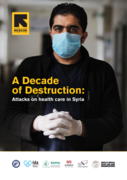
March 2021. “A Decade of Destruction: Attacks on health care in Syria,” highlights with chilling detail how this 10-year war strategy has turned hospitals from safe havens into no-go zones where
...
Syrian civilians now fear for their lives.
more

The world is facing an unprecedented range of emergencies. In reaction to these complex adversities, many people experience considerable distress and impairment, and a minority may even go on to develop mental health conditions. Meanwhile, those wit
...
h pre-existing mental health conditions may experience a worsening of their condition and are at risk of neglect, abandonment, abuse and lack of access to support. Unfortunately, evidence-based mental health care is often extremely limited in humanitarian settings. In response, the World Health Organization (WHO) and the United Nations High Commissioner for Refugees (UNHCR) published the Mental Health Gap Action Programme (mhGAP) Humanitarian Intervention Guide (mhGAP-HIG) in 2015. This practical tool supports health-care providers in assessing and offering first-line management of mental, neurological and substance use (MNS) conditions in humanitarian emergency settings.
2 December 2021. The current report, Stories of change from four countries: Building capacity for integrating mental health care within health services across humanitarian settings, describes efforts in four countries to build evidence-based mental health systems in humanitarian emergency settings using the mhGAP-HIG. This report includes three sections, the first describing the importance of scaling up mental health care in emergency contexts, the second outlining case studies (“stories of change”) to scale up the Mental Health Gap Action Programme (mhGAP) programme in four settings and the third describing lessons learned by stakeholders.
more
Essential health care service disruption due to COVID-19: lessons for sustainability in Nigeria
AHOP National Centre based in Nigeria
World Health Organization WHO, Regional Office Africa
(2022)
C_WHO
The brief concludes that sustaining the continuity of EHS requires policies that ensure a whole-society and systems strengthening approach. This involves increased health care investment, community
...
engagement, disease control regulations, and multisector approaches to improve resilience, EHS quality, and equity.
more
Low- and middle-income countries (LMICs) experience a high disease burden for epilepsy, a chronic neurological condition.The authors evaluate the cost-effectiveness of community health workers (CHWs
...
) to improve adherence to medication for epilepsy in South Africa. They found that utilizing CHWs to improve medication adherence was cost-effective.
more


Prison Health Care in the Czech Republic, Hungary and Poland
M. Mac Donald
The European Institute for Crime Prevention and Control, affiliated with the United Nations
(2001)
C2
HEUNI Paper No. 16
Key messages include Effective communication skills should be used for everyone seeking health care,
including people with MNS conditions and their carers; Effective communication skills enable
...
health-care providers to build rapport and trust with people as well as enabling health-care providers to understand the health and social needs of people with MNS conditions; Health-care providers have a responsibility to promote the rights and dignity of
people with MNS conditions and more
more
As countries commit to achieving universal health coverage, it is imperative to ensure that the design and delivery of palliative care services place attention on quality of
...
care, with action needed across all domains of quality health services: effectiveness, safety, people-centredness, timeliness, equity, integration and efficiency. Providing compassionate, dignified and people-centred palliative care is an ethical responsibility of health systems.
This document provides a practical resource to support implementation of sustainable improvements in the quality of palliative care. It describes approaches to quality policy, strategy and planning for palliative care programmes and services, presents learning on quality of care arising from palliative care programmes, and offers considerations on measurement of quality palliative care services at all levels of the health system. The document also highlights relevant WHO resources available that further support the development of quality palliative care services.
The audience for this document is a general one that includes policy-makers, palliative care service planners, managers, practitioners and health care providers at all levels.
more
These standards for the quality of paediatric care in health facilities form part of normative
guidance for improving the quality of maternal, newborn, child and adolescent
...
health care.
In view of the importance of the continuum of both the life-course and service delivery (1),
these standards build on the Standards for improving the quality of maternal and newborn
care in health facilities (2), during labour, childbirth and the early postnatal period.
more

Checklist for Periodic Evaluation of TB Infection Control in Health-Care Facilities
World Health Organization
(2019)
C_WHO
Accessed: 24.11.2019
Transforming the Quality of Health Care in Ethiopia
This checklist covers five areas of competence needed by health care providers to provide quality of care in contraceptive information and services
...
including: respecting users’ privacy and guaranteeing contfidentiality, choice, accessible and acceptable services, involvement of users in improving services and fostering continuity of care and follow-up.
more


This manual provides practical guidelines for the management of children with severe malnutrition. It seeks to promote the best available therapy so as to reduce the risk of death, shorten the length of time spent in hospital, and facilitate rehabilitation and full recovery. Emphasis is given to the
...
management of severely malnourished children in hospital and health centres; the management of severely malnourished children in disaster situations and refugee camps and of severely malnourished adolescents and adults is also considered briefly.
more
Overview
Learning objectives
• Understand the mental health treatment gap in low-, middle- and high-income countries.
• Understand the principles and aims of the Mental Health Gap Action Prog
...
ramme.
• Acquire an introduction to mhGAP Intervention Guide (mhGAP-IG).
• Learn about mhGAP ToHP training methodology and what to expect from mhGAP ToHP
training.
• Prepare group training ground rules.
• Know the common presentations of mental, neurological and substance abuse (MNS)
conditions.
more

Situational Analysis: 13-23 October 2014
Report prepared using the WHO/SEARO workbook tool for undertaking a situational analysis of medicines in health care delivery in low and middle income c ... ountries more
Report prepared using the WHO/SEARO workbook tool for undertaking a situational analysis of medicines in health care delivery in low and middle income c ... ountries more
The Gambia - Effective and humane mental health treatment and care for all
Mental Health Improvements for Nations Development (MIND); Department of Mental Health & Substance Abuse
World Health Organization
(2019)
C_WHO
Republic of The Gambia; Accessed on 31.01.2019
The WHO Regional Office for Europe, the WHO Collaborating Centre on Culture and Health at the University of Exeter (United Kingdom) and the National Institute of Mental Health (Czechia) convened a w
...
orkshop on culture and reform of mental health care in central and eastern Europe on 2–3 October 2017 in Klecany, Czechia. The aim of this workshop was to improve understanding of the key cultural aspects that impact and drive mental health-care reform in the central and eastern European region. This report outlines the key points and recommendations made by participants in relation to this objective.
more
