
Filter
292
Text search:
practice
parameter
Featured
16
60
Language
Document type
200
42
22
12
6
5
4
1
Countries / Regions
22
17
8
7
6
5
5
4
4
4
4
4
3
3
3
3
3
3
2
2
2
2
2
2
2
2
2
1
1
1
1
1
1
1
1
1
1
1
1
1
1
1
1
1
Authors & Publishers
Publication Years
Category
95
19
16
14
9
4
4
Toolboxes
73
15
12
11
9
9
9
8
6
5
5
4
3
2
2
2
2
2
1
1
The revised guidelines present two major changes to existing guidelines: (A) there are now just 2 categories of pneumonia instead of 3 (“pneumonia” which is treated at home with oral amoxicillin and “severe pneumonia” which requires injectable antibiotics) and (B) oral amoxicillin replaces o
...
This manual has been developed to guide rapid risk assessment of acute public health risks from any type of hazard in response to requests from Member States of the World Health Organization (WHO). The manual is aimed primarily at national departments with health-protection responsibilities, Nationa
...


DHS Working Papers No. 88
education, wealth, mobility, employment, and media exposure
Detonation of a nuclear weapon or activation of a radiological dispersal device could cause radioactively contaminated decedents. These guidelines are designed to address both of these scenarios. They could also be applicable in other instances where decedents’ bodies are contaminated with radioa
...
Volume 2019, Article ID 4157574, 7 pages
https://doi.org/10.1155/2019/4157574
The WHO COVID-19 Essential Supplies Forecasting Tool (COVID-19-ESFT) is meant to help countries forecast essential supplies for their COVID-19 response including personal protective equipment (e.g., masks and gloves), biomedical equipment for case management (e.g., ventilators and oxygen concentrato
...

Surveillance, case investigation and contact tracing for monkeypox: interim guidance 24 June 2022
recommended
The overall goal of surveillance, case investigation and contact tracing in this context is to stop human-to-human transmission to control the outbreak. The key objectives of surveillance and case investigation are to rapidly identify cases and clusters in order to provide optimal clinical care; to
...
Во многих странах суицид является одной из главных причин смерти среди детей и подростков. Одна из главных задач психиатрических служб – выяв-ление молодых людей Ð
...
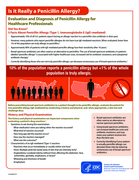
Evaluation and Diagnosis of Penicillin Allergy for Healthcare Professionals
Stand 2.10.2020

Проблема раннего детского аутизма в настоящее время является одной из наиболее актуальных,
что обусловлено, прежде всего, огромным ростом статистических показатÐ
...
В этой главе главное внимание сфокусировано на том, как отдать приоритет взаимоотношениям между опекуном и ребенком в контексте условий первичной ме-дицинской
...
Biostatistics: CD-ROM for self learning
recommended
The main objective of this self learning programme is to understand the purpose of biostatistics through realistic cases and to acquire basic biostatistics skills that can be applied to your work.
The target audiences of this training are medical and biomedical students, laboratory specialists and
...

Arq Neuropsiquiatr 2011;69(2-B):342-348
Journal of the International Association of Providers of AIDS Care 2017, Vol. 16(3) 226–232
While the COVID-19 pandemic threatens all members of society, persons with disabilities are disproportionately impacted due to attitudinal, environmental and institutional barriers that are reproduced in the COVID-19 response.
The paper provides the rationale for these recommendations, which are based on analyses of data from the TRACT trial.
