
Filter
1932
Text search:
occupational
risk
Featured
228
438
Language
Document type
1052
318
270
136
62
34
29
10
6
6
5
4
Countries
82
78
75
59
57
42
39
31
31
30
26
24
23
23
23
21
20
19
19
19
19
19
17
17
16
16
15
14
13
13
12
11
11
11
10
10
10
9
9
9
8
7
7
6
6
6
6
6
5
4
4
4
4
4
4
4
4
3
3
3
3
3
2
2
2
2
2
2
2
2
2
2
2
2
2
2
1
1
1
1
1
1
1
1
1
1
1
1
1
1
1
1
1
1
1
1
1
1
1
1
Authors & Publishers
Publication Years
Category
676
154
117
90
40
22
20
1
1
Toolboxes
239
229
106
106
90
88
86
75
64
56
43
35
32
29
29
28
28
10
7
5
3
2
1
Update September 2021. Safe management of health care waste practices play an essential role in protecting human health during all disease outbreaks, including during Ebola Virus Disease (EVD) outbreaks. This question and answer document provides practical, evidence-based recommendations on minimum
...

Q3: What approaches are available to enable non-specialized health care providers to identify children with intellectual disabilities, including intellectual disabilities due to specific causes?
MMWR Morbidity and Mortality Weekly Report December 19, 2014 / 63(50);1205-1206
In light of the decline in new Ebola cases, strategies are now needed to scale down the activities and bed capacities in Ebola care facilities. These facilities include Ebola treatment units, community care centres, Ebola treatment centres and isolation centres. The Governments of Guinea, Liberia an
...
Please download the other parts from the Webseite
Accessed 14 July 2015
Workplace Pandemic Preparedness. Training Manual
recommended
A training manual for identifying, assessing, preventing and controlling the risks of pandemics in the workplace. This training manual has been developed for both medical and non-medical personnel who may be called upon to lead emergency response, (eg epidemic outbreak, etc), ensure effective conta
...
The aim of the pandemic preparedness checklist is primarily to provide an outline of the essential minimum elements of preparedness, as well as elements of preparedness that are considered desirable. It is recommended that responsible authorities or institutes in countries that are in the process of
...
Report of the Review Committee on the Functioning of the International Health Regulations (2005) in relation to Pandemic (H1N1) 2009
Healthcare Waste Management Toolkit for Global Fund Practitioners and Policy Makers: Part A
Healthcare Waste Management Toolkit for Global Fund Practitioners and Policy Makers. Part B
Standard Treatment Guideline

Program for Early Recovery and Resilience Building from EVD Outbreak in Liberia
Report on assessment of WASH and healthcare waste management in District Sadar Hospital, Cox's Bazar
How safe is our hospital sanitation? An example from a public hospital

This guide has been written to provide information and practical advice on developing and delivering local plans an strategies to commission the most effective and efficient older people’s mental health services.Based upon clinical best practice guidance and drawing upon the range of available evi
...
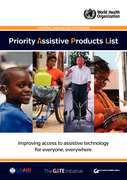
Improving access to assistive technology for everyone, everywhere.
The first WHO Priority Assistive Products List was launched in May 2016. The List includes hearing aids, wheelchairs, communication aids, spectacles, artificial limbs, pill organizers, memory aids and other essential items for many
...
РУКОВОДСТВО ПО БИОЛОГИЧЕСКОЙ БЕЗОПАСНОСТИ ЛАБОРАТОРНЫХ ИССЛЕДОВАНИЙ ПРИ ТУБЕРКУЛЕЗЕ.
GUIDELINES ON LEPROSY CONTROL IN SOUTH AFRICA | 2011
Key populations brief
Accessed November 2017
Adapted from a fact sheet on TB from the International Council of Nurse’s Global TB/MDR-TB Resource Centre at: http://www.icn.ch/tb/stigma.htm.
Accessed November 2017
Key popupations brief.
Pathak et al. (2016), PeerJ, DOI 10.7717/peerj.1738; 1-14
A guide to protocol development for low-income countries

Emerging Infectious Diseases; Vol. 21, No. 11, November 2015
Cervical cancer, along with maternal deaths, has been identified as a national priority in
South Africa as well as other Sub-Saharan African countries. Cervical cancer is the
second most common cancer among women in South Africa, after breast cancer. Due
to limited access to prevention, early dia
...
"This document provides recommendations for protecting healthcare providers and managing patients in the event of a hazardous materials exposure. Content was compiled through nationally recognized, current practice standards and formatted into user-friendly materials. "
A tutorial for trainers in healthcare settings
Version 2: 2 Dec 2014
"The document focuses on an extended set of PPE components, which includes goggles, respirators, gloves,
coveralls and footwear. Used properly, these PPE components can provide effective protection even from airborne
transmissi
...
"This Code provides practical guidance on how to manage health and safety risks associated with hazardous
chemicals for persons conducting a business or undertaking who use chemicals in their workplace."
Quick information on facts and expressions about radiation in alphabetical order
Specific Objectives
• To increase the knowledge and awareness of personnel on chemical management.
• To educate the personnel on the potential adverse health effects of chemical exposure.
• To educate the personnel on the existing laws pertaining to handling of hazardous
chemicals.
• To
...
An Update will be published in late 2018
This article unites the latest guidelines on the management of arterial hypertension in primary health care in Portuguese speaking countries including Brazil, Angola, Mozambique, São Tomé e Príncipe, Cape Verde, among others.
J Pediatr Rev 2015, vol.3 (1) e361

To understand the patterns of Rwanda’s achievements in health development, it is important to explore how Rwanda addresses the Social Determinants of Health (SDH) particularly those related to routine conditions in which people are born, live and work. It is in this particular context that a case
...

Review of International, Regional and National Policies and Legal Frameworks that Promote Migrants and Mobile Populations' Access to Health and Malaria Services in the Greater Mekong Subregion (Cambodia, Lao People's Democratic Republic, Myanmar, Thailand and Viet Nam)
Migrants and mobile popul ...
Migrants and mobile popul ...
The mandate of the National Tuberculosis Control Programme is to provide leadership and stewardship to accelerate intense and coordinated efforts to reduce the adult TB burden of 290 per 100,000 population recently established in the 2013 National TB Prevalence Survey. Other key challenges are low T
...
Drinking-water quality regulations and standards developed or revised in accordance with this guidance will reflect the best practices identified in the WHO Guidelines for Drinking-water Quality to most effectively protect public health. Moreover, the regulations and standards will consider local ne
...

Policy Brief, Updated in March 2017
Key messages
• Meaningful involvement of sex workers in the HIV response through peer-based education and outreach and consultation in policy making and programme planning is vital to reduce their vulnerability to HIV and other sexually transmitted inf ...
Key messages
• Meaningful involvement of sex workers in the HIV response through peer-based education and outreach and consultation in policy making and programme planning is vital to reduce their vulnerability to HIV and other sexually transmitted inf ...
Lancet Glob Health 2018, Published Online September 12, 2018 http://dx.doi.org/10.1016/S2214-109X(18)30387-5
Rehabilitation in health systems provides recommendations for Member States and other relevant stakeholders to strengthen and expand the availability of quality rehabilitation services. Currently, there is a significant unmet need for rehabilitation services and it is frequently undervalued in the h
...
Accessed January 2019, publication date unknown.
Clinical Guideline
Second edition
Published: March 28, 2017https://doi.org/10.1371/journal.pmed.1002271
PLoS Med 14(3): e1002271. https://doi.org/10.1371/journal.pmed.1002271
SCOPING QUESTION: Which psychosocial interventions are effective in the management of cannabis dependence?
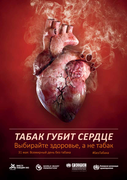
Ежегодно табак убивает более 7 миллионов человек (1), то есть ежедневно в результате употребления табака или воздействия вторичного табачного дыма (ВТД) умирает болÐ
...
Mental health conditions affect one in 10 people at any one time and account for a large proportion of non-fatal disease burden. There is a high degree of comorbidity between mental health conditions such as depression and other noncommunicable diseases (NCDs), including cardiovascular disease, diab
...
This publication is intended for professionals training or practicing in mental health and not for the general public. The opinions
expressed are those of the authors and do not necessarily represent the views of the Editor or IACAPAP. This publication seeks to
describe the best treatments and pra
...
NSW Disaster Mental Health Handbook 5
The Disaster Mental Health Manual and associated handbooks are intended as a resource for mental health staff who are seeking background information and practical guidance and resources to assist in a disaster mental health response.
