Filter
3332
Text search:
mobile
population
Featured
268
1049
Language
Document type
1948
574
345
162
149
57
41
35
5
5
5
2
1
Countries
160
116
109
100
80
77
75
74
74
69
68
68
67
66
60
60
57
56
52
51
43
42
36
33
32
32
29
28
28
27
27
26
25
23
23
22
22
22
21
21
20
19
19
18
18
17
16
14
14
13
12
12
11
10
10
10
9
9
9
8
8
8
8
7
7
7
6
6
6
6
6
6
6
5
5
5
5
5
4
4
4
4
4
4
4
3
3
3
3
3
3
3
3
3
3
3
2
2
2
2
2
2
2
2
2
2
2
2
2
2
2
2
2
1
1
1
1
1
1
1
1
1
1
1
1
1
1
1
1
1
1
1
1
1
1
1
1
1
Authors & Publishers
Publication Years
Category
1539
192
176
132
108
40
15
4
2
2
Toolboxes
340
264
152
150
150
131
118
86
82
78
72
58
53
49
46
38
32
28
24
20
17
13
5
4
1
1
Monitoring the situation of children and women

The Policy Guidelines and Service Standards for National Sexual and Reproductive Health Programme document outlines the steps on how to offer and deliver services. Improving quality of care is critical to improving clients' health status as well as increasing access to, and utilization of Sexual and
...
Key populations brief
Accessed November 2017
Fact sheet -Updated November 2015
Updated: 27 December 2013
Basic Indicators | Nutrition | Health | HIV/AIDS | Education | Demographic Indicators | Economic Indicators | Women | Child Protection | The Rate Of Progress | Adolescents | Disparities By Residence | Disparities By Household Wealth | Early Childhood Development
Key populations brief
Accessed 2017
Rapport sur les populations clès
Accessed November 2017
Key populations brief.

Chapter 8, Prison and Health, published

10–11 May 2016, Catania, Italy
DHS Analytical Studies No. 39



Haïti: DHS 2016-2017 - Key Indicators Report (French)
2015-16 Demographic and Health Survey and Malaria Indicator Survey

DHS Working Papers No. 85


The 2011-2012 National Annual Report on HIV program presents the progress in implementing the strategies and activities articulated in the National Strategic Plan on HIV and AIDS 2009-2012, commonly referred to as the HIV NSP.

The Health Sector Policy gives general orientations for the sector which are further developed in the various sub-sector policies guiding key health programs and departments. All health sub-sector policies will be updated in line with this new policy. The Health Sector Policy is the basis of nationa
...
Neonatal mortality is a major challenge in reducing child mortality rates in Nepal. Despite efforts by the Government of Nepal, data from the last three demographic and health surveys show a rise in the contribution of neonatal deaths to infant and child mortality. The Government of Nepal has implem
...
Through public-private partnerships, the government of Rwanda can make more efficient use of public resources by targeting and meeting the needs of specific populations and thus help ensure family planning services and products will be available to all Rwandans in the long term. This report aims to
...

The purpose of the PAS III is to guide Pakistan’s overall national response for HIV and AIDS through 2020, through focused interventions with set targets, costs, roles and responsibilities. The successful implementation of PAS III involves multiple stakeholders to achieve priority outcomes outline
...
Policy Brief, Updated in March 2017
Key messages
• The criminalisation of male-to-male sex heightens HIV and other sexually transmissible infection (STI) risks and vulnerabilities, and hinders access to HIV and STI services including HCT.
• Men who have sex with men (MSM) and tran ...
Key messages
• The criminalisation of male-to-male sex heightens HIV and other sexually transmissible infection (STI) risks and vulnerabilities, and hinders access to HIV and STI services including HCT.
• Men who have sex with men (MSM) and tran ...
The vision of the new Strategic Action Plan for Strengthening HIS in Myanmar 2017- 2021 is “A strong health information system for a strong health system”. The mission statement of HIS in Myanmar also developed during the strategic planning exercise is “Generating and making accessible compreh
...
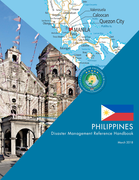
The Philippine Government, International Non-government Organizations (INGOs) and local NGOs are all making attempts to address the impact of disasters and climate change at various levels. The Philippine Government has made significant strides in the implementation of disaster risk reduction (DRR)
...
Cet outil peut être utilisé pour améliorer la qualité du programme ASC. Pour identifier et combler les lacunes dans la conception et la mise en œuvre du programme ASC, veuillez compléter les informations ci-dessous
The survey is representative of the Union Territory, its states and regions and urban and rural areas. It was conducted in all the districts and in 296 of the 330 townships of Myanmar. A total of 13,730 households were interviewed. It collects data on the occupations of people, how much income they
...
The goal of the United States Government for the President's Emergency Plan for AIDS Relief (PEPFAR) in Mozambique is to support country efforts to achieve epidemic control by 2020 through evidence-based policies and interventions to drive progress and save
lives. This document details PEPFAR's op
...
More than 230,000 people displaced by Typhoon Mangkhut in Philippines
Access is still limited due to landslides in mountain areas. Some areas are still flooded, leaving people vulnerable to diseases including leptospirosis, dengue, acute gastroenteritis and AWD
The Joint Response Plan sets out a comprehensive programme shaped around three strategic objectives – deliver protection, provide life-saving assistance and foster social cohesion. The Plan covers all humanitarian sectors and addresses key cross-cutting issues, including protection and gender main
...
Tanzania is prone to refugee influxes, often of long duration. Despite facing its own economic challenges, for decades Tanzania has welcomed thousands of refugees fleeing conflicts in neighboring countries of Great Lakes Region. The counties geographic proximity to the strifetorn Congo Basin is resp
...
While the full extent of Cyclone Ida’s impact is still being assessed, early reports indicate significant damage to infrastructure and livelihoods, with an estimated 3,000km2 of land submerged. Preliminary government reports as of 24 March indicate that more than 58,600 houses have been damaged, i
...
Operational Updates
Emergency Relief & Nutrition Rakhine: A significant increase in internal displacements due to continued armed conflict between the Myanmar military (Tatmadaw) and Arakan Army was reported in northern and central Rakhine State increasing from 6,000 people in February to 20,000 i
...
This document is produced by the Humanitarian Country Team and the United Nations Resident
Coordinator’s Office in Mozambique, with the support of the United Nations Office for the Coordination of
Humanitarian Affairs (OCHA). The projects reflected here support the national government. It covers
...
Key figures (to date)
• 168,254 people affected in Cabo Delgado and 900 people affected in Nampula (preliminary estimates from INGC)
• 35,000 houses partially or destroyed
• 37,696 people hosted in accommodation centers throughout the province
• 9 districts identified in Cabo Delgado and
...
Women and girls have specific needs that are often ignored during crisis. While on the run or while living in shelters, women and girls continue to become pregnant, but they often lack access to basic sexual and reproduc-tive health care. Without assistance by midwifes or access to contraceptives, w
...
Plus de USD 6 millions de dollars du Fonds Humanitaire pour la crise de Djugu
Plus de 67 000 enfants ciblés par une vaccination contre la rougeole en Ituri
Lutte difficile pour endiguer la rougeole dans le sud-est
Persistence de l'insécurité, mouvements continus de civils
...
6th edition

2017-2018
Republic of Albania
Rwanda: Ebola Preparedness Emergency Plan of Action (EPoA) Final Report - DREF Operation n° MDRRW017
Eleven (11) districts in Rwanda were initially were considered most at risk of the outbreak, namely:
• Rusizi, Nyamasheke, Karongi, Rutsiro, Rubavu (bordering DRC)
• Musanze, Burera, Gicumbi and Nyagatare (bordering Uganda)
• Kigali city (comprised of 3 localities) due to the presence of Ki
...
Accessed: 26.09.2019
An Examination of 13 Projects in PEPFAR-Supported Countries
Case Study
Accessed: 30.10.2019

Southern African Journal of HIV Medicine
ISSN: (Online) 2078-6751, (Print) 1608-9693
http://www.sajhivmed.org.za
Published: 23 May 2018