
Filter
4505
Text search:
mental
health
treatment
Featured
448
944
Language
Document type
2742
660
487
230
145
75
72
49
17
13
11
2
1
Countries
202
169
117
116
111
75
73
72
70
70
68
67
66
64
63
56
54
50
50
43
43
42
37
36
35
34
32
32
30
29
27
26
25
24
23
21
21
20
18
17
16
16
16
15
14
14
14
13
13
12
12
12
11
11
11
11
10
10
9
9
9
8
8
7
7
7
7
6
6
6
6
6
6
6
6
6
5
5
5
4
4
4
4
4
4
4
4
4
3
3
3
3
3
3
3
3
3
3
2
2
2
2
2
2
2
2
2
2
2
2
2
1
1
1
1
1
1
1
1
1
1
1
1
1
1
1
1
1
1
1
1
1
1
1
1
1
1
Authors & Publishers
Publication Years
Category
1500
257
253
238
118
96
14
3
1
1
Toolboxes
1026
409
336
253
165
130
129
128
97
81
71
67
57
55
50
44
28
25
18
13
12
10
5
3
1
1

Compared with other health areas, the mental health impacts of climate change have received less research attention. The literature on climate chan
...

Objectives: This paper reviews the mental health policies that have been implemented in Chile in response to the COVID-19 pandemic and the international context of countries' responses. Even before
...
Poverty, HIV and other disease burdens, coupled with common mental disorders including alcohol and other substance use disorders, posttraumatic stress disorder, clinical and postnatal depression, distress, and anxiety, impact how caregivers meet the
...
For children orphaned or made vulnerable by HIV (OVC)
This document contains guidance for strengthening the disability inclusiveness of MHPSS responses and programmes in emergency settings. It is intended to supplement the IASC Guidelines on Mental Health
...
Miscellaneous
Chapter J.5

Africa CDC Non Communicable Diseases, Injuries Prevention and Control and Mental Health Promotion Strategy
recommended
Non-communicable diseases (NCDs) & injuries and mental health conditions constitute a serious impediment to achieving the vision of Agenda 2063 to build an integrated, prosperous, and peaceful Afric
...

Report on the symposium 26–28 May 2015, New Babylon Meeting Center, The Hague
Objective: To review research on associations of trauma type with PTSD in the WHO World Mental Health (WMH) surveys, a series of epidemiological surveys that obtained representative data on trauma-s
...
Introduction
Chapter A.10
Miscellaneous
Chapter J.2
Miscellaneous
Chapter J.8
This publication is intended for professionals training or practicing in mental health and not for the general public. The opinions
expressed are those of the authors and do not necessarily represe
...
Guiding Principles and Recommendations

In these guidelines we use the term gambling problems to refer to
difficulties over time in limiting money or time spent on gambling,
which leads to adverse consequences for the person, others, or for
the community. This could include someone whose gambling is having
a great enough impact on the
...
There is growing understanding and high-level endorsement of the importance of strong collaborative multisectoral approaches to address a broad range of social, economic and governance issues for the prevention and control of noncommunicable disease (NCDs) and
...
J Int Assoc Provid AIDS Care. 2017 ; 16(5): 499–505. doi:10.1177/2325957417709089.
Rev Panam Salud Publica. 2018;42:e45. https://doi.org/10.26633/RPSP.2018.45
Research Paper, Accessed April 10,2019
World Psychiatry. 2010 Jun;9(2):67-77.
The main recommendations are presented in relation to: the need for coordinated policies, plans and programmes, the requirement to scale up services for whole populations, the importance of promoting community awareness about
...
Although the COVID-19 crisis is, in the first instance, a physical health crisis, it has the seeds of a major mental health crisis as well, if acti
...
In many low- and middle-income countries, there is a wide gap between evidencebased recommendations and current practice. Treatment of major CVD risk factors remains suboptimal, and only a minority of patients who are treated reach their target leve
...
High Transmission Areas: Key Populations
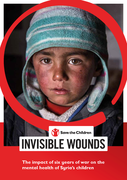
“The children are psychologically crushed and tired.
When we do activities like singing with them, they
don’t respond at all. They don’t laugh like they
would normally. They draw images of children
being butchered in the war, or tanks, or the siege
and the lack of food.”
Teacher in the
...
Human Resources for Health201816:49; https://doi.org/10.1186/s12960-018-0315-7
Executive summary On 27th and 28th April 2021, the division of Disease Control and Prevention in collaboration with Public Health England, organized a virtual consultative meeting as part of the consultations with Member States and partners for the
...
The rise of the discourse of 'trauma' as a major articulator of suffering within Western culture is a facet of the medicalization of life that has gathered pace in the last century. In recent years, Western mental
...
ATLAS on substance use (2010) — Resources for the prevention and treatment of substance use disorders
Accessed: 14.03.2019

[Updated 2015]
Scoping question: What is the effectiveness of psychosocial interventions, including caregiver skills training, for emotional disorders in children and adolescents?
[Updated 2015]
SCOPING QUESTION: What is the effectiveness of psychosocial interventions (including caregiver skills training) for behavioural disorders in children and adolescents?
Q 2: How long should treatment with antidepressants continue in adults with depressive episode/disorder?
Q 1: Are antidepressants (Tricyclic Antidepressants (TCA) and Selective Serotonin Reuptake Inhibitors (SSRI)) better (more
effective than/as safe as) than treatment as usual (placebo) in adults with depressive episode/disorder?
Results of rapid assessment
The COVID-19 pandemic has disrupted or halted critical mental health services in 93% of countries worldwide while the demand for
...

Q4: In individuals with long term and/or recurrent psychotic disorders (including schizophrenia), should individuals be maintained on pharmacotherapy indefinitely or withdrawn from treatment in order to allow for the best outcomes?
Q 3: Is brief, structured psychological treatment in non-specialist health care settings better (more effective than/as safe as) than treatment as
...
mhGAP Training of Health-care Providers Training manual and Supporting material.

This block contains a wide variety of disorders that differ in severity (from uncomplicated intoxication and harmful use to obvious psychotic disorders and dementia), but that are all attributable to the use of one or more psychoactive substances (which may or may not have been medically prescribed)
...
Recommendations for a public health approach
HIV/AIDS Programme
Overview
Learning objectives
• Promote respect and dignity for children and adolescents with mental and behavioural
disorders.
• Know common presentations of children and adolescents with mental
...
The WHO Global Burden of Disease (GBD) study measures the burden of
disease using the disability-adjusted life year metric (DALY). The DALY metric
was developed to assess the burden of disease consistently across diseases,
risk factors and regions. A consistent and comparative description of the
...
HIV/AIDS Programme
Policy Brief

The World Health Organization (WHO) has identified mental health as an integral component of the COVID-19 response. Its rapid assessment of service
...

Depression and Other Common Mental Disorders
recommended
This booklet provides latest available estimates of the prevalence of depression and other common mental disorders at the global and regional level, together with data concerning the consequences of these disorders in terms of lost
...
Q5.SCOPING QUESTION: In individuals with psychotic disorders (including schizophrenia) who require long-term antipsychotic treatment, what is the safety and role of depot antipsychotic medication?

This report aims to improve the assessment of mental health needs in the Americas by providing an updated and nuanced picture of: (a) the disability resulting from
...
Provides clinical descriptions, diagnostic guidelines, and codes for all mental and behavioural disorders commonly encountered in clinical psychiatry. The book was developed from chapter V of the Tenth Revision of the International Statistical Class
...

NICE guideline
Published: 23 May 2017
Q3: In individuals with a first psychotic episode with full remission, how long should antipsychotic drug treatment be continued after remission in order to allow for the best outcomes?

The global burden of disease (GBD) study provides information about fatal and non-fatal health outcomes around the world.
The objective of this work is to describe the burden of mental disorders am
...
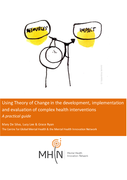
This guide provides a practical overview of the process of developing a Theory of Change, focusing on using a stakeholder-driven, workshop approach to achieve this.

Accessed Febr. 6, 2020
Incorporating Malawi Essential Medicines List (MEML)

The link between cholera in pregnancy and negative childbirth outcomes has been observed since the
19th century, but there is currently no clear understanding of the extent nor the mechanisms to inform
treatment guidelines. The recommendations in
...
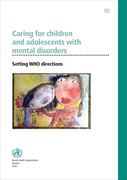
Setting WHO directions
Guidelines
Key Populations
Q8. SCOPING QUESTION: In people with bipolar disorders who require maintenance treatment, are a) antipsychotics or b) mood stabilizers (lithium, valproate or carbamazepine) effective and safe?
ERRATA
2214-9996/a 2014 Icahn School of Medicine at Mount Sinai
Department of Medical Education Icahn School of Medicine at Mount Sinai, New York
http://dx.doi.org/10.1016/j.aogh.2014.10.003
Despite being a curable and preventable disease, tuberculosis (TB) remains as one of the major challenges for health systems, globally. Every year, TB affects more than 10 million people and kills more than 1.4 million people. WHO’s Digital
...

A manual for physicians and other senior health workers. This fourth revision of the manual reflects recent clinical experience and research findings in diarrhoea case management. Compared to earlier versions, it includes revised guidelines on the m
...
The social protection landscape for people affected by TB in the WHO South-East Asia Region
New edition
2nd edition
Accessed Febr. 6 ,2020
Accessed Febr. 6, 2020
The recommendations cover the level of blood pressure to start medication, what type of medicine or combination of medicines to use, the target blood pressure level, and how often to have follow-up checks on blood pressure. In addition, the guideline provides the basis for how physicians and other
...
Reduced healthy life expectancy due to the high burden of both mental ill health and noncommunicable diseases (NCDs) is a major public health conce
...

This document is based on currently available scientific evidence on treatment for drug use disorders and sets out a framework for the implementation of the Standards, in line with principles of public hea
...
The objectives of these WHO guidelines are to provide updated evidence- based recommendations for the treatment of persons with hepatitis C infection using, where possible, all DAA-only combinations. The guidelines also provide recommendations on th
...
The Access to Controlled Medications Programme identified the development of treatment guidelines that cover the treatment of all types of pain as one of the core areas of focus for improving acces
...
The new guide provides practical, first-line management recommendations for mental, neurological and substance use conditions. Contents include modules on assessing and managing conditions such as acute stress, grief, moderate-severe depressive diso
...

Petersen et al. Int J Ment Health Syst (2016) 10:30 DOI 10.1186/s13033-016-0060-z
The purpose of the Clinical Practice Guideline for Treatment of Patients with Anxiety Disorders in Primary Care is to provide professionals with practical recommendations based on scientific evidence to assist in the detection and effective
...
Q7. SCOPING QUESTION: In adults with moderate-severe depressive disorder, what is the effectiveness and safety of antidepressant medication (ADM) in comparison with psychological treatment?
The WHO mhGAP programme’s existing guidelines recommen
...
Public Health Factsheet
Accessed: 29.09.2019
Policy Brief
Consolidated Guidelines
Updated 2016
WHO/HIV/2017.05

Accessed Febr. 6, 2020
These guidelines provide new and updated recommendations on the use of point-of-care testing in children under 18 months of age and point-of-care tests to monitor treatment in people living with HIV; the t
...
HIV, viral hepatitis and STI epidemics, particularly among people who inject drugs and other key populations, continue to be fuelled by laws and policies criminalizing sex work; drug use or possession; diverse forms of gender expression and sexuality; stigma and discrimination; gender discrimination
...
