Filter
663
Text search:
leprosy
treatment
Featured
93
279
Language
Document type
485
55
55
29
21
8
5
3
2
Countries
67
41
34
30
27
26
23
21
19
19
19
14
14
14
13
12
10
7
6
6
5
5
4
4
4
3
3
3
3
3
3
2
2
2
2
2
2
2
2
2
2
2
2
2
2
1
1
1
1
1
1
1
1
1
1
1
1
1
1
1
1
1
1
1
1
1
1
1
1
1
1
1
Authors & Publishers
Publication Years
Category
390
70
35
11
10
9
8
3
Toolboxes
113
86
36
22
15
14
8
8
6
5
4
4
4
3
2
2
2
1
1
1
1
1
Key populations brief.
Guidance on Implending Publi-Private Mix Approaches
PLOS ONE | DOI:10.1371/journal.pone.0155525 May 19, 2016, 1 / 11
Experience of national TB partnerships
Towards a world free of tuberculosis

10–11 May 2016, Catania, Italy

Eradication of yaws in India | Éradication du pian en Inde - 17 April 2015, 90th Year / 17 Avril 2015, 90e Année | No. 16, 2015, 90, 161–168 | http://www.who.int/wer
This document provides guidance for countries on how to implement activities to achieve the interruption of yaws transmission. It is intended for use by national yaws eradication programmes, partners involved in the implementation of yaws eradication activities and WHO technical staff who provide te
...
This document sets out the criteria and procedures to be followed by countries in verifying the interruption of yaws transmission. It is intended for use by international verification teams, national yaws eradication programmes and WHO technical staff involved in the eradication of yaws.
Final report 2016

Advances have been made through expanded interventions delivered through five public health approaches: innovative and intensified disease management; preventive chemotherapy; vector ecology and management; veterinary public health services; and the provision of safe water, sanitation and hygiene. I
...

A National Service Programme for All Children with Special Needs and their Families
In Myanmar, we estimate that at least 40% of children require ECI services for short to longer periods of time. At present, 35.1% of Myanmar children are moderately to severely stunted; all of these children are l ...
In Myanmar, we estimate that at least 40% of children require ECI services for short to longer periods of time. At present, 35.1% of Myanmar children are moderately to severely stunted; all of these children are l ...

It provides insight into WHO’s work that aims to improve the health of the people of the United Republic of Tanzania in collaboration with key stakeholders.
Analysis of survey data looking at 25 years of progress in and the future challenges for tropical medicine and global health
Цель настоящего документа («Основные положения») заключается в подготовке рекомендаций относительно необходимых на национальном уровне мер по адаптации стратегÐ
...
Guidance Document and supporting Resources
В настоящем отчете (это уже четвертое его издание) анализируются препятствия и факторы, затрудняющие доступ к препаратам для лечения лекарственно-устойчивого тубÐ
...
PLOS ONE | https://doi.org/10.1371/journal.pone.0210937
February 5, 2019
The aim of the people-centred framework is to help countries to develop fully prioritized and budgeted NSPs based on a culture of making full use of the available data, which are aligned with national planning cycles and which provide the basis for a robust national response that can accelerate prog
...
Antibiotics use with care
The threat posed by antimicrobial resistance (AMR) to public health as well as global health security has been reiterated in umerous World Health Assembly (WHA) resolutions. AMR is also prioritized under the Global Health Security Agenda (GHSA), and India is one of the contributing countries. The Mi
...
Results of an innovative model launched in TB clinics in six regions
Accessed: 12.03.2020
Nepal has only recently started its journey on the path to an integrated response to the challenge of antimicrobial resistance (AMR). Despite this, it is notable that the Nepal Health Sector Strategy Plan (HSSP)-2 mentions growing antibiotic resistanceas a public health challenge.

Antibiotics and other antimicrobial agents are invaluable life savers, particularly in resource-limited countries where infectious diseases are abundant. Both uncomplicated and severe infections are potentially curable as long as the aetiological agents are susceptible to the
...
Antibiotic resistance is no longer a concern for the distant future but is a pressing issue, both globally and in Nepal. As part of global effort to preserve the effectiveness of antibiotics, the Global Antibiotic Resistance Partnership (GARP)-Nepal was established to doc
...

The Millennium Development Goals (MDGs) showed
that global commitment and collective action
could significantly reduce the disease burdens of
three deadly communicable diseases: HIV/AIDS,
tuberculosis (TB) and malaria. The MDGs helped
focus efforts on these three deadly diseases
and leveraged
...
The Ethiopian Hospital Services Transformation Guidelines (EHSTG) build on and expand the Ethiopian Hospital Reform Implementation Guidelines (EHRIG) and are consistent with the Health Sector Transformation Plan (HSTP). The EHSTG, which is consistent with the national focu
...
Health Situation
Health policies and systems
Cooperation for Health
WHO Country Cooperation Strategic Agenda (2008-2013)

13 May 2021
To avoid a reversal of progress from the adverse impacts of the COVID-19 pandemic, new knowledge and lessons from successful programmatic innovations are urgently needed to improve TB prevention and care. Experience can provide evidence for innovative approaches and strategies to mainta
...
The Compendium of data and evidence-related tools for use in TB planning and programming was developed as a companion document to the People-centred framework for tuberculosis programme planning and prioritization – user guide, published by the World Health Organization (WHO)
...
Final Survey Report
This report presents an analysis of antibacterial agents in preclinical (third annual review) and clinical (fifth annual review) development. The analysis covers traditional (direct-acting small molecules) and non-traditional antibacterial agents in development worldwide. It evaluates to what extent
...
Addressing comorbidities and risk factors for TB is a crucial component of Pillar one of the End TB Strategy, which focuses on integrated patient-centred care and prevention, including action on TB and comorbidities. The Framework for collaborative action on TB and comorbidities aims to support coun
...
The World Health Organization (WHO) convened a meeting of the Technical Advisory Group on Buruli ulcer at its headquarters in Geneva, Switzerland on 25 to 27 March 2019
The road map 2030 was developed by WHO through an extensive global consultation, with indicators set for measuring progress against targets and milestones. This compendium of indicators provides a comprehensive and standardized listing of recommended indicators, including the 70 core indicators pres
...

The sixteenth meeting of the Strategic and Technical Advisory Group for Neglected Tropical Diseases (STAG-NTD) was held as a hybrid meeting, 27–28 September 2022.
Dr Ren Minghui, Assistant Director-General, Universal Health Coverage/Communicable and Noncommunicable Diseases, welcomed participan
...

The World Health Organization (WHO) and the global community of countries, partners, donors, technical experts, scientists and field implementation teams continue to work towards the ultimate goal of a world free of the burden of neglected tropical diseases (NTDs).

Yaws is a disfiguring non-venereal disease caused by infection with the spirochaete. Treponema pallidum subspecies pertenue which is closely related to the causative agent of syphilis and those of the other endemic treponematoses, bejel and pinta. The disease is endemic in certain areas of the World
...

An interregional meeting on leishmaniasis among neighbouring endemic
countries in the Eastern Mediterranean, African and European regions was organized by the World Health Organization (WHO) Regional Office for the Eastern
Mediterranean in Amman, Jordan, from 23 to 25 September 2018. The meeting w
...

The objective of this concept note and the framework it outlines is the elimination of a group of CDs and the negative health effects they generate, which together create a tangible burden on affected individuals, their families and communities, and on health care systems throughout the Region. Thou
...
Report of a global meeting on yaws eradication surveillance, monitoring and evaluation: Geneva, 29–30 January 2018. World Health Organization.
Skin-related neglected tropical diseases, or “skin NTDs”, are historically neglected because active case detection, individual case management, significant resources and intensive effort are required to control, eliminate and eradicate them. Integrated control and management of skin NTDs offers
...
The Strategic Plan of Action and Budget 2016-2025 for the elimination of onchocerciasisin countries was prepared based on the above dlrective for the consideration of IAF 18.The vision of the plan of action is to eliminate onchocerciasis in 80 percent of Africancountries. Implementation of the plan
...

This report summarizes the World Health Organization’s (WHO) global work on water, sanitation and hygiene (WASH) during 2022. It describes how the Organization continued to deliver its essential WASH programming as elaborated in its 2018–2025 strategy.
This report is one of the first major products of the newly established Precision Public Health Metrics unit of the UCN cluster of the WHO Regional Office for Africa. The report presents national trends in communicable and non-communicable disease burden and control in the WHO African region. It tra
...
Int J Health Policy Manag 2017, 6(10), 587–600
Low-income countries face many contextual challenges to manage healthcare technologies effectively, as the majority are imported and resources are constrained to a greater extent. Previous healthcare technology management (HTM) policies in Benin ha
...
Contact No 175 - October December 2001

Lancet 2022; 399: 1155–200 Published Online March 15, 2022 https://doi.org/10.1016/
S0140-6736(21)02488-0
MSF Essential Drugs - Practical Guidelines 2022
recommended
Practical guide intended for physicians, pharmacists, nurses and medical auxiliaries. This guide is not a dictionary of pharmacological agents. It is a practical manual intended for health professionals, physicians, pharmacists, nurses and health auxiliaries invoved in curative care and drug managem
...
WHO Model Formulary for Children
recommended
WHO Model Formulary for children based on the Second Model List of Essential Medicines for Children 2009.
In 2007, the World Health Assembly passed a Resolution titled ‘Better Medicines for Children’. This resolution recognized the need for research and development into medicines for children,
...
2nd. edition
The new edition has been developed to make widely available to programme managers, health care workers in endemic settings, academic researchers, and other key partners, a concise source of information on strategies for MMDP for LF. It is a product of efforts to elaborate and concepts
...
A Resource Book of Inclusive Practices
A toolkit for behavioural and social communication in outbreak response
Guidelines for national programmes and other stakeholders, for annexes see http://www.who.int/tb/publications/2012/tb_hiv_policy_9789241503006/en/
GUIDELINES FOR AWWs/ASHAs/ANMs/PRIs
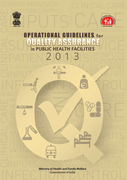
For the Assesor's Guide Vol 1 and 2 see: nrhm.gov.in/images/pdf/programmes/maternal-health/guidelines/Operational_Guidelines_for_Quality_Assurance_in_Public_Health_Facilities_and_checklists-3_books.zip

Review of disability issues and rehabilitation services in 29 african countries.
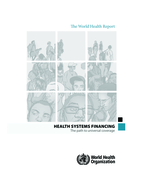
Promoting and protecting health is essential to human welfare and sustained economic and social development. This was recognized more than 30 years ago by the Alma-Ata Declaration signatories, who noted that Health for All would contribute
both to a better quality of life and also to global peace a
...
Available in: English, French, Chinese, Spanish, Russian, Arabic, Thai, Korean, Tajik, Vietnamese, Uzbek
http://www.who.int/disabilities/cbr/guidelines/en/
Available in: English, French, Chinese, Spanish, Russian, Arabic, Thai, Korean, Tajik, Vietnamese, Uzbek
http://www.who.int/disabilities/cbr/guidelines/en/
Guidelines for planning and provision of pastoral and social support services

Global UNIDO Project: Strengthening the local production of essential generic drugs in the least developed and developing countries

2nd edition
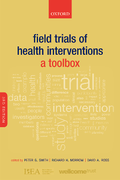
This version of Field Trials of Health Interventions includes seven new chapters on conducting systematic literature reviews, trial
governance, preliminary studies and pilot testing, budgeting and accounting, intervention costing and economic analysis, and Phase IV studies. Before new interventions
...
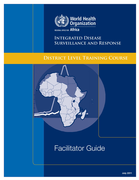
The Facilitator's Guide provides instruction and suggestions for teaching the training modules for the Technical Guidelines for Integrated Disease Surveillance and Response in the Africa Region, 2nd edition. This training is intended for district level health officers who conduct IDSR activities. Th
...