
Filter
270
Text search:
indonesian
Featured
22
76
Language
Document type
188
30
24
13
4
3
2
2
2
1
1
Countries / Regions
100
11
9
8
6
6
5
4
3
3
3
3
3
3
3
3
3
2
2
2
2
2
2
2
2
2
2
2
2
1
1
1
1
1
1
1
1
1
1
1
1
1
1
1
1
1
1
1
1
1
1
1
1
1
1
1
1
1
1
1
1
1
1
1
1
1
Authors & Publishers
Publication Years
Category
117
20
16
11
10
7
2
Toolboxes
20
17
16
14
14
13
12
8
7
6
6
5
5
5
3
3
2
2
2
1
1
1
Learning from earthquake relief and recovery operations
The training courses cover a wide range of technical and disease topics, to help prepare response workers with the skills and knowledge they need in a health emergency.

his revision to the Disaster Management Team’s (DMT) multi-sector response plan for COVID-19 is meant to align the multi-sector plan with the Department of Health’s COVID-19 Emergency Response Plan issued on 24 April 2020. Additionally, at the time of this version, the Department of Education an
...
This revision to the Disaster Management Team’s (DMT) multi-sector response plan for COVID-19 is meant to align the multi-sector plan with the Department of Health’s COVID-19 Emergency Response Plan issued on 24 April 2020.
Key Resources Humanitarian Aid
recommended
MEDBOX Issue Brief no. 6
This issue brief gives you an overview of the most important documents on humanitarian aid and the WASH sector in MEDBOX
The guide is organized into the major types of toxicities, the associated symp-toms, possible offending medications, and the suggested nursing assessments and interventions. Some symptoms (e.g. nausea) may be associated with a num-ber of underlying causes and may be mild, or a symptom of
...
The Access to COVID-19 Tools (ACT) Accelerator’s Country Readiness and Delivery workstream has released guidance on developing a national deployment and vaccination plan (NDVP) for COVID-19 vaccines. This course is intended to help national and sub-national focal points in countries develop the ND
...
Using Epidemiology to Support Primary Health Care. Updated version of the WHO handbook published in the early 1990's entitled: Manual of Epidemiology for District Health Management or those with an interest in applied epidemiology in primary health care and district health systems
Virtually all (99.9 percent) of Southeast Asia’s 656.1 million people live in areas where particulate pollution exceeds the World Health Organization (WHO) guideline of 5 μg/m³. Despite the lockdowns of the pandemic, pollution continued to rise in much of Southeast Asia in 2020. This pollution c
...
This document provides a list of key WHO-recommended maternal and newborn health commodities and aims to accelerate progress towards the SDGs. It consolidates the key and enabling commodities from existing WHO guidelines on maternal and newborn health.
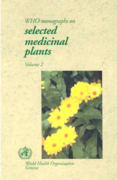
• provide scientific information on the safety, efficacy, and quality control/ quality assurance of widely used medicinal plants, in order to facilitate their appropriate use in Member States;
• provide models to assist Member States in developing their own mono- graphs or formularies for these
...

