
Filter
1998
Text search:
hospital
sanitation
Featured
219
668
Language
Document type
1146
338
230
98
92
31
29
20
8
3
3
Countries
135
115
103
83
57
56
47
47
44
41
39
39
37
35
35
33
32
32
28
23
23
20
20
20
18
18
17
16
15
14
14
14
14
14
14
11
11
10
10
10
8
8
8
7
7
7
6
6
6
6
6
6
5
5
5
5
5
5
5
4
4
4
4
4
4
4
4
4
4
3
3
3
3
3
3
2
2
2
2
2
2
2
2
1
1
1
1
1
1
1
1
1
1
1
1
1
1
1
1
1
1
1
1
1
1
1
1
1
1
1
1
1
1
1
1
1
1
Authors & Publishers
Publication Years
Category
973
131
96
96
94
39
8
3
1
1
Toolboxes
195
126
117
90
86
70
67
56
53
50
40
40
39
36
36
29
24
11
8
6
5
5
4
2

Public Health Situation Analysis and Interventions 10 October 2017
DOI10.5281/zenodo.344972
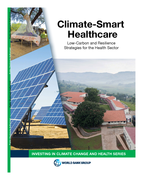
Climate change is damaging human health now and is projected to have a greater impact in the future. Low- and middle-income countries are seeing the worst effects as they are most vulnerable to climate shifts and least able to adapt given weak health systems and poor infrastructure. Low-carbon appro
...
This guide has been produced by the International
Network on Explosive Weapons (INEW) to introduce the
humanitarian advocacy agenda on the use of explosive
weapons in populated areas and to provide ideas for actions
at the national level. It is aimed primarily at NGOs and
campaigners worki
...

March - December 2018
The Government of Bangladesh has kept its borders open to Rohingya refugees and leads the humanitarian response. The people of Bangladesh continue to show tremendous generosity and hospitality in the face of a massive influx. In keeping with its policies, the Government of Ban
...

Prepared for the Stunting Prevention and Reduction Project - The project Medical Waste Management Plan’s (MWMP) overall objective is to prevent and/or mitigate the negative effects of increased generation of medical waste on human health and the environment. The plan proposes measures to prevent t
...

In the last 5 years, the conflict in South Sudan has displaced 4 million people and placed 7 million in need of humanitarian assistance.
This report commissioned by Plan International draws on research conducted with girls and members of their families and communities in multiple sites in South ...
This report commissioned by Plan International draws on research conducted with girls and members of their families and communities in multiple sites in South ...
To understand the patterns of Rwanda’s achievements in health development, it is important to explore how Rwanda addresses the Social Determinants of Health (SDH) particularly those related to routine conditions in which people are born, live and work. It is in this particular context that a case
...

The Early Childhood Development Policy and its Strategic Plan seek to provide a framework to ensure such a holistic and integrated approach to the development of young children. International research has demonstrated the high economic returns on ECD investment and its positive impact on health and
...
The Monitoring Report, which covers the first two months of the response from 25 August to 31 October, highlights the work of the Government of Bangladesh, in cooperation with humanitarian partners who are working to provide relief services for the refugee population and Bangladeshi host communities
...

This year marked the beginning of the WHO biennium 2016-2017 action plan; this annual report highlights WHO’s key achievements in 2016
It also documents the extraordinary efforts by a broad coalition of government ministries, municipalities, international agencies, community groups, women’s or
...

The overall aim of the study was to understand the acceptability and usefulness of PHC clinical placements for nursing and midwifery students.

Lesotho’s predominantly rural population faces significant health challenges within a setting of inadequate human resources for health. It is essential that nurses and nurse-midwives, who together make up the largest health workforce in the country, be adequately prepared to address Lesotho’s He
...
Technical report
This manual aims to provide information about the methods for investigating outbreaks of hepatitis E, and measures for their prevention and control. In addition, the manual gives information about the causative agent – known as the hepatitis E virus (HEV) – its epidemiology ...
This manual aims to provide information about the methods for investigating outbreaks of hepatitis E, and measures for their prevention and control. In addition, the manual gives information about the causative agent – known as the hepatitis E virus (HEV) – its epidemiology ...

Cambodia drafted and adopted the National Action Plan for Disaster Risk Reduction 2014-2018 in 2014. This plan finalized the required policies and legal processes to strengthen DRM in Cambodia. It also focused on capacity building at national and sub-national levels and provided dedicated resources
...

Timor-Leste’s vulnerability to natural hazards means if particular care is not taken in the development of the country’s infrastructure, it will remain at risk to disruption.
Timor-Leste developed the 2008 National Disaster Risk Management Policy, which lays out the government’s vison of ...
Timor-Leste developed the 2008 National Disaster Risk Management Policy, which lays out the government’s vison of ...
Maternal, Infant and Young Child Nutrition Strategic Actions:
1 Endorse and disseminate key policies and regulations
2 Improve maternal nutrition
3 Protect, promote, and support optimal infant and young child feeding practices
4 Support optimal infant and young child feeding in ...
1 Endorse and disseminate key policies and regulations
2 Improve maternal nutrition
3 Protect, promote, and support optimal infant and young child feeding practices
4 Support optimal infant and young child feeding in ...
During the reporting period no significant rainfall was recorded in Cox’s Bazar: this past week brought 29 mm of rain in comparison to 115.25 mm for the previous week. As expected, far fewer weather hazard incidents were recorded in the Rohingya camps: 69 individuals (16 HH) were affected by lands
...

It provides insight into WHO’s work that aims to improve the health of the people of the United Republic of Tanzania in collaboration with key stakeholders.
LEAVING NO-ONE BEHIND | “A Journey to End NTDs – Elimination and Care” records what we have achieved over the last year and where we are now. It presents our plan of action for the coming years, bringing our ‘traditional’ NTD work together with ‘Disease Management Disability and Inclusio
...

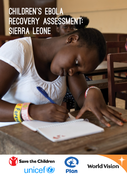
Nearly half the population of Sierra Leone is under the age of 18 years and the impact of the Ebola crisis on their lives now and on their future opportunities has been far-reaching: no school; loss of family members and friends to the virus; and changing roles and responsibilities in the home and t
...
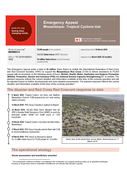
The disaster and Red Cross Red Crescent response to date
9 March 2019: Tropical Cyclone Idai forms over Northern Mozambique Channel. CVM preparedness and early warning actions underway
13 March 2019: IFRC Surge Capacity is deployed to Maputo
14 March 2019: 342,562 Swiss francs allocated from th
...
As of 21 March 2019, a total of 250,000 people are reported to be affected by the floods in nine districts. An estimated 48 per cent of the affected population is under 18 years of age.
There is limited road access in the Chimanimani, the worst affected district.
An estimated 60,000 children are
...
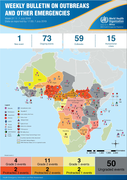
Circulating vaccine-derived poliovirus type 2 in Angola
Ebola virus disease in Democratic Republic of the Congo
Dengue fever in Côte d’Ivoire
Humanitarian crisis in north-east Nigeria.
Hand Hygiene and COVID-19
recommended
MEDBOX Issue Brief No.2.
The main route of transmission of the Sars-CoV-2 virus are small respiratory droplets. Therefore, thoroughly cleaning of hands with either alcohol-based hand rub or soap and water is one of the corner stones of basic protective measures against COVID-19 for everyone. A part
...
BMJ Global Health2019;4:e001504. doi:10.1136/bmjgh-2019-00150
This paper was commissioned by the German Federal Ministry for Economic Cooperation and Development (BMZ) in 2015, and produced by the Deutsche Gesellschaft für Internationale Zusammenarbeit (GIZ) GmbH, in cooperation with German civil society actors and freelance psychologists working in the field
...
National Statistical Committee of the Kyrgyz Republic Bishkek, Kyrgyz Republic
Ministry of Health Bishkek, Kyrgyz Republic
MEASURE DHS
ICF International Calverton, Maryland, U.S.A.
PLOS ONE | https://doi.org/10.1371/journal.pone.0183180 October 9, 2017
Technical Note on Antimicrobial Resistance
This document reflects UNICEF’s response to the growing global threat of AMR to child survival, growth and development. It identifies UNICEF’s AMR-specific and AMR-sensitive actions in reducing infections, promoting access to and optimal use of antimic
...
Antimicrobial resistance (AMR) is a global threat that requires urgent collaborative action within and among countries. AMR makes standard treatments ineffective and facilitates the spread of antimicrobial resistant infections rendering communities vulnerable. The Ministry of Health (MOH) and Minist
...
Antibiotic resistant bacteria are spreading at an alarming rate and some bacterial infections may once again be untreatable. Antibiotic resistance (ABR), conservatively calculated, causes more than 500 000 deaths every year. This number is projected to rise dramatically if radical actions are not ta
...
Research Article
PLOS Medicine | https://doi.org/10.1371/journal.pmed.1002374 August 8, 2017
Responding to community spread of COVID-19
recommended
Interim Guidance 7 March 2020
This document provides technical guidance for government authorities, health workers, and other key stakeholders to guide response to community spread. It will be updated as new information or technical guidance become available. For countries that are already preparin
...
The increasing global trend of Antimicrobial resistance (AMR) has gradually emerged as a major public health challenge for the entire world. AMR has spread to almost all countries and regions, including Pakistan owing to the “misuse and overuse” of Antimicrobials, contributing to the increasing
...

The issue of Antimicrobial resistance has become one of the most substantial health issues, prompting the World Health Assembly (WHA) to urge Member States to finalise tailor made national action plans by May 2017, aligning them with objectives of the Global Action Plan (GAP). These cover awareness,
...
Guía práctica para mejorar la calidad de la atención mediante los servicios de agua, saneamiento e higiene en los establecimientos de salud
The Ghanaian Cabinet approved the antimicrobial resistance (AMR)Policy and Implementation plan(hereafter referred to as the national action plan or NAP)in December 2017, whilst the country case study was in progress. This has set in motion the implementation phase for Ghana, which is a long awaited
...
This interim guidance has been updated with advice on safe and appropriate home care for patients with coronavirus disease 2019 (COVID-19) and on the public health measures related to the management of their contacts.
South Africa has faced many challenges over the past two decades, accomplishing profound positive changes in the social structure and government of the nation. This has not yet fully translated into better health for the population, however, particularly the poorest segment. In fact, the p
...

In Kenya, the bacterial infections that contribute most to human disease are often those in which re-‐sistance is most evident. Examples are multidrug-‐resistant enteric bacterial pathogens such as typhoid,
...
Barbados currently has a rudimentary framework and capacity to address the issue of antimicrobial resistance. There however needs to be coordination of efforts and improvement in areas where gaps have been identified.Actions required include improved antibiotic stewardship in healthcare settings, pr
...
Antimicrobial resistance (AMR) has become a global public health concern and Lebanon is of no exception to this issue. The spread of antimicrobial-resistant bacteria is considered an alarming public health threat, with a potential extent similar to global warming and other social and environmental t
...

The Libyan national action plan has been aligned with WHO five objectives. Analysis of the current situation and addressing the gaps and the needs to reach the main goal “one health” approach involves several national sectors and actors, including human and veterinary health, agriculture and foo
...
The present National action plan on antimicrobial resistance (AMR) with component of antimicrobial consumption (AMC) covering both human and agriculture sectors was developed based on the World Health Organization's (WHO) Global plan on AMR dated 2015. With the purpose to develop this plan, in May 2
...
The goals and objectives of the Sudan National Action Plan on AMR can only be achieved through implementing strategic interventions and activities with all concerned ministries and departments joining hands with other stakeholders to collaboratively tackle these challenges.

The WHO continuously reviews available data on SARS-CoV-2 variants of concern. For this version, the global epidemiological
situation of the COVID-19 pandemic as of 21 January 2022 – at a time when the Omicron VOC had been identified in 171
countries across all six WHO Regions and was rapidly re
...
Human rights must be at the centre of all prevention, preparedness, containment and treatment efforts from the start, in order to best protect public health and support the groups and people who are most at risk. States have an obligation to protect and guarantee everyone the right to the highest at
...
The purpose of this document is to provide interim guidance for setting up of quarantine facilities
Accessed: 16.04.2020
Infection Prevention and Control Programmes
January 2020
The ECA, says over 300,000 Africans could lose their lives due to COVID-19. This, as the pandemic continues to impact on the Continent’s struggling economies whose growth is expected to slow down from 3.2 percent to 1.8 percent in a best-case scenario, pushing close to 27 million people into extr
...
Accessed: 20.04.2020
Kenya reported its first case of COVID-19 on 12 March 2020 and, as at 7 April 2020, 172 cases had been confirmed and 6 deaths reported. The Government of Kenya has taken a number of measures to curb the spread of the virus, including implementing a curfew, restricting movement out and into four coun
...
This document provides guidance on the implementation of the shielding approach in camps and camp-like settings for refugees and internally displaced persons. It is intended for the displaced community itself, humanitarian actors and camp coordination / management authorit
...
This document provides guidance on the implementation of the shielding approach in urban areas in LICs and crisis-affected regions. It is intended for the community itself, national and local governance institutions, and humanitarian and development actors operating in the country.
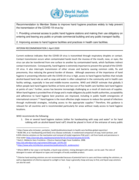
Current evidence indicates that the COVID-19 virus is transmitted through respiratory droplets or contact. Contact transmission occurs when contaminated hands touch the mucosa of the mouth, nose, or eyes; the virus can also be transferred from one surface to another by contaminated hands, which fac
...

The COVID-19 pandemic is having far reaching impacts, well beyond the health crisis and needs, with the most severe impacts experienced in the poorest countries and those most vulnerable to humanitarian crises including natural disasters, such as Nepal.
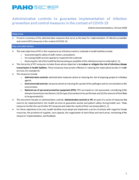
Objective of this document: Present a summary of the administrative measures that serve as the basis for implementation of infection prevention and control (IPC)measures in the context of COVID-19
Right now, we are facing an unpredictable and highly dynamic situation as a global community. However, as we have seen from the solidarity, support and power of communities in the HIV epidemic and already in communities responding to the COVID-19 pandemic, the response must not be fear and stigma. W
...
Aligned to the Lancet Migration Global Statementto include migrants and refugees incountries’response toCOVID-192, this brief focuses onGreece’s challenges and opportunities to build an inclusive response. Asylum seekers and refugees in Greece are currently placed by the Greek governments in Rec
...

The purpose of this document is to present and promote the minimum requirements for IPC programmes at the national and health care facility level, identified by expert consensus according to available evidence and in the context of the WHO core components.
The minimum requirements are defined as: I
...

India is experiencing rapid demographic and epidemiological transitions with NCDs causing significant disability, morbidity and mortality both in urban and rural populations and across all socioeconomic strata. According to the ICMR State Level Disease Burden Initiative, in 2016, NCDs accounted to a
...
In India, in response to the above and guided by our counterparts in the government of India, the UN agencies have developed the Novel Coronavirus Disease Joint Health Response Plan by UN Agencies and Partners, led by WHO-India, in close collaboration with the Ministry of Health and Family Welfare,
...
The report examines how people with mental health conditions are often shackled by families in their own homes or in overcrowded and unsanitary institutions, against their will, due to widespread stigma and a lack of mental health services.
Many are forced to eat, sleep, urinate, and defecate in t
...
Based on scientific evidence, expert consensus and country experiences, the WHO core components for infection prevention and control (IPC) are the foundation for establishing or strengthening effective programmes at the national and facility level.
These new guidelines on core components of infecti
...
BMC Health Services Research (2019) 19:458 https://doi.org/10.1186/s12913-019-4315-7

Thefirst report on Latin America and the Carribean presents key indicators on health and health systems in 33 Latin America and the Caribbean countries. . Analysis is based on the latest comparable data across almost 100 indicators including equity, health status, determinants of health, health car
...
This operation update provides a summary of key results achieved against the IFRC Syria Complex Emergency Plan of Action covering 13-month period, from 1 June 2019 to 30 June 2020.
Quality of care in fragile, conflict-affected and vulnerable settings: tools and resources compendium
recommended
This compendium represents a curated, pragmatic and non-prescriptive collection of tools and resources to support the implementation of interventions to improve quality of care in such contexts. Relevant tools and resources are listed under five areas: Ensuring access and basic infrastructure for qu
...
Interim guidance 2 February 2021 . Available in Arabic, Chinese, English, French, Ukranian, Russian
Health workers are at the front line of the COVID-19 outbreak response and as such are exposed to different hazards that put them at risk. Occupational hazards include exposure to SARS-CoV-2 and othe
...
A Global Analysis of Antimicrobial Resistance and Its Drivers.
Since the first State of the World’s Antibiotics report in 2015, antimicrobial resistance has leveled off in some high-income countries but continues to rise in many low- and middle-income countries (LMICs), where access to antibiotic
...
In this COVID-19 pandemic, timely access to accurate information can be the difference between life and death. The stakes are high in developing countries like Ethiopia where millions of people have limited access to information because of low media access, insufficientin
...
Временное руководство23 декабря 2020 г.
Ethiopia has seen high economic growth over the last decade, but remains a poor country with a high burden of disease. It has made considerable health gains in recent years, mainly by having health policies that focus on extending primary healthcare, using health extension workers. It
...
This training module is meant to strengthen the capacity of CHVs to prevent the Non Communicable Diseases at the community level . The Government of Kenya is committed to supporting community health initiatives and accelerating the achievement of the KHSS&IP goals, Millennium Development G
...
The community-BFCI (c-BFCI) manual has been developed to facilitate training of CHVs and stakeholders providing nutrition sensitive services at community level. The manual covers a wide range of topics: basic nutrition, exclusive breastfeeding, complementary feeding, Breast Milk Substitutes Act, gro
...
