
Filter
1869
Text search:
hiv
epidemiology
Featured
195
458
Language
Document type
1183
266
215
76
52
21
20
19
11
5
Countries
61
56
49
49
46
43
42
37
35
35
34
34
34
33
31
29
28
28
25
24
24
21
20
18
17
15
14
14
14
13
12
11
11
11
10
10
10
9
9
9
8
8
7
7
7
7
7
6
6
6
6
5
5
4
4
4
4
4
4
3
3
3
3
3
3
3
2
2
2
2
2
2
2
2
2
2
1
1
1
1
1
1
1
1
1
1
1
1
1
1
1
1
1
1
1
1
1
1
1
1
1
1
1
1
1
1
1
1
1
1
1
1
1
1
Authors & Publishers
Publication Years
Category
671
206
80
75
44
28
21
1
Toolboxes
298
298
101
81
69
67
47
42
31
26
24
24
24
23
20
17
13
12
12
10
6
4
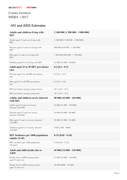
Accessed August 2018
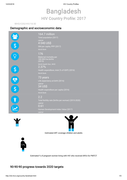
HIV Country Intelligence - HIV Country Profiles
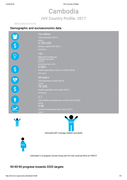
HIV Country Intelligence - HIV Country Profiles
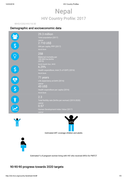
HIV Country Intelligence - HIV Country Profiles
World Aids Day, 1. December 2018
Commemorating 30 Years
Accessed: 05.10.2019
Joint Press Release
Stockholm/Copenhagen 20/03/2017
Source: Global Tuberculosis Report 2015
http://www.who.int/tb/publications/global_report/en/
Accessed: 05.10.2019
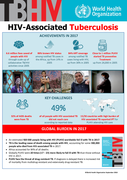
Accessed:10.03.2020

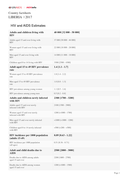
Accessed online August 2018
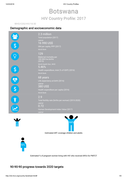
HIV Country Intelligence - HIV Country Profiles
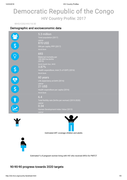
HIV Country Intelligence - HIV Country Profiles
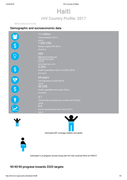
HIV Country Intelligence - HIV Country Profiles
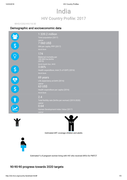
HIV Country Intelligence - HIV Country Profiles
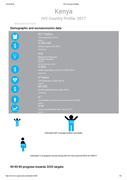
HIV Country Intelligence - HIV Country Profiles
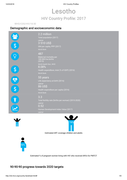
HIV Country Intelligence - HIV Country Profiles
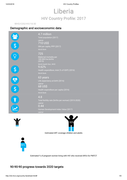
HIV Country Intelligence - HIV Country Profiles
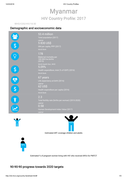
HIV Country Intelligence - HIV Country Profiles
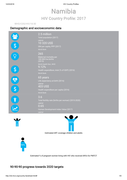
HIV Country Intelligence - HIV Country Profiles
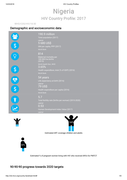
HIV Country Intelligence - HIV Country Profiles
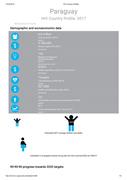
HIV Country Intelligence - HIV Country Profiles
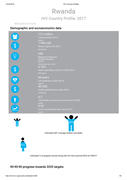
HIV Country Intelligence - HIV Country Profiles
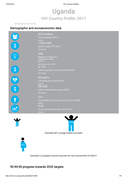
HIV Country Intelligence - HIV Country Profiles
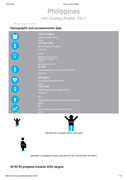
HIV Country Intelligence - HIV Country Profiles
HIV Country Intelligence - HIV Country Profiles
HIV Country Intelligence - HIV Country Profiles
HIV Country Intelligence - HIV Country Profiles
HIV Country Intelligence - HIV Country Profiles
HIV Country Intelligence - HIV Country Profiles
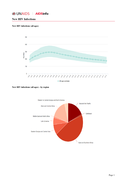
Accesseds: 20.10.2019
Accessed on 28.02.2020
The Department of Nutrition, HIV and AIDS (DNHA) in Ministry of Health and Population is grateful to all stakeholders who contributed to the development of the Nutrition Education Communication Strategy II. The DNHA acknowledges the financial and te
...
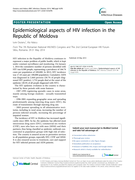
Osoianu and Halacu BMC Infectious Diseases 2014, 14(Suppl 4):P8 http://www.biomedcentral.com/1471-2334/14/S4/P8
From The 7th Romanian National HIV/AIDS Congress and The 2nd Central European HIV
...
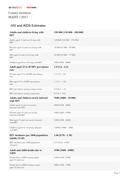
Accessed August 2018
Pan African Medical Journal 2017;27:215. doi: 10.11604/pamj.2017.27.215.12994
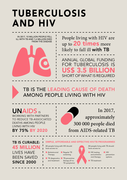
Accessed: 05.10.2019
UNAIDS 2018, Guidance
Indicators for monitoring the
2016 Political Declaration on Ending AIDS
Findings from a cross-sectional qualitative study of HIV vulnerabilities among People Who Inject Drugs and their sex partners in Bihar and Manipur, India. The study is one of the first qualitative comparative studies to seek an in-depth understandin
...

Extract from report of GACVS meeting of 3-4 December 2009, published in the WHO Weekly Epidemiological Record on 29 January 2010

Extract from report of GACVS meeting of 29-30 November 2006, published in the WHO Weekly Epidemiological Record of 19 January 2007
braz j infect dis 2 0 1 7;2 1(2):162–170
http://dx.doi.org/10.1016/j.bjid.2016.11.006
1413-8670/© 2016 Sociedade Brasileira de Infectologia. Published by Elsevier Editora Ltda. This is an open access article under the CC BY-NC-ND license (http://creativecommons.org/licenses/by-nc-nd/4.0/).

Final Draft narrative December 6, 2012 - This strategic plan, developed through the joint collaboration of all stakeholders in the different sectors is aimed at harnessing and bringing together all the stakeholders who have a role in the prevention, detection and management of epidemic and infectiou
...
This report has been developed, based on data provided by the TB & ORD surveillance system from across Rwanda. It provides a comprehensive picture of the occurrence and management of TB & ORD and Leprosy in Rwanda. It is structured based on the 2013-2018 Rwanda TB national strategic plan (2013-2018
...
HRH SA 2030 | Draft HR Strategy for the Health Sector: 2012/13 – 2016/17 Consultation Document

2018 monitoring report: current status and strategic priorities
The report sets out the status of women’s, children’s and adolescents’ health, and on health systems and social and environmental determinants. Regional dashboards on 16 key indicators highlight where progress is being made o ...
The report sets out the status of women’s, children’s and adolescents’ health, and on health systems and social and environmental determinants. Regional dashboards on 16 key indicators highlight where progress is being made o ...
A practical guide to meaningfully engage adolescents in the AIDS response
UNAIDS 2016 reference
Цель этого документа – повысить уровень осознания актуальности приоритетных направлений научных исследований по проблеме ТБ/ВИЧ (то есть по тем направлениям, кот
...
Defending Rights
Breaking Barriers
Reaching People with HIV Services
Global Aids Update 2019
NGO Social Contracting
Sustainable Financing of National HIV Responses
NGO Social Contracting
Sustainable Financing of National HIV Responses
Regional Action Plan for HIV in South-East Asia (2017-2021)
Epidemiology, Control, and Financing

The purpose of the PAS III is to guide Pakistan’s overall national response for HIV and AIDS through 2020, through focused interventions with set targets, costs, roles and responsibilities. The successful implementation of PAS III involves multipl
...
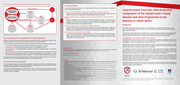
In South Africa, young women and girls are exposed to extremely high levels of gender-based violence (GBV) and HIV infection. Given the links between the two epidemics, it is important that HIV prev
...
The HIV/AIDS Sustainability Index Dashboard is a tool completed every two years by President’s Emergency Plan for AIDS Relief (PEPFAR) teams, host government and partner stakeholders to sharpen the understanding of each country’s sustainability
...
This report provides an update on the key facets of HIV treatment access, including the latest HIV treatment guidelines from World Health Organization (WHO), an overview on pricing for first-line, s
...
Strengthening HIV prevention among most-at-risk populations (MARPs) in the Syrian Arab Republic:
The third edition, released in 2018, has grown to include a total of 18 chapters, contributed by 20 experts and authors from many countries. The goal remains the same: to educate primary care providers on the best practices in TB diagnosis, treatment and follow-up. All articles are richly illustrate
...

Zero new HIV infections
Zero Discrimination
Zero AIDS related deaths
Accessed: 04.10.2019

Joint United Nations Programme on HIV/AIDS (UNAIDS).

Guidance
Indicators for monitoring the 2016 Political Declaration on Ending AIDS
UNAIDS Joint United Nations Programme on HIV/AIDS
The UNAIDS 2020 global report is a call to action. It highlights the scale of the HIV epidemic and how it runs along the fault lines of inequalities.
UNAIDS report on the global AIDS epidemic shows that 2020 targets will not be met because of deeply unequal success; COVID-19 risks blowing HIV progress way off course. Missed targets have resulted in 3.5 million more
...
Men are underrepresented in HIV testing services throughout sub-Saharan Africa. HIV testing is critical to achieve the UNAIDS 95-95-95 goals, as it is the first entry point to
...
Global HIV Strategic Information Working Group
For Populations At Risk For HIV
National HIV curriculum
You can always find the most up to date version of this document at
https://www.hiv.uw.edu/go/co-occurring-conditions/opportunistic-infections-prevention/coreconcept/all
In Danger: UNAIDS Global AIDS Update 2022
recommended
Progress in prevention and treatment is faltering around the world, putting millions of people in grave danger. Eastern Europe and central Asia, Latin America, and the Middle East and North Africa have all seen increases in annual HIV infections ove
...
This technical report presents the epidemiology of human and animal leishmaniases in the EU and its neighbouring countries and concludes that the disease remains widespread and underreported in many countries of southern Europe, northern Africa, and
...

Myanmar is one of the world’s 22 high tuberculosis (TB) burden countries, and supporting TB control in Myanmar is a global priority. This report reflects the findings, discussions, conclusions and recommendations of the fourth international review mission of the Myanmar National TB Programme (NTP)
...
Putting Asia’s HIV response back on track
Clinical guideline for paediatric care of tuberculosis and TB-HIV co-infection
The Zambia Population Based HIV impact assessment of 2016, reported the prevalence of viral hepatitis in Zambia as ranging between 5.6% among adults aged 15 to 59% in the general population, and 7.1% among
...

Ending the epidemics of HIV, tuberculosis and malaria by 2030 is within reach, but not yet fully in our grasp.
With only 11 years left, we have no time to waste. We must step up the fight now.
Journal of the International AIDS Society Vol. 21 (2018) e25133
Many prevention of mother-to-child HIV transmission programmes across Africa initiate HIV-infected ( ...
Many prevention of mother-to-child HIV transmission programmes across Africa initiate HIV-infected ( ...
Report
Almaty, 2016
Authors: Ganina L.Yu., head of epidemiology department, Republican AIDS Center (RAC), Yelizaryeva A. V., epidemiologist, RAC, Kaspirova А. А., head of epidemiology depar
...

Non-communicable diseases (NCDs) are the second common cause of death in sub-Saharan Africa (SSA) accounting for about 35% of all deaths, after a composite of communicable, maternal, neonatal, and nutritional diseases. Despite prior perception of low NCDs mortality rates, current evidence suggests t
...
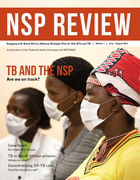
NSP Review
Engaging with South Africa’s National Strategic Plan for HIV, STIs and TB Edition 7 July – August 2013
A publication of the Treatment Action Campaign and SECTION27
GeneXpert: An imperfect rollout
TB in South African prisons: Whe
...
Outline
• Welcome and objectives
• Microbiology, epidemiology and clinical presentation
• Surveillance for imported cases including case definitions
• Laboratory diagnosis • Infection prevention and hospital readiness
• Patient
...

In a retrospective review of hospital records of 40 human monkeypox cases from Nigeria, the majority developed fever and self-limiting vesiculopustular skin eruptions. Five deaths
were reported. Compared to human immunodeficiency virus (HIV)–nega
...
This report documents the findings from the Behavioral Surveillance Survey conducted among youuth aged 15-24 in Rwanda in 2009. The 2009 Youth BSS documented HIV knowledge, attitudes, and behaviors (KAB) among youth in Rwanda. The data provided a c
...
Between 2012 and 2016, development assistance for HIV/AIDS decreased by 20·0%; domestic financing is therefore critical to sustaining the response to HIV/AIDS. To understand whether domestic resour
...
The manual is written for clinicians working at the district hospital (first-level referral care) who diagnose and manage sick adolescents and adults in resource constrained settings. It aims to support clinical reasoning, and to provide an effective clinical approach and protocols for the managemen
...

Polymerase Chain Reaction (PCR) has significantly helped in early diagnosis and commencement of specific interventions for diseases control. It also plays a critical role in understanding the disease epidemiology and unraveling the transmissio
...
With this study, we estimated the burden of serious fungal infections for the general healthy population and for those at risk, including those infected with HIV, patients with asthma, as well as those under intensive care. We also highlight from s
...
