
Filter
617
Text search:
fully
vaccinated
Featured
52
165
Language
Document type
298
113
84
36
32
20
13
13
4
2
1
1
Countries
33
24
23
18
15
13
12
12
12
12
11
10
10
10
8
8
8
8
8
7
7
7
7
7
7
7
7
7
7
6
6
5
5
5
5
5
4
3
3
3
3
3
3
3
3
3
2
2
2
2
2
2
2
2
2
1
1
1
1
1
1
1
1
1
1
1
1
1
1
1
1
1
1
1
Authors & Publishers
Publication Years
Category
275
70
37
30
12
5
2
1
Toolboxes
115
31
25
25
21
19
17
17
12
11
10
9
9
7
6
6
6
5
5
3
3
1
WHO/CDS/TB/99.272
National Guidelines for HIV & AIDS Care and Treatment (5th Edition)
World's largest Science, Technology & Medicine Open Access book publisher
Chapter 7 from the book People's Movements in the 21st Century - Risks, Challenges and Benefits
Morbidity and Mortality Weekly Report
Recommendations and Reports: July 7, 2006 / Vol. 55 / No. RR-9
Human Rights, Minimum Standards and Monitoring at the European and International Levels
Joining efforts to control two trelated global epidemics.
Public Health Situation Analysis and Interventions 10 October 2017
Beyond borders. How to make the global compacts on migration and refugees work for uprooted children
The report presents successful case studies from around the world, including the implementation of minimum protection standards for refugee children in Germany, cross border child protection systems in West Africa, and finding alternatives to the detention of migrant children in Zambia. Other countr
...
Eur Respir J 2016; 48: 808–817 | DOI: 10.1183/13993003.00840-2016
11-17 April 2012

8–18 December 2015
4–15 February 2013
The report reviews progress with the task of planning and implementing measures necessary to secure a completely polio-free world. It also examines actions aimed at ensuring successful transfer of polio assets, innovations developed and lessons learned to countries’ public health programmes and ot
...
Updated to Reflect the 2009 Medical Eligibility Criteria of the World Health Organization
January — December 2018
Responding to a poliovirus event and outbreak, Part 1: General (SOPs) describes the general principles and steps to facilitate timely and effective responses to poliovirus events and outbreaks, and incorporate lessons learned from recent previous outbreak response efforts. This document summarizes r
...
Humanitarian emergencies, regardless of type and cause, have a number of common risk factors for communicable diseases inextricably linked to excess risk of morbidity and mortality which can come from vaccine–preventable diseases (VPDs). The reduction of VPDs is a significant aim of public-health
...
Vol. 2: Clinicians' Guide
Clinicians’ Guide is designed to assist busy medical practitioners in the field with patient management by providing current, essential, practical guidance and background, packaged into a single resource
Clinicians’ Guide is designed to assist busy medical practitioners in the field with patient management by providing current, essential, practical guidance and background, packaged into a single resource

This manual provides practical guidelines for the management of children with severe malnutrition. It seeks to promote the best available therapy so as to reduce the risk of death, shorten the length of time spent in hospital, and facilitate rehabilitation and full recovery. Emphasis is given to the
...
A Manual for Maternity Unit Personnel - Part of the CBM Prevention Toolkit on Birth Impairments
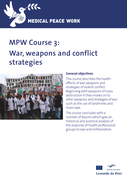
This course describes the health effects of war, weapons and strategies of violent conflict. Beginning with weapons of mass destruction it then moves on to other weapons and strategies of war such as the use of landmines and mass rape. The course concludes with a number of lessons which give an hist
...

UNICEF Strategic Plan 2018-2021. Draft Theory of Change Paper
DHS Further Analysis Reports No. 88 - This further analysis examines levels, trends, and determinants of neonatal mortality in Rwanda, using data from the 2000, 2005, and 2010 Rwanda Demographic and Health Surveys (RDHS).

Prepared for the Stunting Prevention and Reduction Project - The project Medical Waste Management Plan’s (MWMP) overall objective is to prevent and/or mitigate the negative effects of increased generation of medical waste on human health and the environment. The plan proposes measures to prevent t
...

A guide to increasing coverage and equity in all communities in the African Region
Expanded Programs on Immunization (EPI) is responsible for vaccines and vaccination to control, eliminate and eradicate vaccine preventable diseases (VPDs). Having strong immunization systems to deliver vaccines ...
Expanded Programs on Immunization (EPI) is responsible for vaccines and vaccination to control, eliminate and eradicate vaccine preventable diseases (VPDs). Having strong immunization systems to deliver vaccines ...

This report highlights key achievements registered by the Ministry of Health, affiliated institutions, implementing agencies both at central and decentralized levels in 2013-2014. Generally, the Health Sector accomplishments and programs routine data for 2013-2014 confirm that Rwanda maintains its p
...

The current SEARVAP (South-East Asia regional vaccine action plan) describes a set of regional goals and objectives for immunization and control of vaccine-preventable diseases for 2016 – 2020 and highlights priority actions, targets and indicators that address the specific needs and challenges of
...

January - December 2017

The report reflects on the trends, achievements and challenges in global health over the past decade during which Dr Margaret Chan has been Director-General of WHO. It discusses the role of WHO in dealing with such issues as the rise of noncommunicable diseases, leaps in life expectancy, and emergin
...
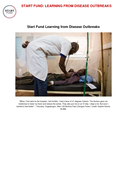
This learning report attempts to understand the drivers for, and barriers to, effective implementation as well as review the experiences of Start Fund members in responding to these outbreaks to support evidence-based decision-making within the Start Network at project, crisis, and system level. Spe
...

Every year, around 830 000 children die from unintentional or "accidental" injuries. The vast majority of these injuries occur in low-income and middle-income countries. However, dozens of prevention strategies and programmes exist. If they were integrated into other child survival programmes and im
...

The five hepatitis viruses have different epidemiological profiles, and their impact, duration, and transmission route also vary. The most common transmission routes contributing to the spread of hepatitis are exposure to infected blood via blood transfusion or unsafe injection practices, consumptio
...


Managing epidemics
recommended
Key facts about major deadly diseases.This manual provides concise and up-to-date knowledge on 15 infectious diseases that have the potential to become international threats, and tips on how to respond to each of them.
You can download an interactive version directly at the website
http://www.who.
...
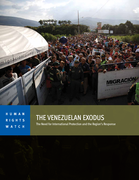
The Need for a Regional Response to an Unprecedented Migration Crisis.
This report provides an overview of where the more than 2 million Venezuelans who have left the country since 2014, at least half of them in the past year and a half alone, are now living, the conditions they face, their prospe
...
Pre-Publication draft version. Lat reviewed on 7th July 2017

The goal of the strategy is to prevent seasonal influenza, control the spread of influenza from animals to humans, and prepare for the next influenza pandemic.
The new strategy is the most comprehensive and far-reaching that WHO has ever developed for influenza. It outlines a path to protect popul
...
Neurological, Psychiatric, and Developmental Disorders: Meeting the Challenge in the Developing World
Institute of Medicine (US) Committee on Nervous System Disorders in Developing Countries.
Washington (DC): National Academies Press (US); 2001.
Bisher hat die STIKO empfohlen, dass alle im Ausland mit einem nicht in der EU zugelassenen Impfstoff geimpften Personen eine erneute Impfserie mit einem in der EU zugelassenen Impfstoff erhalten sollen. Ziel der im Epidemiologischen Bulletin 13/2022 veröffentlichten aktualisierten COVID-19-Impfemp
...
Поэтому уже давно возникала мысль о том,что подробный комментарий по вопросам научных знаний и практическогоопыта, лежащих в основе политики ВОЗ по борьбе
...
Regional situation analysis, practices, experiences, lessons learned and ways forward.
As of June 2019, the number of Venezuelans leaving their country reached 4 million, with Colombia, Peru, Chile, Ecuador and Brazil hosting the vast majority of Venezuelans in Latin America. The end of the first half of the year was marked by the announcement of tighter immigration measures in Peru
...
The EYE strategy is a comprehensive and long-term strategy built on lessons learned that aims at ending yellow fever epidemics by 2026, and consists of three strategic objectives:
protect at-risk populations;
prevent international spread; and
contain outbreaks rapidly.

At least half of the world’s population does not have full coverage of essential health services. Health expenses push more than 100 million people into extreme poverty each and every year, forcing them into terrible choices that no one should ever have to make: Buy medicine or food? Education or
...
UNAIDS 2016, Reference
HIV care and support taking into account the 2016 WHO consolidated guidelines
This document presents a consolidated summary of urgent activities
required to advance preparedness, as elaborated in each country's
national plan, with a particular focus on Priority 1 countries. It
presents the estimated requirements, needs, and gaps for each of the
Priority 1 countries and a
...
Rwanda: Ebola Preparedness Emergency Plan of Action (EPoA) Final Report - DREF Operation n° MDRRW017
Eleven (11) districts in Rwanda were initially were considered most at risk of the outbreak, namely:
• Rusizi, Nyamasheke, Karongi, Rutsiro, Rubavu (bordering DRC)
• Musanze, Burera, Gicumbi and Nyagatare (bordering Uganda)
• Kigali city (comprised of 3 localities) due to the presence of Ki
...
This Strategic Response Plan for the measles emergency in the WHO European Region (SRP) articulates the overall status of measles resurgence in the WHO European Region and the priority actions needed to ensure an effective response to interrupt transmission, save lives and reverse the regional trend
...
Downloaded from https://aidsinfo.nih.gov/guidelines on 10/19/2019
Recommendations from the National Institutes of Health, Centers for Disease Control and Prevention, the HIV Medicine Association of the Infectious Diseases Society of America and the Pediatric Infectious Diseases Society
(This g
...
Large-Scale UN Response Needed to Address Health and Food Crises
This report is based on interviews with more than 150 health care professionals, Venezuelans seeking or in need of medical care who recently arrived in Colombia and Brazil, representatives from international and nongovernmental humani
...
Overwhelming evidence shows that a range of health concerns—mental illness, substance dependence, HIV/AIDS, and noncommunicable diseases—affect prisoners disproportionately. But, while incarceration poses risks to health—including inadequate nutrition and exposure to violence—prisons also pr
...
Context and impact of the crisis
A year after the signing of the Revitalized Agreement on the Resolution of the Conflict in South Sudan (R-ARCSS),1 the ceasefire holds in most parts of the country. Armed conflict between State security forces and opposition armed groups has been contained to a sma
...
Effective Ebola risk communication requires respect and transparency and remains as vital
as ever. An assessment of changing communication needs and preferences in Beni, North Kivu.
In the second year of the current Ebola outbreak response in the Democratic Republic of Congo (DRC), people at ris
...
This is the first national Policy to combat AMR in Cambodia. It was developed based on conclusions and recommendations of a country situaytion analysis.
Household transmission investigation protocol for 2019-novel coronavirus (2019-nCoV) infection
recommended
The household transmission investigation is a case-ascertained prospective study of all identified household contacts of a laboratory confirmed 2019-nCoV infection (see 2.2 Study population). It is intended to provide rapid and early information on the clinical, epidemiological and virological chara
...
The International Pharmaceutical Federation (FIP) is a global federation of national associations of pharmacists and
pharmaceutical scientists. In order to support these associations in their fight against AMR, FIP has prepared this
briefing document. It is an overview of the different activities
...
Infectious diseases are constantly in transition. New diseases develop, known dis-eases become widespread or reemerge, and occasionally a disease is eradicated.Infectious diseases such as HIV, tuberculosis, and cholera are significant causes ofillness and death in many parts of the world. Health car
...
A Guide to the Application of the WHO Multimodal Hand HygieneImprovement Strategy and the “My Five Moments for Hand Hygiene”Αpproach
This interim guidance is for LTCF managers and corresponding infection prevention and control (IPC) focal persons in LTCF and updates the guidance published in March 2020. The objective of this document is to provide guidance on IPC in LTCFs in the context of COVID-19 to 1) prevent COVID-19-virus fr
...
FAO’s component of the Global COVID-19 Humanitarian Response Plan
18.5.2020
This document sets out the preparedness and response plan of the Nigerian Primary Health Care System for COVID-19 Acute Respiratory Disease. It outlines the planning scenarios, key areas of work and priority activities required for the Primary Health Care Sector to quickly scale up its core capacity
...
The WHO COVID-19 Clinical management: living guidance contains the Organization’s most up-to-date recommendations for the clinical management of people with COVID-19. Providing guidance that is comprehensive and holistic for the optimal care of COVID-19 patients throughout their entire illness is
...

Monitoring and evaluation framework
recommended
COVID‑19 strategic preparedness and response
The focus of the current quarterly edition of Eurohealth (from the European Observatory on Health Systems and Policies) is Antimicrobial Resistance (AMR) and contains the following articles:
• Strengthening implementation of AMR national action plans
• Fostering clinical developmen
...
This guidance document has been produced by WHO to assist blood services in the development of national plans to respond to any emerging infectious threats to the sufficiency or safety of the blood supply, whether from an existing infectious agent that is changing in incidence and spread, or from a
...
Version 4
The purpose of these standard operating procedures (SOPs) is to offer policy guidance and to provide performance standards on how to respond to any type of poliovirus outbreak or event in a timely and effective manner, and specifically, to stop an outbrea
...
The two-year impact report for the Access to COVID-19 Tools (ACT) Accelerator details impact, case studies and timelines of key milestones for the Diagnostics, Therapeutics and Vaccines pillars, as well as the Health Systems and Response Connector.
Integrated Management of Acute Malnutrition National Guidelines
Manual of Operations
First Edition 2016
In this document, recommendations are provided on designing and implementing
a cross-sectional serosurvey using school-based sampling to estimate age-specific
DENV seroprevalence to inform a country’s national dengue vaccination program.
The document includes recommendations for methods for
...
The WHO country office for Ghana, began the year 2019 with a 4-day staff retreat at the Busua Beach Resort in the Western Region from 04 to 08 March 2019. The theme for the retreat was ‘Impacting the Health and Lives of the people of Ghana through the Triple Billion Goal”. The staff outlined pri
...
This handbook is an adaptation from the WHO Clinical Handbook Health care for women subjected to intimate partner violence or sexual violence developed by the World Health Organization (WHO), UN Women and United Nations Population Fund. The handbook draws on the work from professionals who are dedic
...
WHO‘s Global Strategy to Accelerate the Elimination of Cervical Cancer, launched today, outlines three key steps: vaccination, screening and treatment. Successful implementation of all three could reduce more than 40% of new cases of the disease and 5 million related deaths by 2050.
WHO technical advisory group on behavioural insights and sciences for health, meeting report, 15 October 2020
Science . 2020 Sep 11;369(6509):1309-1312. doi: 10.1126/science.abe2803. Epub 2020 Sep 3.
The Fair Priority Model offers a practical way to fulfill pledges to distribute vaccines fairly and equitably
