
Filter
390
Text search:
egg
Featured
36
152
Language
Document type
239
55
42
23
8
8
5
4
2
1
1
1
1
Countries / Regions
66
31
15
10
10
9
8
8
7
4
4
4
3
3
3
3
3
3
3
2
2
2
2
2
2
2
2
2
2
2
1
1
1
1
1
1
1
1
1
1
1
1
1
1
1
1
1
1
1
1
1
1
1
1
1
1
1
Authors & Publishers
Publication Years
Category
175
50
32
26
19
14
7
Toolboxes
38
25
18
13
10
10
9
8
8
8
5
5
5
4
3
3
3
3
2
2
2
1
This diagnostic and treatment manual is designed for use by medical professionals involved in curative care at the dispensary and hospital levels. We have tried to respond in the simplest and most practical way possible to the questions and problems faced by field medical staff, using the accumulate
...
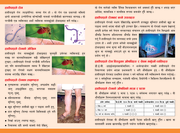
Accessed 18 February 2015
Zika virus is primarily transmitted by the Aedes species of mosquito which is also responsible for the spread of dengue, Chikungunya and yellow fever viruses. In most areas, the primary vector of these viruses is Aedes aegypti, with Aedes albopictus a proven or potential vector in some settings. Wel
...
This case study explores how the Talent Youth Association, supported by Link Up, promotes the integration of comprehensive sexuality education in school curricula in Ethiopia in order to enable young people to understand and claim their sexual and reproductive health and rights

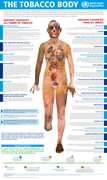
This Poster is available in English, French, Spanish, Russian, Chinese, Portuguese, Hausa and Arabic
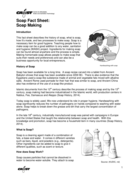
This fact sheet developed by CAWST describes the history of soap, how it’s made, and the two processes for making soap. This fact sheet is available in English, Spanish, and French.
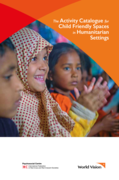
The Toolkit for Child Friendly Spaces in Humanitarian Settings was developed by
the International Federation of the Red Cross and Red Crescent Societies Reference
Centre for Psychosocial Support and World Vision International. The toolkit provides
a set of materials to assist managers and facilit
...
This article is part four in a series of explainers on vaccine development and distribution
Available in different languages
This article is part two in a series of explainers on vaccine development and distribution. Part one focused on how vaccines work to protect our bodies from disease-carrying germs. This article focuses on the ingredients in a vaccine and the three clinical trial phases. Part three outlines the nex
...
This report of the EFSA and ECDC presents the results of zoonoses monitoring activities carried out in 2020 in 27 EU Member States (MS) and nine non-MS. Key statistics on zoonoses and zoonotic agents in humans, food, animals and feed are provided and interpreted historically.

Schistosomiasis, also known as bilharzia, is a disease caused by parasitic worms that require two hosts: humans and certain species of snails. There are two forms of the disease, namely, intestinal schistosomiasis, caused by Schistosoma mansoni and S. japonicum, and urogenital schistosomiasis, cause
...
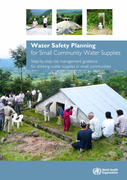
Step-by-step risk management guidance for drinking-water supplies in small communities.
Dengue is a mosquito-borne viral disease that has rapidly spread to all regions of WHO in recent years. Dengue virus is transmitted by female mosquitoes mainly of the species Aedes aegypti and, to a lesser extent, Ae. albopictus. These mosquitoes are also vectors of chikungunya, yellow fever and Zik
...
Revision for Field Review
Online version of the manual: https://iawgfieldmanual.com/manual
