Filter
880
Text search:
dental
health
Featured
97
278
Language
Document type
512
154
107
52
28
8
6
6
2
1
1
1
Countries
53
34
30
26
25
24
23
23
23
22
21
20
17
16
16
16
14
12
12
12
12
11
11
11
10
9
9
7
6
6
6
6
6
5
5
5
5
4
3
3
3
3
3
3
3
3
3
3
2
2
2
2
2
2
2
2
2
2
2
1
1
1
1
1
1
1
1
1
1
1
1
1
1
1
1
1
1
1
1
1
1
1
Authors & Publishers
Publication Years
Category
455
88
39
38
30
17
8
Toolboxes
50
46
45
44
43
38
34
21
18
18
15
14
13
13
13
8
6
5
4
4
3
1
1
Mid-term review of The National AIDS Programme 2011-15
October 2013
Integrated Management of Adolescent and Adult Illness
Integrated Management of Childhood Illness
Interim Guidelines for health workers at health centre or district hospital outpatient clinic
...
Guidelines
Key Populations
The most significant finding of the case study for integrating antimicrobial resistance (AMR)into existing programs and mobilising resources for funding in Nigeria, is that most of the AMR activities within the Nigerian National Action Plan (NAP)canalready be incorporated within exi
...
Barbados currently has a rudimentary framework and capacity to address the issue of antimicrobial resistance. There however needs to be coordination of efforts and improvement in areas where gaps have been identified.Actions required include improved antibiotic stewardship in healthcare settings, pr
...
Using the WHO model list of essential medicines to update a national essential medicines list
Since 1977, WHO has been working with countries to design the package of essential medicines as an integral component of treatment within the continuum of care, developing and disseminating the Model List
...

Deployment of Residents in Various Facilities Designated for Screening and Management of Patients with COVID-19 and the non covid area of the hospital (in this SOP, the term “resident” includes DNB and CPS students)

The WHO continuously reviews available data on SARS-CoV-2 variants of concern. For this version, the global epidemiological
situation of the COVID-19 pandemic as of 21 January 2022 – at a time when the Omicron VOC had been identified in 171
countries across all six WHO Regions and was rapidly re
...
23 December 2020 This document summarizes WHO recommendations for the rational use of personal protective equipment (PPE) in health care settings and temporary strategies during acute supply shortages. This document also contains 2 Annex sections de
...
The State of the world’s nursing 2020 report provides the latest, most up-to-date evidence on and policy options for the global nursing workforce. It also presents a compelling case for considerable – yet feasible – investment in nursing education, jobs, and leadership.
The primary chapters
...

People with underlying noncommunicable diseases (NCDs) such as hypertension, diabetes, cardiovascular disease, chronic respiratory disease and cancer have a high risk for developing severe and even fatal COVID-19. It is important for them to strictly follow basic protective measures and make sure th
...
Accessed: 02.05.2020
These consolidated guidelines provide recommendations for comprehensive prevention and case management strategies in Kenya
Scope of the Guidelines: Infection prevention and control Patient triage Emergency Medical Services Case management Laboratory testing algorithm
Target
...
These guidelines provide evidence-based guidance on the use of peripartum antiviral prophylaxis in HBsAg-positive pregnant women for the prevention of mother-to-child transmission of HBV.
Despite recommendations on the marketing of commercial baby and toddler foods, two new reports from WHO find widespread evidence of inappropriate promotion and poor nutritional quality of foods for infants and young children across the WHO European Region. To address these issues and help countries
...
This technical report contains the results from the FEEDcities Project – Eastern Europe and Central Asia, a cross-sectional survey of the local urban food environment conducted in Chișinău, Republic of Moldova between June and August 2016. It characterizes the vending sites, the food offered and
...
Technical Meeting Report, 14-15 July 2020, Geneva
This updated step by step guide aims to assist the ministries of health (MoHs) in developing the national action plans for noma prevention and control, with a view to sustainably reducing the incidence of noma as a public
...
The Multi-professional Patient Safety Curriculum Guide (2011) was developed to assist in the teaching of patient safety in universities and schools in the fields of dentistry, medicine, midwifery, nursing and pharmacy. It also supports the on-going training of all
...

My Child: 2 to 5 years is a free book from the HSE with advice to help you and your child from age 2 to 5. This edition has text in English with Arabic translation.
My Child: 2 to 5 years is a free book from the HSE with advice to help you and your child from age 2 to 5. This edition has text in English with Arabic translation.

2nd edition, June 2021
Globally, 311,000 women die of cervical cancer every year, 85 percent of them
in resource limited regions of the world. To address this grave threat to women,
the WHO made a call to action in 2018, resulting in accelerated plans to improve
cervical cancer control under the elimination threshold w
...

This document is based on currently available scientific evidence on treatment for drug use disorders and sets out a framework for the implementation of the Standards, in line with principles of public health care. The Standards identify major compo
...
This manual will aid in building the capacity of nurses with clinical knowledge of the unique needs, complex health problems, common geriatric syndromes, and principles of care of older people. It will also enable them to acquire the skills necessar
...

The State of the world’s nursing 2020 report provides the latest, most up-to-date evidence on and policy options for the global nursing workforce.
Noma (cancrum oris) is a severe gangrenous disease of the mouth and face. It mostly affects children between the ages of 2 and 6 years living in extreme poverty. In addition to the known factors such as malnutrition, lack of vaccination in children and poor oral hygiene, several social and environme
...
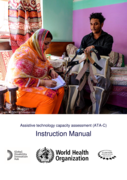
The assistive technology capacity assessment (ATA-C) is a system-level tool to evaluate a country’s capacity to finance, regulate, procure and provide assistive technology. It can be used for awareness raising, policy and programme design, and ongoing monitoring and evaluation. This manual provide
...
The recently published World Health Organization (WHO) Strengthening infection prevention and control in primary care document collates existing standards, measurement and implementation approaches, and resources for infection prevention and control
...
These guidelines have been prepared by the Sub directorate: Maternal Health for the guidance of health workers (doctors and midwives) providing obstetric, surgical and anaesthetic services for pregn
...

This booklet presents key messages for action, summarized from a set of
chapters on different environmental health issues.
This booklet presents key messages for action, summarized from a set of chapters on different environmental health issues, available at www.who.int/ ceh/publications/healthyenvironmentsforhealthychildren. The work is a result of an on-going partners
...

This guide is part of a five-part Caregiver skills training for families of children with developmental delays or disabilities (CST) package providing guidance on caregiver skills training for families of children aged 2–9 years with developmental delays or disabilities.
This guide for facilita
...

Interim rapid response guidance, 10 June 2022.
It includes considerations for certain populations such as patients with mild disease with considerations for community care, patients with moderate to severe disease, sexually active persons, pregnant or breastfeeding women, children and young persons
...

This annual report highlights the work of the WHO from January to June 2021 ( December 2021). The activities featured herein are by no means exhausted but implemented with technical and financial support through WHO in Nigeria; facilitated by its presence at all levels of governance (national, state
...
The pandemic has emphasized the high risk of avoidable harm to patients, health workers, and the general public, and has identified a range of safety gaps across all core components of health system
...
These guidelines provide updated evidence-based recommendations on the priority HCV-related topics from the 2018 WHO Guidelines for the care and treatment of persons diagnosed with chronic hepatitis C infection and the 2017 WHO Guidelines on hepatitis B and C testing. These priority areas are:
...
El resumen ejecutivo del Informe de la OMS sobre la situación mundial de la salud bucodental presenta una instantánea de los datos más recientes sobre las principales enfermedades bucodentales, los factores de riesgo, los retos para los sistemas de salud y las oportunidades de reforma. La clara c
...

Le secteur de la santé a beaucoup évolué au cours des 20 dernières années. Les innovations technologiques ainsi que notre connaissance des maladies ont contribué à allonger l’espérance de vie au 20ème siècle. Cependant, l’un des plus grands défis
aujourd’hui n’est pas de rester a
...
This guideline provides evidence-informed guidance on the use of non-sugar sweeteners to reduce the risk of unhealthy weight gain and diet-related noncommunicable diseases in adults and children. The guidance in this guideline is not based on toxicological assessments of the safety of individual no
...

The Country Cooperation Strategy is the World Health Organization’s corporate framework developed in response to a country’s needs and priorities. The 2022–2025 CCS is the fourth for WHO in Sierra Leone. It is a medium-term strategic document
...
Children continue to be exposed to powerful food marketing, which predominantly promotes foods high in saturated fatty acids, trans-fatty acids, free sugars and/or sodium and uses a wide variety of marketing strategies that are likely to appeal to children. Food marketing has a harmful impact on chi
...
The Infection prevention and control in the context of coronavirus disease 2019 (COVID-19): a living guideline consolidates technical guidance developed and published during the COVID-19 pandemic into evidence-informed recommendations for infection prevention and control (IPC). This living guideline
...

The Infection prevention and control in the context of coronavirus disease 2019 (COVID-19): a living guideline consolidates technical guidance developed and published during the COVID-19 pandemic into evidence-informed recommendations for infection prevention and control (IPC). This living guideline
...
Hepatitis B (HBV) infection is a major public health problem and cause of chronic liver disease.
The 2024 HBV guidelines provide updated evidence-informed recommendations on key priority topics. These include expanded and simplified treatment cri
...
Comprehensive Primary Health Care has an important role in the primary and secondary prevention of several disease conditions, including non-communicable diseases which today contribute to over 60% of the mortality in India. The provision of Compreh
...
This document highlights landmarks and key milestones in the development and implementation of the global agenda for noncommunicable diseases (NCDs) over the last two decades. It summarizes where the world was in 2000, where it is in 2022, and where the world wants to be in terms of NCD prevention a
...
Caring for burns patients from the incident scene to definitive treatment can be a complex, resource-consuming process with the potential to overwhelm health system capacity.This document provides practical guidance for building capacity and capabil
...
District Level M & E Training and Reference Material for Primary Health Care Programmes

Management of Dead Bodies After Disasters: A Field Manual For First Responders. Second Edition
recommended
Proper and dignified management of the dead in disasters is one of the three key pillars of humanitarian response and a fundamental factor in facilitating identification of the deceased and helping families discover the fate of their loved ones. This second and updated edition of this hugely success
...

A practical guide for hospital administrators, health disaster coordinators, health facility designers, engineers and maintenance staff to achieve Smart H
...

Essential Medicines are those that satisfy the priority health care needs of the population. They are selected with due regard to public health relevance, evidence on efficacy, safety and comparativ
...
DIAGNOSIS, MANAGEMENT OF UNCOMPLICATED AND SEVERE MALARIA
Enhancing Men’s Role in HIV Prevention
The objective of this book is to provide health workers with easily accessible information on important aspects of the medicines commonly used at primary care level in Zimbabwe. Medicines are a crucial part of the management of most of our patients,
...
This new edition and fully updated publication replaces the 2012 UCG and is being circulated free of charge to all public and private sector prescribers, pharmacists, and regulatory authorities in the country

This field study to measure access to and use of medicines was undertaken in GHANA in May-June 2008. The study assessed information on the socio-economic level of households, and access to and use of medicines for acute and chronic conditions as well as opinions and perceptio
...
Conducting simulations and drills is the most effective way to evaluate and test disaster preparedness plans; these exercises are used widely by organizations and institutions working in development and in disaster response. Drills and simulations are also excellent tools for training, and for asses
...
A guide for Regional Workshop and Hospital Technicians
Standard Operating Procedures for Procurement in the Public Health Sector. Updated 2006.
Guidebook on ICD10
recommended
3rd edition

The list of emergency medicine has been developed though various consultative meeting and workshops with concerned health professionals and institutions. The medicines in the list should be administered to emergency patients only treated in the
...

The Sierra Leone National Infection Prevention and Control Guidelines were jointly developed and updated by the Ministry of Health and Sanitation in collaboration with the World Health Organization
...
The Rwandan Ministry of Health recognizes the threat that Non-Communicable Diseases (NCDs) pose to health and development in Rwanda and in 2009 articulates strategies to respond to them in the
...
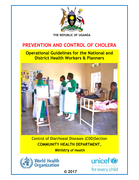
Prevention and Control of Cholera Uganda
recommended
Operational Guidelines for the national and district health workers & planners.
These new approaches include use of selective chemotherapy, Rapid Diagnostic Tests (RDTs), Zinc for treatment of cholera in children and complementary use of OCV

After Workplace exposures and Sexual Assault
| DIRECTORATE: PRIMARY HEALTH CARE SERVICES
| DIVISION: PUBLIC AND ENVIRONMENTAL HEALTH
| SUB-DIVISION: OCCUPATIONAL
...
Accessed November, 2017
Therapeutics Information and Pharmacovigilance Centre | TIPC