
Filter
3533
Text search:
crisis
impact
Featured
267
860
Language
Document type
1680
894
315
199
198
97
82
44
9
7
4
3
1
Countries
201
128
107
99
80
79
79
79
77
74
67
60
56
56
54
54
52
49
46
44
42
40
37
37
32
31
30
27
27
26
25
25
24
23
23
23
23
23
23
23
22
21
21
20
20
19
19
18
18
17
15
14
13
13
12
12
12
11
10
10
9
9
9
8
8
8
8
8
8
7
7
6
6
6
6
6
6
6
6
6
6
5
5
5
5
5
4
4
4
4
4
4
4
3
3
3
3
3
3
3
3
3
3
3
3
3
3
2
2
2
2
2
2
2
2
2
2
2
2
2
2
2
2
2
2
2
2
1
1
1
1
1
1
1
1
1
1
1
1
1
1
1
1
1
1
1
1
Authors & Publishers
Publication Years
Category
1188
170
165
155
117
48
7
6
3
2
Toolboxes
549
338
296
213
167
159
136
122
111
105
99
98
89
71
67
35
31
29
28
25
18
17
13
4
2
1
Supporting the food and agriculture sectors in implementing the Global Action Plan on Antimicrobial Resistance to minimize the impact of antimicrobial resistance
Today, the world is facing a learning crisis: While millions of children have entered education systems for the first time, many of them cannot read, write or do basic mathematics, even after several years of primary school.1 This global learning
...
The ECA, says over 300,000 Africans could lose their lives due to COVID-19. This, as the pandemic continues to impact on the Continent’s struggling economies whose growth is expected to slow down from 3.2 percent to 1.8 percent in a best-case sce
...
Across the Western Pacific Region COVID-19 is placing enormous strain on health and economic systems apart from direct threats to personal health safety and livelihood the pandemic also has significant implications on mental health and psychosocial well being adversity is an established risk factor
...
Protecting Migrants or Reversing Migration? COVID-19 and the risks of a protracted crisis in Latin America
The following key messages on human rights, the environment and COVID-19 highlight essential human rights obligations and responsibilities of States and others, including businesses, in addressing and responding to the COVID-19 crisis.
The purpose of the toolkit is to bring together existing learning and guidance as a starting point for stakeholders to begin SRH preparedness work. Within the SRH sector the field of preparedness is relatively new and growing. More collective effort is required to further evaluate the
...
Food and nutrition security in the Democratic Republic of the Congo is subject to the relentless impact of conflict, epidemics and climate events that have persisted in the country for decades, further compounded by the global COVID-19 pandemic. Lac
...
The primary audience of this report with the compendium of resources are youth engagement practitioners in the Red Cross Red Crescent National Societies as well as technical experts and policy makers across the humanitarian landscape that thrive for meaningful interventions with and for children, ad
...
This survey of agricultural livelihoods and food security in the context of the impact of coronavirus disease 2019 (COVID-19) and other shocks was undertaken during February 2021 by the Food and Agriculture Organization of the United Nations (FAO) i
...
The coronavirus disease 2019 (COVID-19) pandemic has created a global and gendered crisis that is compounding existing inequalities and disproportionately affecting girls and women. Emerging evidence from the COVID-19
...
The coronavirus disease 2019 (COVID-19) pandemic has created a global and gendered crisis that is compounding existing inequalities and disproportionately affecting girls and women. Emerging evidence from the COVID-19
...
At a time when the world is reeling from the deepest global disruption and health crisis of a lifetime, this year’s Living Planet
report provides unequivocal and alarming evidence that nature is unraveling and that our planet is flashing red war
...
This document provides guidance on interventions to prevent vaccine-preventable disease outbreaks in the context of mass population movement resulting from the ongoing crisis in Ukraine.
The 2021 Financing for Sustainable Development Report responds to the request made by Member States to review the impact of the COVID-19 pandemic on nancing for sustainable development, and to propose recommendations to rebuild better. The report u
...
Policy Brief November 2021 Available in English, Spanish and Portuguese
The COVID-19 pandemic has fueled the ongoing antimicrobial resistance (AMR) global crisis due to the increase in the use of antibiotics to treat COVID-19 patients, disruptions
...
This Toolkit is intended to guide humanitarian programme managers and healthcare providers to ensure that sexual and reproductive health interventions put into place both during and after a crisis are responsive to the unique needs of adolescents.
This manual is designed to orient helpers to offer psychologicalfirst aid (PFA) to people following a serious crisis event. PFA involves humane, supportive and practical assistance for people who are distressed, in ways that respect their dignity, c
...
As knowledge on Ebola-related safety measures accumulates, this guidance is provisional. This guide focuses on psychological first aid, which involves humane, supportive and practical help to follow human beings suffering serious crisis events. The
...
The Road to Recovery. This synthesis report is based on three national studies on the evolution of the Ebola epidemic and its impact on Guinea, Liberia and Sierra Leone
In the aftermath of the April 2015 earthquake in Nepal, this paper looks at lessons drawn from previous comparable disasters and seeks to provide invaluable information and assistance to the operational agencies responding to the crisis.
Psychosocial Support and Social and Emotional Learning for Children and Youth in Emergency Settings
recommended
The purpose of this paper is to clarify relevant terminologies and approaches relating to psychosocial well-being and social and emotional learning (SEL) in education in crisis affected contexts, and to explore how psychosocial support (PSS) and soc
...
The refugee exodus from South Sudan continues at an alarming rate, even as the crisis is entering its fifth year. Close to 2.4 million South Sudanese have fled to neighbouring countries mostly to Uganda—the largest host country in sub-Saharan Afri
...
To implement the set of recommendations on the marketing of foods and non-alcoholic beverages to children
With the growing obesity crisis among children, WHO and other public health advocates and consumer groups have called for restrictions on ...
With the growing obesity crisis among children, WHO and other public health advocates and consumer groups have called for restrictions on ...
Singing to the Lions is a free training package (facilitator’s guide, supplement and video) by CRS, that is designed to help children and youth lessen the impact of violence and abuse in their lives. The main component is a three-day workshop wher
...
While the world was gripped by the unfolding COVID-19 pandemic in 2020, children continued to face the same crisis they have for decades: intolerably high mortality rates and vastly inequitable chances at life. In total, more than 5.0 million childr
...
This document aims to define a practical plan of action for the IFRC Secretariat to effectively integrate child protection, as a minimum standard, within its organizational systems and development, protracted crisis and emergency operations. The tim
...
This document provides training and guidance on the reasons for, and the impact of, violence, coercion and abuse within mental health and related settings. It also provides guidance on how to implement strategies to end the use of coercion, violence
...
This document is produced by the Humanitarian Country Team and the United Nations Resident
Coordinator’s Office in Mozambique, with the support of the United Nations Office for the Coordination of
Humanitarian Affairs (OCHA). The projects reflected here support the national government. It covers
...
UN, international agencies and experts released a groundbreaking report demanding immediate, coordinated and ambitious action to avert a potentially disastrous drug-resistance crisis.
If no action is taken - warns the UN Ad hoc Interagency Coordin
...
This manual serves as a toolkit of useful PM&E techniques for improving the performance and impact of community-based interventions, such as those involving the most vulnerable children, home-based care and gender-based violence. The manual includes
...
In 1989, the Republic of Benin was facing a great social and
economical crisis. Civil servants of all the sectors in public
administration were on strike. People did not know where to
go for their health care. Salaries were not paid for more than
...
The booklet starts with a general overview of how illicit drugs and the environment are linked within the bigger picture of the Sustainable Development Goals, climate change and environmental sustainability. It highlights direct and indirect linkages and gives examples of the significant local and i
...
Pandemic Influenza Risk Management
recommended
A WHO guide to inform & harmonize national & international pandemic preparedness and response
The main updates from the 2013 interim guidance are:
Alignment with other relevant United Nations policies for crisis and emergency management, and
...
According to the United Nations, Yemen has been the "Worst humanitarian crisis in the world," for the past two years. Despite the Hudaydah Agreement signed in December 2018, the fighting continued in many areas of the country, such as Hajjah in the
...
This edition of UNICEF’s annual Humanitarian Action for Children highlights UNICEF’s funding appeal, which sets out an ambitious agenda to address the major challenges facing children and young people living through conflict and crisis. It prese
...
This document provides guidance on the implementation of the shielding approach in urban areas in LICs and crisis-affected regions. It is intended for the community itself, national and local governance institutions, and humanitarian and development
...
Unlike foot and mouth disease, the avian flu, e-coli or listeria, the COVID-19 pandemic has not spread directly through livestock or agriculture commodities, and has therefore not directly disrupted on-farm production. However, the crisis is undermi
...
Infectious diseases, such as COVID-19, can have a significant impact on children’s and their caregivers’
wellbeing beyond the disease itself. In terms of child protection, there are three main potential
secondary impacts:
- Neglect and lack
...
With child-friendly places and offers, spaces and relationship opportunities are created in which children can simply be children again. In the international context, the establishment of Child Friendly Spaces in war and crisis regions is firmly est
...

This Interim Guidance outlines how key public health and social measures needed to reduce the risk of COVID-19 spread and the impact of the disease can be adapted for use in low capacity and humanitarian settings. The recommendations outlined here n
...
7 June 2020 Version 1
Women in Myanmar have traditionally been underrepresented in public decision-making processes, a trend which is continuing in structures established to respond to COVID-19. This means that even as women are disproportionately affected by the
...
It highlights how proven digital innovation can be replicated to curb the spread of COVID-19 in Africa. It also estimates investment required to implement such high impact solutions.
This brief document compiles existing material related to mental health and psychosocial support (MHPSS) for the COVID-19 crisis, as well as other resources that can be applicable to the context. Documents are divided into different sections, based
...
The package provides practical, concise yet crucial information about the impact of COVID-19 on daily teaching practices as well as tips and suggestions to improve safety, well-being and learning, with students in face-to-face or remote settings.
...
COVID-19 is stretching formal and informal aspects of community life. The pandemic is overwhelming health systems. Country economies are reaching a breaking point, with particularly significant impact for the livelihoods of vulnerable families and t
...
With about 24 million of Yemen’s 30 million people in need of some form of assistance, the United Nations calls Yemen the world’s worst humanitarian crisis. Cholera and other disease outbreaks are common, malnutrition is widespread, water is sca
...
COVID-19 pandemic has taken the entire world by surprise, creating the greatest global catastrophe since WWII, impacting all spheres of our societies, including health, economy, social protection, as well as security, and human rights. The virus affects people and communities indiscriminately in all
...
Children in refugee situations face many potential dangers, such as violence, abuse, exploitation, discrimination, separation from their families, trafficking and military recruitment. The impact of these experiences can be devastating and long-last
...
Measuring progress towards universal health coverage.
This sixth edition of Health at a Glance Asia/Pacific presents a set of key indicators of health status, the determinants of health, health care resources and utilisation, health care expenditure and financing and quality of care across 27 Asia-
...
The United Nations Secretary-General, António Guterres, echoed the concerns of people and organisations around the world when he recently referred to the impact of the COVID-19 pandemic on schooling as a
‘generational catastrophe’.
.
12 May 2021. This third survey in the series shows that the COVID-19 pandemic continues to impact societies, not only in terms of health, but also social and economic conditions and day-to-day life
Modelling the health impacts of disruptions to essential health services during COVID-19 Module 1
Several epidemiological models have been created to assess the potential impact of disruptions to essential health services caused by COVID-19 on morb
...
Today more people are exposed to hazards. While humanitarian action to mitigate the impact of disasters will always be vitally important, the community is facing critical challenge- how to better anticipate, manage and reduce - disaster risks by int
...
The Lancet Countdown is an international collaboration that independently monitors the health consequences of a changing climate. Publishing updated, new, and improved indicators each year, the Lancet Countdown represents the
consensus of leading researchers from 43 academic institutions and UN ag
...
Against the backdrop of the COVID-19 pandemic, health is receiving unprecedented public and political attention. Yet the fact that climate change also presents us with a health crisis deserves further recognition. From more deaths due to heat stress
...
The Manifesto to Secure a Healthy Planet for All – A Call for Emergency Action | InterAction Council
The Manifesto was launched at a High Level Event in London on the 31st July 2019, where Emergency response mechanisms to address the Climate and Environmental Crisis are being explored. The Manifesto has been developed in response to the increasing
...
The COVID-19 pandemic has led to large increases in healthcare waste, straining under resourced healthcare facilities and exacerbating environmental impacts from solid waste. This report quantifies the additional COVID-19 healthcare waste generated, describes current healthcare waste management syst
...
Biodiversity and Health in the Face of Climate Change pp 47–66
This chapter reviews the emerging importance of pollen allergies in relation to ongoing climate change. Allergic diseases have been increasing in prevalence over the last decades, partly as the result of the
...
The threat climate change poses to health, equity, and development has been rigorously documented. However, in an era marked by economic crisis, regional conflicts, natural disasters and growing disparities between rich and poor, the joint global ac
...
Human activities are driving fundamental changes to the biosphere and disrupting many of our planet’s natural systems. There is increasing scientific evidence that the unfolding climate crisis, global pollution, unprecedented levels of biodiversit
...
Starting on 24 February 2022, a large-scale armed conflict in Ukraine triggered an unprecedented humanitarian crisis across the country, characterised, among other elements, by the displacement of a significant proportion of the Ukrainian population
...

WHO needs US$2.54 billion to provide life-saving assistance to millions of people around the world facing health emergencies. WHO’s Health Emergency Appeal is a consolidation of WHO’s priorities and financial requirements for 2023 to carry out health interventions in emergency and humanitarian r
...
Human Rights based research into COVID-19 related violations with focus on persons with disabilities
The goal of the study was to assess the feasibility of the COVID-19 measures and their resultant impact on Persons with Disabilities in Malawi.
Specifically, the study addressed the following objectives:
a) To evaluate Government’s response to
...
The Contingency Fund for Emergencies (CFE) provides WHO with rapid and flexible resources to respond to disease outbreaks and other health emergencies. The annual report provides an overview of the use and impact of the Fund over the previous year.
The Disaster Recovery Framework (DRF) Guide for the Health Sector provides guidance on how to implement a comprehensive, integrated, and structured approach to disaster recovery. Its overarching goal is to minimize the impact of the disaster on comm
...
After the earthquake in Türkiye-Syria in February 2023 an emergency response was provided to the affected population. Young persons with disabilities were one of the social groups most affected by the crisis. These were either young persons who acq
...
Almost 30 countries vulnerable to a new Ebola-style Epidemic, jeopardising the future of millions of Children. The report ranks the world’s poorest countries on the state of their public health systems, finding that 28 have weaker defences in place than Liberia where, alongside Sierra Leone and Gu
...

“Because we struggle to survive” Child Labour among Refugees of the Syrian Conflict | This study provides pertinent first-hand information on the reality facing Syrian children who are working either in their homeland, the neighbouring countries or elsewhere in Europe. Syria's civil war is the w
...
The following Emergency Response Plan for the COVID-19 pandemic seeks to set out activities that will be undertaken by humanitarian actors in Ukraine over the course of 2020 to respond to the public health impact of the epidemic – as well as the i
...
A practical handbook. This Health Cluster Guide (2nd edition, 2020) provides practical advice on how WHO, Health Cluster Coordinators and partners can work together during a humanitarian crisis to achieve the aims of reducing avoidable mortality, mo
...
Refugee Health
recommended
An approach to emergency situations. Relief workers face rapidly changing and complex environments, new disease patterns, enormous humanitarian needs and relatively limited resources. The authors of this book use their experience in the area to produce an operational manual of the issues involved in
...
The present book deals not only with emergency response, but also with measures designed to reduce the impact of disasters on environmental health infrastructure, such as water supply and sanitation facilities. It also aims to strengthen the ability
...
In an effort to improve the capabilities and accountability of humanitarian and economic practitioners, the SEEP (Small Enterprise Education and Promotion) Network's Minimum Economic Recovery Standards focus on minimum industry standards for facilitating economic recovery in
...
This Toolkit is intended to guide humanitarian programme managers and healthcare providers to ensure that sexual and reproductive health interventions put into place both during and after a crisis are responsive to the unique needs of adolescents.
This Toolkit is intended to guide humanitarian programme managers and healthcare providers to ensure that sexual and reproductive health interventions put into place both during and after a crisis are responsive to the unique needs of adolescents.
The paper sets out the specific communication challenge posed by Ebola and why it was so difficult to get to grips with this in the early months of the outbreak. It thendocuments when the health communication response became more useful and explores what that tells us about effective media and commu
...
This paper brings together lessons from interviews with humanitarians and local responders, as well as existing literature, about the use of quarantine in urban environments during the humanitarian response to the Ebola Crisis
The Facilitator’s Guide for the basic-needs based Response Options Analysis and Planning (ROAP) is a step-by-step guide comprising tools and templates to carry out a multi-sectoral response analysis and planning of response options, in a sudden-onset or chronic
...
Communication Risk in Public Health Emergencies
recommended
A WHO Guideline for Emergency Risk Communication (ERC) policy and practice.
Recent public health emergencies, such as the Ebola virus disease outbreak in West Africa (2014–2015), the emergence of the Zika virus syndrome in 2015–2016 and multi-country yellow fever outbreaks in Africa in 2016, h
...
MALAWI Food Security Outlook JUNE 2018 to JANUARY 2019
As the postharvest period continues, very poor and poor households in districts in the southern and central region will face Stressed (IPC Phase 2) outcomes from June to September. Most of these districts will transition to ...
As the postharvest period continues, very poor and poor households in districts in the southern and central region will face Stressed (IPC Phase 2) outcomes from June to September. Most of these districts will transition to ...
This learning report attempts to understand the drivers for, and barriers to, effective implementation as well as review the experiences of Start Fund members in responding to these outbreaks to support evidence-based decision-making within the Start Network at project,
...
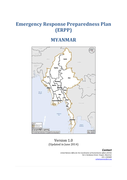
Myanmar is prone to various natural hazards that include earthquakes, floods, cyclones, droughts, fires, tsunamis, some of whichhave the potential to impact large numbers of people. In the event that large numbers of people are affected (such as was
...

The Indonesian government has reformed its laws, policies, and institutions to better manage disaster risk since the significant 2004 Indian Ocean Tsunami. The Government of Indonesia now has contingency plans for every disaster-prone city which identifies its vulnerabilities, outlines the relief re
...
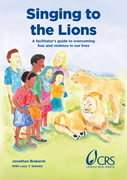
Singing to the Lions is a free training package (facilitator’s guide, supplement and video) by CRS, that is designed to help children and youth lessen the impact of violence and abuse in their lives. The main component is a three-day workshop wher
...
Broken links Psychosocial support for people separated from family members: a field guide
recommended
The 40-page field guide outlines possible causes of separation, discusses the psychosocial impacts of being separated, such as how we experience loss, and provides guidelines on how to support those who have been separated from family members – including delivering difficult news to loved ones, ba
...
The objective of this study is to analyze the strengths, weaknesses, sustainability, and impact of the tsunami response in Sri Lanka and Indonesia 10 years later. A cross cutting theme of this study is the assessment of whether communities are now b
...
In this entry we are looking at smoking, alcohol consumption and the use of illicit drugs. We are studying who is using these substances, how their use has changed over time, and we are presenting the estimates of their impact on health. Collectivel
...
Overview
Learning objectives
• Name the general principles of essential care and practice.
• Name management principles of priority MNS conditions.
• Use effective communication skills in interactions with people with MNS conditions.
• Perform assessments for priority MNS conditions.
â
...
In these guidelines we use the term gambling problems to refer to
difficulties over time in limiting money or time spent on gambling,
which leads to adverse consequences for the person, others, or for
the community. This could include someone whose gambling is having
a great enough
...
Constituting the second part of the World Drug Report 2022, the present booklet contains an overview of the global demand for and supply of drugs.
The first chapter of the booklet begins with the latest estimates of the number of people who use drugs, the distribution of those users by type of drug
...
Constituting the fourth part of the World Drug Report 2022, this booklet focuses on the market dynamics of various stimulants – cocaine, amphetamines and “ecstasy” – and of NPS.
The first chapter contains an analysis of the global market for cocaine, starting with a review of cocaine supply
...
HelpAge International is a global network of organisations promoting the right of all older people to lead dignified, healthy and secure lives. Convite is a humanitarian, independent, nonprofit, non-governmental organisation that works to guarantee and promote social, economic and cultural rights ac
...

Identification of Priority Areas for Multisectoral Interventions (PAMIs) for cholera control
recommended
The identification of Priority Areas for Multisectoral Interventions (PAMIs, sometimes referred to as ‘hotspots’) for cholera control is among the first steps for a cholera-affected country to develop or revise a National Cholera Plan (NCP) for cholera control. PAMI identification is critical to
...
Scientists have known for more than half a century that patients could develop resistance to the drugs used to treat them. Alexander Fleming, who is credited with creating the first antibiotic, penicillin, in 1928, cautioned of the impending crisis
...
The purpose of this plan is to:
Present the GoP’s strategy and actions;
Propose an aid coordination approach;
Identify the critical support needs, including for: public health response to COVID-19; budget support to maintain government services; and diplomatic engagement with region
...
The objectives of NAP are aligned with the global action plan based on national needs and priorities. The emphasis is on One Health approach with all sectors especially human health, animal health and environment contributing towards minimizing the emergence and
...
Based on Human Rights Watch (HRW)'s reporting on the human rights dimensions of the COVID-19 pandemic (see Related Summary, and the video, below), this document presents 40 questions to provoke thinking about a rights-respecting response to the crisis
...
COVID-19! How Can I Protect Myself and Others?
recommended
This curriculum will help you, and your community, understand the science of the virus that causes COVID-19 and other viruses like it. It will help you to figure out how this virus is impacting or affecting you or may impact you in the future. It wi
...
Migrants in Central Asia and the Russian Federation, have been among the most severely impacted by the COVID-19 pandemic.
In the short term, IOM aims at providing support to migrants who are stranded in countries of destination. In addition, IOM will focus its efforts on addressing data gaps, enhan
...
