
Filter
4265
Text search:
commercial
Featured
422
1027
Language
Document type
2105
823
631
295
203
89
60
18
15
10
5
3
1
Countries
226
141
91
70
66
63
63
62
60
60
57
52
52
49
45
44
41
40
39
38
35
35
32
32
28
27
26
24
24
23
21
20
20
20
19
19
18
18
17
17
16
16
14
14
13
13
12
12
12
12
11
11
11
10
9
9
9
9
9
8
8
8
7
7
6
6
6
5
5
5
5
4
4
4
4
4
4
4
4
4
3
3
3
3
3
3
3
3
3
3
3
2
2
2
2
2
2
2
2
2
2
2
2
2
2
2
2
2
2
2
1
1
1
1
1
1
1
1
1
1
1
1
1
1
1
1
1
1
1
1
1
1
Authors & Publishers
Publication Years
Category
1162
426
304
277
230
116
77
4
2
Toolboxes
375
351
308
221
207
154
154
152
131
126
113
102
99
92
84
81
69
46
43
36
21
21
15
4
Global UNIDO Project: Strengthening the local production of essential generic drugs in the least developed and developing countries
The purpose of this document is to share good practices and processes concerning the inclusion of disability issues in HIV policy and programming, drawing on specific experiences in Senegal, Ethiopia, Kenya, Rwanda and Cambodia and on lessons learned at international AIDS conferences.
This textbook seeks to support various levels of health personnel in less-resourced locations by providing evidence-based information about low-tech diagnostic and treatment options for common gynecological conditions such as cervical, ovarian and breast cancer, problems in early pregnancy, contrace
...
Osoianu and Halacu BMC Infectious Diseases 2014, 14(Suppl 4):P8 http://www.biomedcentral.com/1471-2334/14/S4/P8
From The 7th Romanian National HIV/AIDS Congress and The 2nd Central European HIV Forum Sibiu, Romania. 29-31 May 2014
Of the 50 antibiotics in the pipeline, 32 target WHO priority pathogens but the majority have only limited benefits when compared to existing antibiotics. Two of these are active against the multi-drug resistant Gram-negative bacteria, which are spreading rapidly and require urgent solutions.
Gr
...
Guidelines for the prevention, care and treatment of persons with chronic hepatitis B infection
recommended
The recommendations in these guidelines promote the use of simple, non-invasive diagnostic tests to assess the stage of liver disease and eligibility for treatment; prioritize treatment for those with most advanced liver disease and at greatest risk of mortality; and recommend the preferred use of n
...

This Teacher’s Guide accompanies the WHO publication Management of wastes from health-care activities . It provides teaching materials and recommendations for a three day training course, designed mainly for managers of health-care establishments, public health professionals and policy makers
A survey was conducted in countries in all six WHO regions and focused on the building blocks that are considered prerequisites to combat antimicrobial resistance: a comprehensive national plan, laboratory capacity to undertake surveillance for resistant microorganisms, access to safe, effective ant
...
This report presents, for the first time, a global assessment of the extent to which health care facilities provide essential water, sanitation and hygiene (WASH) services. Drawing on data from 54 low- and middle-income countries, the report concludes that 38% lack access to even rudimentary levels
...
The toolkit aims to provide researchers with guidance for improving the quality of studies that use administrative data to better ascertain child maltreatment incidence, response and service delivery. However, these are complex studies to conduct, and the toolkit is not meant to be comprehensive. Re
...
The new guide provides practical, first-line management recommendations for mental, neurological and substance use conditions. Contents include modules on assessing and managing conditions such as acute stress, grief, moderate-severe depressive disorder, post-traumatic stress disorder, epilepsy, and
...
The ‘Toolkit’ is targeted at practitioners responsible for implementing recovery programmes, their objective to provide a ‘how to’ guide on development, implementing and managing complex post-disaster recovery programmes.
Disaster Recovery Toolkit
Disaster Recovery Toolkit
Disaster Recovery Toolkit
Disaster Recovery Toolkit
Disaster Recovery Toolkit
Disaster Recovery Toolkit
Nepal: Urban Housing Sector Profile
recommended
Based on research by a team of Nepalese and international experts, this report carries an analysis of the five key elements in the sector - land, basic services, housing finance, building materials and construction technologies, and labour. It gives an assessment
of how these components are governe
...
The Thinking Health manual outlines an evidence-based approach describing how community health workers can reduce prenatal depression through evidence-based cognitive-behavioural techniques recommended by the mhGAP programme.
This manual is the first volume of WHO’s new series on low-intensity p
...
The report provides a global knowledge base on suicide and suicide attempts as well as actionable steps for countries based on their current resources and context to move forward in suicide prevention.
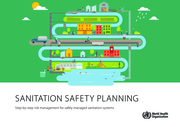
Manual for step-by-step risk management for safely managed sanitation systems. 2nd edition.
This Sanitation safety planning (SSP) manual provides practical, step-by-step guidance to assist in the implementation of the 2018 World Health Organization (WHO) Guidelines on sanitation and health and the
...
The primary audience for the guideline is health programme managers, including governmental and non-governmental organizations, and policy makers who are responsible for designing maternal, newborn and child health programmes, primarily in low-income settings. The guideline is also aimed at health p
...
This 2015 edition not only updates important changes published in the MEC fifth edition, but also includes several user-friendly features and additional supplemental information, in response to requests WHO has received from stakeholders and partners.
The Country Cooperation Strategy (CCS) is a document to guide WHO’s work in countries. CCS is a medium-term vision for WHO’s technical cooperation with a given Member State, and supports the country's national health policy, strategy or plan. The CCS time frame is flexible to align with national
...
at the national and acute health care facility level
This document facilitate the preparation of a risk communication and community engagement strategy for vaccination against COVID-19. Its goal is to help to strengthen the communication and planning capacities of the ministries or secretariats of health and other agencies in charge of communicating
...
The flip book is for pre-deployment trainings for Ebola response, and is based on frequently asked questions about Ebola virus disease (EVD):
What is Ebola virus disease?
How do people become infected with EVD?
Why WHO is focusing on safe and dignified burials of people who have died
...
2nd edition .
This Framework applies to the sharing of H5N1 and other influenza viruses with human pandemic potential and the sharing of benefits. This Framework does not apply to seasonal influenza viruses or other non-influenza pathogens or biological substances that may be contained in clinical
...
Biostatistics: CD-ROM for self learning
recommended
The main objective of this self learning programme is to understand the purpose of biostatistics through realistic cases and to acquire basic biostatistics skills that can be applied to your work.
The target audiences of this training are medical and biomedical students, laboratory specialists and
...
This guideline provides health policy-makers and decision-makers in health professional training institutions with advice on the rationale for health-care providers’ use of counselling skills to address sexual health concerns in a primary health care setting
The primary audience for this guideline includes health-care professionals who are responsible for developing national and local health-care protocols and policies, as well as managers of maternal and child health programmes and policy-makers in all settings. The guideline will also be useful to tho
...
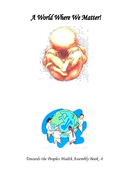
Towards the Peoples Health Assembly Book - 4
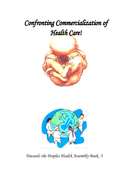
Towards the Peoples Health Assembly Book - 5
Towards the Peoples Health Assembly Book - 1
A Provisional Document. The purpose of this manual is to provide guidance to public health professionals tasked with managing a response to viral hepatitis. As every country’s needs are different with respect to its epidemiology and the current level of response, people would use this manual in di
...
Technical Update
Areas of Africa endemic for Buruli ulcer (BU), caused by Mycobacterium ulcerans, also have a high prevalence of human immunodeficiency virus (HIV), with adult prevalence rates between 1% and 5% (Maps). However, there is limited information on the prevalence of BU–HIV coinfection.
...
WHO Pharmacovigilance indicators: a practical manual for the assessment of pharmacovigilance systems
This manual provides a practical method for determining the pharmacovigilance indices. It is designed to be simple and can be understood by any worker in pharmacovigilance without formal training in monitoring and evaluation. Pharmacovigilance as a medical discipline is crucial in preventing medicin
...
A process for improving community awareness and preparedness for technological hazards and environmental emergencies
This is one of seven Medical Peace Work courses.
This is one of seven Medical Peace Work cases.
This document is part of the process for improving the quality of care in family planning. Medical eligibility criteria for contraceptive use (MEC), the first edition of which was published in 1996, prsents current World Health Organization (WHO) guidance on the safety of various contraceptive e-
m
...
The new WHO guidelines recommend that people living with HIV be started on antiretrovirals (ARVs) as soon as possible after being diagnosed. Currently, many people living with the virus globally must wait until their CD4 counts fall to 500 to start treatment. According to the WHO, the move to early
...
Facilitator's Guide. This guide is designed to assist facilitators in training community health workers (CHWs) and community volunteers (CVs) in integrating community-based TB services into their work. The training will help community workers who already provide numerous services to understand TB an
...
The report focuses on antibacterial resistance (ABR) in common bacterial pathogens. There is a major gap in knowledge about the magnitude of this problem. Antimicrobial resistance (AMR) threatens the effective revention and treatment of an ever-increasing range of infections caused by bacteria, para
...
This handbook provides an overview of the law applicable to asylum, border management and immigration in relation to European Union (EU) law and the European Convention on Human Rights (ECHR). It looks at the situation of those foreigners whom the EU usually refers to as third-country nationals. Thi
...
Migrants in an irregular situation: access to healthcare in 10 European Union Member States
recommended
This report explores the access to healthcare granted to irregular migrants in 10 EU Member States. It focuses on migrants who are present in an irregular situation, namely those who do not fulfil conditions for entry, stay or residence. Through interviews with a range of different sources including
...
WHO commissioned a survey, carried out in September/October 2015, among some 10 000 members of the public in 12 countries (2 per WHO Region: Barbados, China, Egypt, India, Indonesia, Mexico, Nigeria, the Russian Federation, Serbia, South Africa, Sudan and Viet Nam) on their use of antibiotics, knowl
...
Surge in climate change-related disasters poses growing threat to food security
This document provides an overview of the evidence of nutrition gains that can be achieved with improved WASH, a description of key WASH practices, and practical knowledge and guidance on how to integrate WASH into nutrition programmes, including important monitoring and evaluation (M&E) aspects. Th
...
This new publication presents the continuing and emerging challenges to children’s environmental health.
This Rapid Communication aims to inform national TB programmes and other stakeholders about the key implications of the latest evidence on the use of specific molecular assays as initial diagnostic tests of pulmonary and extrapulmonary TB and RR-TB, in adults and children.
Inerim Guidance for health-care providers. This document describes guidance for a supportive response by healthcare providers (e.g. physicians, nurses), focusing primarily on women affected by Zika virus infection during pregnancy and their families, for their mental health and psychosocial needs.
These interim case definitions have been developed for the purpose of providing global standardization for classification and reporting of Zika virus cases. WHO guidance for the surveillance of Zika virus disease is currently being developed.
WHO will periodically review these interim case definiti
...
The use of safe and efficacious insecticides against the adult and larval populations of mosquito vectors is one of the most effective ways to rapidly interrupt transmission of Zika virus, as well as other viruses transmitted by Aedes mosquitoes such as chikungunya and dengue.
Empowering Health Workers to Improve Service Delivery. This training program is designed to build the capacity of program managers and health providers in quality management, and improve the provision of high-quality health services.
Please download the chapters directly from the website: https://w
...
Transforming health: Acclerating the attainment of health goals
This document provides recommendations on essential measures to protect the health and safety of operators and other persons involved in emergency vector control of Aedes spp. mosquitoes, including space spraying of insecticides, larvicide application and, in some cases, indoor residual spraying. It
...
The goal of this course is to provide participants with the foundational skills needed to begin the development, implementation and ongoing improvement of a congenital anomalies surveillance programme, in particular for countries with limited resources. It focuses on the methodology needed to devel
...
Interim guidance for entomologists.
This document describes selected sampling methods that can be used to conduct surveillance of Aedes mosquitoes, pupae and oviposition. It is intended for qualified entomologists at national and sub-national level who are responsible for the surveillance of local
...
This is a resource pack for a Knowledge, Attitudes and Practices (KAP) surveys about Zika virus and its suspected complications such as microcephaly and Guillain-Barré syndrome.
This resource and associated advice was requested by governments and response partners as a way to rapidly obtain valuab
...
Updated Guideline.
The Emergency Triage Assessment and Treatment (ETAT) guidelines provide guidance on the most common emergency conditions in children presenting at the health facility. These include but are not limited to airway obstruction and other breathing problems; circulatory impairment or
...
