
Filter
1615
Text search:
cognitive
development
Featured
132
329
Language
Document type
1045
230
162
86
38
27
15
3
3
2
2
Countries
72
58
40
30
26
23
22
20
20
18
17
16
16
15
14
14
14
14
14
13
13
12
10
10
9
8
8
8
8
7
7
7
6
6
6
5
5
5
5
5
4
4
4
4
4
4
3
3
3
3
3
3
3
3
3
3
2
2
2
2
2
2
2
2
2
2
2
2
1
1
1
1
1
1
1
1
1
1
1
1
1
1
1
1
1
1
1
1
1
1
1
1
1
1
1
1
Authors & Publishers
Publication Years
Category
405
118
116
76
44
39
2
1
Toolboxes
505
168
88
85
62
48
43
30
26
20
16
11
11
9
9
8
6
6
5
5
3
3
2
1
This handbook and teaching guide on recovery has been designed to complement the QualityRights training module on Promoting Recovery in Mental Health and Related Services. The handbook and teaching guide covers much of the same material, but also contains additional text and exercises. It can be giv
...
This training and guidance module addresses the use of coercive and violent practices in mental health and related services with a particular focus on seclusion and restraint. It aims to promote a greater understanding of why these practices are used and build practical skills to help end these prac
...
This training and guidance has been developed to provide an in-depth understanding on what it means to respect legal capacity in mental health and related areas as well as concrete strategies to ensure that people are able to exercise their right to legal capacity in all areas of their life. In this
...
This module has been developed to provide training and guidance to improve the quality of care and human rights conditions in inpatient, outpatient and community based mental health and related services, following the conduct of a comprehensive assessment using the WHO QualityRights assessment toolk
...
This document provides training and guidance on the reasons for, and the impact of, violence, coercion and abuse within mental health and related settings. It also provides guidance on how to implement strategies to end the use of coercion, violence and abuse in these settings.
This document provides training and guidance on legal capacity and how supported decision making, recovery plans and advance plans help to avoid involuntary detention and treatment and ensure people are able to exercise their right to legal capacity.
This document provides training and guidance on the key standards related to the physical and social environment within mental health and related services that need to be met to promote good outcomes, independent living and community inclusion.
This document has been developed to provide training and guidance on how to integrate a human rights approach in mental health and related areas, based on international human rights instruments, in particular the UN Convention on the Rights of Persons with Disabilities (CRPD).
This document has been developed to provide training and guidance to be able to understand what are human rights, what human rights mean for people’s lives, as well as the actions that can be taken by individuals and groups to respect and promote human rights.
PLOS Medicine | www.plosmedicine.org
January 2013 | Volume 10 | Issue 1 | e1001371

National Child Traumatic Stress Network National Center for PTSD | The field of school safety and emergency management has evolved significantly over the past decade. Tragically, acts of violence, natural disasters, and terrorist attacks have taught us many lessons. We also know that other types of
...
Our goal at Voices for Georgia’s Children is to help decision-makers craft and implement policies that ensure Georgia’s children grow up to be healthy, educated and productive citizens. To that end, we have developed a comprehensive policy agenda focused on early childhood, child health and disc
...
This guide provides an overview of important points to consider in the assessment and treatment of PTSD and ASD in children and adolescents. The practitioner checklist later in this document can help
to guide assessment and treatment planning.

This document is designed to provide UNICEF staff and UNICEF partner staff with principles and concepts that can assist them to respond to the psychosocial needs of children in natural disasters and social emergencies such as armed conflict and other forms of violence. It aims to introduce humanitar
...
BMJ 2009; 338 doi: https://doi.org/10.1136/bmj.b158 (Published 05 February 2009)
Cite this as: BMJ 2009;338:b158
Correspondence to: A Burns alistair.burns@manchester.ac.uk
Q12: Should the treatment be similar in individuals with intellectual disability and epilepsy compared to people with epilepsy only?
WHO mhGAP Guideline update
recommended
Update of the Mental Health Gap Action Programme
(mhGAP) Guideline for Mental, Neurological and Substance use Disorders May 2015
From raising awareness to building capacity
Meeting Report
World Health Organization, Geneva, Switzerland 16 -18 September 2013
Autres troubles
Chapitre H.3
Edition en français Traduction : Sevan Minassian Sous la direction de : Priscille Gérardin Avec le soutien de la SFPEADA

Recognition, Assessment and Treatment
National Clinical Guideline Number 159
No se puede subestimar la importancia de crecer en un ambiente familiar nutritivo y de apoyo. Criar a niños en un ambiente cálido y amoroso los sitúa en una trayectoria de desarrollo positiva para el éxito en su vida posterior. Por el contrario, los niños criados con parentalidad inconsistente
...
Good practices in Mental Health and Well-being
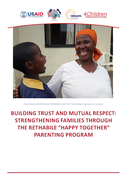
The Rethabile positive parenting activity is being run by 4Children Lesotho with caregivers and teens ages 9 to 24 for the purpose of reducing harsh parenting practices (i.e., violence) and improving positive parenting practices. By promoting adult–child communication around topics such as HIV a
...
Poverty, HIV and other disease burdens, coupled with common mental disorders including alcohol and other substance use disorders, posttraumatic stress disorder, clinical and postnatal depression, distress, and anxiety, impact how caregivers meet the needs of children. When mental health is not consi
...
Mental illness can affect not only the life of the person with the illness, but also their close family, partners
and friends. Significant people in a person’s life are often a source of support with the illness.
However, family, partners and friends may be faced with a loved one’s men
...
Results
Recommendations• NGOs should provide MHPSS services with a focus on empowerment and self-reliance
• Introduce interventions focusing on pain mechanisms, coping strategies and physical resilience
• Implement livelihood programmes
• Increase service accessibility and outreach activ
...

Country Progress Report
Reporting Period
January – December, 2014
Accessed: 26.09.2019
UNAIDS 2018 / Reference
Zhou et al. Int J Ment Health Syst (2019) 13:10 https://doi.org/10.1186/s13033-019-0263-1
For children orphaned or made vulnerable by HIV (OVC)
Policy and practice for maturity-aligned engagement of children in decisions about HIV-related medical and social services and management of confidential information
Kipling Beardsley, Health Policy Plus
Accessed: 26.10.2019
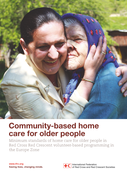
Minimum standards of home care for older people in Red Cross Red Crescent volunteer-based programming in the Europe Zone
The guidelines are aimed at clinical professionals directly involved with and responsible for the care of adults with HIV infection, and at community advocates responsible for promoting the best interests and care of HIV-positive adults. They should be read in conjunction with other published BHIVA
...
Evaluating the Return on Investment of Scaling Up Treatment for Depression, Anxiety, and Psychosis
Accessed Febr. 6, 2020

Accessed Febr. 6, 2020
Teachers' Exercise Book for HIV Prevention
Document 6.1
This booklet contains all the participatory learning experiences that are included in the Training and Resource Manual on School Health and HIV and AIDS Prevention. It is to be given to all teachers who receive training as part of the EI/WH
...

This regional technical guidance note was developed for the UNFPA Asia-Pacific Regional Office (APRO) and Asia-Pacific Country Offices to provide guidance on older persons, health workers, and caregivers in the contexts of COVID-19 to effectively support each member state and work with other partner
...
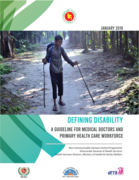
January 2019
Non Communicable Disease Control Programme Directorate General of Health Services Health Services Division, Ministry of Health & Family Welfare
Volume 2019, Article ID 4157574, 7 pages
https://doi.org/10.1155/2019/4157574
Mental health is critical to personal well-being, interpersonal relationships, and successful contributions to society. Mental health conditions consequently impose a high burden not only on individuals, families and society, but also on economies. In Jamaica, mental health conditions are highly pre
...
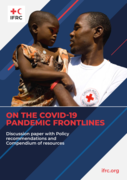
The primary audience of this report with the compendium of resources are youth engagement practitioners in the Red Cross Red Crescent National Societies as well as technical experts and policy makers across the humanitarian landscape that thrive for meaningful interventions with and for children, ad
...

English Analysis on World about Food and Nutrition and Epidemic; published on 13 Dec 2021 by FAO
A framework to guide planetary health education - The lancet, Planetary health
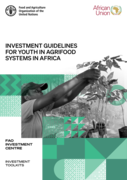
The Investment guidelines for youth in agrifood systems in Africa, developed jointly by FAO and the African Union Commission (AUC) through a multi-stakeholder and participatory process, highlight the importance of youth as change agents and key stakeholders contributing to sustainable agrifood syste
...
Concepte Note, June 2022
El pediatra es el médico de cabecera de los niños pequeños y es el primero en ser consultado por las familias. Los padres esperan que el pediatra no solo sea un experto en atender al niño durante una enfermedad, sino que también lo sea en temas
vinculados al desarrollo. Las alteraciones del d
...
Loss and damage is an urgent concern, driven by the increasingly harmful effects of climate change. Communities are experiencing new types and forms of climate impact, of higher frequency and intensity, which they are not equipped to handle. These impacts compel vulnerable communities to migrate to
...
There has been important progress for the rights of adolescent girls and women in recent decades, yet millions still struggle to
access the nutritious diets, essential nutrition services and nutrition and care practices they need to prevent malnutrition.
Undernutrition, micronutrient deficiencies
...
Air pollution is one of the leading causes of health complications and mortality worldwide, especially affecting lower-income groups, who tend to be more exposed and vulnerable. This study documents the relationship between ambient air pollution exposure and poverty in 211 countries and territories.
...
Accessed September 4th, 2014
Kenya Policy: 2014-2030
recommended
Towards attaining the highest standard Health.
Third edition

January — December 2018

Data from the 2011 Ethiopia Demographic and Health Survey
Vol 5 No 27 | ISSN 2039-2117 (online) | ISSN 2039-9340 (print) | The rate of sexual victimization of mentally retarded children is alarming and it goes unnoticed because the perpetrators could be parents, step- parents, relatives, well-respected individuals by family members, neighbours and educator
...
Consolidated Report
The State of the World’s Children 2013: Children with Disabilities examines the barriers – from inaccessible buildings to dismissive attitudes, from invisibility in official statistics to vicious discrimination – that deprive children with disabilities of their rights and keep them from partic
...

The aim of this pamphlet is to inform parents and guardians of supports and services available for children and young people who are blind or have a visual impairment.
A discussion paper on the scope of the problem, its drivers, and strategies for moving forward for policy, practice, and research
In many protracted emergencies, the prevalence rates of global acute malnutrition (GAM) regularly exceed the emergency threshold of > 15% of children with acute malnutri
...
Arsenic contaminated tube well water was first detected in Bangladesh in early 1990s. The arsenic comes from naturally arsenic-rich material delivered by the region's river systems, deposited over many years to make up the land of Bangladesh. Arsenic contamination is not caused by tube wells, or by
...
The primary objective of the 2015-16 MDHS project is to provide up-to-date estimates of basic demographic and health indicators. Specifically, the MDHS collected information on fertility levels, marriage, fertility preferences, awareness and use of family planning methods, breastfeeding practices, n
...
DHS Working Paper No. 136
A total of 1,222 children age 6-23 months were included in this analysis. Twenty percent of children were stunted and 43% were moderately anemic. Regarding IYCF practices, only 16% of children received a minimum acceptable diet, 25% received diverse food groups, 58% were ...
A total of 1,222 children age 6-23 months were included in this analysis. Twenty percent of children were stunted and 43% were moderately anemic. Regarding IYCF practices, only 16% of children received a minimum acceptable diet, 25% received diverse food groups, 58% were ...
Over the period 2015 to 2019, scaling up a package of selected nutrition-specific and nutrition sensitive interventions to cover 90 per cent of Sudan would:
- Reduce the under-five mortality rate to 49/1,000 live births
- Reduce the prevalence of stunting to 25 per cent
- Reduce the ...
- Reduce the under-five mortality rate to 49/1,000 live births
- Reduce the prevalence of stunting to 25 per cent
- Reduce the ...
This article identifies the three core defining characteristics of healing environments for children and young people who have been exposed to chronic adversity and trauma. A large body of evidence highlights the pervasive and devastating developmental impacts of such exposure but there is also emer
...
An output of a series of workshops on psychosocial support held in 2004-2005 by the Bernard van Leer Foundation and the Coalition on Children Affected by AIDS. Authors Linda Richter, Geoff Foster and Lorraine Sherr discuss the issues surrounding psychosocial care and support for children made vulner
...
Children's Health and the Environment WHO Training Package for the Health Sector World Health Organization
Infant Psychiatry
Chapter B.2
NSW Disaster Mental Health Handbook 1
The Disaster Mental Health Manual and associated handbooks are intended as a resource for mental health staff who are seeking background information and practical guidance and resources to assist in a disaster mental health response.
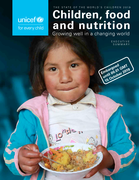
This 2019 edition of The State of the World’s Children (SOWC) examines the issue of children, food and nutrition, providing a fresh perspective on a rapidly evolving challenge. Despite progress in the past two decades, one third of children under age 5 are malnourished – stunted, wasted or overw
...
1-13 December 2018 | Geneva, Switzerland UNAIDS Programme Coordinating Board Issue date: 23 November 2018
UNAIDS/PCB (43)/18.32
The U.S. President‘s Emergency Plan for AIDS Relief
The risk of increasing rates of acute malnutrition during the COVID-19 pandemic demonstrates the urgent need to adapt, and expand access to, acute malnutrition diagnosis and treatment services in humanitarian and fragile contexts.
Nutrition training of health and agriculture workers can help to reduce child undernutrition. Specifically, trained health extension workers cancontribute through frequent nutrition counselling of caregivers. Evidence from systematic reviews has showed that providing nutrition training targeting hea
...
The harmonized training package for Point-of-use-fortification using micronutrient powders has been developed to guide in training frontline health workers. The micronutrient powders will be distributed at the health facilities where instructions on use will be provided by Health Care Providers. Com
...
Abridged version. In this abridged version of the Evidence-based Clinical Practice Guidelines for the Follow-Up of at-risk neonates, we provide recommendations for the care of newborns up to 2 years of age, corresponding to the first phase of their follow-up. The recommendations are intended for all
...
Soil-transmitted helminths are a group of intestinal worms that include Ascaris lumbricoides (giant roundworm), Trichuris trichiura (whipworm), and Ancylostoma spp. (A. duodenale, A. ceylanicum) and Necator americanus (hookworms). Despite the clear biological differences among the different species,
...
