
Filter
1940
Text search:
animals
Featured
170
483
Language
Document type
874
416
272
113
85
84
48
13
12
9
8
5
1
Countries
98
88
52
50
49
41
37
36
34
33
32
26
24
24
24
23
23
22
18
17
17
15
13
12
12
12
12
10
10
9
9
9
8
8
8
8
7
7
7
7
7
6
6
6
6
6
5
5
5
5
5
5
4
4
4
4
4
4
4
3
3
3
3
3
3
3
3
2
2
2
2
2
2
2
2
2
2
2
2
1
1
1
1
1
1
1
1
1
1
1
1
1
1
1
1
1
1
1
1
1
1
1
1
1
1
1
1
1
1
1
1
Authors & Publishers
Publication Years
Category
589
130
118
97
44
38
34
3
1
Toolboxes
228
211
133
133
133
125
79
49
47
44
44
37
31
29
29
28
23
17
17
15
12
5
4
2
2

Nature Reviews Microbiology Vol. 17 (2019)pp.51-62
Antimicrobial susceptibility testing (AST) technologies help to accelerate the
initiation of targeted antimicrobial therapy for patients with infections and could potentially
extend the lifespan of current narrow- spectrum antimicrobials. Althoug
...
A role for nuclear techniques
Antimicrobials play a critical role in the treatment of human and animal (aquatic and terrestrial) diseases, which has led to their widespread application and use. Antimicrobial resistance (AMR) is the ability of microorganisms to stop an antibiotic, such as an antimic
...
Antimicrobial Resistance and our Food Systems - Challenges and Solutions
In aquaculture, antibiotics have been used mainly for therapeutic purposes and as prophylactic agents. The contribution to antimicrobial resistance of antibiotics used in aquaculture is reviewed here, using a risk analysis framework. Some recommendations on responsible conduct in this context are pr
...
Handle Antimicrobials with care, we can help!
Antibiotics use with care
Antimicrobial resistance (AMR) is a threat to human and animal health and refers to the ability of microorganisms to defy the medicines prescribed. For instance when antibiotics are used improperly, such as an incorrect dose, insufficient duration or wrong frequency, resistance is heightened. The mi
...
Antibiotic resistant bacteria are spreading at an alarming rate and some bacterial infections may once again be untreatable. Antibiotic resistance (ABR), conservatively calculated, causes more than 500 000 deaths every year. This number is projected to rise dramatically if radical actions are not ta
...
Antibiotic resistant bacteria are spreading at an alarming rate and some bacterial infections may once again be untreatable. Antibiotic resistance (ABR), conservatively calculated, causes more than 500 000 deaths every year. This number is projected to rise dramatically if radical actions are not ta
...
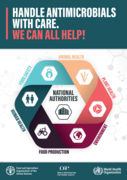
Antimicrobial Resistance can effect us all! Take action now
Educational materials (slide presentations) from FAO covering important biosecurity aspects in poultry farms.
To understand the national situation, Ethiopia did a situation assessment, launched its first strategy in 2011, and took action to contain AMR, as detailed in the blue boxes found throughout this strategy. This updated version of the strategy was in response to the revised health and medicines polic
...
AMR is a serious and growing global problem. A WHO report released in 2014 stated that this serious threat is no longer a prediction for the future it is happening now in every region of the world and has potential to affect anyone, of any age in any community – a real threat to the public health.
...

This is the first NAP on the Prevention and Containment of AMR in Kenya. It has been developed based on the National Policy on Prevention and Containment of AMR and the recommendations of the situation analysis on AMR conducted in 2011 and updated in 2016. This strategy provides a regulatory and imp
...
The National Action Plan for Combating Antibiotic-Resistant Bacteria (CARB), 2020-2025, presents
coordinated, strategic actions that the United States Government will take in the next five years to improve the health and wellbeing of all Americans by changing the course of antibiotic resistance.
T
...

In Vietnam, most of the examination and treatment facilities are facing with of spread of bacteria resistant to many antibiotics. The level and speed of drug resistance are increasing, at alarming level. The burden of drug resistance is increasing due to the increasing cost of treatment, prolonged t
...
AMR is one of the Key priority of the global health security agenda action package, as well as it is one of the commitments of Ministry of Public Health Afghanistan to combat AMR. In Afghanistan because of war and some other political issues the borders of the country are not well secured and well c
...
This National Action Plan addresses actions needed to be taken in order to combat antimicrobial resistance (AMR) in the country. It is obligatory to raise awareness of antimicrobial resistance and promote behavioral change through public communication
programmes that targets human, animal and plant
...

The increasing global trend of Antimicrobial resistance (AMR) has gradually emerged as a major public health challenge for the entire world. AMR has spread to almost all countries and regions, including Pakistan owing to the “misuse and overuse” of Antimicrobials, contributing to the increasing
...
Supporting the food and agriculture sectors in implementing the Global Action Plan on Antimicrobial Resistance to minimize the impact of antimicrobial resistance

The era of effective antibiotics is coming to a close. In just a few generations, many “miracle medicines”have been beaten into ineffectiveness by the bacteria they were intended to eradicate. Bacteria quickly adapt to the presence of antibacterial agents in order
...
Outline
• Welcome and objectives
• Microbiology, epidemiology and clinical presentation
• Surveillance for imported cases including case definitions
• Laboratory diagnosis • Infection prevention and hospital readiness
• Patient flow and actions required at each step
• Co-ord
...
Antimicrobial resistance (AMR) is a serious public health concern with economic, social and political implications that are global in scope, and cross all environmental and ethnic boundaries. As a global threat, AMR risks the achievements of modern medicine, and has the po
...
Временные рекомендации4 ноября 2020 г.
В данной редакции документа представлены обновленные рекомендации в таблице, посвященной важнейшим мерам по подготовке, обес
...

Produced by Training and Research Support Centre for the Regional Network for Equity in Health in east and southern Africa (EQUINET), March 20, 2020.
This brief summarises and provides links to official, scientific and other resources to support an understanding of and individual to regional level
...
Nosocomial infections and antimicrobial resistance are two special health issues listed in Annex 1 of Commission Decision 2000/96/EC of 22 December 1999 on the communicable diseases to be progressively covered by the Community network under Decision No 2119/98/EC of the European Parliament and of th
...
The infectious disease burden in India is among the highest in the world. A large amount of antibiot-ics are consumed in fighting infections, some of them saving lives, but every use adding to antibiotic resistance in bacteria. Antibiotic use is increasing steadily (table 1), particularly
...

The Coronavirus is spreading globally. How can individuals, communities and humanitarian actors best respond to the COVID-19 outbreak? How can the Sphere Handbook guide our response?
These guidelines are available in different languages

Global actions to reduce antimicrobial resistance (AMR) include optimising the use of antimicrobial medicines in human and animal health. In countries with weak healthcare regulation, this requires a greater understanding of the drivers of antibiotic use from the perspective of providers and consume
...

In Kenya, the bacterial infections that contribute most to human disease are often those in which re-‐sistance is most evident. Examples are multidrug-‐resistant enteric bacterial pathogens such as typhoid,
...
Antibiotic resistance is no longer a concern for the distant future but is a pressing issue, both globally and in Nepal. As part of global effort to preserve the effectiveness of antibiotics, the Global Antibiotic Resistance Partnership (GARP)-Nepal was established to doc
...
Educational materials (slide presentations) from FAO covering important biosecurity aspects in poultry farms
Antimicrobial resistant (AMR) organisms are increasing globally, threatening to render existing treatments ineffective against many infectious diseases. In Africa, AMR has already been documented to be a problem for HIV and the pathogens that cause malaria, tuberculosis, typhoid, cholera, meningitis
...
ຢາຕ້ານເຊື້ອຈຸລະຊີບ (Antimicrobial medicines) ມີຄວາມສໍາຄັນຫຼາຍຕໍ່ວຽກງານການແພດ, ສາທາລະນະສຸກ, ສຸຂະພາບສັດ ແລະ ການຜະລິດອາຫານ. ເນà
...

Antibiotics have been useful in fighting infectious diseases in our country for decades, but because of the overuse and misuse of these agents, an increasing number of organisms are now resistant to them. The Philippines, like other Southeast Asian countries, has already been encountering the many c
...
The National Department of Health and Department of Agriculture, Forestry and Fisheries have collectively engaged to determine the key interventions that will form the basis for this strategy taking into account the recommendations from the WHO and OIE.
The development and implementation of a Natio
...
China is one of the major countries for the production and use of antibacterial agents. Antibacterial agents are widely used in healthcare and animal husbandry. It plays a significant role in treating infections and saving patient lives, preventing and treating animal diseases, improving farming ef
...
Η ανακάλυψη πριν από 80 περίπου χρόνια ότι ουσίες που παράγονται από μύκητες ή βακτήρια μπορούν να χρησιμοποιηθούν θεραπευτικά για την ίαση διαφόρων λοιμώξεων, έφεÏ
...
A new respiratory infectious disease, COVID-19, caused by a new coronavirus called SARS-CoV-2, emerged in early December 2019. Since then, the virus has spread to India and 106 other countries in Asia, Europe, North America, Africa, and Oceania. On March 11, the World Health Organization (WHO) decl
...
On 31st December 2019, the World Health Organization (WHO) China Country Office was informed of cases of pneumonia of unknown etiology (unknown cause) detected in Wuhan City, Hubei Province of China. On 7th January 2020, Chinese authorities identified a new strain of Coronavirus as the causative age
...
30 January 2020
This document outlines the standard operating procedures for detection and response to case/s of suspected novel coronavirus disease (2019-nCoV) in South Africa. The content of this document should inform provincial preparedness plans.
The United Nations Environment Programme (UNEP) is stepping up its work on mapping zoonotic threat and protecting the environment to reduce the risk of future pandemics, such as the COVID-19 crisis currently sweeping the globe.
Laboratory biosafety guidance related to coronavirus disease (COVID-19): Interim guidance, 28 January 2021
recommended
The latest update (28 January 2021) includes the following addition and revision:
biosafety aspects for working with antigen-detecting rapid diagnostic test;
handling new variants of SARS-CoV-2 in the laboratory;
updated assay decontamination before disposal;
personal protectiv
...
This document has been developed for the WHO Regional Office for the Eastern Mediterranean to establish a regional plan of action to support the countries of the Region to rapidly accelerate the scaling up of their capacities for the prevention and early detection of, and
...
These communication tools are available to share and print in helping prevent the spread of COVID‑19. Feel free to display and/or distribute on social media to communicate key information to the public about COVID‑19. On Twitter please tag @Amref_Worldwide when posting graphics from our COVID‑
...
Prescriptions and Actionables for a Healthy and Green Recovery.
The practical steps outlined in this report aim at creating a healthier, fairer and greener world while investing to maintain and resuscitate the economy hit by the effects of COVID-19.
Policy makers, national and local decision-make
...
with focus on the aspects important for Catholic Social Teaching-driven management
Clinical care for severe acute respiratory infection: toolkit: COVID-19 adaptation
The proposed roadmap includes components and recommended actions to eliminate these neglected infectious diseases from the Americas.
This article is part four in a series of explainers on vaccine development and distribution
Available in different languages
This article is part two in a series of explainers on vaccine development and distribution. Part one focused on how vaccines work to protect our bodies from disease-carrying germs. This article focuses on the ingredients in a vaccine and the three clinical trial phases. Part three outlines the nex
...

Will COVID-19 vaccines be safe? Will all the COVID-19 candidate vaccines be successful? What are the different phases a vaccine must go through to be approved? This document provides responses to the most frequently asked questions about candidate vaccines and access to COVID-19 vaccination.
Overview.
The COVID-19 pandemic is the latest crisis facing the world, but unless humans release their grip on nature, it won’t be the last, according to a new report by the United Nations Development Programme (UNDP), which includes a new experimental index on human progress that takes into acco
...
English Analysis on World about Disaster Management and Protection and Human Rights; published on 12 Jan 2021 by IFRC
A Global Analysis of Antimicrobial Resistance and Its Drivers.
Since the first State of the World’s Antibiotics report in 2015, antimicrobial resistance has leveled off in some high-income countries but continues to rise in many low- and middle-income countries (LMICs), where access to antibiotic
...
J of Pharm Policy and Pract 14, 27 (2021). https://doi.org/10.1186/s40545-021-00309-8
Child marriage is a widespread practice across Turkana, a nomadic pastoralist region in Kenya. This report explores the issue through the voices of those girls affected by it.

The Tripartite AMR Country Self-Assessment Survey (TrACSS) helps to monitor country progress on the implementation of AMR national actions plans and has been administered on an annual basis by the Tripartite organizations (Food and Agriculture Organization of the United Nations (FAO), World Organisa
...

Reports of antimicrobial-resistant (AMR) microorganisms are increasing globally, threatening to render existing treatments ineffective against many infectious diseases. In Africa, AMR has already been documented to be a problem for human immunodeficiency virus (HIV) and the pathogens that cause mala
...

doi: https://doi.org/10.1101/2020.11.30.20236570
Pre-Print Article
Licensed pharmaceutical products (marketing authorization) should be manufactured only by licensed manufacturers (holders of a manufacturing authorization) whose activities are regularly inspected by competent national authorities. This guide to GMP shall be used as a standard to justify GMP status,
...
Mit dem One Health Ansatz für gesunde Menschen, gesunde Tiere und eine gesunde Umwelt weltweit. Briefing paper.
Der One Health Ansatz nimmt das Zusammenspiel der Gesundheit von Mensch, Tier und Umwelt in
den Blick. Der Ansatz betont den Mehrwert einer trans-, multi- und interdisziplinären Zusamm
...
Biosafety involves the implementation of containment principles, technologies and practices to prevent unintentional exposure to biological agents. Biosecurity involves the protection, control and accountability of biological materials and information related to these materials and dualuse research,
...
Временные рекомендации27 мая 2021 г.
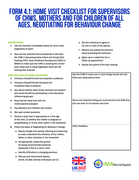
This document is a checklist CHW supervisors can use to ensure that CHWs are implementing high quality home visits.

Health Care Facilities (HCFs) are primarily responsible for management of the healthcare waste generated within the facilities, including activities undertaken by them in the community. The health care facilities, while generating the waste are responsible for segregation, collection, in-house trans
...
To guide One Health capacity building efforts in the Republic of Guinea in the wake of the 2014–2016 Ebola virus disease (EVD) outbreak, we sought to identify and assess the existing systems and structures for zoonotic disease detection and control. We partnered with the government ministries resp
...
World Health Organization, Food and Agriculture Organization of the United Nations & World Organisation for Animal Health. (2021). Antimicrobial resistance and the United Nations sustainable development cooperation framework: guidance for United Nations country teams. World Health Organization
...
Revision Bulletin ESPNF
A rapid review of evidence on the managing the risk of disease emergence in the wildlife trade - World Animal Health Organization (OIE)
Against the backdrop of the COVID-19 pandemic, health is receiving unprecedented public and political attention. Yet the fact that climate change also presents us with a health crisis deserves further recognition. From more deaths due to heat stress to increased transmission of infectious diseases,
...
European Journal of Biomedical and Pharmaceutical Sciences, vol.3 (2016) 1, 192-206
This review shows that if all sub areas of pharmaceutical waste management can efficiently work back to back environmental pollution and dangers to human health can reduce significantly.
A Snapshot of European Collection Schemes
International Journal of Basic & Clinical Pharmacology 5(6):2290-2294
DOI: 10.18203/2319-2003.ijbcp20164081
The purpose of this document is to provide relevant information and guidelines on
coronavirus outbreaks – and in particular the novel coronavirus SARS-CoV-2 and the
diseases it produces, COVID-19 – for pharmacists and the pharmacy workforce, both in a
primary care context (i.e. community phar
...
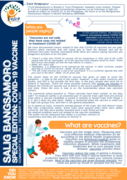
This issue is available in Engilsh, Maguindanao, Maranao, Tagalog from the website
Explore best practise in pharmacy, and learn how to start a career as a pharmacist, with these online pharmacy courses from FutureLearn.
Antimicrobial resistance (AMR) – the ability of microorganisms to resist antimicrobial treatments, especially antibiotics – has a direct impact on human and animal health and carries a heavy economic burden due to higher costs of treatments and reduced productivity caused by sickness. AMR is res
...

2 march 2022
Today, the Commission is proposing to activate the Temporary Protection Directive to offer quick and effective assistance to people fleeing the war in Ukraine. Under this proposal, those fleeing the war will be granted temporary protection in the EU, meaning that they will be given a
...

A guide for hospital trusts' hotel services, procurement teams and caterers to provide more sustainable food.
This manual has been prepared by the Group on Agriculture of the FAO Regional Office for Latin America and the Caribbean. The purpose of this work is to spread the basic concepts of Good Agricultural Practices (GAP)in order to: guide the production systems towards a sustainable agriculture and ecolo
...
March 2022. This report on good practices to combat AMR focuses on activities across human, animal, and environmental health in European countries. The report provides a description of practices, how they were implemented, achievements, and why the practice was unique.
Brucellosis is widespread in both humans and livestock in many developing countries. The authors have performed a series of epidemiological studies on brucellosis in agro-pastoral areas in Tanzania since 2015, with the aim of the disease control. Previously, the potential of a community-based brucel
...
PlosOne https://doi.org/10.1371/journal.pone.0196799; Zoonotic diseases continue to be a public health burden globally. Uganda is especially vulnerable due to its location, biodiversity, and population. Given these concerns, the Ugandan government in collaboration with the Global Health Security Age
...
Despite the human and economic impact of viral epidemics, the world is not well enough prepared for the next emerging viral outbreak. Global trends indicate that new microbial threats will continue to emerge at an accelerating rate, driven by our growing population, expanded travel and trade network
...
Bioethics 519 (online) doi:10.1111/bioe.12145 Volume 29 Number 8 2015 pp. 488–596;
Pandemic plans recommend phases of response to an emergent infectious disease (EID) outbreak, and are primarily aimed at preventing and mitigating human-to-human transmission. These plans carry presumptive weight
...
Objective: To review the effectiveness of antibiotic stewardship interventions in hospitals in low- and middle-income countries.
Antimicrobial resistance (AMR) has emerged as a major public health concern, around which the international leadership has come together to form strategic partnerships and action plans. The main driving force behind the emergence of AMR is selection pressure created due to consumption of antibiotics
...
Clinical Microbiology and Infection Volume 21, Issue 5, May 2015, Pages 433-443;
The neglected zoonotic diseases (NZDs) have been all but eradicated in wealthier countries, but remain major causes of ill-health and mortality across Africa, Asia, and Latin America. This neglect is, in part, a conse
...
