
Filter
922
Text search:
Yellow
fever
Featured
119
369
Language
Document type
593
111
77
50
32
27
15
9
3
3
2
Countries
75
39
38
34
29
26
25
24
23
21
17
17
17
15
13
11
11
10
9
9
9
8
8
7
7
6
6
6
5
5
4
4
4
4
4
4
4
4
4
3
3
3
3
3
3
3
2
2
2
2
2
2
2
2
2
2
2
1
1
1
1
1
1
1
1
1
1
1
1
1
1
1
1
1
1
1
1
1
1
1
1
1
1
1
1
Authors & Publishers
Publication Years
Category
401
128
53
49
23
23
8
Toolboxes
115
62
48
48
37
33
29
22
22
18
17
12
12
11
11
9
9
8
8
6
5
3
1
Stand 4/2022
Aktualisierung des Abschnitts „Hinweise zur Durchführung von Schutzimpfungen“ inkl. neuem Teil zu „Impfungen zum Schutz der reproduktiven Gesundheit, bei Kinderwunsch und während Schwanger - schaft und Stillzeit“
Multilingual guide on the topic of protective vaccination for migrants in Germany.
The guide is available in 16 languages: Albanian, Arabic, Bulgarian, German, English, French,
Greek, Italian, Kurdish, Persian, Polish, Romanian,
Russian, Serbian, Croatian, Spanish, Turkish. For the versions i
...
Report of the WHO/Bill & Melinda Gates Foundation Consultation. The Consultation was organized back-to-back with the first annual meeting of the International Coordinating Group of the BMGF-funded project for human and dog rabies elimination in developing countries, held at WHO headquarters, Geneva,
...
Interim guidelines developed by CDC for healthcare providers in the United States caring for infants born to mothers who while pregnant traveled to or resided in an area with Zika virus transmission. These guidelines include recommendations for the evaluation, testing, and management of infants with
...
The aim of this document is to provide interim guidance for interventions to reduce the risk of maternal Zika virus infection and to manage potential complications during pregnancy. This guidance is based on the best available research evidence and covers areas prioritized by an international, multi
...
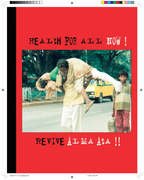
Solomon Islands pharmacy staff have developed an essential medicines supplies list. It was a collaborative effort involving a lot of staff taking the pictures and putting it all together. The list was launched as an initiative to improve the availability of medical stock within the country

The objective of this document is to guide the preparation and implementation of national preparedness plans for the safety of substances of human origin during outbreaks of Zika virus infection, both in affected and non-affected areas.
6th edition, 2010. | Published in collaboration with World Health Organisation and Clinton Health Access Initiative.
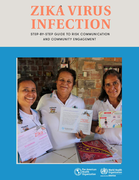
Zika Virus Infection - Step-by-Step Guide to Risk Communication and Community Engagement
recommended
This document provides Technical content on ZIKV, its manifestations, complications, modes of transmission, and prevention measures to be used in answering frequently asked questions and conveying messages in information and communication materials, community talks, press conferences, etc.
El Niño conditions persisting during the 2015/16 planting season have caused the worst drought in 35 years in Southern Africa, resulting in a second consecutive failed harvest. This has created severe food shortages and compounded existing vulnerabilities. Since July 2016, Namibia and Botswana have
...
BMC Family Practice201415:165, DOI: 10.1186/1471-2296-15-165
Open Access
This report describes the work done by WHO from January 2015 up to the end of December 2016 to address the long-term issues of survivor care, health-systems strengthening and research.
Guidebook on ICD10
recommended
3rd edition
Pocket book for field officers and humanitarian helpers on the field in health crisis response and tackling health crisis situation in Indonesia
O impacto do vírus Zika nas meninas e mulheres no nordeste do Brasil
For practitioners in humanitarian and development contexts
Weekly Epidemiological Record (WER), 17 September 2021, Vol. 96, No. 37 (pp. 445-460)
With hundreds of illustrations and clear instructions, A Community Guide to Environmental Health helps health promoters, development workers, environmental activists, and community leaders take charge of their environmental health in villages and cities alike. Also available in Arabic, Spanish, Chin
...
The intent of these guidelines is to develop a holistic, coordinated, proactive and technology driven strategy for management of biological disasters through a culture of prevention, mitigation and preparedness to generate a prompt and effective response in the event of an emergency. Th
...

Guidelines for Handling Temperature Sensitive Vaccines and Pharmaceuticals
Health Evidence Network synthesis report 53
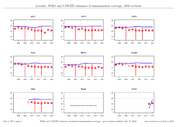
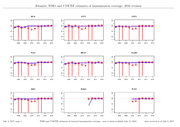
Data received as of July 3, 2017 | WHO and UNICEF estimates of national immunization coverage - next revision available July 15, 2018
National Guidelines for HIV & AIDS Care and Treatment (5th Edition)
The report reviews progress with the task of planning and implementing measures necessary to secure a completely polio-free world. It also examines actions aimed at ensuring successful transfer of polio assets, innovations developed and lessons learned to countries’ public health programmes and ot
...
Transforming Health: Accelerating attainment of Health Goals | THE SECOND MEDIUM TERM PLAN FOR HEALTH

Second Edition, 2012
Mission report: June 11-20, 2017
This document provides information and recommendations for action, based on the current available knowledge around monkeypox. It is a first draft which will be updated in light of evolving evidence and additional information as they become available.
A GUIDE FOR HEALTH WORKERS AND AUTHORITIES IN NIGERIA
Humanitarian emergencies, regardless of type and cause, have a number of common risk factors for communicable diseases inextricably linked to excess risk of morbidity and mortality which can come from vaccine–preventable diseases (VPDs). The reduction of VPDs is a significant aim of public-health
...

UNICEF Strategic Plan 2018-2021. Draft Theory of Change Paper

This guide presents new knowledge and guidelines on the provision of care to persons living with HIV/AIDS, in accordance with the last guidelines of the World Health Organization (WHO) published in 2006 and adapted to the Rwandan national context. It thus responds to the need by the Ministry of Heal
...
The Global Vaccine Action Plan (GVAP) 2011-2020, endorsed by Member States during the May 2012 World Health Assembly, has set ambitious targets to improve access to immunization and tackle vaccine-preventable diseases. This responsibility has been translated into firm commitments in February 2016, t
...
For the Fiscal Year 2015-2016, the Health Sector continued to implement actions meant to improve the availability, and access to quality healthcare. The following report highlights achievements registered by the health sector for the fiscal 2015-2016 in different health programs, as well as in the a
...
This report is primarily intended for the community of policymakers and researchers concerned about the rising risks of domestic, regional, and global infectious disease epidemics, and the collective failure to take the coordinated actions required to reduce such risks. These risks include the expec
...
Polymerase Chain Reaction (PCR) has significantly helped in early diagnosis and commencement of specific interventions for diseases control. It also plays a critical role in understanding the disease epidemiology and unraveling the transmission dynamics of the disease. This manual intends to p
...

An estimated 59 000 people die from rabies each year. That’s one person every nine minutes of every day, 40% of whom are children living in Asia and Africa. As dog bites cause almost all human cases, we can prevent rabies deaths by increasing awareness, vaccinating dogs to prevent the disease at i
...
