
Filter
1920
Text search:
UNFPA
Featured
120
685
Language
Document type
1279
251
158
82
52
35
27
19
9
3
2
1
Countries
68
55
53
53
52
52
51
45
43
42
40
39
38
37
34
34
32
31
31
29
25
25
23
23
22
20
19
19
19
18
18
17
17
16
16
15
15
14
13
13
12
12
11
10
10
9
8
8
8
8
8
8
7
7
7
7
6
6
6
5
5
5
4
4
4
4
4
3
3
3
3
3
3
2
2
2
2
2
2
2
2
2
2
2
2
2
1
1
1
1
1
1
1
1
1
1
1
1
1
1
1
1
1
1
1
Authors & Publishers
Publication Years
Category
1079
252
84
49
34
34
8
2
Toolboxes
190
137
80
56
42
41
31
31
26
25
24
20
18
16
14
12
7
3
2
1
DHS Further Analysis Reports No. 97
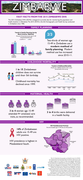
FAST FACTS FROM THE 2015 ZIMBABWE DHS
This revised and fully updated edition of the
International technical guidance on sexuality education
benefits from a new review of the current evidence, and reaffirms the position of sexuality education within a framework of human rights and gender equality. It promotes structured learning about
...
This report summarizes the findings of the 2010 Rwanda Demographic and Health Survey (RDHS). The 2010 Rwanda Demographic and Health Survey (RDHS) was designed to provide data for monitoring the population and health situation in Rwanda. The 2010 RDHS is the fifth Demographic and Health Survey to be
...

Survey finding report


2018 monitoring report: current status and strategic priorities
The report sets out the status of women’s, children’s and adolescents’ health, and on health systems and social and environmental determinants. Regional dashboards on 16 key indicators highlight where progress is being made o ...
The report sets out the status of women’s, children’s and adolescents’ health, and on health systems and social and environmental determinants. Regional dashboards on 16 key indicators highlight where progress is being made o ...
A catalyst for transformation in the United Nations to deliver health results for women, children and adolescents in support of the Sustainable Development Goals
This report documents the findings from the Behavioral Surveillance Survey conducted among youuth aged 15-24 in Rwanda in 2009. The 2009 Youth BSS documented HIV knowledge, attitudes, and behaviors (KAB) among youth in Rwanda. The data provided a cross-sectional look at the current HIV KAB among yo
...
The five thematic discussion papers in this collection were prepared by members of the Global Prevention Coalition Steering Group and other experts from various institutions and countries. Contributors are listed in alphabetical order. The five papers are meant to inform country consultations and th
...
Globally, it is estimated that 128.6 million people are currently in need of humanitarian assistance. Of these individuals, approximately one-fourth are women and girls of reproductive age. Although family planning is one of the most life-saving, empowering, and cost-effective interventions for wome
...

The Humanitarian News Digest is a monthly compilation of links to reports, web stories, press releases, and other
public products published online by organizations with humanitarian operations in Myanmar.
This guide provides national stakeholders and advocates with information and guidance to update the national essential medicines list to include a new commodity, a new indication, or a new formulation based on the available evidence and based on country need and disease burden. While the actors, tim
...
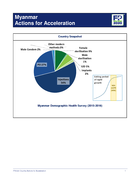
Commitment objective
The Government of Myanmar views family planning as critical to saving lives, protecting mothers and children from death, ill health, disability, and under development. It views access to family planning information, commodities, and services as a fundamental right for every ...
The Government of Myanmar views family planning as critical to saving lives, protecting mothers and children from death, ill health, disability, and under development. It views access to family planning information, commodities, and services as a fundamental right for every ...
In July 2016, the government of Myanmar shared the following update on progress toward achieving its Family Planning 2020 commitment during the 2015-2016 time period (commitment included below for reference). The government added new information to this update in April 2017.

Timor-Leste’s vulnerability to natural hazards means if particular care is not taken in the development of the country’s infrastructure, it will remain at risk to disruption.
Timor-Leste developed the 2008 National Disaster Risk Management Policy, which lays out the government’s vison of ...
Timor-Leste developed the 2008 National Disaster Risk Management Policy, which lays out the government’s vison of ...
Facilitator's Guide
Refresher Training Module for Health Care Providers implementing the MISP
Inter-agency Working Group on Reproductive Health in Crises Training Partnership

Despite improvements in recent years, the prevalence of undernutrition among women and children in Myanmar remains unacceptably high. One in three children are stunted and about 8% are acutely malnourished. Micronutrient deficiencies are common among infants, young children and pregnant women. In fa
...
In many humanitarian emergencies, there is a serious lack of access to even the most basic materials needed for managing the blood in addition to a lack of appropriate sanitation facilities (including water), which are critical for addressing menstrual hygiene. Privacy in emergencies is often scarc
...
Réduction des risques, promotion de la résilience et aide au relèvement
Large File: 12 MB!
Zambia Essential Medicines List (ZEML) 05
recommended
2020 Version
Амстердам, Нидерланды, 23 июля 2018 г.
Отчет
January – December 2014
Republic of Moldova South‐East European Region National Coordination Council
Declaration of Commitment of the United Nations General Assembly Special Session on HIV/AIDS
All In #EndAdolescentAIDS
Global Webinar: Novel Approaches for Addressing Age of Consent as a Barrier to Adolescents' Care Utilization and Engagement
Accessed: 26.10.2019
Ce rapport présente les principaux résultats de la quatrième édition de Enquête Démographique et de Santé du Bénin
(EDSB-IV), réalisée de décembre 2011 à mars 2012 par l’Institut National de la Statistique et de l’Analyse
Économique (INSAE) sous la tutelle du Ministère du Dévelo
...
Cinquième Enquête Démographique et de Santé au Bénin (EDSB-V) 2017-2018
Enquête Démographique et de Santé 2017-2018 Rapport de synthèse, Bénin
The DHS report itself explains the purpose was, “to obtain and provide information on basic indicators of social progress including fertility, childhood mortality, reproductive and child health, nutritional status of children, and awareness of HIV/AIDS and other health-related issues” in PNG. Th
...
This handbook is a quick-reference tool that provides practical, field-level guidance to establish and maintain a GBV sub-cluster in a humanitarian emergency. It provides the foundations for coordination. More in-depth information can be pursued through resources referenced in this handbook. The GBV
...
A progress report
Practical Guidance for collaborative interventions
Translating Community Research Into Global Policy Reform For National Action: A Checklist For Community Engagement To Implement The WHO Consolidated Guideline On The Sexual And Reproductive Health And Rights Of Women Living With HIV
3rd edition | December 2018
Regional indicators to measure progress towards zero discrimination
UNAIDS 2018 | Guidance
World Health Organization Department of Reproductive Health and Research
Brocher Foundation, Hermance, Geneva, Switzerland, 27–29 April 2016

L’élaboration du Plan Intégré de Communication traduit la volonté politique permanente des Autorités du Bénin de rendre plus efficace la lutte contre la mortalité maternelle, néonatale et infanto- juvénile.
Ce rapport présente les résultats de la cinquième année de l’Enquête Démographique et de Santé Continue au Sénégal (EDS-Continue 2017), exécutée par l’Agence Nationale de la Statistique et de la Démographie (ANSD) en collaboration avec le ministère de la Santé et l’Action sociale
...
Le Sénégal a réalisé des Enquêtes Démographiques et de Santé (EDS) en 1986, 1992, 1997, 2005, et 2010-2011. Au sortir de l’édition de 2010-2011, le pays s’est engagé dans la mise en œuvre d’un programme d’enquêtes dont la périodicité de collecte de données est ramenée à un an
...
Ce rapport présente les résultats de la troisième année de l’ECPSS réalisée en 2015 par l’Agence Nationale de la Statistique et de la Démographie et le Ministère de la Santé et de l’Action Sociale.
Ce rapport présente les résultats préliminaires de la quatrième année de l’ECPSS réalisée en 2016 par l’Agence Nationale de la Statistique et de la Démographie et le Ministère de la Santé et de l’Action Sociale.
Résultats de la Sérologie Réalisée dans le Cadre
de l’Enquête à Indicateurs Multiples
New Modules
Accessed: 09.03.2020
Clúster de Educación
30 de marzo de 2020
The United Nations Network on Migration is committed to supporting all partners in pursuit of the implementation of the Global Compact for Safe, Orderly and Regular Migration, recognizing that this cooperative framework provides an invaluable tool for ensuring inclusive, collective responses to COVI
...
This new edition highlights once again the importance of collecting disaggregated data to conduct gender-based analysis in order to determine, address, reduce, and eliminate the causes of gender-related inequalities.
This study is a theory-driven analysis of the socio-demographic determinants of maternal care seeking in Kenya. Specifically, it examines predisposing, enabling, and need factors potentially associated with use of antenatal care (ANC), health facility delivery, and timely postnatal care (PNC).This s
...

It estimates that there have been 228,000 additional deaths of children under five in these six countries [Afghanistan, Nepal, Bangladesh, India, Pakistan and Sri Lanka] due to crucial services, ranging from nutrition benefits to immunisation, being halted.
It says the number of children being tr
...
All countries in the Latin American and Caribbean (LAC) region are expected to report on these indicators for the year 2020.
The report shows that older people are not getting the healthcare treatments they desperately need. The COVID-19 response has disrupted services for non-communicable diseases such as cancer and diabetes, communicable diseases such as malaria, and much-needed services for mental health. Combined with
...

El manual aborda de una manera sencilla y participativa la salud sexual y reproductiva y las ITS y VIH-SIDA en el contexto de Perú; la doble protección que ofrece el condón masculino y femenino; y la mejora de la provisión de ambos métodos en los servicios de planificación familiar y de ITS y
...
Emergency in Ukraine: external situation report
recommended
Here you can download the latest Situation Reports
Weekly updates on the current situation in Ukraine and refugee-receiving countries, priority public health concerns and WHO’s actions to rapidly respond to the health emergency triggered by the conflict and to minimize disruptions to the delivery
...
The health and socioeconomic crisis triggered by the COVID-19 pandemic has hit the countries of Latin America hard and laid bare the profound inequities about which numerous international, regional and national reports have sounded warnings in recent decades. In this context, the historical politica
...
La crisis sanitaria y socioeconómica desencadenada por la pandemia del COVID-19 ha golpeado duramente a los países de América Latina y ha dejado al descubierto las profundas desigualdades sobre las que numerosos informes internacionales, regionales y nacionales han alertado en las últimas décad
...
Latin America and the Caribbean is characterized by a matrix of social inequality whose axes —such as
socioeconomic stratum, gender, stage in the life cycle, ethnicity and race, territory, disability, and immigration
status— create multiple, often concurrent, situations of exclusion and discri
...

Peru celebrates 200 years of independence in 2021. Over this period of independent life, and despite the turbulent socio-political scenarios, from internal armed conflict to economic crisis to political instability over the last 40 years, Peru has experienced major changes on its epidemiological and
...
The 2018 NDHS is a national sample survey that provides up-to-date information on demographic and health indicators. The sample was selected using a stratified, two-stage cluster design, with enumeration areas (EAs) as the sampling units for the first stage. The second stage was a complete listing o
...
La publication des résultats de l’EDSC-V intervient quelques années seulement après l’échéance en 2015 des Objectifs du millénaire pour le développement (OMD), le lancement de l’Agenda 2065 de l’Union Africaine, de l’Agenda 2030 des Nations Unies pour le Développement Durable, et a
...
The LDHS provides an opportunity to inform policy and provide data for planning, implementation, and monitoring and evaluation of national health programs. It is designed to provide up-to-date information on health indicators including fertility levels, sexual activity, fertility preferences, awaren
...
Le Sénégal a réalisé des Enquêtes Démographiques et de Santé (EDS) en 1986, 1992, 1997, 2005, et 2010-2011. Au sortir de l’édition de 2010-2011, notre pays s’est engagé dans la mise en œuvre d’un programme d’enquêtes dont la périodicité de collecte de données est ramenée à un
...
All countries in the Latin American and Caribbean (LAC) region are expected to report on these indicators for the year 2022.
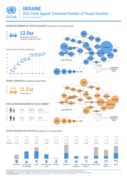
UKRAINE 2022 Flash Appeal: Estimated Number of People Reached by Cluster & Oblast

To support the achievement of health equity in the Region, the regional inter-agency movement Every Woman Every Child Latin America and the Caribbean (EWEC-LAC) advocates for and supports the use of equity and evidence-based policies, strategies and interventions to accelerate equitable progress in
...
This document contains guidance for strengthening the disability inclusiveness of MHPSS responses and programmes in emergency settings. It is intended to supplement the IASC Guidelines on Mental Health and Psychosocial Support in Emergency Settings (2007).
Overall Objective
To consider and add
...
This briefing note summarizes work undertaken by UN Women and WHO to inform the development of a module on violence against women 60 years and older that can be included in dedicated surveys on violence against women. It provides an overview of the challenges in the availability, measurement, and co
...
This Guidance was developed in response to the increase in HIV-related human rights crises and the shrinking civic space for rights-related responses to HIV in recent years across the world. This document builds upon existing guidance documents, offering updated guidance for country-based United Nat
...
The module is currently available in English, French, Nepali, Portuguese, Russian, and Spanish
A practical handbook. This Health Cluster Guide (2nd edition, 2020) provides practical advice on how WHO, Health Cluster Coordinators and partners can work together during a humanitarian crisis to achieve the aims of reducing avoidable mortality, morbidity and disability, and restoring the delivery
...
Manual with Scale
Interagency Guidelines - This revised Interagency List of Essential Medicines for Reproductive Health presents
the current international consensus on rational selection of essential reproductive health medicines. The list is intended to support decisions regarding the production, quality assurance
...
Specific action sheets offer useful guidance on mental health and psychosocial support and cover the following areas coordination assessment monitoring and evaluation protection and human rights standards human resources community mobilisation and support health services education dissemination of i
...
Handbook; EmOC indicators
Education material for teachers of midwifery
Midwifery education modules - second edition
Education material for teachers of midwifery
Midwifery education modules - second edition
Education material for teachers of midwifery
Midwifery education modules - second edition
