
Filter
663
Text search:
Relief
Web
Featured
80
191
Language
Document type
431
79
72
37
17
14
4
3
2
2
1
1
Countries
22
16
16
15
15
14
14
13
12
11
11
10
10
9
9
9
8
8
7
6
6
6
5
5
5
4
4
4
4
4
4
4
4
3
3
3
3
3
3
2
2
2
2
2
2
2
2
2
2
2
2
2
2
2
2
2
2
2
1
1
1
1
1
1
1
1
1
1
1
1
1
1
1
1
1
1
1
1
1
1
1
1
1
1
1
Authors & Publishers
Publication Years
Category
190
59
45
44
40
14
4
3
1
Toolboxes
64
53
38
34
32
30
30
29
23
20
15
13
13
12
10
9
9
7
4
3
3
2
2
1
Disaster Preparedness Training Programme
This guideline provides health policy-makers and decision-makers in health professional training institutions with advice on the rationale for health-care providers’ use of counselling skills to address sexual health concerns in a primary health care setting

The document is primarily meant to inform mental health and psychosocial support (MHPSS) staff, such as: psychologists, psychosocial counsellors, social workers, psychiatrists, psychiatric nurses, and others who are involved providing individual or group counselling, psychotherapy and/or psychiatric
...
WHO Pharmacovigilance indicators: a practical manual for the assessment of pharmacovigilance systems
This manual provides a practical method for determining the pharmacovigilance indices. It is designed to be simple and can be understood by any worker in pharmacovigilance without formal training in monitoring and evaluation. Pharmacovigilance as a medical discipline is crucial in preventing medicin
...
The Multi-Cluster/Sector Initial Rapid Assessment (MIRA) is a joint needs assessment tool that can be used in sudden onset emergencies, including IASC System-Wide Level 3 Emergency Responses (L3 Responses).
Healthcare Waste Management Toolkit for Global Fund Practitioners and Policy Makers: Part A
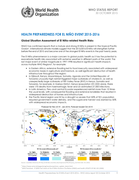
Global Situation Assessment of El Niño-related Health Risks
This provisional Facilitator's Kit provides a complete framework for a 3-day training on Community Preparedness for Reproductive Health and Gender. The goal is to build community capacity to prepare and respond to risks and inequities faced by women and girls during emergencies.
Skin and mucosal conditions are extremely common in all children and adults in particular in HIV-infected adults and children and are one of the commonest daily management problems faced by health care workers caring for patients with HIV infection
Sphere unpacked
Disease Control Priorities, 3rdEdition: Volume 4.
Mental, neurological, and substance use disorders are common, highly disabling, and associated with significant premature mortality. The impact of these disorders on the social and economic well-beingof individuals, families, and societies is large
...
In this review, the editors will investigate the impact of eight WASH interventions in preventing (reducing the risk of) and controlling outbreaks in LMIC, with particular focus on three diseases of current concern to the response community – cholera, Ebola, and Hepatitis E. Additionally, we will
...
A key purpose of the Recovery Toolkit is to support countries in the reactivation of health services which may have suffered as a result of the emergency. These services include ongoing programmes such as immunization and vaccinations, maternal and child health services, and noncommunicable diseases
...
Guía de prácticas esenciales. Segunda edición
Effective implementation of WHO PEN, combined with other very cost effective population-wide interventions, will help even resource constrained settings to attain the global voluntary targets related to reduction of premature mortality and preventionof heart attacks and strokes.
The paper sets out the specific communication challenge posed by Ebola and why it was so difficult to get to grips with this in the early months of the outbreak. It thendocuments when the health communication response became more useful and explores what that tells us about effective media and commu
...
Standard Treatment Guideline
Guidelines for Primary, Secondary and Tertiary Level Care
The NGO Safety and Security Training Report provides a narrative of the research findings, an updated curriculum, and guidance tools for training. It is based on extensive research and interviews with members of the NGO community. The report draws upon existing training materials, community consulta
...
Guide des programmes de protection de l’enfant pour concevoir et appliquer pas-à-pas les méthodes d’enquête CAP.
Getting Contraceptives To Health Facilities: 10 Questions For Community-Based Groups To Consider
recommended
This Guide helps all the health care providers in the non- public sector to explore alternative means of access to contraceptives and skills to determine quantities required and management of stock. Health care providers include community health workers, nurses and midwives, clinical officers and me
...
Supplement
HIV testing services
December 2016
20-22 July 2015, Monrovia, Liberia
Services, Identified needs and recommendations following the April and May 2015 Earthquakes in Nepal
Operational guidance for managing programme quality.
These guidelines are about implementing the programme-quality standards of the Core Humanitarian Standard in limited access humanitarian response. They have been developed using approaches and tools tested by Oxfam, other INGOs and the UN in Afgh
...
Examination of the business behaviour of Boehringer Ingelheim, Bayer and Baxter in Uganda
Summary of current WHO recommendations and guidance on programmatic approaches
For practitioners in humanitarian and development contexts
With hundreds of illustrations and clear instructions, A Community Guide to Environmental Health helps health promoters, development workers, environmental activists, and community leaders take charge of their environmental health in villages and cities alike. Also available in Arabic, Spanish, Chin
...

What We Know, What We Don’t Know, and What We Need to Do
In support of the African decade of disabled persons | 1st January 199 - 31st of December 2009
Sub-Saharan African Journal of Medicine: Year : 2014 | Volume : 1 | Issue : 1 | Page : 1-14
Trauma-Informed Practice Guide
recommended
Practical Guide on Trauma-Informed Approaches
This study, and similar studies in Kenya, Mozambique, Swaziland, Uganda, and Zambia is the outcome of close collaborative by a team in Swaziland, with technical and financial support from the UNAIDS Regional Support Team for Eastern and Southern Africa, UNAIDS Geneva, and the World Bank's Global HIV
...
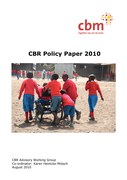
CBR Advisory Working Group | Co-ordinator: Karen Heinicke-Motsch
This brief gives an overview of disability rights in the Sub-Saharan region, with focus on Sida partner countries; DRC, Ethiopia, Kenya, Liberia, Mali, Mozambique, Rwanda, Somalia, Sudan and South Sudan, Tanzania, Uganda, Zambia and Zimbabwe
This brief focuses on disability rights in the ASEAN countries, namely Brunei Darussalam, Cambodia, Indonesia, Lao People’s Democratic
Republic (PDR), Malaysia, Myanmar, the Philippines, Singapore, Thailand and Viet Nam.
Setting WHO directions
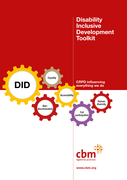
Disability-inclusive development policy and practice is constantly changing and evolving. It is a foundational part of our work in CBM, underpinning all that we do. It requires us to be constantly reflecting, learning and improving our practice. In particular looking to the deeper questions: of the
...
The Barefoot Guide 5: Mission Inclusion - Stories and practices of building a world where all belong
From 2011 until 2016, a multi-actor programme was run in five countries to improve the life chances and living conditions of people experiencing exclusion and marginalisation of various kinds. This programme worked with local leaders, organisations and movements as well as various institutions and a
...
This Joint Emergency Management Plan of the International Organizations (Joint Plan) describes the
interagency framework of preparedness for and response to an actual, potential or perceived nuclear or
radiological emergency independent of whether it arises from an acci
...
The aim of this publication is to provide practical guidance for public information officers on the preparation for and response to a nuclear or radiological emergency, and to fulfil in part functions assigned to the IAEA in the Convention on Assistance in the Case of a
...

Injury to the skin and underlying tissues from acute exposure to
a large external dose of radiation is referred to as cutaneous
radiation injury (CRI). Acute radiation syndrome (ARS) 1 will
usually be accompanied by some skin damage; however, CRI
can
...
Successful detonation of an improvised nuclear device (IND) would be a catastrophic event, causing an unprecedented number of injuries and lives lost, as well as economic, political, and social disruption. However, an effective medical response and an infrastructure prepared to protect itself from f
...
Effective risk communication requires the alignment of complex factors including trust between the communicator and the audience(s), audience involvement, and emotional responses to risk. Risk communication is especially challenging now as new media changes the landscape for both
communicators and
...
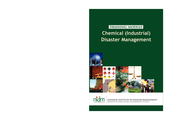
Key Features:
• Module Users: Disaster Management Trainers
• Training Targets: State Government and District
officials / Disaster Management Authorities / Disaster
Management Planners and Responders
• Training Duration: 5 working days (one week)
• Trainers Input: Multi-disciplinary
â€
...
These ICRC guidelines outline the organization’s approach to mental health and psychosocial support (MHPSS) during and after armed conflict and other situations of violence. They provide a framework for harmonizing MHPSS programmes within the organization, and an insight into its strategic process
...

The purpose of the WHO Manual for the Public Health Management of Chemical Incidents is to provide a comprehensive overview of the principles and roles of public health in the management of chemical incidents and emergencies. While this information is provided for each phase of the emergency cycle,
...
The recommendations in this guideline are intended to inform the development of relevant national- and local-level health policies and clinical protocols. Therefore, the target audience includes national and local public health policy-makers, implementers and managers of maternal and child health pr
...

Background document to the 2018 joint statement by WHO, UNFPA, UNICEF, ICM, ICN, FIGO and IPA: definition of skilled health personnel providing care during childbirth

Cryptococcal disease is one of the most common opportunistic infections among people living with advanced HIV disease and is a major contributor to severe illness, morbidity, and mortality, particularly in sub-Saharan Africa.
These guidelines update the recommendations that were first released i
...

The goal of this Global Action Plan is to articulate synergistic actions that will be required to prevent HIVDR from undermining efforts to achieve global targets on health and HIV, and to provide the most effective treatment to all people living with HIV including adults, key populations, pregnant
...
Guide pour augmenter la couverture et l'équité dans toutes les communautés de la Région africaine (2017)
Les programmes élargis de vaccination (PEV) sont responsables des vaccins et luttent contre les maladies évitables par la vaccination, dans le but de les éliminer, voire les éradique ...
Les programmes élargis de vaccination (PEV) sont responsables des vaccins et luttent contre les maladies évitables par la vaccination, dans le but de les éliminer, voire les éradique ...


The 2011-2012 National Annual Report on HIV program presents the progress in implementing the strategies and activities articulated in the National Strategic Plan on HIV and AIDS 2009-2012, commonly referred to as the HIV NSP.

The clinical guidelines and protocols for the practice of emergency medicine presented in this document are designed to be a useful resource not only for those wishing to become emergency medicine specialists, but also for general practitioners and other healthcare providers tasked with caring for p
...
This booklet provides policymakers, planners, and other interested parties with insight into the current state of the Rwandan health sector. These statistics provide a basis for policies, strategies, and planned interventions to ensure they are responsive to the needs of the health sector and, cruci
...

Vitamin A supplementation (VAS) programs targeted at children aged 6–59 months are implemented in many countries. By improving immune function, vitamin A (VA) reduces mortality associated with measles, diarrhea, and other illnesses. There is currently a debate regarding the relevance of VAS, but a
...
The skin of a patient is the first and most visible structure of the body that any health-care worker encounters during the course of an examination. To the patient, it is also highly visible, and any disease that affects it is noticeable and will have an impact on personal and social well-being. Th
...

Ethiopia met the MDG target for drinking water access with a unique and high degree of success. The magnitude of the country’s success in providing improved drinking water to nearly half of its population in 25 years despite its diversity, size, and challenges cannot be overstated. This case study
...
This external performance evaluation of the Malawi Girls’ Empowerment through Education and Health Activity (ASPIRE), conducted 2.5 years after ASPIRE began, establishes the activity’s progress against its objectives, proposes adaptations for the final year, and captures lessons for application
...

An action research conducted in Bang Shau village Northern Shan State, Myanmar
Disinfection of drinking-water supplies has been one of the most significant public health advancements of the last century with respect to reducing waterborne disease.
Although chlorine has been used as the disinfectant of choice for public drinking-water supplies for the past century, a numbe ...
Although chlorine has been used as the disinfectant of choice for public drinking-water supplies for the past century, a numbe ...
The Sendai Framework for Disaster Risk Reduction 2015-2030 outlines seven clear targets and four priorities for action to prevent new and reduce existing disaster risks: (i) Understanding disaster risk; (ii) Strengthening disaster risk governance to manage disaster risk; (iii) Investing in disaster
...
The guidelines are presented in the form of the following chapters:
Chapter 1: Floods status and context
Chapter 2: Institutional framework and financial arrangements
Chapter 3: Flood prevention, preparedness and mitigation
Chapter 4: Flood forecasting and warning in India
C ...
Chapter 1: Floods status and context
Chapter 2: Institutional framework and financial arrangements
Chapter 3: Flood prevention, preparedness and mitigation
Chapter 4: Flood forecasting and warning in India
C ...
