Filter
924
Text search:
PLHIV
Featured
68
394
Language
Document type
767
62
43
13
13
10
6
5
3
1
1
Countries
87
46
36
35
35
32
30
28
26
24
22
21
21
21
20
18
17
16
14
13
13
12
12
10
9
8
8
7
7
7
6
6
6
6
6
5
5
4
4
4
3
3
3
3
3
3
2
2
2
2
2
2
1
1
1
1
1
1
1
1
1
1
1
1
1
1
1
1
1
Authors & Publishers
Publication Years
Category
565
33
29
16
14
12
6
2
Toolboxes
231
113
11
8
7
6
6
5
4
4
3
1
1
1
1
1
The floods caused by the Tropical Cyclone IDAI has affected 3 million people in the Republics of Malawi, Mozambique and Zimbabwe leaving 839 people dead, and this figure continued to rise as the rains stopped and water subsided. To date, over 201,476 people (Table 1) have been displaced and about 31
...
This is an update of a seven-year TB and Leprosy national strategic plan (TBL-NSP), which extends from 2013 to 2020. The update focuses on the plan covering from 2017-20 and is based on the 2017 external mid-term programme review key findings and recommendations; the global and national End TB strat
...
Framework of Indictors and Targets
Как и руководство 2006 года, настоящий документ предназначен для специалистов,
занимающихся разработкой государственных программ по борьбе с туберкулезом, педиатр
...
6th edition
This six-day training is intended for case managers/community health volunteers/field supervisors who help households affected by HIV in India.
Regional action plan 2019-2023
Journal of Virus Eradication 2018; 4 (Supplement 2): 33–39
Policy Brief
published: 16 March 2018 doi: 10.3389/fpubh.2018.00069
Meeting Report
27–30 June 2017 Manila, Philippines
Meeting report, 25-26 September 2017 Copenhagen, Denmark
October 2018
This publication was produced at the request of the United States Agency for International Development. It was prepared independently by David Lowe, David Hales, Britt Herstad, Billy Pick, Aisuluu Bolotbaeva, and Gulgun Jonboboeva.
Special Report
This report of the European Centre for Disease Prevention and Control (ECDC) was coordinated by Teymur Noori. Report review was provided by Andrew J. Amato-Gauci, Anastasia Pharris, Annabelle Gourlay, Amanda Mocroft, Jan C. Semenza, Denis Coulombier and Piotr Kramarz.

A regional consultation report and draft transition framework
Legislative and Policy analysis and recommendations for reform
Accessed: 29.09.2019

Evaluation report
January 2014
Evaluation report November 2014
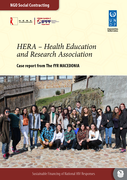
Case report from The fYR MACEDONIA
NGO Social Contracting
Sustainable Financing of National HIV Responses
Endorsed by the CCM Georgia on April 15th 2015
Accessed: 26.09.2019
Accessed: 26.09.2019
PLOS ONE | https://doi.org/10.1371/journal.pone.0186835 October 30, 2017
Evaluation report
September 2014

Country Progress Report
Reporting Period
January – December, 2014
Accessed: 26.09.2019
Evaluation report
December 2014
January – December 2014
Republic of Moldova South‐East European Region National Coordination Council
Declaration of Commitment of the United Nations General Assembly Special Session on HIV/AIDS
Evaluation report
September 2014
Accessed: 24.09.2019
Kan M et al. Journal of the International AIDS Society 2018, 21(S5):e25139 http://onlinelibrary.wiley.com/doi/10.1002/jia2.25139/full | https://doi.org/10.1002/jia2.25139
Getting to Zero
Sustainable Financing of National HIV Responses
Alternative Thematic Report on implementation of the Convention on Elimination of all Forms of discrimination against Women on the issues related to women living with HIV from the affected groups (women – former prisoners, women using injected drugs, women sex workers).
Accessed: 04.10.2019
Evaluation report
April 2013
Evaluation report
This report is part of the overall Ukrainian National AIDS programme evaluation conducted
in September 2012
F1000Research 2019, 8:323 Last updated: 17 MAY 2019
SDG target 3.3: by 2030, end the epidemics of AIDS, tuberculosis, malaria and neglected tropical diseases and combat hepatitis, waterborne diseases and other communicable diseases.

STAATSKOERANT, 5 MEI 2015 No. 38763
No. 38763 GOVERNMENT GAZETTE, 5 MAY 2015
General Notice
Notice 295 of 2015
Department of basic education
National education policy act, 1996 (Act No 27 of 1996)
Call for written submissions from stakeholder bodies and members of the public on Departmen
...
This summary highlights the experiences, results and actions from
the implementation of the Rapid Assessment Tool for Sexual and
The tool – developed by IPPF, UNFPA, WHO, UNAIDS, GNP+, ICW and Young Positives in
2009 – supports national assessments of the bi-directional linkages
between sexu
...
A Report on the Application of the HIV Stigma index in the Western highlands and Chimbu provinces
Summary Report
Accessed: 19.10.2019
Child Survival Working Group
Accessed: 26.10.2019
Kyiv, Ukraine 22-24 November 2010
Meeting Report
Nguyen HH et al. Journal of the International AIDS Society 2018, 21:e25151 http://onlinelibrary.wiley.com/doi/10.1002/jia2.25151/full | https://doi.org/10.1002/jia2.25151
Putting Asia’s HIV response back on track
As an inter-faith network of religious leaders living with or affected by HIV, INERELA+ seeks to empower religious leaders through education, knowledge and skills to live positively, becoming symbols of hope and agents of change who will help eliminate stigma and discrimination within their congrega
...
WHO working group on HIV incidence assays meeting report
10–11 December 2015
Glion, Switzerland
UNAIDS/WHO working group on global HIV/AIDS and STI surveillance
WHO/HIV/2017.03
PLOS ONE | https://doi.org/10.1371/journal.pone.0192765 February 23, 2018
Vision 2030
Accessed: 17.11.2019
Recommended actions at international and national levels
It's time to deliver differently.
Accessed: 13.11.2019
International Journal of Infectious Diseases 80 (2019) 10–15
journal homepage: www.elsevier.com/locate/ijid
Research Article
PLOS ONE | DOI:10.1371/journal.pone.0164619 October 13, 2016
“Continuum of HIV services refers to a comprehensive package of HIV prevention, diagnostic, treatment, care and support services provided for people at risk of HIV infection or living with HIV and their families”
August, 2018
Policy brief. HIV testing services (HTS) and anti-retroviral therapy (ART) have been scaled up substantially. It is estimated that, globally, nearly 80% of people with HIV now know their status. With the offer of immediate ART initiation and improved treatment options, access to and uptake of treatm
...
Accessed: 30.01.2020
Experiences from Indonesia, Kenya, Uganda and Ukraine
Research Article
PLOS Medicine | DOI:10.1371/journal.pmed.1002253 April 4, 2017
Jamieson D and Kellerman S. Journal of the International AIDS Society 2016, 19:20917 http://www.jiasociety.org/index.php/jias/article/view/20917 | http://dx.doi.org/10.7448/IAS.19.1.20917
Policy
June 2015
Training Menus, Facilitation Tips, and Participatory Training Modules
What recommendations did the assessment produce?
• Developing guidelines and plans to further the process of SRH and Hiv integration.
• Training stakeholders at different levels of the health system on how to integrate activities.
• Establishing mechanisms for collaboration/coordinati
...
South Africa reported it fist case of COVID-19 on 5 March 2020. While the first cases were imported, local transmission has led to a rapid increase in the number of cases. As of 21 April 2020, more than 3,400 cases and 58 deaths had been confirmed. On 15 March, President Cyril Ramaphosa declared a n
...
The COVID-19 pandemic has affected everyone, including key populations at higher risk of HIV. And the gains made against other infectious diseases, including HIV, are at risk of being reversed as a result of disruptions caused by COVID-19. This is the background to a new report published by FHI 360,
...

This National Prevention Road Map addresses the above-mentioned challenges and aims to guide, focus and reinvigorate the HIV prevention response during the period 2018-2020. It also renews the commitment of political leadership,
BMC Public Health (2021) 21:299 https://doi.org/10.1186/s12889-021-10296-9

It is estimated that prior to the war there were more than 250 000 people (1% of total population) living with HIV in Ukraine, of whom around 130 000 were receiving antiretroviral therapy.
As the displacement of people from Ukraine escalates, it is imperative that countries across Europe receivin
...
Providing quality, stigma-free services is essential to equitable health care for all and achieving global HIV goals and broader Sustainable Development Goals related to health. Every person has the right to the highest attainable standard of physical and mental health. Countries have a legal obliga
...
PEPFAR Malawi’s Country Operational Plan (COP) 2021 reflects a culmination of strong interagency collaboration between the PEPFAR Malawi team, Government of Malawi (GoM), and civil society organizations (CSOs) to mitigate the devastating impacts of COVID-19 and sustain progress achieved over the l
...
Malawi is a landlocked country with a surface area of 118,484 km2. Administratively, the country is divided into three regions, namely the Northern, Central and Southern regions. The country has 28 districts, which are further divided into traditional authorities (TA) ruled by chiefs. The TAs are su
...