
Filter
1696
Featured
170
494
Language
Document type
988
312
212
90
41
20
15
11
3
3
1
Countries
333
89
57
30
29
23
23
22
19
16
16
14
13
12
11
11
9
8
8
8
8
7
7
7
7
6
6
6
5
5
5
5
4
4
4
4
4
4
4
4
4
3
3
3
3
3
3
3
2
2
2
2
2
2
2
2
2
2
2
2
2
2
2
2
2
2
1
1
1
1
1
1
1
1
1
1
1
1
1
1
1
1
1
1
1
1
1
1
1
1
1
1
1
Authors & Publishers
Publication Years
Category
579
212
125
88
45
20
19
3
1
Toolboxes
137
133
127
117
65
60
56
50
49
49
47
40
22
22
19
18
17
16
15
8
7
4
4
1
Joining efforts to control two trelated global epidemics.
A technical guide for sputum smear microscopy, initiated by the International Union against Tuberculosis, is designed to be an easy to use reference standard for the collection, storage and transpor
...
Towards the Peoples Health Assembly Book -5

Standard Treatment Guideline
Accessed Febr. 6, 2020
Towards the Peoples Health Assembly Book -4
This fourth annual report monitors global progress towards the 2023 target for global elimination of industrially produced trans-fatty acids (TFA), highlighting achievements during the past year (October 2021 – September 2022). Countries are respo
...
treat TB
Description of Research Outputs, 2009 - 2014
Working Paper 589 July 2021T

Inequality of access to palliative care and symptom relief is one of the greatest disparities in global health care (1). Currently, there is avoidable suffering on a massive scale due to lack of access to palliative care and symptom relief in low- and middle-income countries (LMICs) (1). Yet basic p
...
A Meand to enhancing HIV prevention in key populations. This document has been developed out of the increasing need to set up standards and procedures to prevent and respond to violence against key populations.
WHO/CDS/TB/99.272
Key stakeholders must be involved in the planning, implementation, monitoring and evaluation of NCD plans and programmes. Within a ministry of health there will be different types of stakeholders, such as programme managers and senior managers in departments of prevention, health promotion, and hosp
...
The infectious disease burden in India is among the highest in the world. A large amount of antibiot-ics are consumed in fighting infections, some of them saving lives, but every use adding to antib
...
The Global Antibiotic Resistance Partnership (GARP)-Mozambique team, in partnership with the Center for Disease Dynamics, Economics & Policy (CDDEP), has produced this report as part of a solid com-
...
South Africa has faced many challenges over the past two decades, accomplishing profound positive changes in the social structure and government of the nation. This has not yet fully translated into better health for the population, howeve
...
Accessed: 22.03.2019
Mental disorders are a leading cause of the global burden of disease, and the provision of mental health services in developing countries remains very limited and far from equitable. Using the Creditor Reporting System, we estimate the amounts and p
...
The Global Health Security Agenda programme develops national capacity to prevent zoonotic and non-zoonotic diseases while quickly and effectively detecting and controlling diseases when they do emerge. The Emerging Pandemic Threats programme improv
...
A Global Analysis of Antimicrobial Resistance and Its Drivers.
Since the first State of the World’s Antibiotics report in 2015, antimicrobial resistance has leveled off in some high-income countries but continues to rise in many low- and middle-income countries (LMICs), where access to antibiotic
...

The increasing global trend of Antimicrobial resistance (AMR) has gradually emerged as a major public health challenge for the entire world. AMR has spread to almost all countries and regions, including Pakistan owing to the “misuse and overuse”
...

The Global vector control response 2017–2030 (GVCR) provides a new strategy to strengthen vector control worldwide through increased capacity, improved surveillance, better coordination and integr
...
Trachoma is an eye infection that for thousands of years caused many people to go blind across all continents. As the result of development and targeted interventions, trachoma is now limited to an estimated 57 countries, often affecting the poorest
...
The Coronavirus Disease 2019 (COVID-19) has had a continuous and robust impact on world health. The resulting COVID-19 pandemic has had a devastating physical, mental and fiscal impact on the millions of people living with noncommunicable diseases (
...
Funded by CBM: www.cbm.org
In the current absence of vaccine for COVID-19, public health response target breaking the chain of infection by focusing on the mode of transmission. This paper summarizes current evidence-base around the transmission dynamics, pathogenic, and clin
...
A manual for programme managers.
БОРЬБА С ТУБЕРКУЛЕЗОМ В ТЮРЬМАХ
Руководство для руководителей программ
Significant progress has been made in the eradication of three priority diseases in the African Region, as a result of extensive collaboration between the Regional Office, WHO country offices and countries. For example, in August 2020, the region wa
...
Standard Treatment Guideline

at the national and acute health care facility level
Rabies is a devastating and societally important zoonotic disease, which is transmitted principally to humans through the bite of infected dogs. This acute, progressive viral encephalitis has the highest case fatality of any infectious
...
A manual for programme managers.
The World Health Organization organized a Consultation of National Leprosy Programme managers, partners and affected persons to discuss the draft Global Leprosy Strategy, 2021--2030. This virtual event took place from 26 to 30 October 2020. It was a
...
Guidelines for Diagnosing and Managing Disseminated Histoplasmosis among People Living with HIV
recommended
Histoplasmosis is a disease caused by the fungus Histoplasma capsulatum. This disease is highly endemic in some regions of North America, Central America, and South America and is also reported in c
...
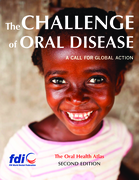
A all for global Action. The Oral Health Atlas. Second edition
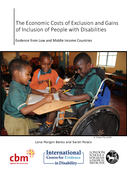
Evidence from Low and Middle Income Countries
Introduction to Low Cost Sanitation
recommended
Planning, Promotion, Contruction & Design. Manual
In 2012, all Member States of the World Health Organization (WHO) endorsed a historical target to reduce premature mortality from noncommunicable diseases
(NCD). This commitment was echoed in 2015 by the United Nations Sustainable Development Goals, which included a target to reduce premature morta
...
Management of Snake Bite. Quick Reference Guide
recommended
Standard Treatment Guideline
Standard Treatment Guideline
ABSTRACT
More than 500 million people worldwide live with cardiovascular disease (CVD). Health systems today face fundamental challenges in delivering optimal care due to ageing populations, healthcare workforce constraints, financing, availability
...
Childhood cancer ‘Signs and Symptoms’ campaign
recommended
Compilation of campaign materials
Accessed on 29 September 2020
This report explores the reasons why global health is critical to medicine and what this means for medical education. It argues that an understanding of global health is important for all students a
...
Leishmaniasis is a climate-sensitive disease. Changes in temperature, rainfall, and humidity can have strong impacts on
the sandfly vector, altering their distribution and influencing their survival and population sizes. Increased temperatures shor
...
Cervical cancer, along with maternal deaths, has been identified as a national priority in
South Africa as well as other Sub-Saharan African countries. Cervical cancer is the
second most common cancer among women in South Africa, after breast canc
...
The Republic of the Union of Myanmar’s National Strategic Plan on HIV/AIDS 2016–2020 is the strategic guide for the country’s response to HIV at nat
...

The National Strategic Plan is based on the following guiding principles:
1) Life-course approach: adolescence is a key decade in the course of life that influences the health outcomes later in life.
2) Comprehensive approach: It recogniz ...
1) Life-course approach: adolescence is a key decade in the course of life that influences the health outcomes later in life.
2) Comprehensive approach: It recogniz ...
Socioeconomic status is associated with differences in risk factors for cardiovascular disease incidence and outcomes, including mortality. However, it is unclear whether the associations between ca
...
Childhood Respiratory Diseases & the Environment learning objectives
•To understand how the respiratory tract is affected by the environment
•To describe respiratory diseases linked to the environment
•To list one population-level intervention and one personal-level intervention
...
Improving the management of childhood tuberculosis within national tuberculosis programmes: research priorities based on a literature review
WHO/HTM/TB/2007.381, 07.02
These guidelines provide specific recommendations and expert suggestions — for national policy-makers and programme managers and their partners and stakeholders— on prioritizing, planning and pr
...
Hepatitis B (HBV) infection is a major public health problem and cause of chronic liver disease.
The 2024 HBV guidelines provide updated evidence-informed recommendations on key priority topics. These include expanded and simplified treatment cri
...
Guidelines for the prevention, care and treatment of persons with chronic hepatitis B infection
recommended
The recommendations in these guidelines promote the use of simple, non-invasive diagnostic tests to assess the stage of liver disease and eligibility for treatment; prioritize treatment
...
Final Report
Submitted to: Unicef, New Delhi
ORG Centre for Social Research (A Division of AC Nielsen ORG- MARG Private Limited)
Accessed: 30.10.2019
India | The ‘Standard Operating Procedures for Care, Protection and Rehabilitation of Children in Street Situations’, is a unique endeavour to streamline the processes and interventions regardin
...
This 2011 update of Guidelines for the programmatic management of drug-resistant tuberculosis is intended as a tool for use by public health professionals working in response
to the Sixty-second Wo
...
Hand hygiene is vital for safe health care delivery, yet practices at the point of care remain suboptimal worldwide. A comprehensive research agenda is therefore necessary to improve our understanding of factors influencing hand hygiene behaviour an
...

Non-communicable diseases (NCDs) are of increasing concern for society and national governments, as well as globally due to their high mortality rate. The main risk factors of NCDs can be classified
...
This brief considers the rationale for shielding individuals at high risk of severe disease or death from COVID-19 in low- and middleincome countries. It provides an overview of proposed approaches
...
The Millennium Development Goals (MDGs) showed
that global commitment and collective action
could significantly reduce the disease burdens of
three deadly communicable diseases: HIV/AIDS,
tuberculosis (TB) and malaria. The MDGs helped
focus eff
...
This document defines the framework for Malawi’s National HIV Programs. Considering public health benefits and risks, as well as funding and resource implications, deviations from these guidelines
...
The Compendium of data and evidence-related tools for use in TB planning and programming was developed as a companion document to the People-centred framework for tuberculosis programme p
...
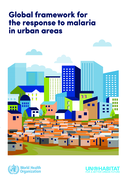
Cities are uniquely positioned to understand local needs and respond rapidly to changing conditions to safeguard health. These changes require strong city leadership to implement multisectoral, health-relevant policies and public services that engage communities. The response to malaria must be an i
...
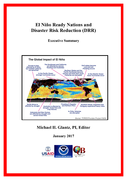
This document is intended for a wide audience including national and local policymakers, implementers and managers of national and local maternal a
...
An Advocate’s Guide: Strategic Indicators for Universal Access to Sexual and Reproductive Health and Rights
recommended
This guide was prepared to enable advocates to use data
when advocating for universal access to SRHR at the national,
regional and global levels. It is a direct outcome of the Strategic
SRHR Indi
...
First published in 2020, this toolkit is intended for clinicians working in acute care, managing adult and paediatric patients with acute respiratory infection, including severe pneumonia, acute respiratory distress syndrome, sepsis and septic shock
...
Development of one or more vaccines for Neisseria gonorrhoeae is an important objective for sexual and reproductive health worldwide, and for the f
...
Global cardiovascular disease (CVD) burden is high and rising, especially in low-income and middle-income countries (LMICs). Focussing on 45 LMICs, we aimed to determine (1) the adult population’s median 10-year predicted CVD risk, including its v
...
Undernutrition increases the risk of tuberculosis (TB) and in turn TB can lead to malnutrition. Undernutrition is therefore highly prevalent among people with TB. It has been demonstrated that undernutrition is a risk factor for progression from TB
...
Improving Infection Prevention and Control Practices at Health Facilities in Resource-Limited Settings
recommended
SIAPS Technical Report. This report summarizes key accomplishments and lessons learned in implementing SIAPS’ approach to improving IPC practices in four countries: South Africa, Namibia, Jordan, and Ethiopia. All activities address SIAPS’s overall objective to build or enhance
...
This publication gives a broad vision of what a comprehensive approach to cervical cancer prevention and control means. In particular, it outlines the complementary strategies for comprehensive cerv
...
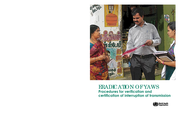
This document sets out the criteria and procedures to be followed by countries in verifying the interruption of yaws transmission. It is intended for use by international verification teams, national
...
Antimicrobial resistance (AMR) is a major public health challenge, which is recognized as high priority area by the Government of India. The increasing consumption of antibiotics is one of the key drivers of antimicrobial resistance seen in bugs of
...
WHO published guidance for clinicians and health care decision-makers on the use of corticosteroids in patients with COVID-19.
We recommend systemic corticosteroids for the treatment of patients
...
These guidelines – an update to the World Health Organization’s 2015 publication Consolidated strategic information guidelines – present a set of essential aggregate indicators and guidance on choosing, collecting and systematically analysing strategic information to manage and monitor the
...

Poor quality health services are holding back progress on improving health in countries at all income levels.
Today, inaccurate diagnosis, medication errors, inappropriate or unnecessary treatment, inadequate or unsafe clinical facilities or practices, or providers who lack adequate training an ...
Today, inaccurate diagnosis, medication errors, inappropriate or unnecessary treatment, inadequate or unsafe clinical facilities or practices, or providers who lack adequate training an ...
he WHO Guidelines on Integrated Care for Older People (ICOPE) propose evidence-based recommendations for health care professionals to prevent, slow or reverse declines in the physical and mental cap
...
In India, in response to the above and guided by our counterparts in the government of India, the UN agencies have developed the Novel Coronavirus Disease
...
Terminology used to describe the transmission of pathogens through the air varies across scientific disciplines, organizations and the general public. While this has been the case for decades, during the coronavirus
...
he WHO South-East Region in 2019 accounted for nearly a million missing TB patients from the estimated incidence. Active case-finding (ACF) or systematic screening for tuberculosis is an important t
...
This document provides guidance for countries on how to implement activities to achieve the interruption of yaws transmission. It is intended for use by n
...
