
Filter
356
Text search:
IASC
et
al.
Featured
Recommendations
82
New Publications
83
Language
Document type
No document type
190
Guidelines
57
Studies & Reports
42
Manuals
28
Training Material
22
Strategic & Response Plan
5
Brochures
4
Fact sheets
4
Situation Updates
3
Online Courses
1
Countries / Regions
Syria
15
Global
15
Latin America and the Carribbean
14
Ukraine
10
Russia
9
Yemen
7
Germany
6
Congo, Democratic Republic of
5
India
5
Nepal
5
Middle East and North Africa
5
Sierra Leone
4
Haiti
4
South Sudan
4
China
4
Mozambique
4
Myanmar / Burma
4
Western and Central Europe
4
Venezuela
4
Indonesia
3
Brazil
3
Colombia
3
Angola
3
Eastern Europe
3
Portugal
3
Guinea
2
Liberia
2
Senegal
2
Somalia
2
Iraq
2
Jordan
2
Kenya
2
Malaysia
2
Bangladesh
2
Argentina
2
Burundi
2
Chile
2
West and Central Africa
2
Eastern Europe and Central Asia
2
Spain
2
Burkina Faso
1
Nigeria
1
Mali
1
Guinea-Bissau
1
Côte d’Ivoire / Ivory Coast
1
Ethiopia
1
Ghana
1
Niger
1
Togo
1
Philippines
1
Pakistan
1
Lebanon
1
Turkey
1
Tanzania
1
Rwanda
1
Singapore
1
Sudan
1
Benin
1
Central African Republic
1
Peru
1
Hungary
1
Madagascar
1
Mexico
1
Sri Lanka
1
East and Southern Africa
1
South–East Asia Region
1
Western Pacific Region
1
Africa
1
Fiji
1
Palestine
1
Italy
1
Laos
1
Bulgaria
1
Moldova
1
Kyrgyzstan
1
Kazakhstan
1
Gabon
1
Denmark
1
France
1
Belarus
1
Authors & Publishers
Publication Years
Category
Countries
84
Key Resources
42
Women & Child Health
41
Public Health
20
Capacity Building
11
Clinical Guidelines
10
Pharmacy & Technologies
1
Toolboxes
Mental Health
70
COVID-19
53
Conflict
34
Refugee
19
Disability
16
Natural Hazards
16
HIV
13
Ebola
6
Rapid Response
6
Planetary Health
6
Zika
5
TB
2
Global Health Education
2
NTDs
2
Health Financing Toolbox
1
NCDs
1
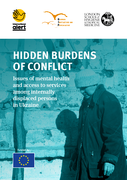
Some 32% of internally displaced persons (IDPs) in Ukraine suffer from post-traumatic stress disorder (PTSD) as a result of the conflict in the east.
Among the 2,203 respondents surveyed across Ukraine, the study also found a high prevalence of mental disorders such as depression (22%) and anxiety
...
A new story book that aims to help children understand and come to terms with COVID-19 has been produced
With the help of a fantasy creature, Ario, “My Hero is You, How kids can fight COVID-19!” explains how children can protect themselves, their families and friends from coronavirus and how to
...
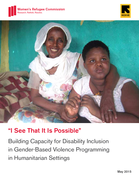
Women and girls with mental and intellectual disabilities were perceived to be most at risk of sexual violence, and family and service providers may only become aware of sexual violence against them when they become pregnant.
Discrimination by GBV service providers, family and community members was
...
Чрезвычайные ситуации возникают по целому ряду причин: природные бедствия, такие как землетрясения и наводнения; вооруженные конфликты и гражданские войны; техноÐ
...
This guide focuses on three main areas: how to support a person whose condition warrants home care because of non-severe symptoms and home care is recommended by local jurisdictions; how to prevent the spread of COVID-19 in the home; and how to provide emotional support to family members. While this
...
Під час гуманітарних надзвичайних станів у загальних закладах охорони здоров’я має бути принаймні один медичний працівник, який, працюючи під супервізією, буде Ñ
...
Данное руководство описывает вмешательство низкой интенсивности под названием «Управление проблемами плюс» (УП+) – для взрослого населения в состоянии дистресса
...
Disease Control Priorities, 3rdEdition: Volume 4.
Mental, neurological, and substance use disorders are common, highly disabling, and associated with significant premature mortality. The impact of these disorders on the social and economic well-beingof individuals, families, and societies is large
...
Kenya reported its first case of COVID-19 on 12 March 2020 and, as at 7 April 2020, 172 cases had been confirmed and 6 deaths reported. The Government of Kenya has taken a number of measures to curb the spread of the virus, including implementing a curfew, restricting movement out and into four coun
...
Children living in humanitarian crises face an increased risk of abuse. While the threats of harm are increasing, the established systems in place to protect them are breaking down. Faced with the COVID-19 pandemic and its impacts, vulnerable families suffer multiple hardships. Schools are closed an
...
Infant Feeding in Emergencies Module 2
recommended
for health and nutrition workers in emergency situations for training, practice and reference
Accessed on 31.03.2020
This Guidance Note aims to provide humanitarian child protection practitioners, particularly child protection advisors and program managers, with guidance on how to engage in responses to infectious disease outbreaks to ensure children’s protection needs are taken into ac
...
The Basic Needs and Response Analysis Framework and Toolkit (known as the Framework & Toolkit) is part of the ECHO ERC funded project to increase the uptake of multi-purpose cash grants (MPGs) in emergency responses for more efficient and effective humanitarian action. MPGs are a powerful aid modali
...
This guidance note is intended primarily for health actors working in emergency and disaster risk management (hereafter 'emergency risk management') at the local, national or international level, and in governmental or nongovernmental agencies. People with disabilities, those
...
Пандемия COVID-19 вызвала кризис системы здравоохранения и социальноэкономический кризис глобального масштаба. В связи с ограничениями на
поездки и передвижение грÐ
...
Women, the elderly, adolescents, youth, and children,
persons with disabilities, indigenous populations, refugees,
migrants, and minorities experience the highest degree
of socio-economic marginalization. Marginalized people
become even more vulnerable in emergencies.1 This is due
to factors su
...
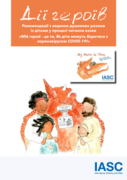
Рекомендації з ведення душевних розмов із дітьми у процесі читання казки«Мій герой – це ти, Як діти можуть боротися з коронавірусом COVID-19!»
