Filter
155
Text search:
IASC,
Global
Nutrition
Cluster,
UNICEF
Featured
Recommendations
23
New Publications
41
Language
Document type
No document type
88
Strategic & Response Plan
20
Manuals
17
Guidelines
16
Studies & Reports
12
Situation Updates
1
Fact sheets
1
Countries / Regions
Global
6
Nepal
5
South Sudan
5
Syria
5
Myanmar / Burma
5
Congo, Democratic Republic of
4
Philippines
4
Yemen
4
Ethiopia
3
Ukraine
3
Latin America and the Carribbean
3
Indonesia
2
Papua New Guinea
2
Sudan
2
East and Southern Africa
2
Iran
2
Nigeria
1
Mali
1
Cameroon
1
Ghana
1
Uganda
1
Zimbabwe
1
Haiti
1
India
1
Somalia
1
Pakistan
1
Jordan
1
Afghanistan
1
Kenya
1
China
1
Rwanda
1
Bangladesh
1
Mozambique
1
Brazil
1
Serbia
1
Croatia
1
Burundi
1
West and Central Africa
1
Middle East and North Africa
1
Western Pacific Region
1
Asia
1
Africa
1
Fiji
1
Venezuela
1
Laos
1
Russia
1
Kyrgyzstan
1
Vietnam
1
Turkmenistan
1
Japan
1
Portugal
1
Spain
1
Azerbaijan
1
Bosnia and Herzegovina
1
Authors & Publishers
Publication Years
Category
Countries
39
Key Resources
28
Women & Child Health
18
Public Health
8
Clinical Guidelines
3
Capacity Building
2
General Guidelines
1
Pharmacy & Technologies
1
Toolboxes
COVID-19
32
Conflict
18
Mental Health
12
Disability
10
Natural Hazards
8
Rapid Response
7
Refugee
6
HIV
5
Planetary Health
3
Zika
2
Ebola
1
TB
1
Specific Hazards
1
Global Health Education
1
Recognizing the extent to which the COVID-19 outbreaks affects women and men differently is hugely important. Some preliminary data suggested that more men than women are dying, potentially due to sex-based immunological differences, higher rates of cardiovascular disease for men and lifestyle choic
...
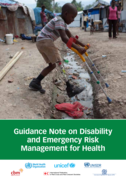
This guidance note is intended primarily for health actors working in emergency and disaster risk management (hereafter 'emergency risk management') at the local, national or international level, and in governmental or nongovernmental agencies. People with disabilities, those
...
This publication provides an overview of UN Women’s commitments to the humanitarian community guided by the “UN Women strategic plan 2022–2025”. It highlights areas where UN Women has a unique advantage in advancing gender equality and the empowerment of women and girls across the humanitari
...
The magnitude of urban disasters, high population densities, and a complex social, political and institutional environment has challenged the manner in which humanitarian agencies are used to working. Humanitarian agencies are now grappling with how to change their approaches to this reality. This d
...
Ce plan humanitaire multisectoriel spécifique à la réponse COVID-19 constitue un addendum au Plan de Réponse Humanitaire 2020 (PRH) afin d’intégrer l’impact de la pandémie de COVID-19 sur les besoins humanitaires existants et sur les activités des partenaires humanitaires
In addition to the ongoing humanitarian emergencies in the country, the COVID-19 pandemic poses a potential monumental social and economic threat to Nigeria, with a devastating knock on effect for the most vulnerable population in the BAY states who have endured a decade of conflict. The UN system i
...
Global Situation Assessment of El Niño-related Health Risks
This Toolkit is intended to guide humanitarian programme managers and healthcare providers to ensure that sexual and reproductive health interventions put into place both during and after a crisis are responsive to the unique needs of adolescents.
Services, Identified needs and recommendations following the April and May 2015 Earthquakes in Nepal
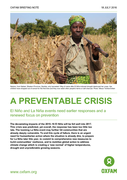
The devastating impacts of the 2015–16 El Niño will be felt well into 2017. This crisis was predicted, yet overall, the response has been too little too late. The looming La Niña event may further hit communities that are already deeply vulnerable. To end this cycle of failure, there is an urgen
...
The Standard consists of nine key inclusion standards, and seven sets of sector-specific inclusion standards for protection – water, sanitation and hygiene, food security and livelihoods, nutrition, shelter, settlement and household items, health
...
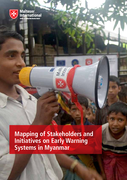
This study aims to analyze national and international stakeholders and their initiatives in Early Warning Systems in Myanmar, to identify priority gaps that need to be addressed by all stakeholders. It is presented as a first step towards supporting GoUM in information-gathering under the Myanmar Ac
...
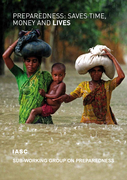
This document addresses preparedness as an important investment against natural and man-made disasters. Through good practices, it urges the humanitarian community, governments and regional bodies to use preparedness thinking to be aware of risks, to reduce them and to plan ahead to combat them in o
...
This guidance has been developed in line with the WHO corporate risk management framework, the WHO business continuity and contingency plans, as well as the Inter-Agency Emergency Response Preparedness Framework. It is based on a common organiza-tional approach and procedures for managing including
...
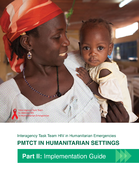
front cover © Jonathan Hyams/Save the Children
This guide focuses on three main areas: how to support a person whose condition warrants home care because of non-severe symptoms and home care is recommended by local jurisdictions; how to prevent the spread of COVID-19 in the home; and how to provide emotional support to family members. While this
...