
Filter
260
Text search:
Health
Cluster,
Nutrition
Cluster,
OCHA
Featured
Recommendations
32
New Publications
101
Language
Document type
No document type
146
Studies & Reports
29
Strategic & Response Plan
26
Situation Updates
20
Manuals
16
Guidelines
12
Fact sheets
8
Resource Platforms
2
Training Material
1
Countries / Regions
Syria
23
South Sudan
17
Yemen
13
Myanmar / Burma
11
Central African Republic
10
Ukraine
10
Philippines
8
Global
8
Congo, Democratic Republic of
7
Kenya
7
Mozambique
7
Nigeria
6
Sudan
6
Madagascar
6
Zimbabwe
5
Venezuela
5
Sierra Leone
4
Ethiopia
4
Somalia
4
Bangladesh
4
Liberia
3
Cameroon
3
Niger
3
Haiti
3
Nepal
3
Afghanistan
3
Malawi
3
Guinea
2
Uganda
2
India
2
South Africa
2
Papua New Guinea
2
Asia
2
Laos
2
Burkina Faso
1
Senegal
1
Mali
1
Pakistan
1
Jordan
1
Lebanon
1
Thailand
1
Indonesia
1
Hungary
1
Colombia
1
Libya
1
East and Southern Africa
1
West and Central Africa
1
Western Pacific Region
1
Latin America and the Carribbean
1
Africa
1
Poland
1
Palestine
1
Bulgaria
1
Romania
1
Moldova
1
Slovakia
1
Iran
1
Authors & Publishers
Publication Years
Category
Countries
115
Key Resources
39
Public Health
11
Women & Child Health
7
Capacity Building
3
Clinical Guidelines
3
Toolboxes
Conflict
58
COVID-19
37
Natural Hazards
26
Rapid Response
10
Ebola
7
Refugee
7
HIV
6
Mental Health
6
Disability
5
Cholera
4
TB
3
Planetary Health
3
South Sudan
1
Typhoon
1
Zika
1
Specific Hazards
1
Global Health Education
1
Caregiver
1
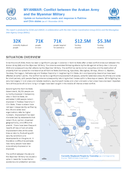
Since the end of 2018, there has been a significant upsurge in violence in Rakhine State after armed conflict broke out between the Arakan Army (AA) and the Myanmar Military. The violence escalated following attacks by the AA against military sites in January 2019 and subsequent counter-attacks by t
...
This Guidance Note is meant to help protection cluster coordinators apply nexus approaches in a practical way by, providing concrete steps and means to address prevalent or longstanding protection issues, risk patterns, trends and chronic vulnerabil
...
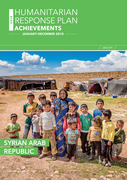
The 2018 Humanitarian Response Plan (HRP) aimed to assist 10.5 million people with direct assistance and 11.2 million people with improved access to basic services. In an effort to meet humanitarian needs, humanitarian partners provided various types of humanitarian life-saving and life-sustaining
...
The steps reassert the sequence of the HPC, with needs analysis directly informing decisions about the response and monitoring, whether for the preparation of new plans or adjustments to existing ones. The steps of the HPC have a rationale and cannot be skipped. However, the depth of work under each
...
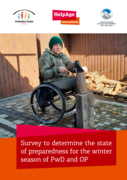
The winter season is approaching fast, while older people (OP) and people with disabilities (PwD) have already been living in the harsh environment of a full-scale war for eight months, with their basic needs and human rights at risk of being neglected and violated for eight years of ongoing war.
T
...
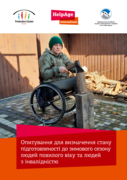
The winter season is approaching fast, while older people (OP) and people with disabilities (PwD) have already been living in the harsh environment of a full-scale war for eight months, with their basic needs and human rights at risk of being neglected and violated for eight years of ongoing war.
T
...
The humanitarian situation in the Central African Republic (CAR) has further worsened over the past six months. Election-related violence that broke out in mid-December 2020 has had a devastating effect on civilians. Thousands of people have been forced to flee, human rights violations have surged,
...
Children living in humanitarian crises face an increased risk of abuse. While the threats of harm are increasing, the established systems in place to protect them are breaking down. Faced with the COVID-19 pandemic and its impacts, vulnerable families suffer multiple hardships. Schools are closed an
...

Réduction des risques, promotion de la résilience et aide au relèvement
The Standard consists of nine key inclusion standards, and seven sets of sector-specific inclusion standards for protection – water, sanitation and hygiene, food security and livelihoods, nutrition, shelter, settlement and household items,
...
During the reporting period, 5,068 people were identified as being displaced by conflict and in need of humanitarian aid. In addition, 434 people who were affected by conflict received humanitarian assistance across the north.
