Filter
2097
Text search:
Guidelines
on
vaccination
Featured
247
542
Language
Document type
1074
367
298
132
113
45
25
21
11
5
2
2
Countries
78
73
62
50
46
44
42
42
42
37
37
33
31
31
30
29
26
23
23
22
21
19
19
19
18
17
17
16
15
14
14
14
13
13
11
11
11
10
10
10
9
9
9
8
8
8
8
8
7
7
6
6
6
6
6
6
5
5
5
5
5
5
4
4
4
4
4
3
3
3
3
3
3
3
2
2
2
2
2
2
2
2
2
2
2
2
2
2
2
2
1
1
1
1
1
1
1
1
1
1
1
1
1
1
1
1
1
1
1
1
1
1
1
1
Authors & Publishers
Publication Years
Category
820
232
127
127
83
21
20
2
2
Toolboxes
281
142
122
119
112
60
53
53
51
49
45
41
36
29
27
24
22
22
22
16
10
2
1
1


A Focus on the Journey to Self-Reliance for Preventing Child and Maternal Deaths . June 2018
The 2018 Acting on the Call report focuses on 25 ...
The 2018 Acting on the Call report focuses on 25 ...
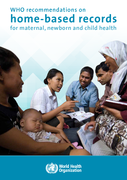
The primary audience for the guideline is policy makers and health programme managers of MNCH and immunization programmes in ministries of health where decisions are made and policies created on the use and implementation of homebased records.
The
...
Antimicrobial resistance (AMR) is a threat to human and animal health and refers to the ability of microorganisms to defy the medicines prescribed. For instance when antibiotics are used improperly, such as an incorrect dose, insufficient duration or wrong frequency, resistance is heightened. The mi
...

The main objective of this guidance is to provide scientific advice on public health principles and considerations for infection and prevention control of COVID-19 in migrant and refugee reception and detention centres in the European Union and Euro
...
21 August 2020
This guidance provides specific considerations for the use of non-medical masks, also known as fabric masks, by children as a means for source control in the context of the current COVID-19 pandemic. It also advises on the use of med
...
Background paper 8
The Independent Panel for Pandemic Preparedness and Response
May 2021

Health Care Facilities (HCFs) are primarily responsible for management of the healthcare waste generated within the facilities, including activities undertaken by them in the community. The health care facilities, while generating the waste are responsible for segregation, collection, in-house trans
...
Training on handling, storing and transporting Pfizer BioNTech COVID-19 Vaccine COMIRNATY® (Tozinameran)
recommended
4 August 2021. Currently, Pfizer BioNTech COVID-19 Vaccine COMIRNATY® (Tozinameran) is the only COVID-19 vaccine that should be stored and transported at -60ºC to -86ºC ultra-low temperature (ULT) conditions. Prior to use the vaccine can be transferred to -20ºC freezer or +2-8ºC refrigerator at
...
The OIE has been working on the AMR issue for a long
time. In undertaking its role as a standard- setting organisation*
for animal health, including zoonoses, the OIE has developed
a wide range of international standards
...
Infectious diseases continue to impose unpredictable burdens on global health and economies, a subject that requires constant research and updates. In this sense, the objective of the present article was to review studies
...

Since the beginning of the Ukraine crisis on 24 February 2022, WHO has supported Government-led efforts and initiatives alongside key partners on the ground. Building
...
The National Action Plan (NAP) has been developed based on the model recommended in the global Action Plan. Local data on on-going interventions we
...

The five hepatitis viruses have different epidemiological profiles, and their impact, duration, and transmission route also vary. The most common transmission routes contributing to the spread of hepatitis are exposure to infected blood via blood transfusion or unsafe injection practices, consumptio
...

WHO TRS N°1012.
Key updates include: (i) surveillance strategies, including cross-sectoral linking of systems and suitable diagnostics; (ii) the latest recommendations on human and animal immunization; (iii) palliative care in lowresource setting
...
This guidance note is intended primarily for health actors working in emergency and disaster risk management (hereafter 'emergency risk management') at the local, national or international level, and in governmental or nongovernmental agencies. People with disabilities, those
...


2nd edition.
T The Compendium has been developed as a clear and concise instrument to facilitate the understanding and planning of delivery of high-quality care for everybody affected by TB. It incorporates all recent policy guidance from WHO; follows the care pathway of persons with signs or sympt
...
The document describes the use of strategic information at various stages of the response in the context of strengthening broader health information systems. Strategic information can be defined as data collected at all service delivery and administrative levels to inform policy and programme decisi
...
Overwhelming evidence shows that a range of health concerns—mental illness, substance dependence, HIV/AIDS, and noncommunicable diseases—affect prisoners disproportionately. But, while incarceration poses risks to health—including inadequate nutrition and exposure to violence—prisons also pr
...
The extensive use of antimicrobials in human and veterinary medicine in recent years has accelerated the emergence and spread of resistant microorganisms. This situation has been worsened by the lack of investment in developing new effective antibiotics. The severity of the consequences is clear to
...
Antimicrobial resistance has become a serious public health threat for effective treatment of an ever increasing range of infections caused by bacteria, parasites, viruses and fungi. When infections can no longer be treated by first-line antibiotics, other antibiotics must be used, which are both mo
...
The issue of Antimicrobial resistance has become one of the most substantial health issues, prompting the World Health Assembly (WHA) to urge Member States to finalise tailor made national action plans by May 2017, aligning them with objectives of the Global Action Plan (GAP). These cover awareness,
...
The publication provides an overview and analysis of international instruments that set standards related to the use of antimicrobials across the human, animal and plant sectors, and their release into the environment. The purpose of the document is to identify existing instruments and standards in
...
Validation of elimination of mother-to-child transmission, or vertical transmission, of HIV, syphilis and hepatitis B virus (HBV), is an attestation that a country has successfully met standard criteria for elimination, or for being at 1 of the 3 levels of achievement
...
The overview of findings from five Latin American countries
Bull World Health Organ 2022;100:50–59 | doi: http://dx.doi.org/10.2471/BLT.21.286689
English Analysis on World about Agriculture, Climate Change and Environment, Epidemic and more; published on 01 Feb 2022 by Action Against Hunger
This guide presents a basis for understanding how diarrhoeal diseases are currently influenced by climate and weather, and may be further exacerbated by climate change. It is a technical guide on how to conduct a Vulnerability & Adaptation assessmen
...
Peripheral artery disease (PAD) is the most underdiagnosed, underestimated and undertreated of the atherosclerotic vascular diseases despite its poor prognosis. There may be racial or contextual differences in the Asia-Pacific region as to epidemiology, availability of diagnostic and therapeutic mod
...
About one fourth of the world’s population is estimated to have been infected with the tuberculosis (TB) bacilli, and about 5–10% of those infected develop TB disease in their lifetime. The risk for TB disease after infection depends on several
...
Evidence-to-Decision and Grade tables
Tools and practical guidance for achieving high uptake
Accountability for the global health sector strategies, 2016–2021
WHO/CDS/HIV/19.7
ECDC Technical Document
Ramped-up cancer services could save 7 million lives over the next decade—and addressing huge service gaps between rich and poor countries is key to success, according to this report.
In 2019, over 90% of high-income countries reported that comprehensive cancer treatment services were available
...
The global tripartite self-assessment survey of country progress in addressing antimicrobial resistance (AMR) is a component of a broader approach for monitoring and evaluation of the global action plan on AMR. This report analyses the results of th
...
The global tripartite self-assessment survey of country progress in addressing antimicrobial resistance (AMR) is a component of a broader approach for monitoring and evaluation of the global action plan on AMR. This report analyses the results of th
...
Sepsis contributes significantly to preventable mortality and is the final common pathway to death for severe infectious diseases; it can also arise as a complication of injuries and non-communicable diseases.

COVID-19 has heavily emphasized how contact tracing is crucial for managing outbreaks, and as part of the strategy for adjusting, and eventually lifting, lockdowns and other stringent public health and social measures. As the pandemic develops further, it will be a core measure to manage further wav
...
Abridged version. In this abridged version of the Evidence-based Clinical Practice Guidelines for the Follow-Up of at-risk neonates, we provide recommendations for the care of newborns up to 2 years of age, corresponding to the first phase of their
...
To help trainers to create awareness,attitude and skills in waste handlers in day to day management of medical waste in health care settings.
Guidance for clinical case management of thrombosis syndrome with thrombocytopenia (TTS) following vaccination to prevent coronavirus disease (COVID-19)
Interim guidance 19 July 2021
Developmental disabilities are common. Yet, children with developmental disabilities have been neglected in health systems planning and policy provisions for health and continue to experience stigmatization, institutionalization, barriers to access health care and inequalities in health and educatio
...
This publication aims to provide updated guidance on the specific use of yellow fever laboratory assays in the context of surveillance to be used across the Global Yellow Fever Laboratory Network for disease surveillance. In the recent years, new co
...
This short paper aims to identify key evidence gaps in our knowledge of livestock- and fisheries-linked antimicrobial resistance in the developing world, and to document on-going or planned research initiatives
...
Review
Drake AL et al. Journal of the International AIDS Society 2019, 22:e25271 http://onlinelibrary.wiley.com/doi/10.1002/jia2.25271/full | https://doi.org/10.1002/jia2.25271

This Commission report aims to contribute to a new era of multilateral cooperation based on strong UN institutions to reduce the dangers of COVID-19, forestall the next pandemic, and enable the world to achieve the agreed goals of sustainable develo
...
With this World Health Day, WHO is drawing attention to a group of diseases that are spread by insects and other vectors, the heavy health and economic burdens they impose, and what needs to be done to reduce these burdens. Many of these diseases have been historically confined to distinct geographi
...
This regional advocacy strategy on HIV and AIDS, tuberculosis (TB) and sexually transmitted infetions (STIs) is intended for use by Southern African Development Community (SADC) Member States at a national level. This is an overall advocacy strategy
...
The Sierra Leone National Infection Prevention and Control Guidelines were jointly developed and updated by the Ministry of Health and Sanitation in collaboration with the World Health Organization and the US Centers for Disease Control and Preventi
...

The aim of this report is to: (1) synthesize the findings from selected maternal and newborn related studies in Nepal conducted during 2011-2014, (2) identify areas of improvement in existing interventions, and (3) recommend possible strategies to fulfill such gaps.
Zambia has recognised the Public Health threat of antimicrobial resistance and its impact on morbidity and mortality, as well as the subsequent economic consequences. The country has recorded microorganisms which have developed resistance to antimic
...
Frontiers in Pediatrics | www.frontiersin.org
1 April 2019 | Volume 7 | Article 159
Member States have requested WHO policy guidance on how to facilitate the implementation of national AMS activities in an integrated and programmatic approach. This policy guidance responds to that demand from Member States and is anchored in public
...
1 in 3 countries are not taking action to help students catch up on their learning post-COVID-19 school closures
WHO operational handbook on tuberculosis Module 5: Management of tuberculosis in children and adolescents
recommended
The practical guidance in the operational handbook aims to inform the development or revision of national policies and related implementation guidance on the management of TB in children and adolescents under programmatic circumstances and at differ
...
This report contains the results of an in-depth Training Needs Assessment (TNA) of Health Workers in the 4 project counties of the republic of Kenya – Nakuru, Kisumu, Nairobi and Bungoma. The assessment, facilitated by the UPOPs Project in close collaboration with the Ministry of Health and Minist
...

Three classess of tests are now recommended in the latest consolidated guideles on tests for tuberculosis infection. It includes for the first-time a new class of Mycobacterium tuberculosis antigen-based skin tests (TBSTs), and the two existing clas
...
Mali national action plan on antimicrobial resistance: review of progress in the human health sector
This policy brief aims to provide a review of the current progress on implementing the Mali national action plan on AMR, identifies critical gaps, and highlights findings to accelerate further progr
...

Advances have been made through expanded interventions delivered through five public health approaches: innovative and intensified disease management; preventive chemotherapy; vector ecology and management; veterinary public health services; and the provision of safe water, sanitation and hygiene. I
...

The Committee discussed the implications for preparedness for smallpox-like events reflected by the ongoing COVID-19 pandemic. The Committee noted how quickly diagnostics and vaccines could be developed and deployed when resources and political will were abundant. This rapidity was also due to the f
...

This is the first NAP on the Prevention and Containment of AMR in Kenya. It has been developed based on the National Policy on Prevention and Conta
...
Barbados currently has a rudimentary framework and capacity to address the issue of antimicrobial resistance. There however needs to be coordination of efforts and improvement in areas where gaps have been identified.Actions required include improved antibiotic stewardship in healthcare settings, pr
...
This inter-agency guidance document aims to supplement the COVAX demand creation package for COVID-19 vaccines with key considerations for humanitarian contexts and marginalized populations with specific access and communication needs.
21 Sept.2021
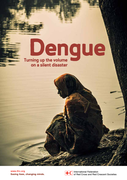
Over the past 50 years, dengue has spread from nine to over a hundred countries, making it the most rapidly spreading vector-borne disease. Yet, dengue continues to have a low profile among policy-makers and donors and does not receive the media attention it deserves. While there is no vaccine or cu
...
The objectives of the meeting were to agree on coordinated and aligned support to the 3 countries’ national health recovery plans (Guinea, Liberia, Sierra Leone); to identify cross-cutting areas and opportunities for integration; to identify ways
...

GUIDE OPÉRATIONNEL à l'usage du personnel de niveau central, intermédiaire et périphérique
Global Action Plan on Antimicrobial Resistance
recommended
The goal of the draft global action plan is to ensure, for as long as possible, continuity of successful treatment and prevention of infectious diseases with effective and safe medicines that are quality-assured, used in a responsible way, and accessible to all who need them.