
Filter
5483
Text search:
Global
health
and
environment
Featured
438
1418
Language
5270
158
121
88
72
42
35
34
8
7
7
5
5
5
5
4
4
4
3
3
3
3
3
3
3
3
3
3
3
2
2
2
2
2
2
2
2
2
1
1
1
1
1
1
1
1
1
1
1
1
1
1
1
1
1
1
1
1
1
1
Document type
2932
1129
598
303
265
95
88
29
17
12
6
5
Countries
274
171
155
109
106
106
101
99
93
93
93
82
81
80
76
75
75
72
71
68
66
52
49
47
45
43
40
36
35
34
34
34
29
27
27
26
26
24
24
23
22
22
21
21
20
20
18
18
17
16
16
15
15
14
14
14
14
13
12
12
11
10
9
8
8
8
7
7
7
7
7
7
7
6
6
6
5
5
5
5
5
5
4
4
4
4
4
4
4
4
4
4
3
3
3
3
3
3
3
3
3
2
2
2
2
2
2
2
2
2
2
2
2
2
2
2
2
2
1
1
1
1
1
1
1
1
1
1
1
1
1
1
1
1
1
1
1
1
1
Authors & Publishers
690
266
231
171
171
130
118
93
71
54
33
30
28
28
27
26
25
25
25
22
22
22
21
20
19
19
18
18
17
16
16
16
16
16
15
15
15
15
15
14
13
13
13
13
13
13
12
12
12
12
12
12
12
12
11
11
11
11
11
11
11
11
11
10
10
10
10
10
10
10
10
9
9
9
9
9
9
9
9
9
8
8
8
8
8
8
8
8
8
8
8
8
8
8
7
7
7
7
7
7
7
7
7
7
7
7
7
6
6
6
6
6
6
6
6
6
6
6
6
6
6
6
6
6
6
6
6
5
5
5
5
5
5
5
5
5
5
5
5
5
5
5
5
5
5
5
5
5
5
5
5
5
5
5
5
5
5
5
5
5
5
5
5
4
4
4
4
4
4
4
4
4
4
4
4
4
4
4
4
4
4
4
4
4
4
4
4
4
4
4
4
4
4
4
4
4
4
4
4
4
4
4
4
4
4
4
4
4
4
4
4
4
4
4
4
4
4
4
4
4
4
4
4
4
4
4
4
4
4
4
4
3
3
3
3
3
3
3
3
3
3
3
3
3
3
3
3
3
3
3
3
3
3
3
3
3
3
3
3
3
3
3
3
3
3
3
3
3
3
3
3
3
3
3
3
3
3
3
3
3
3
3
3
3
3
3
3
3
3
3
3
3
3
3
3
3
3
3
3
3
3
3
3
3
3
3
3
3
3
3
3
3
3
3
3
3
3
3
3
3
3
3
3
3
3
3
3
3
3
3
3
3
3
3
3
3
3
3
3
3
3
3
3
3
3
3
3
3
3
3
3
3
3
3
3
3
3
2
2
2
2
2
2
2
2
2
2
2
2
2
2
2
2
2
2
2
2
2
2
2
2
2
2
2
2
2
2
2
2
2
2
2
2
2
2
2
2
2
2
2
2
2
2
2
2
2
2
2
2
2
2
2
2
2
2
2
2
2
2
2
2
2
2
2
2
2
2
2
2
2
2
2
2
2
2
2
2
2
2
2
2
2
2
2
2
2
2
2
2
2
2
2
2
2
2
2
2
2
2
2
2
2
2
2
2
2
2
2
2
2
2
2
2
2
2
2
2
2
2
2
2
2
2
2
2
2
2
2
2
2
2
2
2
2
2
2
2
2
2
2
2
2
2
2
2
2
2
2
2
2
2
2
2
2
2
2
2
2
2
2
2
2
2
2
2
2
2
2
2
2
2
2
2
2
2
2
2
2
2
2
2
2
2
2
2
2
2
2
2
2
2
2
2
2
2
2
2
2
2
2
2
2
2
2
2
2
2
2
2
2
2
2
2
2
2
2
2
2
2
2
2
2
2
2
2
2
2
2
2
2
2
2
2
2
2
2
2
2
2
2
2
2
2
2
2
2
2
2
2
2
2
2
2
2
2
2
2
2
2
2
2
2
2
2
2
2
2
2
2
2
2
2
2
2
2
2
2
2
2
2
2
2
2
2
2
2
2
2
2
2
2
2
2
2
2
2
2
2
2
2
2
2
2
2
2
2
2
2
2
2
2
2
2
1
1
1
1
1
1
1
1
1
1
1
1
1
1
1
1
1
1
1
1
1
1
1
1
1
1
1
1
1
1
1
1
1
1
1
1
1
1
1
1
1
1
1
1
1
1
1
1
1
1
1
1
1
1
1
1
1
1
1
1
1
1
1
1
1
1
1
1
1
1
1
1
1
1
1
1
1
1
1
1
1
1
1
1
1
1
1
1
1
1
1
1
1
1
1
1
1
1
1
1
1
1
1
1
1
1
1
1
1
1
1
1
1
1
1
1
1
1
1
1
1
1
1
1
1
1
1
1
1
1
1
1
1
1
1
1
1
1
1
1
1
1
1
1
1
1
1
1
1
1
1
1
1
1
1
1
1
1
1
1
1
1
1
1
1
1
1
1
1
1
1
1
1
1
1
1
1
1
1
1
1
1
1
1
1
1
1
1
1
1
1
1
1
1
1
1
1
1
1
1
1
1
1
1
1
1
1
1
1
1
1
1
1
1
1
1
1
1
1
1
1
1
1
1
1
1
1
1
1
1
1
1
1
1
1
1
1
1
1
1
1
1
1
1
1
1
1
1
1
1
1
1
1
1
1
1
1
1
1
1
1
1
1
1
1
1
1
1
1
1
1
1
1
1
1
1
1
1
1
1
1
1
1
1
1
1
1
1
1
1
1
1
1
1
1
1
1
1
1
1
1
1
1
1
1
1
1
1
1
1
1
1
1
1
1
1
1
1
1
1
1
1
1
1
1
1
1
1
1
1
1
1
1
1
1
1
1
1
1
1
1
1
1
1
1
1
1
1
1
1
1
1
1
1
1
1
1
1
1
1
1
1
1
1
1
1
1
1
1
1
1
1
1
1
1
1
1
1
1
1
1
1
1
1
1
1
1
1
1
1
1
1
1
1
1
1
1
1
1
1
1
1
1
1
1
1
1
1
1
1
1
1
1
1
1
1
1
1
1
1
1
1
1
1
1
1
1
1
1
1
1
1
1
1
1
1
1
1
1
1
1
1
1
1
1
1
1
1
1
1
1
1
1
1
1
1
1
1
1
1
1
1
1
1
1
1
1
1
1
1
1
1
1
1
1
1
1
1
1
1
1
1
1
1
1
1
1
1
1
1
1
1
1
1
1
1
1
1
1
1
1
1
1
1
1
1
1
1
1
1
1
1
1
1
1
1
1
1
1
1
1
1
1
1
1
1
1
1
1
1
1
1
1
1
1
1
1
1
1
1
1
1
1
1
1
1
1
1
1
1
1
1
1
1
1
1
1
1
1
1
1
1
1
1
1
1
1
1
1
1
1
1
1
1
1
1
1
1
1
1
1
1
1
1
1
1
1
1
1
1
1
1
1
1
1
1
1
1
1
1
1
1
1
1
1
1
1
1
1
1
1
1
1
1
1
1
1
1
1
1
1
1
1
1
1
1
1
1
1
1
1
1
1
1
1
1
1
1
1
1
1
1
1
1
1
1
1
1
1
1
1
1
1
1
1
1
1
1
1
1
1
1
1
1
1
1
1
1
1
1
1
1
1
1
1
1
1
1
1
1
1
1
1
1
1
1
1
1
1
1
1
1
1
1
1
1
1
1
1
1
1
1
1
1
1
1
1
1
1
1
1
1
1
1
1
1
1
1
1
1
1
1
1
1
1
1
1
1
1
1
1
1
1
1
1
1
1
1
1
1
1
1
1
1
1
1
1
1
1
1
1
1
1
1
1
1
1
1
1
1
1
1
1
1
1
1
1
1
1
1
1
1
1
1
1
1
1
1
1
1
1
1
1
1
1
1
1
1
1
1
1
1
1
1
1
1
1
1
1
1
1
1
1
1
1
1
1
1
1
1
1
1
1
1
1
1
1
1
1
1
1
1
1
1
1
1
1
1
1
1
1
1
1
1
1
1
1
1
1
1
1
1
1
1
1
1
1
1
1
1
1
1
1
1
1
1
1
1
1
1
1
1
1
1
1
1
1
1
1
1
1
1
1
1
1
1
1
1
1
1
1
1
1
1
1
1
1
1
1
1
1
1
1
1
1
1
1
1
1
1
1
1
1
1
1
1
1
1
1
1
1
1
1
1
1
1
1
1
1
1
1
1
1
1
1
1
1
1
1
1
1
1
1
1
1
1
1
1
1
1
1
1
1
1
1
1
1
1
1
1
1
1
1
1
1
1
1
1
1
1
1
1
1
1
1
1
1
1
1
1
1
1
1
1
1
1
1
1
1
1
1
1
1
1
1
1
1
1
1
1
1
1
1
1
1
1
1
1
1
1
1
1
1
1
1
1
1
1
1
1
1
1
1
1
1
1
1
1
1
1
1
1
1
1
1
1
1
1
1
1
1
1
1
1
1
1
1
1
1
1
1
1
1
1
1
1
1
1
1
1
1
1
1
1
1
1
1
1
1
1
1
1
1
1
1
1
1
1
1
1
1
1
1
1
1
1
1
1
1
1
1
1
1
1
1
1
1
1
1
1
1
1
1
1
1
1
1
1
1
1
1
1
1
1
1
1
1
1
1
1
1
1
1
1
1
1
1
1
1
1
1
1
1
1
1
1
1
1
1
1
1
1
1
1
1
1
1
1
1
1
1
1
1
1
1
1
1
1
1
1
1
1
1
1
1
1
1
1
1
1
1
1
1
1
1
1
1
1
1
1
1
1
1
1
1
1
1
1
1
1
1
1
1
1
1
1
1
1
1
1
1
1
1
1
1
1
1
1
1
1
1
1
1
1
1
1
1
1
1
1
1
1
1
1
1
1
1
1
1
1
1
1
1
1
1
1
1
1
1
1
1
1
1
1
1
1
1
1
1
1
1
1
1
1
1
1
1
1
1
1
1
1
1
1
1
1
1
1
1
1
1
1
1
1
1
1
1
1
1
1
1
1
1
1
1
1
1
1
1
1
1
1
1
1
1
1
1
1
1
1
1
1
1
1
1
1
1
1
1
1
1
1
1
1
1
1
1
1
1
1
1
1
1
1
1
1
1
1
1
1
1
1
1
1
1
1
1
1
1
1
1
1
1
1
1
1
1
1
1
1
1
1
1
1
1
1
1
1
1
1
1
1
1
1
1
1
1
1
1
1
1
1
1
1
1
1
1
1
1
1
1
1
1
1
1
1
1
1
1
1
1
1
1
1
1
1
1
1
1
1
1
1
1
1
1
1
1
1
1
1
1
1
1
1
1
1
1
1
1
1
1
1
1
1
1
1
1
1
1
1
1
1
1
1
1
1
1
1
1
1
1
1
1
1
1
1
1
1
1
1
1
1
1
1
1
1
1
1
1
1
1
1
1
1
1
1
1
1
1
1
1
1
1
1
1
1
1
1
1
1
1
1
1
1
1
1
1
1
1
1
1
1
1
1
1
1
1
1
1
1
1
1
1
1
1
1
1
1
1
1
1
1
1
1
1
1
1
1
1
1
1
1
1
1
1
1
1
1
1
1
1
1
1
1
1
1
1
1
1
1
1
1
1
1
1
1
1
1
1
1
1
1
1
1
1
1
1
1
1
1
1
1
1
1
1
1
1
1
1
1
1
1
1
1
1
1
1
1
1
1
1
1
1
1
1
1
1
1
1
1
1
1
1
1
1
1
1
1
1
1
1
1
1
1
1
1
1
1
1
1
1
1
1
1
1
1
1
1
1
1
1
1
1
1
1
1
1
1
1
1
1
1
1
1
1
1
1
1
1
1
1
1
1
1
1
1
1
1
1
1
1
1
1
1
1
1
1
1
1
1
1
1
1
1
1
1
1
1
1
1
1
1
1
1
1
1
1
1
1
1
1
1
1
1
1
1
1
1
1
1
1
1
1
1
1
1
1
1
1
1
1
1
1
1
1
1
1
1
1
1
1
1
1
1
1
1
1
1
1
1
1
1
1
1
1
1
1
1
1
1
1
1
1
1
1
1
1
1
1
1
1
1
1
1
1
1
1
1
1
1
1
1
1
1
1
1
1
1
1
1
1
1
1
1
1
1
1
1
1
1
1
1
1
1
1
1
1
1
1
1
1
1
1
1
1
1
1
1
1
1
1
1
1
1
1
1
1
1
1
1
1
1
1
1
1
1
1
1
1
1
1
1
1
1
1
1
1
1
1
1
1
1
1
1
1
1
1
1
1
1
1
1
1
1
1
1
1
1
1
1
1
1
1
1
1
1
1
1
1
1
1
1
1
1
1
1
1
1
1
1
1
1
1
1
1
1
1
1
1
1
1
1
1
1
1
1
1
1
1
1
1
1
1
1
1
1
1
1
1
1
1
1
1
1
1
1
1
1
1
1
1
1
1
1
1
1
1
1
1
1
1
1
1
1
1
1
1
1
1
1
1
1
1
1
1
1
1
1
1
1
1
1
1
1
1
1
1
1
1
1
1
1
1
1
1
1
1
1
1
1
1
1
1
1
1
1
1
1
1
1
1
1
1
1
1
1
1
1
1
1
1
1
1
1
1
1
1
1
1
1
1
1
1
1
1
1
1
1
1
1
1
1
1
1
1
1
1
1
1
1
1
1
1
1
1
1
1
1
1
1
1
1
1
1
1
1
1
1
1
1
1
1
1
1
1
1
1
1
1
1
1
1
1
1
1
1
1
1
1
1
1
1
1
1
1
1
1
1
1
1
1
1
1
1
1
1
1
1
1
1
1
1
1
1
1
1
1
1
1
1
1
1
1
1
1
1
1
1
1
1
1
1
1
1
1
1
1
1
1
1
1
1
1
1
1
1
1
1
1
1
1
1
1
1
1
1
1
1
1
1
1
1
1
1
1
1
1
1
1
1
1
1
1
1
1
1
1
1
1
1
1
1
1
1
1
1
1
1
1
1
1
1
1
1
1
1
1
1
1
1
1
1
1
1
1
1
1
1
1
1
1
1
1
1
1
1
1
1
1
1
1
1
1
1
1
1
1
1
1
1
1
1
1
1
1
1
1
1
1
1
1
1
1
1
1
1
1
1
1
1
1
1
1
1
1
1
1
1
1
1
1
1
1
1
1
1
1
1
1
1
1
1
1
1
1
1
1
1
1
1
1
1
1
1
1
1
1
1
1
1
1
1
1
1
1
1
1
1
1
1
1
1
1
1
1
1
1
1
1
1
1
1
1
1
1
1
1
1
1
1
1
1
1
1
1
1
1
1
1
1
1
1
1
1
1
1
1
1
1
1
1
1
1
1
1
1
1
1
1
1
1
1
1
1
1
1
1
1
1
1
1
1
1
1
1
1
1
1
1
1
1
1
1
1
1
1
1
1
1
1
1
1
1
1
1
1
1
1
1
1
1
1
1
1
1
1
1
1
1
1
1
1
1
1
1
1
1
1
1
1
1
1
1
1
1
1
1
1
1
1
1
1
1
1
1
1
1
1
1
1
1
1
1
1
1
1
1
1
1
1
1
1
1
1
1
1
1
1
1
1
1
1
1
1
1
1
1
1
1
1
1
1
1
1
1
1
1
1
1
1
1
1
1
1
1
1
1
1
1
1
1
1
1
1
1
1
1
1
1
1
1
1
1
1
1
1
1
1
1
1
1
1
1
1
1
1
1
1
1
1
1
1
1
1
1
1
1
1
1
1
1
1
1
1
1
1
1
1
1
1
1
1
1
1
1
1
1
1
1
1
1
1
1
1
1
1
1
1
1
1
1
1
1
1
1
1
1
1
1
1
1
1
1
1
1
1
1
1
1
1
1
1
1
1
1
1
1
1
1
1
1
1
1
1
1
1
1
1
1
1
1
1
1
1
1
1
1
1
1
1
1
1
1
1
1
1
1
1
1
1
1
1
1
1
1
1
1
1
1
1
1
1
1
1
1
1
1
1
1
1
1
1
1
1
1
1
1
1
1
1
1
1
1
1
1
1
1
1
1
1
1
1
1
1
1
1
1
1
1
1
1
1
1
1
1
1
1
1
1
1
1
1
1
1
1
1
1
1
1
1
1
1
1
1
1
1
1
1
1
1
1
1
1
1
1
1
1
1
1
1
1
1
1
1
1
1
1
1
1
1
1
1
1
1
1
1
1
1
1
1
1
1
1
1
1
1
1
1
1
1
1
1
1
1
1
1
1
1
1
1
1
1
1
1
1
1
1
1
1
1
1
1
1
1
1
1
1
1
1
1
1
1
1
1
1
1
1
1
1
1
1
1
1
1
1
1
1
1
1
1
1
1
1
1
1
1
1
1
1
1
1
1
1
1
1
1
1
1
1
1
1
1
1
1
1
1
1
1
1
1
1
1
1
1
1
1
1
1
1
1
1
1
1
1
1
1
1
1
1
1
1
1
1
1
1
1
1
1
1
1
1
1
1
1
1
1
1
1
1
1
1
1
1
1
1
1
1
1
1
1
1
1
1
1
1
1
1
1
1
1
1
1
1
1
1
1
1
1
1
1
1
1
1
1
1
1
1
1
1
1
1
1
1
1
1
1
1
1
1
1
1
1
1
1
1
1
1
1
1
1
1
1
1
1
1
1
1
1
1
1
1
1
1
1
1
1
1
1
1
1
1
1
1
1
1
1
1
1
1
1
1
1
1
1
1
1
1
1
1
1
1
1
1
1
1
1
1
1
1
1
1
1
1
1
1
1
1
1
1
1
1
1
1
1
1
1
1
1
1
1
1
1
1
1
1
1
1
1
1
1
1
1
1
1
1
1
1
1
1
1
1
1
1
1
1
1
1
1
1
1
1
1
1
1
1
1
1
1
1
1
1
1
1
1
1
1
1
1
1
1
1
1
1
1
1
1
1
1
1
1
1
1
1
1
1
1
1
1
1
1
1
1
1
1
1
1
1
1
1
1
1
1
1
1
1
1
1
1
1
1
1
1
1
1
1
1
1
1
1
1
1
1
1
1
1
1
1
1
1
1
1
1
1
1
1
1
1
1
1
1
1
1
1
1
1
1
1
1
1
1
1
1
1
1
1
1
1
1
1
1
1
1
1
1
1
1
1
1
1
1
1
1
1
1
1
1
1
1
1
1
1
1
1
1
1
1
1
1
1
1
1
1
1
1
1
1
1
1
1
1
1
1
1
1
1
1
1
1
1
1
1
1
1
1
1
1
1
1
1
1
1
1
1
1
1
1
1
1
1
1
1
1
1
1
1
1
1
1
1
1
1
1
1
1
1
1
1
1
1
1
1
1
1
1
1
1
1
1
1
1
1
1
1
1
1
1
1
1
1
1
1
1
1
1
1
1
1
1
1
1
1
1
1
1
1
1
1
1
1
1
1
1
1
1
1
1
1
1
1
1
1
1
1
1
1
1
1
1
1
1
1
1
1
1
1
1
1
1
1
1
1
1
1
1
1
1
1
1
1
1
1
1
1
1
1
1
1
1
1
1
1
1
1
1
1
1
1
1
1
1
1
1
1
1
1
1
1
1
1
1
1
1
1
1
1
1
1
1
1
1
1
1
1
1
1
1
1
1
1
1
1
1
1
1
1
1
1
1
1
1
1
1
1
1
1
1
1
1
1
1
1
1
1
1
1
1
1
1
1
1
1
1
1
1
1
1
1
1
1
1
1
1
1
1
1
1
1
1
1
1
1
1
1
1
1
1
1
1
1
1
1
1
1
1
1
1
1
1
1
1
1
1
1
1
1
1
1
1
1
1
1
1
1
1
1
1
1
1
1
1
1
1
1
1
1
1
1
1
1
1
1
1
1
1
1
1
1
1
1
1
1
1
1
1
1
1
1
1
1
1
1
1
1
1
1
1
1
1
1
1
1
1
1
1
1
1
1
1
1
1
1
1
1
1
1
1
1
1
1
1
1
1
1
1
1
1
1
1
1
1
1
1
1
1
1
1
1
1
1
1
1
1
1
1
1
1
1
1
1
1
1
1
1
1
1
1
1
1
1
1
1
1
1
1
1
1
1
1
1
1
1
1
1
1
1
1
1
1
1
1
1
1
1
1
1
1
1
1
1
1
1
1
1
1
1
1
1
1
1
1
1
1
1
1
1
1
1
1
1
1
1
1
1
1
1
1
1
1
1
1
1
1
1
1
1
1
1
1
1
1
1
1
1
1
1
1
1
1
1
1
1
1
1
1
1
1
1
1
1
1
1
1
1
1
1
1
1
1
1
1
1
1
1
1
1
1
1
1
1
1
1
1
1
1
1
1
1
1
1
1
1
1
1
1
1
1
1
1
1
1
1
1
1
1
1
1
1
1
1
1
1
1
1
1
1
1
1
1
1
1
1
1
1
1
1
1
1
1
1
1
1
1
1
1
1
1
1
1
1
1
1
1
1
1
1
1
1
1
1
1
1
1
1
1
1
1
1
1
1
1
1
1
1
1
1
1
1
1
1
1
1
1
1
1
1
1
1
1
1
1
1
1
1
1
1
1
1
1
1
1
1
1
1
1
1
1
1
1
1
1
1
1
1
1
1
1
1
1
1
1
1
1
1
1
1
1
1
1
1
1
1
1
1
1
1
1
1
1
1
1
1
1
1
1
1
1
1
1
1
1
1
1
1
1
1
1
1
1
1
1
1
1
1
1
1
1
1
1
1
1
1
1
1
1
1
1
1
1
1
1
1
1
1
1
1
1
1
1
1
1
1
1
1
1
1
1
1
1
1
1
1
1
1
1
1
1
1
1
1
1
1
1
1
1
1
1
1
1
1
1
1
1
1
1
1
1
1
1
1
1
1
1
1
1
1
1
1
1
1
1
1
1
1
1
1
1
1
1
1
1
1
1
1
1
1
1
1
1
1
1
1
1
1
1
1
1
1
1
1
1
1
1
1
1
1
1
1
1
1
1
1
1
1
1
1
1
1
1
1
1
1
1
1
1
1
1
1
1
1
1
1
1
1
1
1
1
1
1
1
1
1
1
1
1
1
1
1
1
1
1
1
1
1
1
1
1
1
1
1
1
1
1
1
1
1
1
1
1
1
1
1
1
1
1
1
1
1
1
1
1
1
1
1
1
1
1
1
1
1
1
1
1
1
1
1
1
1
1
1
1
1
1
1
1
1
1
1
1
1
1
1
1
1
1
1
1
1
1
1
1
1
1
1
1
1
1
1
1
1
1
1
1
1
1
1
1
1
1
1
1
1
1
1
1
1
1
1
1
1
1
1
1
1
1
1
1
1
1
1
1
1
1
1
1
1
1
1
1
1
1
1
1
1
1
1
1
1
1
1
1
1
1
1
1
1
1
1
1
1
1
1
1
1
1
1
1
1
1
1
1
1
1
1
1
1
1
1
1
1
1
1
1
1
1
1
1
1
1
1
1
Publication Years
1
1
1561
3448
451
19
2
Category
1882
352
297
291
290
119
44
9
3
2
Toolboxes
440
387
367
366
285
238
188
181
174
165
151
105
103
97
94
87
72
45
33
33
31
30
20
3
2
1

During the implementation of the National Strategic Plan 2009–2012 on HIV and AIDS, Rwanda has continued its progress towards universal access to HIV and AIDS services. The new HIV
...
and AIDS National Strategic Plan July 2013–June 2018 (thereafter referred to as ‘the NSP’) presented here is set on pursuing the same objective, with inspiration from the global targets of “zero new HIV infections, zero HIV-related deaths and zero stigma and discrimination due to HIV”.
more
Contact tracing and quarantine in the context of COVID-19: interim guidance, 6 July 2022
recommended
Contact tracing for COVID-19 is the process of identifying, assessing, and managing people who have been exposed to someone who has been infected with the SARS-CoV-2 virus, while quarantine is the separation of contacts from other people after expos
...
ure to a probable or confirmed case of SARS-CoV-2 infection. In the context of growing global population immunity from COVID-19 vaccination and past SARS-CoV-2 infection, WHO recommends that identification, contact, quarantine and follow-up should be prioritized for individuals at high risk who have been in contact with a confirmed or probable case of SARS-CoV-2 infection, rather than targeting all contacts. This updated guidance also introduces shorter recommended quarantine periods, including the ability to further shorten quarantine through the use of testing. National and local health authorities should use risk-based approaches to contact tracing and quarantine that include reviewing and adjusting to their local circumstances and disease epidemiology, population immunity, their health system’s capacities, and risk tolerance.
more
The social context of schistosomiasis and its control: an introduction and annotated bibliography
Bruun, B.; Aagaard-Hansen, J.; Watts, S.
World Health Organization WHO; Institutional Repository for Information Sharing iris
(2008)
C_WHO
Schistosomiasis is widely recognized as a disease that is socially determined. An
understanding of the social and behavioural factors linked to disease transmission and
control should play a vital
...
role in designing policies and strategies for schistosomiasis
prevention and control. To this must be added the awareness that schistosomiasis is
also a disease of poverty. It still survives in poverty-stricken, remote areas where there
is little or no safe water or sanitation, and health care is scarce or non-existent. For
a variety of complex reasons, many of which are addressed in this book, the disease
is particularly prevalent in sub-Saharan Africa, and persists in certain areas of rural
China. This concern for human behaviour in an environment of poverty echoes the
concerns of the new research priority for “diseases of poverty” identified by the
Special Programme for Research & Training in Tropical Diseases.
more
Today, the World Health Organization (WHO) is advancing the global fight against acute malnutrition in children under 5 with the launch of its new guideline on the prevention
...
and management of wasting and nutritional oedema (acute malnutrition). This milestone is a crucial response to the persistent global issue of acute malnutrition, which affects millions of children worldwide.
In 2015, the world committed to achieving the Sustainable Development Goals (SDGs), including the ambitious target of eliminating malnutrition in all of its forms by 2030. However, despite these commitments, the proportion of children with acute malnutrition has persisted at a worrying level, affecting an estimated 45 million children under five worldwide in 2022.
In 2022, approximately 7.3 million children received treatment for severe acute malnutrition (SAM). Although treatment coverage has increased, children with SAM in many of the worst affected countries are still unable to access the full necessary care for them to recover.
The Global Action Plan (GAP) on child wasting recognized the need for updated normative guidance to support governments in the prevention and management of acute malnutrition. WHO answered this call to action and developed a comprehensive guideline that provides evidence-based recommendations and good practice statements and will be followed by guidance and tools for implementation.
more

Vaccines are powerful weapons in the fight against pandemic viruses as shown by responses to both the 2009 H1N1 influenza and the COVID-19 pandemics. However, planning for accessing, allocating and
...
deploying vaccines in a pandemic situation is a complex endeavour, beset with multiple challenges at all levels – local, regional and global. The World Health Organization (WHO) and its partners have prepared this revised guidance document to assist countries update their national deployment and vaccination plans (NDVPs) by leveraging global learnings from past pandemic responses, including the recent COVID-19 vaccination effort. The development and testing of a NDVP would not only advance pandemic preparedness efforts but would also have benefits in terms of increasing national capabilities to manage other health emergencies which require emergency vaccination campaigns.
more
The report focuses on antibacterial resistance (ABR) in common bacterial pathogens. There is a major gap in knowledge about the magnitude of this problem. Antimicrobial resistance (AMR) threatens the effective revention and treatment of an ever-incr
...
easing range of infections caused by bacteria, parasites, viruses and fungi. This WHO report, produced in collaboration with Member States and other partners, provides for the first time, as accurate a picture as is presently possible of the magnitude of AMR and the current state of surveillance globally. It examines the information on AMR, in particular antibacterial resistance (ABR), at country level worldwide.
more
ABSTRACT
More than 500 million people worldwide live with cardiovascular disease (CVD). Health systems today face fundamental challenges in delivering optimal care due to ageing populations, healthcare workforce constraints, financing, availability
...
and affordability of CVD medicine, and service delivery.
Digital health technologies can help address these challenges. They may be a tool
to reach Sustainable Development Goal 3.4 and reduce premature mortality from
non-communicable diseases (NCDs) by a third by 2030. Yet, a range of fundamental barriers prevents implementation and access to such technologies. Health system governance, health provider, patient and technological factors can prevent or distort their implementation.
World Heart Federation (WHF) roadmaps aim to identify essential roadblocks on the pathway to effective prevention, detection, and treatment of CVD. Further, they aim to provide actionable solutions and implementation frameworks for local adaptation. This WHF Roadmap for digital health in cardiology identifies barriers to implementing digital health technologies for CVD and provides recommendations for overcoming them.
more
The World Health Organization (WHO) endorses the use of population-based prevalence surveys for estimating the prevalence of trachoma. In general, the prevalence of TF in children aged 1–9 years and
...
the prevalence of TT in adults aged ≥ 15 years are measured at the same time in any district being surveyed. This was the approach of the Global Trachoma Mapping Project, which undertook baseline surveys in > 1500 districts worldwide in order to provide the data required to start interventions where needed.
The survey design recommended by WHO is a two-stage cluster random sample survey, which uses probability proportional to size sampling to select 20–30 villages, and random, systematic or quasi-random sampling to select 25–30 households in each of those villages. In most surveys, everyone aged ≥ 1 year living in selected households is examined. more
The survey design recommended by WHO is a two-stage cluster random sample survey, which uses probability proportional to size sampling to select 20–30 villages, and random, systematic or quasi-random sampling to select 25–30 households in each of those villages. In most surveys, everyone aged ≥ 1 year living in selected households is examined. more
Cardiovascular, Respiratory, and Related Disorders. Disease Control Priorities, Third Edition : Volume 5
rabhakaran, Dorairaj; Anand, Shuchi; Gaziano, Thomas A.; et al.
World Health Organisation (WHO)
(2017)
CC
This volume on CVDs, renal, and respiratory disorders has particularly high value. It carries the potential to become the most effective game-changer in global
...
health by helping all countries to combat, contain, and control the biggest killer presently prowling the globe and by enabling us to reach the 2030 goals for NCDs and health overall. As one who has witnessed the epidemic of CVDs advance menacingly across the world in the past four decades, I fervently hope that the clear and convincing messages conveyed by the extensively researched and elegantly communicated analyses in this volume will be heard, heeded, and harmonized with policy and practice in all countries.
Large file: 33 MB. Please download directly from the website link.
more

This updated implementation guidance is intended for all those who set policy for, or offer care to, pregnant women, families and infants: governments; national managers of maternal and child
...
health programmes in general, and of breastfeeding- and BFHI-related programmes in particular; and health-facility managers at different levels (facility directors, medical directors, chiefs of maternity and neonatal wards). The document presents the first revision of the Ten Steps since 1989. The topic of each step is unchanged, but the wording of each one has been updated in line with the evidence-based guidelines and global public health policy.
more

At the threshold of Sustainable Development Goals (SDG) era, this document captures the remarkable achievements by Member States towards achieving MDGs 4 and 5. It acknowledges new opportunities in the post-2015 phase shaped by the SDGs
...
and the Global Strategy for women’s, children’s and adolescents’ health and presents an advanced state of preparedness in the Region. This also highlights the region’s renewed commitment for a more inclusive and more dynamic flagship action for ending preventable maternal, newborn and child mortality as well as to improve women’s, children’s and adolescents’ health and wellbeing in the South-East Asia Region.
more
This analytical report reviews and discusses the potential role and influence of political commitment in implementing endorsements and conducting p
...
olicy in the field of tuberculosis (TB) prevention and care. It promotes discussion by comparing and analysing the extent to which selected international commitments, set out in declarations and other committal documents between 2000 and 2018, may have translated into sustainable action. This reflection is relevant and timely, as the United Nations high-level meeting (UNHLM) on TB recently took place, offering countries the opportunity to take stock of progress made, refocus efforts, and step up global commitments to achieve the United Nations Sustainable Development Goal of eliminating TB by 2030
more
While there has been real progress in addressing the burden of disease in the WHO African region, the COVID-19 pandemic has highlighted the link between health, economics and security, as the region
...
saw decades of progress threatened, including positive trends in decreasing inequality. In the African Region the momentum towards achieving the 2030 SDG disease burden reduction targets (SDG targets 3.3, 3.4 and 3B) has stalled.
The COVID-19 pandemic was also a major threat to gains made, such as the eradication of polio in the region, declared in 2020; reduced numbers of new HIV infections in 2021 compared to 2010; and passing the 2020 milestone of the End TB Strategy, with a 22% reduction in new cases compared with 2015. However, the pandemic also disrupted essential health services in 92% of countries globally, 22.7 million children missed basic immunization, there was an increase in malaria and TB, and global deaths from TB rose for the first time since 2015.
more

Guideline on Inclusive Disaster Risk Reduction: Early Warning and Accessible Broadcasting
Dion, Betty; Qureshi, Aqeel
Global Alliance on Accessible Technologies and Environments (GAATES), Asia Pacific Broadcasting Union, Asia Disaster Preparedness Center
(2014)
C1
- Build community resilience to coastal hazards by improving capacity of inclusive disaster management systems.
- Reduce the mortality rate of persons with disabilities in situations of risk.
- Raise awareness about inclusive policies, practices ... and disaster risk reduction strategies that address the accessibility of communication, shelter, transportation and early warning systems.
- Foster collaboration between disaster preparedness organizations, broadcasters and organizations of persons with disabilities to mainstreaming disability issues in disaster risk reduction strategies.
- Build the capacity of disaster management organizations, governments, broadcasters and built environment practitioners by providing technical specifications on accessible communications and the design of accessible shelters and the built environment. more
- Reduce the mortality rate of persons with disabilities in situations of risk.
- Raise awareness about inclusive policies, practices ... and disaster risk reduction strategies that address the accessibility of communication, shelter, transportation and early warning systems.
- Foster collaboration between disaster preparedness organizations, broadcasters and organizations of persons with disabilities to mainstreaming disability issues in disaster risk reduction strategies.
- Build the capacity of disaster management organizations, governments, broadcasters and built environment practitioners by providing technical specifications on accessible communications and the design of accessible shelters and the built environment. more
The key to a lasting world free of all forms of poliovirus lies in rapidly interrupting all remaining endemic transmission of WPV in the endemic areas of Pakistan and Afghanistan. This is the only way to ensure that such strains do not re-emerge glo
...
bally through international spread. It lays the cornerstone for the eventual cessation of all oral polio vaccine use, in order to eliminate the long-term risks associated with variant poliovirus strains, which is the GPEI’s top operational priority. The target for certifying the
world free of all WPV remains end-2026.
more

An estimated 59 000 people die from rabies each year. That’s one person every nine minutes of every day, 40% of whom are children living in Asia and Africa. As dog bites cause almost all human cases, we can prevent rabies deaths by increasing awar
...
eness, vaccinating dogs to prevent the disease at its source and administering life-saving treatment after people have been bitten. We have the vaccines, medicines, tools and technologies to prevent people from dying from dog-mediated rabies. For a relatively low cost it is possible to break the disease cycle and save lives
more
2nd edition. The 2018 Roadmap incorporates an additional critical population: adolescents. Despite making up 1 in 6 of the world’s people, adolescents have been largely overlooked as global momentum to address TB has grown. Spanning the ages of 10
...
–19 years, adolescents are both at risk of TB and represent an important population for TB control. They often present with infectious TB and frequently have multiple contacts in congregate settings, such as schools and other educational institutions. Nevertheless, few countries capture TB data in suitably age-disaggregated ways to allow full understanding of its impact in this group and even fewer provide the adolescent-friendly services our young people need to access diagnosis and care.
more

Soil-transmitted helminths are a group of intestinal worms that include Ascaris lumbricoides (giant roundworm), Trichuris trichiura (whipworm), and Ancylostoma spp. (A. duodenale, A. ceylanicum) and
...
Necator americanus (hookworms). Despite the clear biological differences among the different species, their transmission is characterized by the same sequence of events: (i) infected individuals excrete worm eggs through their stool in soil; (ii) under optimal conditions of moisture and temperature the excreted eggs develop into infectious stages; and (iii) finally, infection occurs through oral uptake (Ascaris, Ancylostoma and Trichuris) or skin penetration (Ancylostoma and Necator) of these infectious stages (embryonated eggs and third stage larvae) that reside in the soil and/or in the environment (referring to their common name).
more
This guide includes information relevant for tuberculosis (TB) program and laboratory managers, as well as Ministry of Health officials across disease programs interested in establishing integrated
...
solutions for specimen referral. Though TB-focused in name, it offers integration-oriented assessment, design, and monitoring guidance related to improving coordination and efficiency, and is relevant for other programs as well. Country case studies include viral load and early infant diagnosis (EID) in Uganda and EID in Ethiopia.
more
3rd edition. In 2001, Uganda adapted the Integrated Disease Surveillance and Response (IDSR) developed by World Health Organization (WHO) for member states in African region. The Ministry of
...
Health has been implementing the IDSR strategy since then with success across the country. This strategy provides the opportunity for rational use of resources and maximises investments in health surveillance systems. The 3rd edition IDSR guidelines incorporates lessons learnt from previous
epidemics, new frameworks like the Global Health Security Agenda (GHSA), One Health, Disaster Risk Management (DRM), the WHO regional strategy for health security and emergencies, and the rising non-communicable diseases, and aims to strengthen implementation of IHR (2005) core surveillance and response capacities. These guidelines have been adapted to reflect national priorities, policies and public health structures; and shall be used in conjunction with other similar
guidelines/strategies or initiatives.
Overall, the 3rd edition technical guidelines will incorporate the following:
• Strengthening Indicator Based Surveillance
• Strengthening Event Based Surveillance
• Improving community-based disease surveillance
• Improving Cross Border Surveillance and response
• Scaling up e-IDSR implementation
• Improving reporting and information sharing platforms
• Improved data sharing across sectors
• Tailoring IDSR to Emergency or Disaster contexts
The 3rd edition guidelines are intended for use as:
• A general reference for surveillance activities across all levels
• A set of definitions for thresholds that trigger some action for response
• A stand-alone reference for level-specific guidelines on surveillance and response
• A resource for developing training, supervision and evaluation of surveillance activities
• A guide for improving early detection and preparedness for outbreak response.
more
Pathways to progress: a multi-level approach to strengthening health systems
Samuels, F., Amaya, A.B., Rodríguez Pose, R. and Balabanova, D.
Overseas Development Institute
(2014)
C1
Findings on maternal and child health in Nepal, Mozambique and
Rwanda, and neglected tropical d
...
iseases in Cambodia and Sierra Leone | This report synthesises findings from five country case studies from the health dimension of this project, which focus on maternal and child health (MCH) (Mozambique,Nepal, Rwanda) and neglected tropical diseases (NTDs)(Cambodia, Sierra Leone). MCH was selected given its centrality in two of the Millennium Development Goals (MDGs) and its ability to act as a proxy for strengthened health systems. NTDs, while until recently relatively neglected in global policy debates, are now attracting more interest, not least because they are viewed as diseases of the poor whose treatment could positively impact on most of the other MDGs.
more
Climate change, increasing population densities, and intensified globalisation in trade, travel and migration are among the most important factors shaping the 21st century. Each impacts upon populat
...
ion health and the risk of infectious disease, particularly those originating at the human-animal-environmental interface. The recognition that many risk drivers of infectious disease fall outside of the typical domain of the health sector creates the challenge of identifying and pursuing priorities for cross-sectoral action aimed at strengthening global health security. In response, the One Health concept has emerged, as have related initiatives addressing Planetary Health and Biodiversity and Human Health. From a public health perspective and operationally speaking, the One Health approach offers great potential, emphasising as it does cooperation and coordination between multiple sectors. Yet despite having been a focal point for discussion for over a decade, numerous challenges facing the implementation of One Health preparedness strategies remain. While some are technical, related to the requirement for innovative early warning systems or new vaccines, for example, others are institutional and cultural in nature, given the transdisciplinary nature of the topic. There have thus been calls to address One Health from multiple perspectives, from ecology to the social sciences. In order to further explore this issue and to identify priority areas for action for strengthening One Health preparedness in Europe, ECDC convened an expert consultation on 11–12 December 2017.
more
Haiti, one of the poorest countries in the world, was devastated by an earthquake in 2010. The disaster uncovered the realities of a non-existent mental health care system with only ten psychiatrists nationwide. Attempts were made to assess the incr
...
eased prevalence of mental illness, likely due to the trauma to which many were exposed. Several interventions were carried out with aims to integrate mental health into primary health care services. The interplay between socio-cultural beliefs and health (both mental and physical) in Haiti has been widely commented upon by both foreign aid and local caregivers. Observations frequently highlight barriers to the willingness of patients to seek care and to their acceptance of biomedicine over traditional Vodou beliefs. The perception of Haitian beliefs as barriers to the availability and acceptance of mental health care has intensified the difficulty in providing effective recommendations and interventions both before and after the earthquake. Argued in this review is the importance of considering the interactions between socio-cultural beliefs and mental health when developing models for the prevention, screening, classification and management of mental illness in Haiti. These interactions, especially relevant in mental health care and post-disaster contexts, need to be acknowledged in any healthcare setting. The successes and failures of Haiti’s situation provide an example for global consideration.
more
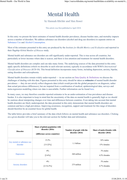
Mental health disorders remain widely under-reported — in our section on Data Quality & Definitions we discuss the challenges of dealing with this data. Figures presented in this entry should be taken as estimates of mental
...
health disorder prevalence — they do not strictly reflect diagnosis data (which would provide the global perspective on diagnosis, rather than actual prevalence differences), but are imputed from a combination of medical, epidemiological data, surveys and meta-regression modelling where raw data is unavailable. Further information can be found here.
Accessed April 15, 2019
more
Quality of care in fragile, conflict-affected and vulnerable settings: tools and resources compendium
recommended
This compendium represents a curated, pragmatic and non-prescriptive collection of tools and resources to support the implementation of interventions to improve quality of care in such contexts. Rel
...
evant tools and resources are listed under five areas: Ensuring access and basic infrastructure for quality; shaping the system environment; reducing harm; improving clinical care; and engaging and empowering patients, families and communities.
more
Joining efforts to control two trelated global epidemics.

The main objectives of these guidelines are to:
1. contribute to the quality assurance of medicinal plant materials used as the source for herbal medicines to improve the quality, safety and efficacy of finished herbal products; 2. guide the f ... ormulation of national and/or regional GACP guidelines and GACP monographs for medicinal plants and related standard operating procedures; and 3. encourage and support the sustainable cultivation and collection of medicinal plants of good quality in ways that respect and support the conservation of medicinal plants and the environment in general. These guidelines concern the cultivation and collection of medicinal plants and include certain post-harvest operations. more
1. contribute to the quality assurance of medicinal plant materials used as the source for herbal medicines to improve the quality, safety and efficacy of finished herbal products; 2. guide the f ... ormulation of national and/or regional GACP guidelines and GACP monographs for medicinal plants and related standard operating procedures; and 3. encourage and support the sustainable cultivation and collection of medicinal plants of good quality in ways that respect and support the conservation of medicinal plants and the environment in general. These guidelines concern the cultivation and collection of medicinal plants and include certain post-harvest operations. more
The Impacts of Climate Change on Human Health
in the United States: A Scientific Assessment
Climate change is a significant threat to the health of the American people. This scientific assessment
...
examines how climate change is already affecting human health and the changes that may occur in the future.
more
The Western Pacific Regional Action Plan for the Prevention and Control of Noncommunicable Diseases (2014–2020) was developed in response to a resolution adopted at the sixty-second session of the WHO Regional Committee for the Western
...
Pacific. The regional plan is fully harmonized with the Global Action Plan for the Prevention and Control of Noncommunicable Diseases (2013–2020) while adding the value of actions that build on regional achievements, contexts, opportunities and perspective
more
The State of the world’s nursing 2020 report provides the latest, most up-to-date evidence on and policy options for the global nursing workforce.
This short document summarizes the key content of the WHO report Reducing the harm from alcohol by regulating cross-border alcohol marketing, advertising and promotion. It outlines the way that alcohol is being marketed across national borders – o
...
ften by digital means – and often regardless of the social, economic or cultural environment in receiving countries. It highlights how increasingly sophisticated advertising and promotion techniques, including linking alcohol brands to sports and cultural activities, sponsorships and use of e-mails, SMS and social media, are being used to increase customer loyalty and gain new customers. The summary also explains that young people and heavy drinkers are increasingly targeted by alcohol advertising, often to the detriment of their health, and highlights the need for more effective national regulations and better international collaboration.
more
This fourth annual report monitors global progress towards the 2023 target for global elimination of industrially produced trans-fatty acids (TFA), highlighting achievements during the past year (Oc
...
tober 2021 – September 2022). Countries are responding to the World Health Organization (WHO) call to action by putting into place best-practice TFA policies. Mandatory TFA policies are currently in effect for 3.4 billion people in 60 countries (43% of the world population); of these, 43 countries have best-practice policies in effect, covering 2.8 billion people (36% of the world population).
Over the past year, several additional countries took action to eliminate industrially produced TFA: best-practice policies came into effect in India in January 2022, Uruguay in May 2022 and Oman in July 2022. Best-practice policies were passed in Bangladesh in November 2021 (to come into effect in December 2022) and in Ukraine in September 2020 (to come into effect in October 2023), best-practice TFA policies are projected to pass soon in Mexico, Nigeria and Sri Lanka.
more
Reporting period: January 2014 – December 2014
The human immunodeficiency virus (HIV) epidemic in Myanmar is concentrated among men who have sex with men (MSM), people who inject drugs (PWID) and female sex workers (FSW). HIV prevalence in th ... e adult population aged 15 years and older was estimated at 0.54% in 2014. But data from HIV Sentinel Sero-Surveillance (HSS) indicates higher prevalence in 2014 among key populations: FSW 6.3%, MSM 6.6% and PWID 23.1%. Compared to 2012 data, the prevalence has declined from 7.1% in FSW and 8.9% in MSM, but has increased from 18% in PWID.
Epidemiological modelling suggests that in 2014 there were around 212,000 people living with HIV (PLHIV) in Myanmar, 34% of whom were females. Nearly 11,000 people died of HIV-related illnesses, compared to approximately 15,000 in 2011. An estimated 9,000 new infections occurred in 2014. more
The human immunodeficiency virus (HIV) epidemic in Myanmar is concentrated among men who have sex with men (MSM), people who inject drugs (PWID) and female sex workers (FSW). HIV prevalence in th ... e adult population aged 15 years and older was estimated at 0.54% in 2014. But data from HIV Sentinel Sero-Surveillance (HSS) indicates higher prevalence in 2014 among key populations: FSW 6.3%, MSM 6.6% and PWID 23.1%. Compared to 2012 data, the prevalence has declined from 7.1% in FSW and 8.9% in MSM, but has increased from 18% in PWID.
Epidemiological modelling suggests that in 2014 there were around 212,000 people living with HIV (PLHIV) in Myanmar, 34% of whom were females. Nearly 11,000 people died of HIV-related illnesses, compared to approximately 15,000 in 2011. An estimated 9,000 new infections occurred in 2014. more
Brazil‘s Social Policy Response to Covid-19: Healthcare and Poverty Alleviation
Massard da Fonseca, E.; Arantes Beatriz, L. B.; Portella, C.
Global Dynamics of Social Policy; Deutsche Forschungsgemeinschaft
(2022)
CC
During the pandemic, Brazil has provided its citizens with support in the areas of long-term care and disability, the labor market, social assistance, education, and pensions. This report focuses on
...
two social policy areas, health-care and family benefits (including labor policies), as these were the most crucial social policies implemented in Brazil during the Covid-19 pandemic in terms of the resources allocated and the magnitude of social impact. Brazil’s relatively generous social policies were uncoordinated with public health interventions, which contributed to poor compliance with these public health interventions. This suggests that social policy initiatives alone are insufficient in mitigating the social consequences of the pandemic. They need to be accompanied by and coordinated with public health measures, including regulations on testing, social distancing and mask wearing.
more

Cholera is an acute gastrointestinal infection caused by the bacterium Vibrio Cholerae serogroup O1 or O139, and is often linked to unsafe drinking water, lack of proper sanitation and personal hygi
...
ene. It adversely affects mostly the poor and vulnerable populations in countries, which are already deprived of proper health facilities and conducive environmental conditions. The disease spreads through oro-fecal transmission by the ingestion of contaminated food or water or by person-to-person contact. It has a short incubation period of 2 hours to 5 days and the number of affected cases can rapidly increase across large regions. Cholera is a significant threat to global public health leading to an estimated 3-5 million cases per year worldwide, with an annual toll of 100,000 deaths. The disease was first reported in 1817 from the Ganges Delta of India and since then the ongoing 7th pandemic has emerged from Indonesia, reached Africa in 1970 and Somalia happens to be one of the early affected countries. Over the past few decades,
Somalia has witnessed the occurrence of repeated AWD/Cholera disease outbreaks that have caused high morbidity and mortality across the country.
more
This is an update of a seven-year TB and Leprosy national strategic plan (TBL-NSP), which extends from 2013 to 2020. The update focuses on the plan covering from 2017-20 and is based on the 2017 ext
...
ernal mid-term programme review key findings and recommendations; the global and national End TB strate-gies and targets; stakeholders consultation and recent revision of the national TB guidelines.
more
Planetary health is a transdisciplinary approach that aims to advance the understanding of the links between human-driven changes to the planet and their consequences,
...
and to develop appropriate solutions to the challenges identified. This emerging movement has not yet agreed upon a code of ethics to underpin the rapidly expanding body of research being carried out in its
name. However, a code of ethics might support the principles for planetary health set out in the Canmore Declaration of 2018. Phrases such as “Public Health 2.0”, “Human Health in an Era of Global Environmental Change”, or “A safe and just operating space for humanity” are often used in planetary health discussions, but are not always clearly defined and so far, the field lacks a strong guiding ethical framework. In this paper, we propose a starting point towards a code of ethics for planetary health that builds on the Canmore Declaration.
more

This document aims to assist countries to take the first step towards better considering gender and equity issues in their efforts to tackle antimicrobial resistance (AMR), to inform the implementation of strategies in national action plans
...
and contribute to improved reach and effectiveness of AMR efforts in the longer term. It is part of a series of papers being developed y WHO, FAO and OIE to build a better global evidence base for implementing AMR national action plans. This version is illustrated by examples from the health sector predominantly but
will be updated with advice from the food and animal sectors in due course.
more
Policy Analysis and Advocacy Decision Model for HIV-Related Services
B. Pick; D. Wolfe; D. Burrows; F. Hariga; et al.
USAID (From the American People); REPFAR; EURASIAN Harm Reduction Network; Health Policy Project
(2012)
C2
People Who Inject Drugs
In addition, the following individuals of our external expert advisory committee made instrumental contributions to the initial design and content of the document: Billy Pick, USAID; Daniel Wolfe, Open Society Foundations;
...
Dave Burrows, AIDS Projects Management Group; Fabienne Hariga, United Nations Office on Drugs and Crime; Mauro Guarinieri, the Global Fund to Fight AIDS, Tuberculosis and Malaria; Richard Needle, Office of the U.S. Global AIDS Coordinator; and Sergey Votyagov, EHRN.
more
The publication provides an overview and analysis of international instruments that set standards related to the use of antimicrobials across the human, animal and plant sectors,
...
and their release into the environment. The purpose of the document is to identify existing instruments and standards in order to guide both their implementation and to inform discussions and direction for future international instruments related to antimicrobial use.
more
The Strategic Advisory Group of Experts (SAGE) on Immunization held a meeting on 3-6 October 2022. This report summarizes the discussions, conclusions and recommendations.
It covers the following items:
...
Global Reports
Immunization Agenda 2030 and Regional reports
Monkeypox
RSV
COVID-19 vaccines
Polio vaccination
Ebola (Sudan ebolavirus outbreak update)
more
Community health worker teams are potential game-changers in ensuring access to care in vulnerable communities. Who are they? What do they actually do? Can they help South Africa realize universal health
...
coverage? As the proactive arm of the health services, community health workers teams provide household and community education, early screening, tracing and referrals for a range of health and social services. There is little local or global evidence on the household services provided by such teams, beyond specific disease-oriented activities such as for HIV and TB. This paper seeks to address this gap.
more
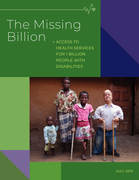
One billion people around the world live with disabilities. This report makes the case that they are being “left behind” in the global community’s work on health. This lack of access not only
...
violates the rights of people with disabilities under international law, but UHC and SDG 3 cannot be attained without better health services for the one billion people with disabilities.
more

This National Food and Nutrition Policy developed in 2013 builds on several achievements that have improved the status of nutrition and household food security in Rwanda during the past six years. T
...
he outlines ambitious but necessary strategies needed to solve serious and
persistent problems including the high prevalence of child stunting and high levels of anaemia in children and women. The NFNP also takes into account major differences in the economic development environment and the higher national and international priority placed on improving nutrition and related household food security problems in the second decade of the new millennium compared to 2007 when the country’s first National Nutrition Policy was adopted.
more
UNICEF, WHO Whole of Syria Nutrition, Cluster, the Global Nutrition Cluster, the IFE Core Group, and partners call for ALL involved in the response to the earthquakes in Syria to protect, promote,
...
and support the feeding and care of infants and young children, their caregivers, especially pregnant, postpartum, and breastfeeding women. This is critical to support maternal and child survival, growth and development, and to prevent malnutrition, illness and death. This joint statement has been issued to help secure immediate, coordinated, multi-sectoral action on infant and young child feeding (IYCF) to support and provide care for infants and their caregivers during the emergency response of the Earthquake in Syria.
more
Childhood Respiratory Diseases & the Environment learning objectives
•To understand how the respiratory tract is affected by the environment
•To describe respiratory diseases linked to the
...
environment
•To list one population-level intervention and one personal-level intervention for decreasing risk of respiratory diseases
more
The EU's air quality directives (2008/50/EC Directive on Ambient Air Quality and Cleaner Air for Europe and 2004/107/EC Directive on heavy metals and
...
polycyclic aromatic hydrocarbons in ambient air) set pollutant concentrations thresholds that shall not be exceeded in a given period of time. In case of exceedances, authorities must develop and implement air quality management plans. These plans should aim to bring concentrations of air pollutants to levels below the limit and target values.
Selected EU standards and the World Health Organization (WHO) guidelines are summarised in the table below. These apply over differing periods of time because the observed health impacts associated with the various pollutants occur over different exposure times.
The WHO guideline values are set for the protection of health, and are generally stricter than the comparable politically agreed EU standards.
more
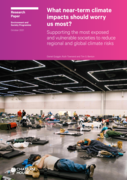
What near-term climate impacts should worry us most?
Supporting the most exposed and vulnerable societies to reduce
regional and global climate
...
risks
more
The Global Health Security Agenda programme develops national capacity to prevent zoonotic and non-zoonotic diseases while quickly
...
and effectively detecting and controlling diseases when they do emerge. The Emerging Pandemic Threats programme improves national capacity to pre-empt the emergence and re-emergence of infectious zoonotic disease and to prevent the next pandemic.
Action against emerging pandemic threats is taken through projects on: Avian influenza, Middle East respiratory syndrome, Africa Sustainable Livestock 2050 and Emergency equipment stockpile. With high-impact diseases that jump from animals to humans on the rise, these programmes are reducing the risk to lives and livelihoods from national, regional and global disease spread. more
Action against emerging pandemic threats is taken through projects on: Avian influenza, Middle East respiratory syndrome, Africa Sustainable Livestock 2050 and Emergency equipment stockpile. With high-impact diseases that jump from animals to humans on the rise, these programmes are reducing the risk to lives and livelihoods from national, regional and global disease spread. more
A Global Inventory of Alternative Medical Waste Treatment Technologies
Stop TB`s GDF provides a wide range of diagnostic equipment and laboratory supplies in its Diagnostics Catalog
his course provides an overview of the basic information relevant to FP programs and services, including rationale for voluntary FP, contraceptive method considerations, contraceptive options (including short-acting, long-acting,
...
and permanent methods), and FP for clients with special needs. It also addresses quality of services and access to care, as well as contraceptive security. Finally, the course highlights key tools to facilitate service delivery, client counseling, and provider training.
more
This document puts forward the joint position and vision of an expert, global, multistakeholder working group on implementing Kangaroo Mother Care (KMC) for all preterm or low birth weight (LBW) inf
...
ants as the foundation for small and/or sick newborn care within maternal, newborn, and child health programmes, and spur collaborative global action. The document summarizes the background information, evidence, and rationale for making KMC available to every preterm or LBW newborn and seeks to galvanize the international maternal, newborn, and child health community and families to come together to support the implementation of KMC for all preterm or LBW infants to improve their and their mothers and families health and well-being.
This position paper is intended to be used by policy-makers (i.e. those responsible for national policy, guideline development and budget allocation), development partners, programme managers, health workforce leadership, practising clinicians, civil society leadership (e.g. parent and professional organizations) and researchers/research organizations involved in KMC implementation research.
more
Severe and difficult asthma in a low- and middle-income country (LMIC) can relate to lack of availability of basic medications; potentially reversible factors such as poor adherence or comorbidities
...
such as obesity inhibiting a good response to treatment; and (rarely) true severe, therapy-resistant asthma. However, definitions of severity should encompass not merely doses of prescribed medication, but also underlying risk. The nature of asthmatic airway disease shows geographical variation, and LMIC asthma should not be assumed to be phenotypically the same as that in high-income countries (HICs). The first assessment step is to ensure another diagnosis is not being missed. Largely, political action is needed if children with asthma are to get access to basic medications. If a child is apparently not responding to low dose, simple medications, the next step is not to increase the dose but perform a detailed assessment of what factors (for example co-morbidities such as obesity, or social factors like poor adherence) are inhibiting a treatment response; in most cases, an underlying reason can be found. An assessment of risk of future severe asthma attacks, side-effects of medication and impaired lung development is also important. True severe, therapy-resistant asthma is rare and there are multiple underlying molecular pathologies. In HICs, steroid-resistant eosinophilia would be treated with omalizumab or mepolizumab, but the cost of these is prohibitive in LMICs, the biomarkers of successful therapy are likely only relevant to HICs. In LMICs, a raised blood eosinophil count may be due to parasites, so treating asthma based on the blood eosinophil count may not be appropriate in these settings.
more
The COVID-19 pandemic is a rapidly evolving global crisis and there
is much that is still emerging in terms of the psychosocial and mental
...
health consequences for the diverse populations affected by this
emergency. This toolkit is based on what is currently available and
will be updated as additional resources become available.
more
The Lancet Global Health Volume 9, ISSUE 3, e361-e365, March 01, 2021
The public health community has tried for decades to show, through evidence-
...
based research, that safe water, sanitation, and hygiene (WASH) and clean cooking fuels that reduce household air pollution are essential to safeguard health and save lives in low-income and middle-income countries. In the past 40 decades, there have been many innovations in the development of low-cost and efficacious technologies for WASH and household air pollution, but many of these technologies have been associated with disappointing health outcomes, often because low-income households have either not adopted, or inconsistently adopted, these technologies.
more
The GFF needs an additional US$2.5 billion from 2021 to 2025 to enable countries to protect health gains and accelerate progress toward the 2030 Goals. Of this amount, the GFF urgently needs to sec
...
ure new pledges of US$1.2 billion by the end of 2021 to help its current 36 partner countries protect and maintain essential health services and implement time-sensitive service delivery and health system improvements to enable a sharp bend of the curve back to a positive trajectory to close the gap to the SDGs.
more
In concordance with the global and WHO activities on ARC, the Ministry of Health and Family Welf
...
are (MoHFW) in Bangladesh has come forward and initiative was taken to conduct program for containment of antimicrobial resistance in Bangladesh. Director, Disease Control and Line Director, Communicable Disease Control, DGHS was selected as a national focal point to coordinate the national program. Since AMR is a multi-faceted problem, conduction of activities in well-coordinated manner through One Health approach is very important.
more
English Manual and Guideline on World about Food and Nutrition, Health and Epidemic; published o
...
n 30 Nov 2021 by USAID
more
Practically, planetary health presents a new way to approach and solve problems. For example, there is
alignment at the highest levels with global
...
policy frameworks – primarily the Convention on Biological
Diversity Aichi Biodiversity Targets, the Paris Climate Agreement, and the Sustainable Development
Goals – which will require collaboration across sectors to make progress. While this alignment validates
integrated concepts like planetary health, it also highlights the need for these concepts to be much
more actionable, so that they can be easily taken up by government decision makers as a way to
achieve goals.
more
Communications and outreach to policy-makers and the wider public are essential to mobilize and sustain support for policy solutions to air polluti
...
on and bring the needed health, environment and economic benefits.
more

The Millennium Development Goals (MDGs) showed
that global commitment and collective action
could significantly reduce the disease burdens of
three deadly communicable diseases: HIV/AIDS,
tuberc
...
ulosis (TB) and malaria. The MDGs helped
focus efforts on these three deadly diseases
and leveraged disease-specific programmes and
financing, thus achieving significant progress.
more
Climate change is a verified, global phenomenon, but its consequences will not be evenly distributed. Developing countries and small island nations will be the most affected. Countries will experien
...
ce more frequent extreme weather events and resulting changes in water quality and availability, increased contamination of air, and food security problems. Health impact due to climate change include diarrhoeal diseases, vector-borne diseases, heat stress, malnutrition, deaths and injuries due to extreme weather events and mental stress.
more
The National Action Plan (NAP) has been developed based on the model recommended in the global Action Plan. Local data on on-going interventions were collected from technical informants in the various areas of work. These were analysed using the pol
...
icy framework provided by the AMR policy document. Interventions were developed to address gaps in all five objectives of the global Action Plan. Further consultations were done to ensure that the recommended interventions were feasible, valid and relevant within the systemic contexts pertaining to the various affected sectors.
more
National Action Plan on Antimicrobial Resistance/Afghanistan
Ministry of Public Health, Afghanistan
Food and Agriculture Organization of the United Nations FAO
(2017)
C2
AMR is one of the Key priority of the global health security agenda action package, as well as it is one of the commitments of Ministry of Public Health
...
Afghanistan to combat AMR. In Afghanistan because of war and some other political issues the borders of the country are not well secured and well controlled therefore control of smuggling of medicine is a big challenge in front of the rational use of medicine. Lack of knowledge (professionals and public), poor economic state, conflict of war, presence of remote areas and etc…. are the other main challenges for this to won the battle of combating AMR.
more
This companion document to Ending the neglect to attain the Sustainable Development Goals: a road map for neglected tropical diseases 2021-2030 ("the road map") aims to support a range of stakeholders - including countries in which neglected tropical diseases (NTDs) are endemic, international organi
...
zations and non-State actors - to achieve the road map targets through a transdisciplinary, cross-cutting One Health approach. Specifically, it provides guidance on the One Health actions needed by major stakeholders and how to support a paradigm shift towards One Health in national NTD programmes. Examples of common One Health challenges and how they can be overcome as well as illustrative cases studies are provided throughout. The companion document was developed through a global consultative process involving stakeholder interviews, interactive workshops, and online public consultation.
more
As the COVID-19 pandemic continues to threaten health and food systems around the world, the 2020 Global Nutrition Report calls on governments, bus
...
inesses and civil society to step up efforts to address malnutrition in all its forms.
more
Clinical Microbiology and Infection Volume 21, Issue 5, May 2015, Pages 433-443;
The neglected zoonotic diseases (NZDs) have been all but eradicated in wealthier countries, but remain major causes of ill-
...
health and mortality across Africa, Asia, and Latin America. This neglect is, in part, a consequence of under-reporting, resulting in an underestimation of their global burden that downgrades their relevance to policy-makers and funding agencies. Increasing awareness about the causes of NZDs and how they can be prevented could reduce the incidence of many endemic zoonoses.
more
Taking a multisectoral, One Health approach is necessary to address complex health threats at the human-animal-environment interface, such as rabie
...
s, zoonotic influenza, anthrax, and Rift Valley fever. Such zoonotic diseases continue to have major impacts on health, livelihoods, and economies, and cannot be effectively addressed by one sector alone.
more
Biobehavioural Survey Guidelines - For Populations at risk for HIV
A. Abdul-Quader; M. Berry; T. Bingham; J. Burnett; et al.
Centers for Diseases Control and Prevention; UNAIDS; World Health Organization; et al.
(2017)
C_WHO
Global HIV Strategic Information Working Group
The Global Antibiotic Resistance Partnership (GARP)-Mozambique team, in partnership with the Center for Disease Dynamics, Economics & Policy (CDDEP), has produced this report as part of a solid com-mitment to develop actionable policy proposals to t
...
ackle antibiotic resistance and improve appropriate antibiotic access. It is the result of a thorough review of published and unpublished data on antibiotic resistance and a long internal consultation effort that engaged academic scientists, health professionals and other stakeholders within Mozambique.
more
Clean and sustainable household energy and appliances, for cooking, heating and lighting can improve he
...
alth, increase productivity, reduce poverty and protect the environment while addressing air pollution.
more

The Global Task Force on Cholera Control (GTFCC) launched Ending Cholera: A Global
Roadmap to 2030 (Global Roadmap) (1), a strategy that aims to
...
reduce global cholera
deaths by 90% and eliminate the disease in at least 20 countries by 2030. It is
organized according to three main axes:
• Ensuring early detection and response to contain outbreaks; (2)
• Adopting a multisectoral approach to prevent and control cholera in hotspots; and
• Establishing an effective coordination mechanism for technical support, resource
mobilization and partnership at local and global levels.
more
The objective of this guidance document is to support the public health professionals
in implementing effective surveillance of cholera in at-risk, endemic and epidemic
areas. This document has be
...
en developed by the Surveillance Working Group of the
Global Task Force for Cholera Control (GTFCC) at the World Health Organization based
on the existing documents, guidelines, tools and articles related to surveillance of
cholera disease, as well as technical discussions with experts held during GTFCC
meetings.
more
The animal health subsector within the agriculture sector is the gatekeeper of antimicrobial resistance (AMR) in livestock, aquaculture, animal products, and the immediate animal
...
environment. In support of member countries taking responsibility for and moving forward with putting AMR monitoring and surveillance in place for the animal sector, the Food and Agriculture Organization of the United Nations Regional Office for Asia and the Pacific (FAO-RAP) developed a regional AMR surveillance framework, each pillar of which is complemented by a guideline to reinforce its progressive implementation. The first of this series, Volume 1: Monitoring and surveillance of antimicrobial resistance in bacteria from healthy food animals intended for consumption, is centered on healthy animals reaching consumers and on the protection of public health.
more
A framework to implement the Agenda for the Americas on Health, Environment, and Climate Change 2021–2030

The Global Burden of Disease (GBD) study, a collaborative endeavour of the World
Health Organization (WHO), the World Bank and the Harvard School
...
of Public Health,
drew the attention of the international health community to the burden of neurological
disorders and many other chronic conditions. This study found that the burden of neurological
disorders was seriously underestimated by traditional epidemiological and health
statistical methods that take into account only mortality rates but not disability rates. The
GBD study showed that over the years the global health impact of neurological disorders
had been underestimated.
more
Injection Safety and Safe Disposal of Medical Waste National Communication Strategy and Health Care Waste Management Standard
Operating Procedures
...
(SOPs).
The overall objective of the consultancy was to review and align the three national technical and communication guiding documents on HCWM to the WHO Blue Book and other global standards and recommendations. The specific objectives of the assignment were ; to establish how well aligned the Kenya Healthcare Waste Management Guidelines, 2011, are to the WHO Blue Book on healthcare waste management, global recommendations and other global conventions on environmental protection; to establish the extent to which the Kenya Injection Safety and Safe Disposal of Medical Waste National Communication Strategy is aligned to the National Health Communication Guidelines, 2013; to determine the extent to which the current Standard Operating Procedures are aligned to the best available technologies (BAT) and best environmental practices (BEP) and international practices; and to assess current health care waste management practices at the health facilities supported by the GEF project.
more
This strategy defines the World Health Organization (WHO) vision and framework for supporting Member States to accelerate the development, implementation
...
and monitoring of their National Action Plan for Health Security (NAPHS) from 2022 to 2026. The National Action Plan for Health Security (NAPHS) are critical to ensure national capacities in health emergency prevention, preparedness, response and recovery are planned, built, strengthened and sustained in order to achieve national, regional and global health security and therefore keep the world safe, serve the vulnerable and promote health.
The strategy promotes, where existing, the use of existing national action plans for health security and not necessary the creation of an additional unique plan. This will avoid duplication and ensure maximum efficiency in domestic resourcing and operationalization efficiency while harnessing external buy-in to support national health priorities.
more

Ebola messages based on their qualitative research done in hotspot areas of Bombali and Urban Freetown, Jan-Feb 2015
INDEX-TB Guidelines - Guidelines on extra-pulmonary tuberculosis for India
Indian Council of Medical Research (ICMR), Global Health Advocates, Cochrane Infectious Diseases Group
World Health Organisation (WHO)
(2016)
C1
The main objective of these guidelines is to provide guidance on up-to-date, uniform, evidence-informed practices for suspecting, diagnosing and managing various forms of extra-pulmonary tuberculosis (EPTB) at all levels of healthcare delivery. They
...
can then contribute to the National Programme to improve detection, care and outcomes in EPTB; to help the programme with initiation of treatment, adherence and completion whilst minimizing drug toxicity and overtreatment; and contribute to practices that minimize the development of drug resistance.
more
Spread of resistance to antimicrobial agents (AMR) does not know national borders and has reached dimensions, which require immediate actions at the national, regional and
...
global levels.
Antibiotic resistance is a natural biological response to improper use of antimicrobial agents (AMA); increasing number of essential drugs, which become ineffective, contributing to selection, survival and replication of resistant strains of microorganisms. When chosen antimicrobials prove to be ineffective, the second- or third-line drugs need to be used although
in the majority of cases these drugs are more expensive, less safe and not always available.
more
Climate change presents the single biggest threat to human development, and its widespread impacts disproportionately burden the poorest and most vulnerable households in fragile
...
and rural developing contexts – particularly women and children.
According to the Intergovernmental Panel on Climate Change’s (IPCC) latest report, ‘between 2010 and 2020, droughts, floods and storms killed 15 times as many people in highly vulnerable countries, particularly in Africa — which is responsible for less than 3 percent of global emissions – than in the wealthiest countries’.
Recognising environmental degradation and climate change are key accelerators of extreme child vulnerability, World Vision (WV) approved the Environmental Stewardship Management Policy (‘the Policy’) and Guidelines (‘the Guidelines’) in 2021.
To support the implementation of the Policy and Guidelines, WV has developed this Environmental Stewardship and Climate Action Handbook (‘the Handbook’) to help offices across the WV Partnership implement best practice environmental management strategies both in the field and in our operations and facilities.
Integrating environmental stewardship and climate action into all our work – whether that be in our Area Programmes, grant projects, responses to disasters or advocacy – is critical to achieving WV’s strategy.
As a Christian organisation we are compelled to follow the ways of Jesus Christ, calling us to care for the ‘least of these’ (Matthew 25:40) – the vulnerable children who are disproportionately impacted by climate change. Our response to the degradation of the environment is not motivated by political expediency or funding – but because we are called to steward God’s creation (Genesis 1:28).
more
Female Genital Schistosomiasis (FGS) is a gynaecological disease caused by Schistosoma haematobium, a parasitic worm that is acquired by skin contact with freshwater contaminated by schistosome cerceriae. Communities in which the infection is most endemic have limited access to clean water
...
and healthcare services. Up to 150 million adolescent girls and women are estimated to be at risk of FGS and about 16–56 milion womens are living with FGS, with the majority of these in sub-Saharan Africa. The variability of these estimates points to the fact that this neglected tropical disease is not well studied and frequently not prioritized by local, regional, and global health policy makers.
more
This document outlines PAHO’s regional priorities for the year 2023 to sustain and scale up health emergency and humanitarian assistance in the A
...
mericas, with a focus on five priority countries currently facing a prolonged humanitarian crisis and recovering from recent acute emergencies: Colombia, El Salvador, Guatemala, Haiti, and Venezuela (Bolivarian Republic of). These goals align with and build on the World Health Organization’s Global Health Emergency Appeal for 2023, its principles, priorities, and strategies.
more
First Global Patient Safety Challenge Clean Care is Safer Care
The WHO Guidelines on Hand Hygiene in Health Care provide health-care workers (HCWs
...
), hospital administrators and health authorities with a thorough review of evidence on hand hygiene in health care and specific recommendations to improve practices and reduce transmission of pathogenic microorganisms to patients and HCWs. The present Guidelines are intended to be implemented in any situation in which health care is delivered either to a patient or to a specific group in a population. Therefore, this concept applies to all settings where health care is permanently or occasionally performed, such as home care by birth attendants.
more
High meat consumption, particularly red meat and processed meat, negatively affects our health, while meat production is one of the largest contributors to
...
global warming and environmental degradation. The aim of our study was to explore trends in meat consumption within the UK and the associated changes in environmental impact. We also aimed to identify any differences in intake associated with gender, ethnicity, socioeconomic status, and year of birth.
more
The arrival and rapid spread of the mosquito-borne viral disease Chikungunya across the Americas is one of the most significant public health developments of recent years, preceding
...
and mirroring the subsequent spread of Zika. Globalization in trade and travel can lead to the importation of these viruses, but climatic conditions strongly affect the efficiency of transmission in local settings. In order to direct preparedness for future outbreaks, it is necessary to anticipate global regions that could become suitable for Chikungunya transmission. Here, we present global correlative niche models for autochthonous Chikungunya transmission. These models were used as the basis for projections under the representative concentration pathway (RCP) 4.5 and 8.5 climate change scenarios. In a further step, hazard maps, which account for population densities, were produced. The baseline models successfully delineate current areas of active Chikungunya transmission. Projections under the RCP 4.5 and 8.5 scenarios suggest the likelihood of expansion of transmission-suitable areas in many parts of the world, including China, sub-Saharan Africa, South America, the United States and continental Europe. The models presented here can be used to inform public health preparedness planning in a highly interconnected world.
more
This situation analysis has gathered information about the current state of AMR, contributing factors and antimicrobial use in Zimbabwe from the human, animal, agricultural and environmental sectors
...
. Data has been gathered from different sectors such as the general public, academia, the Ministry of Health and Child Care, the Ministry of Agriculture Mechanization and Irrigation Development and the Ministry of Environment, Water and Climate. It shows that AMR is a real concern in Zimbabwe and a threat to the health outcomes of humans, to the economic productivity of the livestock industry and a risk to the environment.
more

Antimicrobials have been a critical public health tool since the discovery of penicillin in 1928, saving the lives of millions of people around the world. Today, however, the emergence of drug resistance is reversing the miracles of the past eighty
...
years, with drug choices for the treatment of many infections becoming increasingly limited, expensive, and, in some cases, non-existent.
Conscious of the public health threats of AMR to both humans, animals and the environment, the ministries of health and sanitation, agriculture forestry and food security and the environmental protection agency put together a national multi-sectoral coordinating group tasked with the responsibility of establishing mechanisms to integrate all initiatives into a single concerted action and development of the national AMR strategic plan (2018-2022). The National Strategic Plan on Antimicrobial Resistance is the first approach which addresses AMR specifically.
more
This document aims to provide global guidance on poliomyelitis (polio) surveillance in the context of the COVID-19 pandemic. It comes as a technical complement to Polio eradication programme continuity, Immunization in the context of COVID-19 pandem
...
ic frequently asked questions, and is aligned with the Global Polio Eradication Initiative (GPEI) commitment to support the COVID-19 pandemic response.
It highlights the decision making framework to guide the level of polio surveillance activities at country level including; the measures to put in place to ensure a minimum level of polio surveillance in the field and in the laboratory, and the trigger to return to normal polio function.
more
The issue of Antimicrobial resistance has become one of the most substantial health issues, prompting the World Health Assembly (WHA) to urge Member States to finalise tailor made national action pl
...
ans by May 2017, aligning them with objectives of the Global Action Plan (GAP). These cover awareness, surveillance and research, hygiene infection prevention & control, optimal use of antimicrobial medicines and economic case for sustainable investment. Indonesia, by virtue of its geographical terrain and complex interactions with diverse stakeholders, indicates a higher burden of AMR. Most of the country’s data currently relies on local studies conducted by labs and universities. To get a more accurate estimate of the situation, one has to rely on results from the Regional Resistance Surveillance Programme. By undertaking such measure, Indonesia would acquire data to detect AMR trends at a national level.
more
The report reviews progress with the task of planning and implementing measures necessary to secure a completely polio-free world. It also examines actions aimed at ensuring successful transfer of polio assets, innovations developed
...
and lessons learned to countries’ public health programmes and other global health priorities
more
Gender-based violence is a life-threatening, global health and human rights issue that violates international human rights law
...
and principles of gender equality. It is also a threat to lasting peace and an affront to our common humanity. United Nations Member States have called for urgent action to end GBV in emergencies, recognizing that in crises, the risk of GBV is heightened, particularly for women and adolescent girls.
more
The National Department of Health and Department of Agriculture, Forestry and Fisheries have collectively engaged to determine the key intervention
...
s that will form the basis for this strategy taking into account the recommendations from the WHO and OIE.
The development and implementation of a National Antimicrobial Resistance Strategy Framework that complements international efforts is a major step towards containment of the growing threat of antimicrobial resistance in human and animal health. Global partnerships need to be strengthened because the responsibility for reducing resistance is a shared one. This responsibility is not only limited to the health care sector, but calls for collaborative action in all sectors - human, animal and agriculture.
The National Antimicrobial Resistance Strategy Framework will affect South Africa’s response to this looming threat. We already have the tools and expertise to make a difference, now all we need is to work together toward a better future.
more
The framework responds to the demand from Member States and partners for guidance on how the health sector and its operational basis in
...
health systems can systematically and effectively address the challenges increasingly presented by climate variability and change. This framework has been designed in light of the increasing evidence of climate change and its associated health risks (1); global, regional and national policy mandates to protect population health (2); and a rapidly emerging body of practical experience in building health resilience to climate change (3).
more
Antibiotic resistance has been recognized as a major global health threat and optimizing prescribing is one of the most effective measures
...
to preserve the effectiveness of antibiotics. The quality of prescribing depends mostly on those prescribers belonging to clinical medical specialties having direct contact with patients. These doctors, who comprise the majority of antibiotic prescribers,undergo long-term undergraduate and postgraduate training that shapes their professional knowledge and behaviour
J Antimicrob Chemother2019;74: 3611–3618doi:10.1093/jac/dkz375 Advance Access publication 3 September 2019
more
The COVID-19 pandemic has exposed the inadequacy of investments in public health, the persistence of profound economic and social inequalities and
...
the fragility of many key global systems and approaches.
more
Human African trypanosomiasis (HAT) has been an alarming global public health issue. The disease affects mainly poor and marginalized people in low
...
-resource settings and is caused by two subspecies of haemoflagellate parasite, Trypanosoma brucei and transmitted by tsetse flies. Progress made in HAT control during the past decade has prompted increasing global dialogue on its elimination and eradication. The disease is targeted by the World Health Organization (WHO) for elimination as a public health problem by 2020 and to terminate its transmission globally by 2030, along-side other Neglected Tropical Diseases (NTD). Several methods have been used to control tsetse flies and the disease transmitted by them. Old and new tools to control the disease are available with constraints.
Currently, there are no vaccines available. Efforts towards intervention to control the disease over the past decade have seen considerable progress and remarkable success with incidence dropping progressively, reversing the upward trend of reported cases. This gives credence in a real progress in its elimination. This study reviews various control measures, progress and a highlight of control issues, vector and parasite barriers that may have been hindering progress towards its elimination.
more
