
Filter
9047
Text search:
Global
Report
Featured
658
2251
Language
8083
457
437
259
132
120
78
66
21
12
7
6
6
6
6
6
6
6
5
5
4
4
4
4
4
4
3
3
3
3
3
3
3
3
3
3
2
2
2
2
2
2
2
2
2
2
2
2
2
1
1
1
1
1
1
1
1
1
1
1
1
1
1
1
1
1
Document type
4844
1999
953
391
380
181
124
97
35
15
14
6
2
1
Countries
486
257
251
183
172
171
160
157
154
152
149
143
139
139
123
120
117
112
112
111
105
100
91
90
70
69
64
63
63
63
62
61
60
59
59
56
54
53
52
51
50
50
48
46
44
42
40
38
33
32
31
30
27
26
25
25
25
25
23
23
22
22
21
20
18
18
18
17
16
15
15
14
14
13
12
12
11
11
10
10
10
10
9
9
9
9
9
8
8
8
8
7
7
7
7
6
6
6
6
6
6
6
5
5
5
5
4
4
4
4
4
4
4
4
4
4
4
4
3
3
3
3
3
3
3
3
3
3
3
2
2
2
2
2
2
2
2
2
2
1
1
1
1
1
1
1
1
1
1
1
1
1
1
1
Authors & Publishers
1178
468
452
293
259
219
188
132
131
99
65
56
49
45
42
42
40
39
36
35
34
33
32
31
31
29
28
28
27
27
27
26
26
26
26
26
25
25
25
24
24
23
23
23
23
22
22
21
20
20
20
19
19
19
19
19
19
18
18
18
17
17
16
16
16
16
16
15
15
15
15
15
15
15
14
14
14
14
13
13
13
13
13
12
12
12
12
12
12
12
12
11
11
11
11
11
11
11
11
11
11
10
10
10
10
10
10
10
10
10
10
10
10
9
9
9
9
9
9
9
9
9
9
9
9
9
9
9
9
8
8
8
8
8
8
8
8
8
8
8
8
8
8
8
8
8
8
8
8
7
7
7
7
7
7
7
7
7
7
7
7
7
7
7
7
7
7
7
7
7
7
7
6
6
6
6
6
6
6
6
6
6
6
6
6
6
6
6
6
6
6
6
6
6
6
6
6
6
6
6
6
6
6
6
6
6
6
6
6
6
6
6
6
6
5
5
5
5
5
5
5
5
5
5
5
5
5
5
5
5
5
5
5
5
5
5
5
5
5
5
5
5
5
5
5
5
5
5
5
5
5
5
5
5
5
5
5
5
5
5
5
5
5
5
5
5
5
5
5
5
5
5
5
5
5
5
5
5
5
5
4
4
4
4
4
4
4
4
4
4
4
4
4
4
4
4
4
4
4
4
4
4
4
4
4
4
4
4
4
4
4
4
4
4
4
4
4
4
4
4
4
4
4
4
4
4
4
4
4
4
4
4
4
4
4
4
4
4
4
4
4
4
4
4
4
4
4
4
4
4
4
4
4
4
4
4
4
4
4
4
4
4
4
4
4
4
4
4
4
4
4
4
4
4
4
4
4
4
4
4
4
4
4
4
4
4
4
4
4
4
4
4
4
4
4
4
4
4
3
3
3
3
3
3
3
3
3
3
3
3
3
3
3
3
3
3
3
3
3
3
3
3
3
3
3
3
3
3
3
3
3
3
3
3
3
3
3
3
3
3
3
3
3
3
3
3
3
3
3
3
3
3
3
3
3
3
3
3
3
3
3
3
3
3
3
3
3
3
3
3
3
3
3
3
3
3
3
3
3
3
3
3
3
3
3
3
3
3
3
3
3
3
3
3
3
3
3
3
3
3
3
3
3
3
3
3
3
3
3
3
3
3
3
3
3
3
3
3
3
3
3
3
3
3
3
3
3
3
3
3
3
3
3
3
3
3
3
3
3
3
3
3
3
3
3
3
3
3
3
3
3
3
3
3
3
3
3
3
3
3
3
3
3
3
3
3
3
3
3
3
3
3
3
3
3
3
3
3
3
3
3
3
3
3
3
3
2
2
2
2
2
2
2
2
2
2
2
2
2
2
2
2
2
2
2
2
2
2
2
2
2
2
2
2
2
2
2
2
2
2
2
2
2
2
2
2
2
2
2
2
2
2
2
2
2
2
2
2
2
2
2
2
2
2
2
2
2
2
2
2
2
2
2
2
2
2
2
2
2
2
2
2
2
2
2
2
2
2
2
2
2
2
2
2
2
2
2
2
2
2
2
2
2
2
2
2
2
2
2
2
2
2
2
2
2
2
2
2
2
2
2
2
2
2
2
2
2
2
2
2
2
2
2
2
2
2
2
2
2
2
2
2
2
2
2
2
2
2
2
2
2
2
2
2
2
2
2
2
2
2
2
2
2
2
2
2
2
2
2
2
2
2
2
2
2
2
2
2
2
2
2
2
2
2
2
2
2
2
2
2
2
2
2
2
2
2
2
2
2
2
2
2
2
2
2
2
2
2
2
2
2
2
2
2
2
2
2
2
2
2
2
2
2
2
2
2
2
2
2
2
2
2
2
2
2
2
2
2
2
2
2
2
2
2
2
2
2
2
2
2
2
2
2
2
2
2
2
2
2
2
2
2
2
2
2
2
2
2
2
2
2
2
2
2
2
2
2
2
2
2
2
2
2
2
2
2
2
2
2
2
2
2
2
2
2
2
2
2
2
2
2
2
2
2
2
2
2
2
2
2
2
2
2
2
2
2
2
2
2
2
2
2
2
2
2
2
2
2
2
2
2
2
2
2
2
2
2
2
2
2
2
2
2
2
2
2
2
2
2
2
2
2
2
2
2
2
2
2
2
2
2
2
2
2
2
2
2
2
2
2
2
2
2
2
2
2
2
2
2
2
2
2
2
2
2
2
2
2
2
2
2
2
2
2
2
2
2
2
2
2
2
2
2
2
2
2
2
2
2
2
2
2
2
2
2
2
2
2
2
2
2
2
2
2
2
2
2
2
2
2
2
2
2
2
2
2
2
2
2
2
2
2
2
2
2
2
2
2
2
2
2
2
2
2
2
2
2
2
2
2
2
2
2
2
2
2
2
2
2
2
2
2
2
2
2
2
2
2
2
2
2
2
2
2
2
2
2
2
2
2
2
2
2
2
2
2
2
2
2
2
2
2
2
2
2
2
2
2
2
2
2
2
2
2
2
2
2
2
2
2
2
2
2
2
1
1
1
1
1
1
1
1
1
1
1
1
1
1
1
1
1
1
1
1
1
1
1
1
1
1
1
1
1
1
1
1
1
1
1
1
1
1
1
1
1
1
1
1
1
1
1
1
1
1
1
1
1
1
1
1
1
1
1
1
1
1
1
1
1
1
1
1
1
1
1
1
1
1
1
1
1
1
1
1
1
1
1
1
1
1
1
1
1
1
1
1
1
1
1
1
1
1
1
1
1
1
1
1
1
1
1
1
1
1
1
1
1
1
1
1
1
1
1
1
1
1
1
1
1
1
1
1
1
1
1
1
1
1
1
1
1
1
1
1
1
1
1
1
1
1
1
1
1
1
1
1
1
1
1
1
1
1
1
1
1
1
1
1
1
1
1
1
1
1
1
1
1
1
1
1
1
1
1
1
1
1
1
1
1
1
1
1
1
1
1
1
1
1
1
1
1
1
1
1
1
1
1
1
1
1
1
1
1
1
1
1
1
1
1
1
1
1
1
1
1
1
1
1
1
1
1
1
1
1
1
1
1
1
1
1
1
1
1
1
1
1
1
1
1
1
1
1
1
1
1
1
1
1
1
1
1
1
1
1
1
1
1
1
1
1
1
1
1
1
1
1
1
1
1
1
1
1
1
1
1
1
1
1
1
1
1
1
1
1
1
1
1
1
1
1
1
1
1
1
1
1
1
1
1
1
1
1
1
1
1
1
1
1
1
1
1
1
1
1
1
1
1
1
1
1
1
1
1
1
1
1
1
1
1
1
1
1
1
1
1
1
1
1
1
1
1
1
1
1
1
1
1
1
1
1
1
1
1
1
1
1
1
1
1
1
1
1
1
1
1
1
1
1
1
1
1
1
1
1
1
1
1
1
1
1
1
1
1
1
1
1
1
1
1
1
1
1
1
1
1
1
1
1
1
1
1
1
1
1
1
1
1
1
1
1
1
1
1
1
1
1
1
1
1
1
1
1
1
1
1
1
1
1
1
1
1
1
1
1
1
1
1
1
1
1
1
1
1
1
1
1
1
1
1
1
1
1
1
1
1
1
1
1
1
1
1
1
1
1
1
1
1
1
1
1
1
1
1
1
1
1
1
1
1
1
1
1
1
1
1
1
1
1
1
1
1
1
1
1
1
1
1
1
1
1
1
1
1
1
1
1
1
1
1
1
1
1
1
1
1
1
1
1
1
1
1
1
1
1
1
1
1
1
1
1
1
1
1
1
1
1
1
1
1
1
1
1
1
1
1
1
1
1
1
1
1
1
1
1
1
1
1
1
1
1
1
1
1
1
1
1
1
1
1
1
1
1
1
1
1
1
1
1
1
1
1
1
1
1
1
1
1
1
1
1
1
1
1
1
1
1
1
1
1
1
1
1
1
1
1
1
1
1
1
1
1
1
1
1
1
1
1
1
1
1
1
1
1
1
1
1
1
1
1
1
1
1
1
1
1
1
1
1
1
1
1
1
1
1
1
1
1
1
1
1
1
1
1
1
1
1
1
1
1
1
1
1
1
1
1
1
1
1
1
1
1
1
1
1
1
1
1
1
1
1
1
1
1
1
1
1
1
1
1
1
1
1
1
1
1
1
1
1
1
1
1
1
1
1
1
1
1
1
1
1
1
1
1
1
1
1
1
1
1
1
1
1
1
1
1
1
1
1
1
1
1
1
1
1
1
1
1
1
1
1
1
1
1
1
1
1
1
1
1
1
1
1
1
1
1
1
1
1
1
1
1
1
1
1
1
1
1
1
1
1
1
1
1
1
1
1
1
1
1
1
1
1
1
1
1
1
1
1
1
1
1
1
1
1
1
1
1
1
1
1
1
1
1
1
1
1
1
1
1
1
1
1
1
1
1
1
1
1
1
1
1
1
1
1
1
1
1
1
1
1
1
1
1
1
1
1
1
1
1
1
1
1
1
1
1
1
1
1
1
1
1
1
1
1
1
1
1
1
1
1
1
1
1
1
1
1
1
1
1
1
1
1
1
1
1
1
1
1
1
1
1
1
1
1
1
1
1
1
1
1
1
1
1
1
1
1
1
1
1
1
1
1
1
1
1
1
1
1
1
1
1
1
1
1
1
1
1
1
1
1
1
1
1
1
1
1
1
1
1
1
1
1
1
1
1
1
1
1
1
1
1
1
1
1
1
1
1
1
1
1
1
1
1
1
1
1
1
1
1
1
1
1
1
1
1
1
1
1
1
1
1
1
1
1
1
1
1
1
1
1
1
1
1
1
1
1
1
1
1
1
1
1
1
1
1
1
1
1
1
1
1
1
1
1
1
1
1
1
1
1
1
1
1
1
1
1
1
1
1
1
1
1
1
1
1
1
1
1
1
1
1
1
1
1
1
1
1
1
1
1
1
1
1
1
1
1
1
1
1
1
1
1
1
1
1
1
1
1
1
1
1
1
1
1
1
1
1
1
1
1
1
1
1
1
1
1
1
1
1
1
1
1
1
1
1
1
1
1
1
1
1
1
1
1
1
1
1
1
1
1
1
1
1
1
1
1
1
1
1
1
1
1
1
1
1
1
1
1
1
1
1
1
1
1
1
1
1
1
1
1
1
1
1
1
1
1
1
1
1
1
1
1
1
1
1
1
1
1
1
1
1
1
1
1
1
1
1
1
1
1
1
1
1
1
1
1
1
1
1
1
1
1
1
1
1
1
1
1
1
1
1
1
1
1
1
1
1
1
1
1
1
1
1
1
1
1
1
1
1
1
1
1
1
1
1
1
1
1
1
1
1
1
1
1
1
1
1
1
1
1
1
1
1
1
1
1
1
1
1
1
1
1
1
1
1
1
1
1
1
1
1
1
1
1
1
1
1
1
1
1
1
1
1
1
1
1
1
1
1
1
1
1
1
1
1
1
1
1
1
1
1
1
1
1
1
1
1
1
1
1
1
1
1
1
1
1
1
1
1
1
1
1
1
1
1
1
1
1
1
1
1
1
1
1
1
1
1
1
1
1
1
1
1
1
1
1
1
1
1
1
1
1
1
1
1
1
1
1
1
1
1
1
1
1
1
1
1
1
1
1
1
1
1
1
1
1
1
1
1
1
1
1
1
1
1
1
1
1
1
1
1
1
1
1
1
1
1
1
1
1
1
1
1
1
1
1
1
1
1
1
1
1
1
1
1
1
1
1
1
1
1
1
1
1
1
1
1
1
1
1
1
1
1
1
1
1
1
1
1
1
1
1
1
1
1
1
1
1
1
1
1
1
1
1
1
1
1
1
1
1
1
1
1
1
1
1
1
1
1
1
1
1
1
1
1
1
1
1
1
1
1
1
1
1
1
1
1
1
1
1
1
1
1
1
1
1
1
1
1
1
1
1
1
1
1
1
1
1
1
1
1
1
1
1
1
1
1
1
1
1
1
1
1
1
1
1
1
1
1
1
1
1
1
1
1
1
1
1
1
1
1
1
1
1
1
1
1
1
1
1
1
1
1
1
1
1
1
1
1
1
1
1
1
1
1
1
1
1
1
1
1
1
1
1
1
1
1
1
1
1
1
1
1
1
1
1
1
1
1
1
1
1
1
1
1
1
1
1
1
1
1
1
1
1
1
1
1
1
1
1
1
1
1
1
1
1
1
1
1
1
1
1
1
1
1
1
1
1
1
1
1
1
1
1
1
1
1
1
1
1
1
1
1
1
1
1
1
1
1
1
1
1
1
1
1
1
1
1
1
1
1
1
1
1
1
1
1
1
1
1
1
1
1
1
1
1
1
1
1
1
1
1
1
1
1
1
1
1
1
1
1
1
1
1
1
1
1
1
1
1
1
1
1
1
1
1
1
1
1
1
1
1
1
1
1
1
1
1
1
1
1
1
1
1
1
1
1
1
1
1
1
1
1
1
1
1
1
1
1
1
1
1
1
1
1
1
1
1
1
1
1
1
1
1
1
1
1
1
1
1
1
1
1
1
1
1
1
1
1
1
1
1
1
1
1
1
1
1
1
1
1
1
1
1
1
1
1
1
1
1
1
1
1
1
1
1
1
1
1
1
1
1
1
1
1
1
1
1
1
1
1
1
1
1
1
1
1
1
1
1
1
1
1
1
1
1
1
1
1
1
1
1
1
1
1
1
1
1
1
1
1
1
1
1
1
1
1
1
1
1
1
1
1
1
1
1
1
1
1
1
1
1
1
1
1
1
1
1
1
1
1
1
1
1
1
1
1
1
1
1
1
1
1
1
1
1
1
1
1
1
1
1
1
1
1
1
1
1
1
1
1
1
1
1
1
1
1
1
1
1
1
1
1
1
1
1
1
1
1
1
1
1
1
1
1
1
1
1
1
1
1
1
1
1
1
1
1
1
1
1
1
1
1
1
1
1
1
1
1
1
1
1
1
1
1
1
1
1
1
1
1
1
1
1
1
1
1
1
1
1
1
1
1
1
1
1
1
1
1
1
1
1
1
1
1
1
1
1
1
1
1
1
1
1
1
1
1
1
1
1
1
1
1
1
1
1
1
1
1
1
1
1
1
1
1
1
1
1
1
1
1
1
1
1
1
1
1
1
1
1
1
1
1
1
1
1
1
1
1
1
1
1
1
1
1
1
1
1
1
1
1
1
1
1
1
1
1
1
1
1
1
1
1
1
1
1
1
1
1
1
1
1
1
1
1
1
1
1
1
1
1
1
1
1
1
1
1
1
1
1
1
1
1
1
1
1
1
1
1
1
1
1
1
1
1
1
1
1
1
1
1
1
1
1
1
1
1
1
1
1
1
1
1
1
1
1
1
1
1
1
1
1
1
1
1
1
1
1
1
1
1
1
1
1
1
1
1
1
1
1
1
1
1
1
1
1
1
1
1
1
1
1
1
1
1
1
1
1
1
1
1
1
1
1
1
1
1
1
1
1
1
1
1
1
1
1
1
1
1
1
1
1
1
1
1
1
1
1
1
1
1
1
1
1
1
1
1
1
1
1
1
1
1
1
1
1
1
1
1
1
1
1
1
1
1
1
1
1
1
1
1
1
1
1
1
1
1
1
1
1
1
1
1
1
1
1
1
1
1
1
1
1
1
1
1
1
1
1
1
1
1
1
1
1
1
1
1
1
1
1
1
1
1
1
1
1
1
1
1
1
1
1
1
1
1
1
1
1
1
1
1
1
1
1
1
1
1
1
1
1
1
1
1
1
1
1
1
1
1
1
1
1
1
1
1
1
1
1
1
1
1
1
1
1
1
1
1
1
1
1
1
1
1
1
1
1
1
1
1
1
1
1
1
1
1
1
1
1
1
1
1
1
1
1
1
1
1
1
1
1
1
1
1
1
1
1
1
1
1
1
1
1
1
1
1
1
1
1
1
1
1
1
1
1
1
1
1
1
1
1
1
1
1
1
1
1
1
1
1
1
1
1
1
1
1
1
1
1
1
1
1
1
1
1
1
1
1
1
1
1
1
1
1
1
1
1
1
1
1
1
1
1
1
1
1
1
1
1
1
1
1
1
1
1
1
1
1
1
1
1
1
1
1
1
1
1
1
1
1
1
1
1
1
1
1
1
1
1
1
1
1
1
1
1
1
1
1
1
1
1
1
1
1
1
1
1
1
1
1
1
1
1
1
1
1
1
1
1
1
1
1
1
1
1
1
1
1
1
1
1
1
1
1
1
1
1
1
1
1
1
1
1
1
1
1
1
1
1
1
1
1
1
1
1
1
1
1
1
1
1
1
1
1
1
1
1
1
1
1
1
1
1
1
1
1
1
1
1
1
1
1
1
1
1
1
1
1
1
1
1
1
1
1
1
1
1
1
1
1
1
1
1
1
1
1
1
1
1
1
1
1
1
1
1
1
1
1
1
1
1
1
1
1
1
1
1
1
1
1
1
1
1
1
1
1
1
1
1
1
1
1
1
1
1
1
1
1
1
1
1
1
1
1
1
1
1
1
1
1
1
1
1
1
1
1
1
1
1
1
1
1
1
1
1
1
1
1
1
1
1
1
1
1
1
1
1
1
1
1
1
1
1
1
1
1
1
1
1
1
1
1
1
1
1
1
1
1
1
1
1
1
1
1
1
1
1
1
1
1
1
1
1
1
1
1
1
1
1
1
1
1
1
1
1
1
1
1
1
1
1
1
1
1
1
1
1
1
1
1
1
1
1
1
1
1
1
1
1
1
1
1
1
1
1
1
1
1
1
1
1
1
1
1
1
1
1
1
1
1
1
1
1
1
1
1
1
1
1
1
1
1
1
1
1
1
1
1
1
1
1
1
1
1
1
1
1
1
1
1
1
1
1
1
1
1
1
1
1
1
1
1
1
1
1
1
1
1
1
1
1
1
1
1
1
1
1
1
1
1
1
1
1
1
1
1
1
1
1
1
1
1
1
1
1
1
1
1
1
1
1
1
1
1
1
1
1
1
1
1
1
1
1
1
1
1
1
1
1
1
1
1
1
1
1
1
1
1
1
1
1
1
1
1
1
1
1
1
1
1
1
1
1
1
1
1
1
1
1
1
1
1
1
1
1
1
1
1
1
1
1
1
1
1
1
1
1
1
1
1
1
1
1
1
1
1
1
1
1
1
1
1
1
1
1
1
1
1
1
1
1
1
1
1
1
1
1
1
1
1
1
1
1
1
1
1
1
1
1
1
1
1
1
1
1
1
1
1
1
1
1
1
1
1
1
1
1
1
1
1
1
1
1
1
1
1
1
1
1
1
1
1
1
1
1
1
1
1
1
1
1
1
1
1
1
1
1
1
1
1
1
1
1
1
1
1
1
1
1
1
1
1
1
1
1
1
1
1
1
1
1
1
1
1
1
1
1
1
1
1
1
1
1
1
1
1
1
1
1
1
1
1
1
1
1
1
1
1
1
1
1
1
1
1
1
1
1
1
1
1
1
1
1
1
1
1
1
1
1
1
1
1
1
1
1
1
1
1
1
1
1
1
1
1
1
1
1
1
1
1
1
1
1
1
1
1
1
1
1
1
1
1
1
1
1
1
1
1
1
1
1
1
1
1
1
1
1
1
1
1
1
1
1
1
1
1
1
1
1
1
1
1
1
1
1
1
1
1
1
1
1
1
1
1
1
1
1
1
1
1
1
1
1
1
1
1
1
1
1
1
1
1
1
1
1
1
1
1
1
1
1
1
1
1
1
1
1
1
1
1
1
1
1
1
1
1
1
1
1
1
1
1
1
1
1
1
1
1
1
1
1
1
1
1
1
1
1
1
1
1
1
1
1
1
1
1
1
1
1
1
1
1
1
1
1
1
1
1
1
1
1
1
1
1
1
1
1
1
1
1
1
1
1
1
1
1
1
1
1
1
1
1
1
1
1
1
1
1
1
1
1
1
1
1
1
1
1
1
1
1
1
1
1
1
1
1
1
1
1
1
1
1
1
1
1
1
1
1
1
1
1
1
1
1
1
1
1
1
1
1
1
1
1
1
1
1
1
1
1
1
1
1
1
1
1
1
1
1
1
1
1
1
1
1
1
1
1
1
1
1
1
1
1
1
1
1
1
1
1
1
1
1
1
1
1
1
1
1
1
1
1
1
1
1
1
1
1
1
1
1
1
1
1
1
1
1
1
1
1
1
1
1
1
1
1
1
1
1
1
1
1
1
1
1
1
1
1
1
1
1
1
1
1
1
1
1
1
1
1
1
1
1
1
1
1
1
1
1
1
1
1
1
1
1
1
1
1
1
1
1
1
1
1
1
1
1
1
1
1
1
1
1
1
1
1
1
1
1
1
1
1
1
1
1
1
1
1
1
1
1
1
1
1
1
1
1
1
1
1
1
1
1
1
1
1
1
1
1
1
1
1
1
1
1
1
1
1
1
1
1
1
1
1
1
1
1
1
1
1
1
1
1
1
1
1
1
1
1
1
1
1
1
1
1
1
1
1
1
1
1
1
1
1
1
1
1
1
1
1
1
1
1
1
1
1
1
1
1
1
1
1
1
1
1
1
1
1
1
1
1
1
1
1
1
1
1
1
1
1
1
1
1
1
1
1
1
1
1
1
1
1
1
1
1
1
1
1
1
1
1
1
1
1
1
1
1
1
1
1
1
1
1
1
1
1
1
1
1
1
1
1
1
1
1
1
1
1
1
1
1
1
1
1
1
1
1
1
1
1
1
1
1
1
1
1
1
1
1
1
1
1
1
1
1
1
1
1
1
1
1
1
1
1
1
1
1
1
1
1
1
1
1
1
1
1
1
1
1
1
1
1
1
1
1
1
1
1
1
1
1
1
1
1
1
1
1
1
1
1
1
1
1
1
1
1
1
1
1
1
1
1
1
1
1
1
1
1
1
1
1
1
1
1
1
1
1
1
1
1
1
1
1
1
1
1
1
1
1
1
1
1
1
1
1
1
1
1
1
1
1
1
1
1
1
1
1
1
1
1
1
1
1
1
1
1
1
1
1
1
1
1
1
1
1
1
1
1
1
1
1
1
1
1
1
1
1
1
1
1
1
1
1
1
1
1
1
1
1
1
1
1
1
1
1
1
1
1
1
1
1
1
1
1
1
1
1
1
1
1
1
1
1
1
1
1
1
1
1
1
1
1
1
1
1
1
1
1
1
1
1
1
1
1
1
1
1
1
1
1
1
1
1
1
1
1
1
1
1
1
1
1
1
1
1
1
1
1
1
1
1
1
1
1
1
1
1
1
1
1
1
1
1
1
1
1
1
1
1
1
1
1
1
1
1
1
1
1
1
1
1
1
1
1
1
1
1
1
1
1
1
1
1
1
1
1
1
1
1
1
1
1
1
1
1
1
1
1
1
1
1
1
1
1
1
1
1
1
1
1
1
1
1
1
1
1
1
1
1
1
1
1
1
1
1
1
1
1
1
1
1
1
1
1
1
1
1
1
1
1
1
1
1
1
1
1
1
1
1
1
1
1
1
1
1
1
1
1
1
1
1
1
1
1
1
1
1
1
1
1
1
1
1
1
1
1
1
1
1
1
1
1
1
1
1
1
1
1
1
1
1
1
1
1
1
1
1
1
1
1
1
1
1
1
1
1
1
1
1
1
1
1
1
1
1
1
1
1
1
1
1
1
1
1
1
1
1
1
1
1
1
1
1
1
1
1
1
1
1
1
1
1
1
1
1
1
1
1
1
1
1
1
1
1
1
1
1
1
1
1
1
1
1
1
1
1
1
1
1
1
1
1
1
1
1
1
1
1
1
1
1
1
1
1
1
1
1
1
1
1
1
1
1
1
1
1
1
1
1
1
1
1
1
1
1
1
1
1
1
1
1
1
1
1
1
1
1
1
1
1
1
1
1
1
1
1
1
1
1
1
1
1
1
1
1
1
1
1
1
1
1
1
1
1
1
1
1
1
1
1
1
1
1
1
1
1
1
1
1
1
1
1
1
1
1
1
1
1
1
1
1
1
1
1
1
1
1
1
1
1
1
1
1
1
1
1
1
1
1
1
1
1
1
1
1
1
1
1
1
1
1
1
1
1
1
1
1
1
1
1
1
1
1
1
1
1
1
1
1
1
1
1
1
1
1
1
1
1
1
1
1
1
1
1
1
1
1
1
1
1
1
1
1
1
1
1
1
1
1
1
1
1
1
1
1
1
1
1
1
1
1
1
1
1
1
1
1
1
1
1
1
1
1
1
1
1
1
1
1
1
1
1
1
1
1
1
1
1
1
1
1
1
1
1
1
1
1
1
1
1
1
1
1
1
1
1
1
1
1
1
1
1
1
1
1
1
1
1
1
1
1
1
1
1
1
1
1
1
1
1
1
1
1
1
1
1
1
1
1
1
1
1
1
1
1
1
1
1
1
1
1
1
1
1
1
1
1
1
1
1
1
1
1
1
1
1
1
1
1
1
1
1
1
1
1
1
1
1
1
1
1
1
1
1
1
1
1
1
1
1
1
1
1
1
1
1
1
1
1
1
1
1
1
1
1
1
1
1
1
1
1
1
1
1
1
1
1
1
1
1
1
1
1
1
1
1
1
1
1
1
1
1
1
1
1
1
1
1
1
1
1
1
1
1
1
1
1
1
1
1
1
1
1
1
1
1
1
1
1
1
1
1
1
1
1
1
1
1
1
1
1
1
1
1
1
1
1
1
1
1
1
1
1
1
1
1
1
1
1
1
1
1
1
1
1
1
1
1
1
1
1
1
1
1
1
1
1
1
1
1
1
1
1
1
1
1
1
1
1
1
1
1
1
1
1
1
1
1
1
1
1
1
1
1
1
1
1
1
1
1
1
1
1
1
1
1
1
1
1
1
1
1
1
1
1
1
1
1
1
1
1
1
1
1
1
1
1
1
1
1
1
1
1
1
1
1
1
1
1
1
1
1
1
1
1
1
1
1
1
1
1
1
1
1
1
1
1
1
1
1
1
1
1
1
1
1
1
1
1
1
1
1
1
1
1
1
1
1
1
1
1
1
1
1
1
1
1
1
1
1
1
1
1
1
1
1
1
1
1
1
1
1
1
1
1
1
1
1
1
1
1
1
1
1
1
1
1
1
1
1
1
1
1
1
1
1
1
1
1
1
1
1
1
1
1
1
1
1
1
1
1
1
1
1
1
1
1
1
1
1
1
1
1
1
1
1
1
1
1
1
1
1
1
1
1
1
1
1
1
1
1
1
1
1
1
1
1
1
1
1
1
1
1
1
1
1
1
1
1
1
1
1
1
1
1
1
1
1
1
1
1
1
1
1
1
1
1
1
1
1
1
1
1
1
1
1
1
1
1
1
1
1
1
1
1
1
1
1
1
1
1
1
1
1
1
1
1
1
1
1
1
1
1
1
1
1
1
1
1
1
1
1
1
1
1
1
1
1
1
1
1
1
1
1
1
1
1
1
1
1
1
1
1
1
1
1
1
1
1
1
1
1
1
1
1
1
1
1
1
1
1
1
1
1
1
1
1
1
1
1
1
1
1
1
1
1
1
1
1
1
1
1
1
1
1
1
1
1
1
1
1
1
1
1
1
1
1
1
1
1
1
1
1
1
1
1
1
1
1
1
1
1
1
1
1
1
1
1
1
1
1
1
1
1
1
1
1
1
1
1
1
1
1
1
1
1
1
1
1
1
1
1
1
1
1
1
1
1
1
1
1
1
1
1
1
1
1
1
1
1
1
1
1
1
1
1
1
1
1
1
1
1
1
1
1
1
1
1
1
1
1
1
1
1
1
1
1
1
1
1
1
1
1
1
1
1
1
1
1
1
1
1
1
1
1
1
1
1
1
1
1
1
1
1
1
1
1
1
1
1
1
1
1
1
1
1
1
1
1
1
1
1
1
1
1
1
1
1
1
1
1
1
1
1
1
1
1
1
1
1
1
1
1
1
1
1
1
1
1
1
1
1
1
1
1
1
1
1
1
1
1
1
1
1
1
1
1
1
1
1
1
1
1
1
1
1
1
1
1
1
1
1
1
1
1
1
1
1
1
1
1
1
1
1
1
1
1
1
1
1
1
1
1
1
1
1
1
1
1
1
1
1
1
1
1
1
1
1
1
1
1
1
1
1
1
1
1
1
1
1
1
1
1
1
1
1
1
1
1
1
1
1
1
1
1
1
1
1
1
1
1
1
1
1
1
1
1
1
1
1
1
1
1
1
1
1
1
1
1
1
1
1
1
1
1
1
1
1
1
1
1
1
1
1
1
1
1
1
1
1
1
1
1
1
1
1
1
1
1
1
1
1
1
1
1
1
1
1
1
1
1
1
1
1
1
1
1
1
1
1
1
1
1
1
1
1
1
1
1
1
1
1
1
1
1
1
1
1
1
1
1
1
1
1
1
1
1
1
1
1
1
1
1
1
1
1
1
1
1
1
1
1
1
1
1
1
1
1
1
1
1
1
1
1
1
1
1
1
1
1
1
1
1
1
1
1
1
1
1
1
1
1
1
1
1
1
1
1
1
1
1
1
1
1
1
1
1
1
1
1
1
1
1
1
1
1
1
1
1
1
1
1
1
1
1
1
1
1
1
1
1
1
1
1
1
1
1
1
1
1
1
1
1
1
1
1
1
1
1
1
1
1
1
1
1
1
1
1
1
1
1
1
1
1
1
1
1
1
1
1
1
1
1
1
1
1
1
1
1
1
1
1
1
1
1
1
1
1
1
1
1
1
1
1
1
1
1
1
1
1
1
1
1
1
1
1
1
1
1
1
1
1
1
1
1
1
1
1
1
1
1
1
1
1
1
1
1
1
1
1
1
1
1
1
1
1
1
1
1
1
1
1
1
1
1
1
1
1
1
1
1
1
1
1
1
1
1
1
1
1
1
1
1
1
1
1
1
1
1
1
1
1
1
1
1
1
1
1
1
1
1
1
1
1
1
1
1
1
1
1
1
1
1
1
1
1
1
1
1
1
1
1
1
1
1
1
1
1
1
1
1
1
1
1
1
1
1
1
1
1
1
1
1
1
1
1
1
1
1
1
1
1
1
1
1
1
1
1
1
1
1
1
1
1
1
1
1
1
1
1
1
1
1
1
1
1
1
1
1
1
1
1
1
1
1
1
1
1
1
1
1
1
1
1
1
1
1
1
1
1
1
1
1
1
1
1
1
1
1
1
1
1
1
1
1
1
1
1
1
1
1
1
1
1
1
1
1
1
1
1
1
1
1
1
1
1
1
1
1
1
1
1
1
1
1
1
1
1
1
1
1
1
1
1
1
1
1
1
1
1
1
1
1
1
1
1
1
1
1
1
1
1
1
1
1
1
1
1
1
1
1
1
1
1
1
1
1
1
1
1
1
1
1
1
1
1
1
1
1
1
1
1
1
1
1
1
1
1
1
1
1
1
1
1
1
1
1
1
1
1
1
1
1
1
1
1
1
1
1
1
1
1
1
1
1
1
1
1
1
1
1
1
1
1
1
1
1
1
1
1
1
1
1
1
1
1
1
1
1
1
1
1
1
1
1
1
1
1
1
1
1
1
1
1
1
1
1
1
1
1
1
1
1
1
1
1
1
1
1
1
1
1
1
1
1
1
1
1
1
1
1
1
1
1
1
1
1
1
1
1
1
1
1
1
1
1
1
1
1
1
1
1
1
1
1
1
1
1
1
1
1
1
1
1
1
1
1
1
1
1
1
1
1
1
1
1
1
1
1
1
1
1
1
1
1
1
1
1
1
1
1
1
1
1
1
1
1
1
1
1
1
1
1
1
1
1
1
1
1
1
1
1
1
1
1
1
1
1
1
1
1
1
1
1
1
1
1
1
1
1
1
1
1
1
1
1
1
1
1
1
1
1
1
1
1
1
1
1
1
1
1
1
1
1
1
1
1
1
1
1
1
1
1
1
1
1
1
1
1
1
1
1
1
1
1
1
1
1
1
1
1
1
1
1
1
1
1
1
1
1
1
1
1
1
1
1
1
1
1
1
1
1
1
1
1
1
1
1
1
1
1
1
1
1
1
1
1
1
1
1
1
1
1
1
1
1
1
1
1
1
1
1
1
1
1
1
1
1
1
1
1
1
1
1
1
1
1
1
1
1
1
1
1
1
1
1
1
1
1
1
1
1
1
1
1
1
1
1
1
1
1
1
1
1
1
1
1
1
1
1
1
1
1
1
1
1
1
1
1
1
1
1
1
1
1
1
1
1
1
1
1
1
1
1
1
1
1
1
1
1
1
1
1
1
1
1
1
1
1
1
1
1
1
1
1
1
1
1
1
1
1
1
1
1
1
1
1
1
1
1
1
1
1
1
1
1
1
1
1
1
1
1
1
1
1
1
1
1
1
1
1
1
1
1
1
1
1
1
1
1
1
1
1
1
1
1
1
1
1
1
1
1
1
1
1
1
1
1
1
1
1
1
1
1
1
1
1
1
1
1
1
1
1
1
1
1
1
1
1
1
1
1
1
1
1
1
1
1
1
1
1
1
1
1
1
1
1
1
1
1
1
1
1
1
1
1
1
1
1
1
1
1
1
1
1
1
1
1
1
1
1
1
1
1
1
1
1
1
1
1
1
1
1
1
1
1
1
1
1
1
1
1
1
1
1
1
1
1
1
1
1
1
1
1
1
1
1
1
1
1
1
1
1
1
1
1
1
1
1
1
1
1
1
1
1
1
1
1
1
1
1
1
1
1
1
1
1
1
1
1
1
1
1
1
1
1
1
1
1
1
1
1
1
1
1
1
1
1
1
1
1
1
1
1
1
1
1
1
1
1
1
1
1
1
1
1
1
1
1
1
1
1
1
1
1
1
1
1
1
1
1
1
1
1
1
1
1
1
1
1
1
1
1
1
1
1
1
1
1
1
1
1
1
1
1
1
1
1
1
1
1
1
1
1
1
1
1
1
1
1
1
1
1
Publication Years
1
1
2724
5666
634
19
1
1
Category
3222
568
524
454
333
142
76
11
4
3
Toolboxes
787
767
662
571
468
374
306
262
236
222
207
203
198
197
178
131
128
109
60
52
48
33
28
3
3
1
Climate-induced water insecurity poses one of the biggest threats to humanity and will lead to more hunger, disease and displacement
Oxfam water engineers are having to drill deeper, more expensive and harder-to-maintain water boreholes used by some of the poorest communities around the world, mo
...
re often now only to find dry, depleted or polluted reservoirs.
Today, during World Water Week, Oxfam publishes the first of its series of reports, “Water Dilemmas”, about the growing water crisis, in large part driven by global heating from greenhouse gas emissions. The report describes how climate change will impact water security in different regions, leading to more hunger, disease and displacement.
Carlos Calderon, Humanitarian Advocacy and Partnerships Lead for Oxfam Aotearoa said, “This new Oxfam research is focused on the global Water, Sanitation and Hygiene (WaSH) situation, but it paints a picture that illustrates the complexity of elements that, combined, will continue to increasingly affect women, girls, boys and men in the decades to come. Changing weather, poverty, inequality, gender-based violence, political instability and conflicts are impacting the availability and quality of adequate water systems. All governments, particularly those from rich countries, should responsively take action at a global scale. The clock is ticking. Our children will judge us for our actions today, or for the lack of them.”
more
Substantial progress in the fight against HIV has been made over the past decade. Advances in HIV prevention, testing, and treatment have been matched by declines in HIV incidence and HIV-related deaths. The success of Botswana reaching the 95-95-95 targets, despite resource limitations, points to a
...
hopeful future. However, the recent publication of In Danger: UNAIDS Global AIDS Update 2022, the UNAIDS annual report, paints a sobering picture of the fragility of these gains.
Stagnating financing for the HIV response, alongside continued global inequities, and the impact of the COVID-19 pandemic, jeopardises progress. Current projections indicate that neither the UNAIDS 2025 95-95-95 targets nor the goal of ending the AIDS
epidemic by 2030 will be met.
more
World Relief published a new report revealing the immense impact of COVID-19 on the world's poor. This report is one of the most comprehensive of its kind, corresponding to the two-year anniversary
...
of when the World Health Organization declared COVID-19 to be a global pandemic.
more
UNICEF’s 2013 flagship report, The State of the World’s Children, focuses on Children with Disabilities. The report covers a range of thematic areas and attempts to contribute to the
...
global discussion on and draw greater attention to disability rights for children. This thematic note presents excerpts from the report related to Nutrition. All references and original sources can be found in the full report.
more
This analytical report reviews and discusses the potential role and influence of political commitment in implementing endorsements and conducting policy in the field of tuberculosis (TB) prevention and care. It promotes discussion by comparing and a
...
nalysing the extent to which selected international commitments, set out in declarations and other committal documents between 2000 and 2018, may have translated into sustainable action. This reflection is relevant and timely, as the United Nations high-level meeting (UNHLM) on TB recently took place, offering countries the opportunity to take stock of progress made, refocus efforts, and step up global commitments to achieve the United Nations Sustainable Development Goal of eliminating TB by 2030
more
AMR is a serious and growing global problem. A WHO report released in 2014 stated that this serious threat is no longer a prediction for the future it is happening now in every region of the world a
...
nd has potential to affect anyone, of any age in any community – a real threat to the public health. The coming together of the various important stakeholders to develop this document is the testimony of their agreement of how serious is the issue at hand and their intentions to combat AMR is translated into an Action Plan. WHO also reported that there are about 2 million people in the US are infected with the AMR organism while 23,000 die annually from AMR infections. Fiji is just 10 hours journey away from the United States of America therefore Fiji must act now to keep our population safe from AMR organisms.
more
The COVID-19 pandemic has been a formative experience for all humanity and a health emergency of global proportions, presenting a huge challenge to national leaders, health systems, and citizens. The findings of a new
...
report by the OSCE Office for Democratic Institutions and Human Rights (ODIHR) shows that it has also been a test to our democracies and the respect for human rights to which countries across the OSCE committed many years ago.
more
Key Messages and Recommendations.
The Report, Todos y todas sin excepción, produced by the Global Education Monitoring (GEM) Report and the Regio
...
nal Bureau for Education in Latin America and the Caribbean (OREALC /UNESCO Santiago), along with the Laboratory of Education, Research and Innovation in Latin America and the Caribbean (SUMMA) shows that, prior to the pandemic, in 21 countries, children from the richest households were five times as likely as the poorest to complete upper secondary school.
Learning outcomes were low before COVID-19. Only half of 15-year-olds achieved minimum proficiency in reading. In Guatemala and Panama, barely 10 disadvantaged 15-year-old students master basic mathematics skills for every 100 of their better-off peers. Indigenous people and Afro-descendants also have lower attainment and literacy rates.
The report includes a set of key recommendations for the next decade, which will help countries achieve the objectives of the 2030 Agenda and calls for schools to be more inclusive, which many still are not.
more
The 2020 edition of the World malaria report takes a historical look at key milestones that helped shape the global response to the disease over the last 2 decades – a period of unprecedented succ
...
ess in malaria control. The report features a detailed analysis on progress towards the 2020 milestones of WHO’s global malaria strategy and a special section on malaria and the COVID-19 pandemic.
As in past years, the report provides an up-to-date assessment of the burden of malaria at global, regional and country levels. It tracks investments in malaria programmes and research as well as progress across all intervention areas. This latest report draws on data from 87 countries and territories with ongoing malaria transmission.
more

This report aims to support countries in the necessary transition toward healthier, more sustainable diets by integrating biodiversity in food-based interventions to support nutrition and health. It is intended to help guide decision-makers in the h
...
ealth, nutrition and other sectors, to:
Consider the important role of biodiversity in food systems for the development of integrated interventions to support healthy, diverse and sustainable diets;
To focus investments and country support for more comprehensive, coordinated and cross-cutting public health and nutrition projects and policies; and
To strengthen the resilience of food systems, health systems, and societies, each of which are each increasingly compromised by widespread ecological degradation, biodiversity loss and climate change.
Biodiversity at every level (genetic, species and ecosystem level) is a foundational pillar for food security, nutrition, and dietary quality. It is the basic source of variety in essential foods, nutrients, vitamins and minerals, and medicines, and underpins life-sustaining ecosystem services. It is a core environmental determinant of health, often a vital ingredient of healthy nutritional outcomes and livelihoods, gender equality, social equity, and other health determinants.
Biodiversity can play a more prominent role in planning for nutritional outcomes in various ways, e.g. by facilitating the production of nutritious fruits and plant products, sustaining livelihoods through more efficient production and increasing the diversity of products available in markets. This Guidance presents and expands on six core building blocks for mainstreaming biodiversity for nutrition and health:
Cross-sectoral knowledge development and knowledge co-production;
Enabling environments;
Integration;
Conservation and the wider use of biodiversity;
Education and awareness-raising;
Monitoring and evaluation;
This WHO report builds on an unprecedented opportunity to mainstream biodiversity in order to support healthy and sustainable diets, and offers the necessary technical guidance to catalyze and support a transformation of the global food system and transition to healthier, more sustainable diets.
more
The global migration context is rapidly changing with new conflicts and coups, new public health threats, new levels of environmental stress and changing perceptions around human mobility. Against that backdrop, migration policies, actions and attit
...
udes are becoming more and more extreme, according to the 2021 edition of the Mixed Migration Review, the annual publication by the Mixed Migration Centre (MMC) of the Danish Refugee Council (DRC).
Download the full report here: https://reliefweb.int/sites/reliefweb.int/files/resources/Mixed-Migration-Review-2021.pdf
more
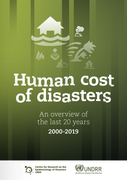
he statistics in this report are from the Emergency Events Database (EM-DAT) maintained by the Centre for Research on the Epidemiology of Disasters (CRED) which records disasters which have killed ten or more people; affected 100 or more people; res
...
ulted in a declared state of emergency; or a call for international assistance.
In the period 2000 to 2019, there were 7,348 major recorded disaster events claiming 1.23 million lives, affecting 4.2 billion people (many on more than one occasion) resulting in approximately US$2.97 trillion in global economic losses.
This is a sharp increase over the previous twenty years. Between 1980 and 1999, 4,212 disasters were linked to natural hazards worldwide claiming approximately 1.19 million lives and affecting 3.25 billion people resulting in approximately US$1.63 trillion in economic losses.
Much of the difference is explained by a rise in climate-related disasters including extreme weather events: from 3,656 climate-related events (1980-1999) to 6,681 climate-related disasters in the period 2000-2019.
more
The State of the world’s nursing 2020 report provides the latest, most up-to-date evidence on and policy options for the global nursing workforce.
DR-TB drugs under the microscope: Sources and prices for drug-resistant tuberculosis medicines
recommended
4th edition.
This report – now in its fourth edition – analyses the barriers and factors affecting access to treatment regimens for drug-resistant tuberculosis (DR-TB), including new and repurposed drugs. We provide detailed pricing profiles of
...
key DR-TB drugs, using manufacturer responses to standardised questionnaires and the Global TB Drug Facility website.
more
Landmine Monitor 2017
International Campaign to Ban Landmines – Cluster Munition Coalition (ICBL-CMC)
(2017)
C3
This is the 19th annual Landmine Monitor report. It is the sister publication to the Cluster Munition Monitor report, first published in November 2010.
Landmine Monitor 2016 provides a
...
global overview of the landmine situation. Chapters on developments in specific countries and other areas are available in online Country Profiles at www.the-monitor.org/cp.
Landmine Monitor covers mine ban policy, use, production, trade, and stockpiling, and also includes information on contamination, clearance, casualties, victim assistance, and support for mine action. The report focuses on calendar year 2015, with information included up to November 2016 when possible.
more
Planetary Health 101 Information and Resources
recommended
The Panorama Perspectives: Conversations on Planetary Health report series aims to inspire new thinking, conversations, and engagement with planetary health and other integrated concepts. Collaboration and open knowledge sharing across sectors are n
...
ecessary to solve the complex global health and development problems of today. These reports are intended as practical tools, presenting actionable opportunities to advance planetary health.Each report expands on knowledge gathered from many sources, including analysis of publicly available reports and data; forums and events; group discussions; and individual conversations
more
his sequel to the Groundswell report includes projections and analysis of internal climate migration for three new regions: East Asia and the Pacific, North Africa, and Eastern Europe and Central Asia. Qualitative analyses of climate-related mobilit
...
y in countries of the Mashreq and in Small Island Developing States (SIDS) are also provided. This new report builds on the scenario-based modeling approach of the previous Groundswell report from 2018, which covered Sub-Saharan Africa, South Asia, and Latin America. The two reports’ combined findings provide, for the first time, a global picture of the potential scale of internal climate migration across the six regions, allowing for a better understanding of how slow-onset climate change impacts, population dynamics, and development contexts shape mobility trends.
Available in English, French, Arabic, Spanish
more
This is the seventeenth annual publication of the Global Hunger Index (GHI), a report jointly published by Concern Worldwide and Welthungerhilfe.
The 2022
...
Global Hunger Index (GHI) brings us face to face with a grim reality. The toxic cocktail of conflict, climate change, and the COVID-19 pandemic had already left millions exposed to food price shocks and vulnerable to further crises. Now the conflict in Ukraine—with its knock-on effects on global supplies of and prices for food, fertilizer, and fuel—is turning a crisis into a catastrophe.
But the speed and severity of the global food crisis reflects the fact that millions of people were already living on the precarious edge of hunger—a legacy of past failures to build more just, sustainable, and resilient food systems. This year’s report therefore focuses on food systems transformation and local governance.
According to the 2022 GHI, Hunger is at alarming levels in 5 countries—Central African Republic, Chad, Democratic Republic of the Congo, Madagascar, and Yemen— and is provisionally considered *alarming *in 4 additional countries— Burundi, Somalia, South Sudan, and Syria. In a further 35 countries, hunger is considered serious, based on 2022 GHI scores and provisional designations.
more
The World health statistics report is the annual compilation of health and health-related indicators, which has been published by the World Health Organization since 2005. The 2024 edition reviews more than 50 health-related indicators from the Sust
...
ainable Development Goals and WHO’s Thirteenth General Programme of Work. It also highlights the findings from the Global health estimates 2021, notably the impact of the COVID-19 pandemic on life expectancy and healthy life expectancy.
more
Internally displaced children are twice invisible in global and national data. First, because internally displaced people (IDPs) of all ages are often unaccounted for. Second, because age-disaggregation of any kind of data is limited, and even more
...
so for IDPs.
Planning adequate responses to meet the needs of internally displaced children, however, requires having at least a sense of how many there are and where they are. This report presents the first estimates of the number of children living in internal displacement triggered by conflict and violence at the global, regional and national levels.
more

An estimated 1.3 billion people – or 16% of global population worldwide – experience a significant disability today. Persons with disabilities have the right to the highest attainable standard of health as those without disabilities. However, th
...
e WHO Global report on health equity for persons with disabilities demonstrates that while some progress has been made in recent years, the world is still far from realizing this right for many persons with disabilities who continue to die earlier, have poorer health, and experience more limitations in everyday functioning than others. These poor health outcomes are due to unfair conditions faced by persons with disabilities in all facets of life, including in the health system itself. Countries have an obligation under international human rights law to address the health inequities faced by persons with disabilities. Furthermore, the Sustainable Development Goals and global health priorities will not progress without ensuring health for all.
more
The NGO Safety and Security Training Report provides a narrative of the research findings, an updated curriculum, and guidance tools for training. It is based on extensive research and interviews with members of the NGO community. The
...
report draws upon existing training materials, community consultations, survey responses, job descriptions, as well as relevant trends in humanitarian and development practice. It captures good practice and global understanding in regard to quality and consistency of NGO security training.
more
Covid-19 Social Policy Response Series / No.14
This report examines Ecuador’s social policy response to mitigate the Covid-19 pandemic’s effects and protect
vulnerable populations. It chronologically traces containment, closure policies, socia
...
l policies and programmes
put in place following the announcement of Covid-19 as a global pandemic. A combination of external con-
straints and domestic structures, i.e. informality and weak coordination, led to truncated efforts in the healthcare
response, while persistent inequalities in access to technology and high levels of informality led to fragmented
education, labour policies and social protection responses. The report zooms into the Family Protection Grant
(Bono de Protección Familiar or BPF), a new social protection programme that covers informal workers, which
captures the difficulties in reaching unregistered populations amid lockdown and containment measures.
more
African countries, like many regions of the world, are affected by the legacy of atrocity crimes. Genocide, the transatlantic slave trade and slavery, colonialism and post-independence violence committed during dictatorships, not to mention civil war and violent extremism, have severely violated hum
...
an rights and left devastating marks on societies across the continent. The way in which societies deal with violent pasts has profound implications for the present and the future, as well as their chances of building sustainable peace.
Strengthening education about atrocity crimes, including genocide, crimes against humanity and war crimes, is an essential part of addressing violent pasts and preventing future atrocity crimes. Echoing a series of United Nations resolutions on the importance of educational measures for genocide prevention,1 in 2013, the Secretary-General’s annual report Responsibility to protect: State responsibility and prevention included the recommendation: “Education curriculums should include instruction on past violations and on the causes, dynamics and consequences of atrocity crimes” as an important means to promote societal resilience to atrocity crimes.
This recognition is in line with the Education 2030 Agenda and, more specifically, target 4.7 of Sustainable Development Goal (SDG) 4 on Education. This target calls on countries to promote education that fosters sustainable development, human rights, gender equality, a culture of peace, global citizenship and an appreciation of cultural diversity.
more
The article focuses on "The State of the World’s Children 2023" report published by UNICEF. It highlights the critical role of vaccines in saving lives and the challenges in global immunization ef
...
forts, especially for marginalized and underserved children. The report emphasizes the impact of COVID-19 on routine immunization, leaving millions of children unprotected from preventable diseases. It calls for urgent measures to restore and improve vaccination coverage, ensure equity in vaccine access, strengthen primary healthcare systems, and build trust in vaccines. The report also advocates for innovations and sustainable funding to achieve immunization for every child.
more
The article focuses on "The State of the World’s Children 2023" report published by UNICEF. It highlights the critical role of vaccines in saving lives and the challenges in global immunization ef
...
forts, especially for marginalized and underserved children. The report emphasizes the impact of COVID-19 on routine immunization, leaving millions of children unprotected from preventable diseases. It calls for urgent measures to restore and improve vaccination coverage, ensure equity in vaccine access, strengthen primary healthcare systems, and build trust in vaccines. The report also advocates for innovations and sustainable funding to achieve immunization for every child.
more
The article focuses on "The State of the World’s Children 2023" report published by UNICEF. It highlights the critical role of vaccines in saving lives and the challenges in global immunization ef
...
forts, especially for marginalized and underserved children. The report emphasizes the impact of COVID-19 on routine immunization, leaving millions of children unprotected from preventable diseases. It calls for urgent measures to restore and improve vaccination coverage, ensure equity in vaccine access, strengthen primary healthcare systems, and build trust in vaccines. The report also advocates for innovations and sustainable funding to achieve immunization for every child.
more
The article focuses on "The State of the World’s Children 2023" report published by UNICEF. It highlights the critical role of vaccines in saving lives and the challenges in global immunization ef
...
forts, especially for marginalized and underserved children. The report emphasizes the impact of COVID-19 on routine immunization, leaving millions of children unprotected from preventable diseases. It calls for urgent measures to restore and improve vaccination coverage, ensure equity in vaccine access, strengthen primary healthcare systems, and build trust in vaccines. The report also advocates for innovations and sustainable funding to achieve immunization for every child.
more

Urbanization, land use, global trade and industrialization have led to profound and negative impacts on nature, biodiversity and ecosystems across the world. The ongoing depletion of natural resources not only afects environmental conditions but als
...
o has an enormous impact on the well-being and security of societies.
This report provides an overview of the impacts of the natural environment on human health. It presents the ways nature and ecosystems can support and protect health and well-being, and describes how nature degradation and loss of biodiversity can threaten human health.
more
UN, international agencies and experts released a groundbreaking report demanding immediate, coordinated and ambitious action to avert a potentially disastrous drug-resistance crisis.
If no action is taken - warns the UN Ad hoc Interagency Coordin
...
ating Group on Antimicrobial Resistance who released the report – drug-resistant diseases could cause 10 million deaths each year by 2050 and damage to the economy as catastrophic as the 2008-2009 global financial crisis. By 2030, antimicrobial resistance could force up to 24 million people into extreme poverty.
more
Since the World Health Organization (WHO) launched the Global Antimicrobial Resistance Surveillance System (GLASS) in 2015, there has been rapidly growing awareness among many African countries that they need to be doing more to combat an
...
timicrobial resistance (AMR). The Africa Centres for Disease Control and Prevention (CDC) was officially inaugurated in January 2017 and will support countries commencing surveillance for serious infectious disease threats in Africa, including resistance. Review of the recent WHO GLASS report suggests that, while certain nations do have some surveillance systems in place, very few countries in Africa currently conduct effective routine surveillance.
African Journal of Laboratory MedicineISSN: (Online) 2225-2010, (Print) 2225-2002
more
Climate Change 2021: The Physical Science Basis
recommended
The Working Group I contribution to the Sixth Assessment Report, Climate Change 2021: The Physical Science Basis is now out (August 2021). The report addresses the most up-to-date physical understa
...
nding of the climate system and climate change, bringing together the latest advances in climate science, and combining multiple lines of evidence from paleoclimate, observations, process understanding, and global and regional climate simulations.
more
The coronavirus disease 2019 (COVID-19) pandemic has created a global and gendered crisis that is compounding existing inequalities and disproportionately affecting girls and women. Emerging evidence from the COVID-19 crisis in 2020 shows school clo
...
sures, disruptions in essential services and rising poverty contributed to girls’ increased risk of female genital mutilation (FGM). School closures limited the monitoring and reporting of cases of FGM. Rising household monetary poverty may have contributed to families adopting negative coping mechanisms, including having girls undergo FGM as a precursor to marriage to reduce household costs. A report from the United Nations Population Fund (UNFPA) estimates 2 million additional cases of FGM by 2030 due to the pandemic.
more
The coronavirus disease 2019 (COVID-19) pandemic has created a global and gendered crisis that is compounding existing inequalities and disproportionately affecting girls and women. Emerging evidence from the COVID-19 crisis in 2020 shows school clo
...
sures, disruptions in essential services and rising poverty contributed to girls’ increased risk of female genital mutilation (FGM). School closures limited the monitoring and reporting of cases of FGM. Rising household monetary poverty may have contributed to families adopting negative coping mechanisms, including having girls undergo FGM as a precursor to marriage to reduce household costs. A report from the United Nations Population Fund (UNFPA) estimates 2 million additional cases of FGM by 2030 due to the pandemic.
more
The International Forum of Indigenous Women (IIWF) has prepared this report in order to have a
document for analysis and systematization of the impacts of the COVID-19 pandemic on the lives
of Indigenous Women, and to identify the strategies promo
...
ted by them. This document is expected
to serve as a political tool for advocacy. The methodology used in this analysis is a gender and
Indigenous Women’s collective and individual human rights approach. The results are mainly based
on a global, participatory survey, conducted in English, French and Spanish languages, aimed at
indigenous women’s organizations and leaders.
more
With a focus on Pakistan and Nigeria’s most vulnerable communities, this report provides insight about the role that community push-back is playing in the transmission of the polio virus and how the Glob
...
al Polio Eradication Initiative (GPEI) can mitigate these social risks to reach every missed child.
more
(African Development Bank policy research document 1)
The report examines financing in the battle against malaria, focusing on the role of foreign aid. It analyzes whether or not a disease such as malaria can be controlled or eliminated in Afri ... ca without health aid. It also presents a theoretical model of the economics of malaria and shows how health aid can help avoid the “disease trap.” While calling for increased funding from international sources to fight malaria, it also recommends that African countries step up their own efforts, including on domestic resource mobilization. In 2016, governments of endemic countries contributed 31% of the estimated total of US $ 2.7 billion.
Between 2000 and 2014, malaria control efforts were scaled up and worldwide deaths were cut in half. But declining health aid and deprioritized vertical aid (as for malaria), despite its potentially great efficiency, have led to rising numbers of cases. In 2016, 216 million cases of malaria were reported, up from 211 million in 2015. Africa was home to 90% of all malaria cases and 91% of malaria deaths in 2016. Progress appears to have stalled in the global fight against the disease. more
The report examines financing in the battle against malaria, focusing on the role of foreign aid. It analyzes whether or not a disease such as malaria can be controlled or eliminated in Afri ... ca without health aid. It also presents a theoretical model of the economics of malaria and shows how health aid can help avoid the “disease trap.” While calling for increased funding from international sources to fight malaria, it also recommends that African countries step up their own efforts, including on domestic resource mobilization. In 2016, governments of endemic countries contributed 31% of the estimated total of US $ 2.7 billion.
Between 2000 and 2014, malaria control efforts were scaled up and worldwide deaths were cut in half. But declining health aid and deprioritized vertical aid (as for malaria), despite its potentially great efficiency, have led to rising numbers of cases. In 2016, 216 million cases of malaria were reported, up from 211 million in 2015. Africa was home to 90% of all malaria cases and 91% of malaria deaths in 2016. Progress appears to have stalled in the global fight against the disease. more
One billion people around the world live with disabilities. This report makes the case that they are being “left behind” in the global community’s work on health. This lack of access not only
...
violates the rights of people with disabilities under international law, but UHC and SDG 3 cannot be attained without better health services for the one billion people with disabilities.
more
24 Nov. 2021
Action against gender-based violence being pushed to the outlying margins of the global COVID-19 response
A new Oxfam report shows an undeniable increase in gender-based violence (G
...
BV) during the COVID-19 pandemic around the world to which too many governments and donors are not doing enough to tackle.
The report, The Ignored Pandemic: The Dual Crisis of Gender-Based Violence and COVID-19, showed the number of calls made by survivors to domestic violence hotlines in ten countries during the first months of lockdown. The data reveals a 25 – 111 percentage surge; in Argentina (25%), Colombia (79%), Tunisia (43%), China (50%), Somalia (50%), South Africa (69%), UK (25%), Cyprus (39%), Italy (73%) and the largest increase in Malaysia where calls surged by over 111%.
more
Nurses are critical to deliver on the promise of “leaving no one behind” and the global effort to achieve the Sustainable Development Goals (SDGs). They make a central contribution to national and glob
...
al targets related to a range of health priorities, including universal health coverage, mental health and noncommunicable diseases, emergency preparedness and
response, patient safety, and the delivery of integrated, people-centred care.
No global health agenda can be realized without concerted and sustained efforts to maximize the contributions of the nursing workforce and their roles within interprofessional health teams. To do so requires policy interventions that enable them to have maximum impact and effectiveness by optimizing nurses’ scope and leadership, alongside accelerated investment
in their education, skills and jobs. Such investments will also contribute to the SDG targets related to education, gender, decent work and inclusive economic growth.
This State of the world’s nursing 2020 report, developed by the World Health Organization (WHO) in partnership with the International Council of Nurses and the global Nursing Now campaign, and with the support of governments and wider partners, provides a compelling case on the value of the nursing workforce globally.
more
Health Statistics in the Western Pacific Region 2023: Monitoring health for the SDGs is the third biennial report providing an overview of the progress of the World Health Organization (WHO) Western Pacific Region towards the health-related Su
...
stainable Development Goal (SDG) targets. This edition also serves as a baseline assessment for the implementation of the global WHO Fourteenth General Programme of Work 2025–2028 (GPW14) within the Western Pacific Region and the for the Regional Vision “Weaving Health for Families, Communities, and Societies of the Western Pacific Region: Working Together to Improve Health, Well-Being and Save Lives”.
more
An estimated 1.3 billion people globally experience significant disability. This figure has grown over the last decade and will continue to rise due to demographic and epidemiological changes. In 2022, the World Health Organization launched the Global
...
report on health equity for persons with disabilities. This report demonstrated that many persons with disabilities are still being left behind. Experiencing persistent health inequities, persons with disabilities die earlier, they have poorer health and functioning, and they are more affected by health emergencies than the general population. These differences are largely associated with unjust factors both inside and beyond the health sector and are avoidable. The Global Report called upon Member States to take actions to make health sector more inclusive for persons with disabilities through the primary health care approach. This will be essential for countries to make health coverage truly universal and to progress towards other health-related targets in the sustainable development goals.
more

Myanmar is one of the world’s 22 high tuberculosis (TB) burden countries, and supporting TB control in Myanmar is a global priority. This report reflects the findings, discussions, conclusions and
...
recommendations of the fourth international review mission of the Myanmar National TB Programme (NTP), which brought together international and national partners to review progress in TB control and to offer guidance on future TB control directions and efforts.
A high-quality national disease prevalence survey completed in 2010 demonstrated a TB disease burden two to three times higher than anticipated on the basis of previous surveys. In 2011 about 200 000 adults and children will have developed TB, including 20 000 HIV infected and 9000 suffering from MDR-TB, both of which will require additional care and costly treatment. TB remains among the top killers of adults, and more women die of TB than from maternal causes. more
A high-quality national disease prevalence survey completed in 2010 demonstrated a TB disease burden two to three times higher than anticipated on the basis of previous surveys. In 2011 about 200 000 adults and children will have developed TB, including 20 000 HIV infected and 9000 suffering from MDR-TB, both of which will require additional care and costly treatment. TB remains among the top killers of adults, and more women die of TB than from maternal causes. more
The Strategic Advisory Group of Experts (SAGE) on Immunization held a meeting on 3-6 October 2022. This report summarizes the discussions, conclusions and recommendations.
It covers the following items:
...
Global Reports
Immunization Agenda 2030 and Regional reports
Monkeypox
RSV
COVID-19 vaccines
Polio vaccination
Ebola (Sudan ebolavirus outbreak update)
more
July 2018
This fourth edition of the Unitaid/WHO market and technology landscape: HIV rapid diagnostic tests for self-testing report summarizes the current HIV testing gap; the challenges facing efforts to scale up; and the potential role HIV se
...
lf-testing (HIVST) could play to achieve the United Nation’s 90-90-90 targets. In particular, the report synthesises the existing and emerging market demand and supply of kits.
The information in this report is intended for manufacturers, donors, national programmes, researchers and other global health stakeholders who are exploring the potential role of HIVST.
more
A stated objective of WHO’s European Mental Health Action Plan 2013–2020 is to ensure better information and knowledge for service planning, development, monitoring and evaluation, including requesting Member States to report on the indicato
...
rs in the Plan.
Progress towards achieving the internationally agreed mental health objectives and targets is monitored in the periodic WHO Mental Health Atlas, which collates global information on mental health policies, resources and services.
This booklet provides a snapshot of the situation in countries in the WHO European region with regard to a number of core mental health targets and indicators, derived from the WHO’s Mental Health Atlas 2017.
more
In Climate Change 2014: Impacts, Adaptation, and Vulnerability. Part A: Global and Sectoral Aspects. Contribution of Working Group II to the Fifth Assessment Report of the Intergovernmental Panel on
...
Climate Change
more
There is no single answer to this question, and therefore no single way to do it. In The Lancet Global Health, Antonia Dingle and colleagues report the convening of a group of policy makers to discu
...
ss why we should track financing for RMNCH. The group developed a set of principles guiding what information an aid tracking tool would ideally include. The authors present
this tool—the Muskoka2 method—for tracking RMNCH aid, along with estimates of RMNCH development assistance from 2002 to 2017
more
The full range and scale of all forms of violence against children are only now becoming visible, as is the evidence of the harm it does. This book documents the outcomes and recommendations of the process of the United Nations Secretary-General’s Study on Violence against Children. ‘The Studyâ€
...
™ is the first comprehensive, global study on all forms of violence against children.
It builds on the model of the study on the impact of armed conflict on children, prepared by Graça Machel and presented to the General Assembly in 1996, and follows the World Health Organization’s 2002 World Report on Violence and Health.1
more
Antimicrobial resistance (AMR) is a serious public health concern with economic, social and political implications that are global in scope, and cross all environmental and ethnic boundaries. As a
...
global threat, AMR risks the achievements of modern medicine, and has the potential to impact overall global development. It is important, therefore, to elevate AMR beyond health as part of a larger development agenda in the context of the Sustainable Development Goals (SDGs). This report provides in-depth technical discussions in areas that have direct implications to the containment of AMR as a development agenda. The report is organized in five chapters which served as the technical background documents for the Biregional Technical Consultation on AMR in Asia, 14-15 April 2016. More information from the meeting is available in the WHO Meeting Report: Biregional Technical Consultation on Antimicrobial Resistance in Asia. The meeting was the first time senior officials from the Ministry of Health and Ministry of Agriculture across Asia came together to tackle AMR
more
Cardiovascular diseases (CVDs) are a growing public health problem in Ghana and other African countries. Strokes and other CVDs have become a leading cause of death due to increasing risk factors such as hypertension. According to the Global Burden
...
of Disease study (GBD), ischaemic heart disease was the fourth leading cause of death in Ghana in 2016. The prevalence of hyper-
tension, a major risk factor for CVDs, is increasing rapidly and ranges from 19% to 48%, according to the Ghana Health Service Annual Report, 2017, due to rising life expectancy and the increasing prevalence of contributing factors such as overweight/obesity. Early diagnosis and adequate management of the risk factors can reduce the fatal consequences of CVDs.
At the heart of improving risk assessment and management of CVDs are nationally approved guidelines, which facilitate standardisation of care approaches.
These guidelines developed by experts from all levels of health care and stakeholders capture all recommended approaches and necessary information for clinicians and other healthcare workers on CVDs. They also serve as a practical guide for assessing and managing the most important CVDs prevalent in Ghana and can be used at all levels of care namely health facilities without a doctor; with a general practitioner and with a physician specialist.
more
For the first time WHO and UNICEF bring together the data on sanitation coverage and investment, and how it impacts health, economies, and the environment. Citing evidence on what works from successful countries and global guidelines, WHO and UNICEF
...
call for strong government leadership and investment in resilient sanitation services. The report charts an ambitious way forward following the SDG6 global acceleration framework themes of governance, financing, capacity development, data and information, and innovation to achieve universal access to safe sanitation.
Read the full publication report here: https://www.who.int/publications/i/item/9789240014473.
more
Nature, biodiversity and health: an overview of interconnections
Urbanization, land use, global trade and industrialization have led to profound and negative impacts on nature, biodiversity and ecosystems across the world. The ongoing depletion of
...
natural resources not only affects environmental conditions but also has an enormous impact on the well-being and security of societies.
This report provides an overview of the impacts of the natural environment on human health. It presents the ways nature and ecosystems can support and protect health and well-being, and describes how nature degradation and loss of biodiversity can threaten human health. It is targeted at readers who do not have extensive experience with the links between nature and health.
more
Since 1995, WHO has ensured a consistent approach to national, regional and global TB surveillance by providing standardized definitions, forms and registers for the recording and reporting of individual-level and aggregated data about people diagno
...
sed with and treated for TB, which are used worldwide. This standardization has facilitated the regular reporting of TB data to WHO from 215 countries and areas in annual rounds of global TB data collection, with findings published in an annual WHO global TB report since 1997 and data made publicly available via the online WHO global TB database.
more
Hundreds of thousands of refugees are at risk of being pushed to return to Syria in 2018, despite ongoing violence, bombing and shelling that are endangering the lives of civilians, leading humanitarian agencies warn in a report released today. The
...
warning comes amid a global anti-refugee backlash, harsher conditions in neighbouring countries hosting Syrians, and Syrian government victories in the conflict that have fuelled misleading rhetoric suggesting Syria is safe for refugees to return.
more

Robust clinical research capacity in low- and middle-income countries is key to stemming the spread of epidemics, according to a new report from the International Vaccines Task Force (IVTF). The report
...
lays out how to develop the political support, financing and coordination required to build this capacity as a crucial component of global epidemic preparedness. The IVTF was convened by the World Bank Group (WBG) and the Coalition for Epidemic Preparedness Innovations (CEPI) in October 2017.
more

Pathways to progress: a multi-level approach to strengthening health systems
Samuels, F., Amaya, A.B., Rodríguez Pose, R. and Balabanova, D.
Overseas Development Institute
(2014)
C1
Findings on maternal and child health in Nepal, Mozambique and
Rwanda, and neglected tropical diseases in Cambodia and Sierra Leone | This report synthesises findings from five country case studies from the health dimension of this project, which f
...
ocus on maternal and child health (MCH) (Mozambique,Nepal, Rwanda) and neglected tropical diseases (NTDs)(Cambodia, Sierra Leone). MCH was selected given its centrality in two of the Millennium Development Goals (MDGs) and its ability to act as a proxy for strengthened health systems. NTDs, while until recently relatively neglected in global policy debates, are now attracting more interest, not least because they are viewed as diseases of the poor whose treatment could positively impact on most of the other MDGs.
more
The Lancet Published Online June 11, 2019 http://dx.doi.org/10.1016/S0140-6736(19)30934-1
More than one-in-five people living in conflict-affected areas suffers from a mental illness, according to a new UN-backed report, prompting the World Health
...
Organization (WHO) to call for increased, sustained investment in mental health services in those zones.
Around 22 per cent of those affected, suffer depression, anxiety or post-traumatic stress disorder, according to this analysis.
The study also shows that about nine per cent of conflict-affected populations have a moderate to severe mental health condition; substantially higher than the global estimate for these mental health conditions in the general population.
more
Available in Arabic, Chinese, English, French, Russian and Spanish. You can download a summary of the main report and background documents!
The report demonstrates that the current system—at bot
...
h national and international levels— was not adequate to protect people from COVID-19. The time it took from the reporting of a cluster of cases of pneumonia of unknown origin in mid-late December 2019 to a Public Health Emergency of International Concern being declared was too long. February 2020 was also a lost month when many more countries could have taken steps to contain the spread of SARS-CoV-2 and forestall the global health, social, and economic catastrophe that continues its grip. The Panel finds that the system as it stands now is clearly unfit to prevent another novel and highly infectious pathogen, which could emerge at any time, from developing into a pandemic.
more
The World Health Organization (WHO) has identified mental health as an integral component of the COVID-19 response. Its rapid assessment of service delivery for mental, neurological and substance use (MNS) disorders during the COVID-19 pandemic, on which this
...
report is based, is the first attempt to measure the impact of the pandemic on such services at a global level. The data were collected through a web-based survey completed by mental health focal points at ministries of health between June and August 2020. The questionnaire covered the existence and funding of mental health and psychosocial support (MHPSS) plans, the presence and composition of MHPSS coordination platforms, the degree of continuation and causes of disruption of different MNS services, the approaches used to overcome these disruptions, and surveillance mechanisms and research on MNS data.
more
PlosOne December 10, 2014 https://doi.org/10.1371/journal.pone.0111913
Plastic pollution is ubiquitous throughout the marine environment, yet estimates of the global abundance and weight of floating plastics have lacked data, particularly from the
...
Southern Hemisphere and remote regions. Here we report an estimate of the total number of plastic particles and their weight floating in the world's oceans from 24 expeditions (2007–2013) across all five sub-tropical gyres, costal Australia, Bay of Bengal and the Mediterranean Sea conducting surface net tows (N = 680) and visual survey transects of large plastic debris (N = 891). Using an oceanographic model of floating debris dispersal calibrated by our data, and correcting for wind-driven vertical mixing, we estimate a minimum of 5.25 trillion particles weighing 268,940 tons. When comparing between four size classes, two microplastic <4.75 mm and meso- and macroplastic >4.75 mm, a tremendous loss of microplastics is observed from the sea surface compared to expected rates of fragmentation, suggesting there are mechanisms at play that remove <4.75 mm plastic particles from the ocean surface.
more
PLOS Glob Public Health 2(8): e0000272. https://doi.org/10.1371/journal.pgph.0000272
Sepsis is a major global health problem, especially in sub-Saharan Africa. Improving patient care requires that healthcare providers understand patients’ priorit
...
ies and provide quality care within the confines of the context they work. We report the perspectives of patients, caregivers and healthcare workers regarding care quality for patients admitted for sepsis to public hospitals in Uganda and Malawi. This qualitative descriptive study in two hospitals included face-to face semi-structured interviews with purposively selected patients recovering from sepsis, their caregivers and healthcare workers. In both Malawi and Uganda, sepsis care often occurred in resource-constrained environments which undermined healthcare workers’ capacity to deliver safe, consistent and accessible care. Constraints included limited space, strained; water, sanitation and hygiene (WASH) amenities and practices, inadequate human and material resources and inadequate provision for basic needs including nutrition. Heavy workloads for healthcare workers strained relationships, led to poor communication and reduced engagement with patients and caregivers.
more
Atlas of African Health Statistics 2022: Health situation analysis of the WHO African Region
Since 2019, we have been implementing Phase 2 of the regional Transformation Agenda, which informs and aligns with the global WHO Transformation, to ensure
...
WHO is accountable, driven by re- sults and providing value for money in the pursuit of better health. Our global priority in this period is to contribute to delivering on the triple billion targets of expanding universal health coverage, protecting people from emergencies, and promoting health and well-being for people across the Region.
This year’s Atlas of African Health Statistics is being produced in the context of the COVID-19 pandemic that we have been expe- riencing for over two years. The ongoing coronavirus pandemic, together with other health emergencies in the WHO African Re- gion, is yet again testing the strength and resilience of our health systems. Indeed, the impact of COVID-19 is visible in the disruption of services. The report also presents the latest data for more than 50 health-related indicators of the Sustainable Development Goals and WHO’s “triple billion” targets and provides comprehensive country-level statistics using the results chain of the AFRO frame- work of actions for strengthening health systems to achieve UHC and the health-related SDGs.
more
Cardiovascular disease (CVD) is often thought to be a problem of wealthy, industrialized nations. The term “cardiovascular disease” is used throughout the report to refer to cardiac disease, vascular diseases of the brain and kidney, and periphe
...
ral vascular disease. The report’s main focus is on the major contributors to global CVD mortality, coronary heart disease and stroke, and on the major modifiable risk factors for cardiovascular diseases. In fact, as the leading cause of death worldwide, CVD now has a major impact not only on developed nations but also on low and middle income countries, where it accounts for nearly 30 percent of all deaths. The terms “developed” and “high income countries” are used interchangeably throughout the report to refer to countries classified by the World Bank as high income economies. The terms “developing” and “low and middle income countries” are used interchangeably throughout the report to refer to countries classified by the World Bank as low, lower middle, and upper middle income economies. The increased prevalence of risk factors for CVD and related chronic diseases in developing countries, including tobacco use, unhealthy dietary changes, reduced physical activity, increasing blood lipids, and hypertension, reflects significant global changes in behavior and lifestyle. The term “chronic diseases” is used throughout the report to refer to CVD and the following related chronic diseases that share many common risk factors: diabetes, cancer, and chronic respiratory disease. These changes now threaten once-low-risk regions, a shift that is accelerated by industrialization, urbanization, and globalization. The potentially devastating effects of these trends are magnified by a deleterious economic impact on nations and households, where poverty can be both a contributing cause and a consequence of chronic diseases. The accelerating rates of unrecognized and inadequately addressed CVD and related chronic diseases in both men and women in low and middle income countries are cause for immediate action.
more
A general consensus exists that as a country develops economically, health spending per capita rises and the share of that spending that is prepaid through government or private mechanisms also rises. However, the speed and magnitude of these changes vary substantially across countries, even at simi
...
lar levels of development. In this study, we use past trends and relationships to estimate future health spending, disaggregated by the source of those funds, to identify the financing trajectories that are likely to occur if current policies and trajectories evolve as expected.
Methods
We extracted data from WHO's Health Spending Observatory and the Institute for Health Metrics and Evaluation's Financing Global Health 2015 report. We converted these data to a common purchasing power-adjusted and inflation-adjusted currency. We used a series of ensemble models and observed empirical norms to estimate future government out-of-pocket private prepaid health spending and development assistance for health. We aggregated each country's estimates to generate total health spending from 2013 to 2040 for 184 countries. We compared these estimates with each other and internationally recognised benchmarks.
Findings
Global spending on health is expected to increase from US$7·83 trillion in 2013 to $18·28 (uncertainty interval 14·42–22·24) trillion in 2040 (in 2010 purchasing power parity-adjusted dollars). We expect per-capita health spending to increase annually by 2·7% (1·9–3·4) in high-income countries, 3·4% (2·4–4·2) in upper-middle-income countries, 3·0% (2·3–3·6) in lower-middle-income countries, and 2·4% (1·6–3·1) in low-income countries. Given the gaps in current health spending, these rates provide no evidence of increasing parity in health spending. In 1995 and 2015, low-income countries spent $0·03 for every dollar spent in high-income countries, even after adjusting for purchasing power, and the same is projected for 2040. Most importantly, health spending in many low-income countries is expected to remain low. Estimates suggest that, by 2040, only one (3%) of 34 low-income countries and 36 (37%) of 98 middle-income countries will reach the Chatham House goal of 5% of gross domestic product consisting of government health spending.
Interpretation
Despite remarkable health gains, past health financing trends and relationships suggest that many low-income and lower-middle-income countries will not meet internationally set health spending targets and that spending gaps between low-income and high-income countries are unlikely to narrow unless substantive policy interventions occur. Although gains in health system efficiency can be used to make progress, current trends suggest that meaningful increases in health system resources will require concerted action.
Funding
Bill & Melinda Gates Foundation.
more
Interpersonal violence – in all its forms – has a grave effect on children: Violence undermines children’s future potential; damages their physical, psychological and emotional well-being; and in many cases, ends their lives. The report sheds
...
light on the prevalence of different forms of violence against children, with global figures and data from 190 countries. Where relevant, data are disaggregated by age and sex, to provide insights into risk and protective factors.
more
A new publication - Waste Management during the COVID-19 Pandemic: from response to recovery - reviews current practices for managing waste from healthcare facilities, households and quarantine locations accommodating people with confirmed or suspected cases of COVID-19. Jointly produced by UNEP, th
...
e Institute for Global Environmental Strategies and the International Environmental Technology Centre, the report considers various approaches, identifies best practices and technologies, and provides recommendations for policy-makers and practitioners to improve waste management, over the long term.
more
Coherent Market Insights has announced the addition of Chagas Disease Treatment Market 2023 Forecast Analysis by Types, Applications, Size, Share, Key Players, and Regions. a new research report to its market research archive. The Chagas Disease Tre
...
atment Market has been thoroughly researched and analyzed by industry experts and researchers. The industry is examined at the global, regional, and national levels. The report highlights the primary revenue stream for the estimated year, along with sales volumes, growth patterns, and major industry market dynamics. The historical data is provided, as well as a comprehensive revenue analysis for the forecast period. The report focuses on the size, share, growth status, and future trends of the Chagas Disease Treatment Market, as well as recent business developments.
more
Every day in 2020, approximately 800 women died from preventable causes related to pregnancy and childbirth - meaning that a woman dies around every two minutes.
Sustainable Development Goal (SDG) target 3.1 is to reduce maternal mortality to less than 70 maternal deaths per 100 000 live births by
...
2030.
The United Nations Maternal Mortality Estimation Inter-Agency Group (MMEIG) – comprising WHO, the United Nations Children’s Fund (UNICEF), the United Nations Population Fund (UNFPA), the World Bank Group and the United Nations Department of Economic and Social Affairs, Population Division (UNDESA/Population Division) has collaborated with external technical experts on a new round of estimates covering 2000 to 2020. The estimates represent the most up to date, internationally-comparable MMEIG estimates of maternal mortality, using refined input data and methods from previous rounds.
The report presents internationally comparable global, regional and country-level estimates and trends for maternal mortality between 2000 and 2020.
more
Infertility is a disease of the male or female reproductive system defined by the failure to achieve a pregnancy after 12 months or more of regular unprotected sexual intercourse. Understanding the magnitude of infertility is critical for developing appropriate interventions, for monitoring access t
...
o quality fertility care, and for mitigating risk factors for and consequences of infertility.
The objective of this report is to provide estimates of the global and regional prevalence of infertility by analyzing all relevant and representative studies from 1990 to 2021, taking into account different study approaches. This report also provides insight into how the estimation of infertility prevalence can be improved to obtain more reliable and actionable data. These estimates improve the understanding of the burden of infertility, and provide a basis for appropriate policies and services to achieve universal access to fertility care for all.
more
Recovery from COVID-19 has been challenging in Guatemala. As a result of the prolonged socio-economic impact of the pandemic, the average poverty rate nationwide has increased by almost 5%. This rise in the poverty level further exacerbates preexisting vulnerabilities and erodes the limited safety n
...
ets available to vulnerable populations. Year after year, recurrent disasters and humanitarian crises aggravate the historic social gaps that result in high levels of vulnerability, multidimensional poverty, and overall deprivation of essential services among hundreds of thousands of Guatemalans. According to the World Risk Report 2020, Guatemala is the tenth country with the highest level of exposure to disaster worldwide. Globally, it ranks 28th regarding vulnerability according to the 2021 INFORM’s risk index and 62nd in the Global Climate Risk Index 2021.
In 2020, Guatemala faced a record-breaking and devastating hurricane season with extreme rainfall, catastrophic winds, and deadly landslides, from which the country has not yet recovered. Unfortunately, recurrent extreme weather events, such as Hurricane Julia that hit Central America in early October 2022, progressively but deeply eroded a weak health infrastructure and local health systems.
more
The Africa Centres for Disease Control and Prevention (Africa CDC) Biosafety and Biosecurity Initiative was launched by the Africa CDC in April 2019 with the aim of strengthening the African Union (AU) Member States’ biosafety and biosecurity systems and enabling them to comply with national and i
...
nternational requirements for biosafety and biosecurity including the International Health Regulations (IHR) (2005), the Biological Weapons Convention (BWC), and United Nations Security Council Resolution (UNSCR) 1540 and the multi-country Global Health Security Agenda (GHSA). The World Health Organization (WHO) Joint External Evaluation (JEE) and the Global Health Security Index report confirmed the known capacity gaps in biosafety and biosecurity among Africa Union Member (AU).
The regional consultations by Africa CDC conducted between 2019-2021 highlighted the deficiency or limited availability of standardized and regionally recognized training programs in the continent, limiting biosafety and biosecurity capacity building efforts in the region. In response, Africa CDC working with AU Member States developed a home grown, implementable and accessible professional training and certification program that is both recognized and endorsed by AU Member States. The Regional Training and Certification Program for Biosafety and Biosecurity Professionals, for African Biosafety and Biosecurity Professionals (RTCP-BBP) has four (4) areas of specialization, namely
Selection, Installation, Maintenance and Certification of Biological Safety Cabinets
Biorisk Management
Design and Maintenance of Facilities Handling High Risk Pathogens (Biocontainment Engineering)
Biological Waste management
more
The Africa Centres for Disease Control and Prevention (Africa CDC) Biosafety and Biosecurity Initiative was launched by the Africa CDC in April 2019 with the aim of strengthening the African Union (AU) Member States’ biosafety and biosecurity systems and enabling them to comply with national and i
...
nternational requirements for biosafety and biosecurity including the International Health Regulations (IHR) (2005), the Biological Weapons Convention (BWC), and United Nations Security Council Resolution (UNSCR) 1540 and the multi-country Global Health Security Agenda (GHSA). The World Health Organization (WHO) Joint External Evaluation (JEE) and the Global Health Security Index report confirmed the known capacity gaps in biosafety and biosecurity among Africa Union Member (AU).
The regional consultations by Africa CDC conducted between 2019-2021 highlighted the deficiency or limited availability of standardized and regionally recognized training programs in the continent, limiting biosafety and biosecurity capacity building efforts in the region. In response, Africa CDC working with AU Member States developed a home grown, implementable and accessible professional training and certification program that is both recognized and endorsed by AU Member States. The Regional Training and Certification Program for Biosafety and Biosecurity Professionals, for African Biosafety and Biosecurity Professionals (RTCP-BBP) has four (4) areas of specialization, namely
- Selection, Installation, Maintenance and Certification of Biological Safety Cabinets
- Biorisk Management
- Design and Maintenance of Facilities Handling High Risk Pathogens (Biocontainment Engineering)
- Biological Waste management
more
State of the Climate in Asia 2023
recommended
Asia remained the world’s most disaster-hit region from weather, climate and water-related hazards in 2023. Floods and storms caused the highest number of reported casualties and economic losses, whilst the impact of heatwaves became more severe, according to a new
...
report from the World Meteorological Organization (WMO).
The State of the Climate in Asia 2023 report highlighted the accelerating rate of key climate change indicators such as surface temperature, glacier retreat and sea level rise, which will have major repercussions for societies, economies and ecosystems in the region.
In 2023, sea-surface temperatures in the north-west Pacific Ocean were the highest on record. Even the Arctic Ocean suffered a marine heatwave.
Asia is warming faster than the global average. The warming trend has nearly doubled since the 1961–1990 period.
more
The chapter Dementia in Latin America and the Caribbean: Prevalence, Incidence, Impact, and Trends over Time, is part of the publication series titled “Decade of Healthy Aging: situation and challenges”. This document aims to provide an outline of the current situation in Latin America and the C
...
aribbean in respect of the prevalence and incidence of dementia and its impact on the health status of older people. As dementia is a significant global health problem which also has social and economic impacts this document highlights the importance of monitoring dementia in the region. The document evidences that dementia is one of the main contributors to dependence and disability in older people in Latin America and the Caribbean and, although its prevalence and incidence increase exponentially with age, it is not part of normal aging. Alzheimer’s disease is the most common dementia, and there is no cure for this condition, but with timely diagnosis is possible to ameliorate symptoms. It is important to assess what are the needs of people leaving with dementia and their families and to integrate dementia risk reduction strategies in pre-existing strategies for other non-communicable diseases. As shown in the report, despite the huge burden dementia is still underdiagnosed, and it is fundamental to better monitor its prevalence, incidence and the different societal impact that dementia can have. For that, it is crucial to promote the use of harmonized methodologies to address this information in a broader number of studies and countries in the region. This can contribute to the generation of direct actions to decrease dementia risk and lead to healthier lives for people with dementia and their families.
more

The threat climate change poses to health, equity, and development has been rigorously documented. However, in an era marked by economic crisis, regional conflicts, natural disasters and growing disparities between rich and poor, the joint global ac
...
tions required to address climate change have been vigorously debated – and critical decisions postponed.
This document, part of WHO’s Health in the Green Economy series, describes how many climate change measures can be “win-wins” for people and the planet.
These policies yield large, immediate public health benefits while reducing the upward trajectory of greenhouse gas emissions. Many of these policies can improve the health and equity of people in poor countries and assist developing countries in adapting to climate change that is already occurring, as evidenced by more extreme storms, flooding, drought and heatwaves.
WHO’s Department of Public Health and Environment launched the Health in the Green Economy initiative in 2010 to review potential health and equity “co-benefits” of proposed climate change measures – as well as relevant risks.
This review examines mitigation strategies discussed in the Fourth Assessment Report of the Intergovernmental Panel on Climate Change which constitutes the most broad-based global review of mitigation options by scientific experts.
more
MEDBOX Annual Report 2023
recommended
The MEDBOX Annual Report provides an overview of the most important projects of the past year
At present at least 2.2 billion people around the world have a vision impairment, of whom at least 1 billion have a vision impairment that could have been prevented or is yet to be addressed. The world faces considerable challenges in terms of eye care, including inequalities in the coverage and qua
...
lity of prevention, treatment and rehabilitation services; a shortage of trained eye care service providers; and poor integration of eye care services into health systems, among others. The World report on vision aims to address these challenges and galvanize action.
more
Ramped-up cancer services could save 7 million lives over the next decade—and addressing huge service gaps between rich and poor countries is key to success, according to this report.
In 2019, over 90% of high-income countries reported that com
...
prehensive cancer treatment services were available through the public health system, compared to fewer than 15% of low-income countries, according to WHO.
But poorer countries can make substantial strides with a universal health coverage approach and use of the latest science to meet their particular needs.
The report lays out proven ways to prevent new cancer cases without breaking the bank, including tobacco-control measures and vaccines that protect against common cancers.
more
World Report 2021, Human Rights Watch’s 31st annual review of human rights practices and trends around the globe, reviews developments in more than 100 countries.
In his introductory essay, Executive Director Kenneth Roth calls on the incoming
...
US administration to more deeply embed respect for human rights as an element of domestic and foreign policy to counter the “wild oscillations in human rights policy” that in recent decades have come with each new resident of the White House. Roth emphasizes that even as the Trump administration mostly abandoned the protection of human rights, joined by China, Russia and others, other governments—typically working in coalition and some new to the cause—stepped forward to champion rights. As it works to entrench rights protections, the Biden administration should seek to join, not supplant, this new collective effort.
more

This results report for the biennium 2020–2021 presents the progress towards the triple billion targets, outcomes and outputs, based on the GPW 13 results framework and indicators. It uses structured methodologies, both quantitative and qualitativ
...
e, for measuring and analysing the achievements and challenges to achieving them, and includes country and impact case studies to exemplify how the Organization’s work is driving health impacts at the country level, where it matters most. For the first time, the WHO Secretariat is reporting on its investments, results and performance through a scorecard methodology for every country or territory it serves.
more
Around the world, millions of refugees and migrants in vulnerable situations, such as low-skilled migrant workers, face poorer health outcomes than their host communities, especially where living and working conditions are sub-standard, according to the first WHO World
...
report on the health of refugees and migrants. This has dire consequences for the probability that the world will not achieve the health-related Sustainable Development Goals for these populations.
more
Mycetoma - Report by the Secretariat - WHO
Some of the key findings of the report include:
Almost 80% of the general public are concerned about developing dementia at some point and 1 in 4 people think that there is nothing we can do to prevent dementia
35% of carers across the w
...
orld said that they have hidden the diagnosis of dementia of a family member
Over 50% of carers globally say their health has suffered as a result of their caring responsibilities even whilst expressing positive sentiments about their role
Almost 62% of healthcare providers worldwide think that dementia is part of normal ageing
40% of the general public think doctors and nurses ignore people with dementia
more
The World Drug Report 2022 is aimed not only at fostering greater international cooperation to counter the impact of the world drug problem on health, governance and security, but also, with its special insights, at assisting Member States in antici
...
pating and address-ing threats from drug markets and mitigating their consequences.
more
The booklet starts with a general overview of how illicit drugs and the environment are linked within the bigger picture of the Sustainable Development Goals, climate change and environmental sustainability. It highlights direct and indirect linkages and gives examples of the significant local and i
...
ndividual-level impact that drugs can have on the environment. This is followed by a more in-depth overview of the latest scientific evidence for plant-based drugs and for synthetic drugs. For plant-based drugs, for example, this includes an analysis of the relationship between illicit crop cultivation and deforestation. For synthetic drugs, it includes an analysis of waste composition, volumes, and dumping and discharge, as well as the relation with wastewater treatment.
more
Interactive website: Data by topic; country profiles, microdata
Overview.
The COVID-19 pandemic is the latest crisis facing the world, but unless humans release their grip on nature, it won’t be the last, according to a new report by the United Nations Development Programme (UNDP), which includes a new experi
...
mental index on human progress that takes into account countries’ carbon dioxide emissions and material footprint.
The report lays out a stark choice for world leaders - take bold steps to reduce the immense pressure that is being exerted on the environment and the natural world, or humanity’s progress will stall.
more
The previous report of the WHO Expert Committee on this disease
followed a meeting in 1995. Intensive, coordinated efforts against HAT during
the intervening 18 years have resulted in a decrease in incidence to a point at
which elimination is
...
considered feasible. This report provides information about
new diagnostic approaches, new therapeutic regimens and better understanding
of the distribution of the disease with high-quality mapping. The roles of human
and animal reservoirs and the tsetse fly vectors that transmit the parasites are
emphasized. The new information has formed the basis for an integrated strategy
with which it is hoped that elimination of HAT will be achieved. The report also
contains recommendations on the approaches that will lead to elimination of the
disease.
more
The Director-General has the honour to transmit to the Seventy-fifth World Health Assembly the report of the seventh meeting of the Working Group on Sustainable Financing, which met in a hybrid format, from 25 to 27 April 2022.
The thirty-seventh meeting of the Programme, Budget and Administration Committee was held in Geneva from 25 to 27 January 2023 and chaired by Ms Aishath Rishmee (Maldives). The Committee adopted its agenda and agreed its programme of work. In his opening remarks, the Director-General emphasized the
...
crucial work on the financial future of the Organization, most significantly implementation of the Programme budget 2022−2023 and development of the Proposed programme budget 2024−2025, which would be the first to benefit from the agreed increase in assessed contributions. He welcomed the work of the Agile Member States Task Group on Strengthening WHO’s Budgetary, Programmatic and Financing Governance with its recommendations for long-term improvements in reform, prevention of and response to sexual abuse and harassment, new web-based information portals and a new replenishment process for consideration by Member States. Efforts were also under way to improve impact at country level, and he would continue to report to Member States on progress. He was heading an agile, proactive and fast-responding WHO, committed to implementing plans approved by Member States.
more
The COVID-19 pandemic has been the biggest disaster in living memory, on almost any measure. More than 6.5 million people are confirmed to have died in less than three years, and the pandemic’s indirect impacts have touched the lives of virtually every community on the planet.
Our World Disasters
...
Report 2022 focuses on the coronavirus pandemic and preparedness: both the ways preparedness ahead of COVID-19 was inadequate, and how the world can prepare more effectively for future public health emergencies.
more
FACTI Panel Interim Report
The High-Level Panel on International Financial Accountability, Transparency and Integrity for Achieving the 2030 Agenda (FACTI Panel)
The High-Level Panel on International Financial Accountability, Transparency and Integrity for Achieving the 2030 Agenda (FACTI Panel)
(2020)
CC
The High-Level Panel on International Financial Accountability, Transparency and Integrity for Achieving the 2030 Agenda (FACTI Panel) was convened by the 74th President of United Nations General Assembly and the 75th President of the Economic and Social Council on 2 March 2020. The objective of the
...
FACTI Panel is to contribute to the overall efforts undertaken by Member States to implement the ambitious and transformational vision of the 2030 Agenda for Sustainable Development. It is mandated to review current challenges and trends related to financial accountability, transparency and integrity, and to make evidence-based recommendations to close remaining gaps in the international system.
more
The 2020 Financing for Sustainable Development Report, the fifth report of the Inter-agency Task Force on Financing for Development, provides a comprehensive assessment of the state of sustainable f
...
inance. Prepared by more than 60 agencies of the United Nations system and partner international organizations, the report brings together a wide range of expertise and perspectives. It puts forward a set of policy recommendations to mobilize financing flows, and align them with economic, social and environmental priorities. These recommendations should assist Member States and all other stakeholders as they work toward fully implementing the Addis Agenda and achieve the SDGs.
more
The 2021 Financing for Sustainable Development Report responds to the request made by Member States to review the impact of the COVID-19 pandemic on nancing for sustainable development, and to propose recommendations to rebuild better. The
...
report underlines the need for policy actions to ensure e ective support until the recovery is rmly underway. Its thematic chapter discusses the systemic and interlinked nature of risk in a tightly intertwined world, and the importance of providing nancing for risk reduction and resilience and nancing that is risk-informed and resilient. With the collaboration of more than 60 agencies of the United Nations system and partner international organizations, the report provides much needed guidance to Member States to take action towards a more resilient future.
more
The 2022 Financing for Sustainable Development Report identifies a “great finance divide” as a main driver of the divergent recovery. Developed countries were able to borrow record sums at ultra-low interest rates to support their people and eco
...
nomies, but the pandemic response and investment in recovery of poor countries was limited by fiscal constraints. This joint report, by over 60 agencies of the United Nations system and partner international organizations, provides analysis and puts forward policy recommendations to overcome this “finance divide” and enhance developing countries’ access to financing for recovery and productive and sustainable investment.
more
Why bold action against inequalities is needed to en AIDS, stop COVID-19 and prepare for future pandemics
FACTI Panel Interim Report - Executive Summary
The High-Level Panel on International Financial Accountability, Transparency and Integrity for Achieving the 2030 Agenda (FACTI Panel)
The High-Level Panel on International Financial Accountability, Transparency and Integrity for Achieving the 2030 Agenda (FACTI Panel)
(2020)
CC
The High-Level Panel on International Financial Accountability, Transparency and Integrity for Achieving the 2030 Agenda (FACTI Panel) was convened by the 74th President of United Nations General Assembly and the 75th President of the Economic and Social Council on 2 March 2020. The objective of the
...
FACTI Panel is to contribute to the overall efforts undertaken by Member States to implement the ambitious and transformational vision of the 2030 Agenda for Sustainable Development. It is mandated to review current challenges and trends related to financial accountability, transparency and integrity, and to make evidence-based recommendations to close remaining gaps in the international system.
more

Board of Directors Report 2016-2017
Coalition for Epidemic Preparedness Innovations (CEPI)
Coalition for Epidemic Preparedness Innovations (CEPI)
(2017)
CC
Board of Directors Report 2016-2017 of the Coalition for Epidemic Preparedness Innovations (CEPI) outlining financial information about CEPI regarding investors and accounts.
