
Filter
1713
Text search:
public
spaces
Featured
167
392
Language
Document type
807
370
219
101
96
49
30
26
4
4
2
Countries
83
72
51
46
42
41
37
36
32
32
29
28
27
23
22
21
21
20
19
18
17
17
16
16
16
16
16
14
13
13
12
12
11
11
11
11
10
10
10
9
9
9
9
9
8
8
8
7
6
6
6
6
5
5
5
5
5
5
4
4
4
4
4
4
3
3
3
3
3
3
3
2
2
2
2
2
2
2
2
2
2
2
2
2
2
2
2
1
1
1
1
1
1
1
1
1
1
1
1
1
1
1
1
1
1
1
1
1
1
1
1
1
1
Authors & Publishers
Publication Years
Category
595
109
100
81
55
37
11
4
1
1
Toolboxes
278
144
129
118
108
88
70
63
54
45
45
32
27
22
16
15
14
11
7
7
5
4
2
1
1
This checklist is for any organization or person supporting the routine use of evidence in
the process of policy-making. Evidence-informed policy-making (EIPM) is essential for achieving the Sustainable Development Goals (SDGs) and universal health coverage (UHC). Its importance is emphasized in WH
...
The content of these guidelines goes beyond the technicalities of medical needs with additional insights into community empowerment, possible access to welfare and economic opportunities and similar issues. If these are adequately explored, the health and quality of life of people affected and their
...
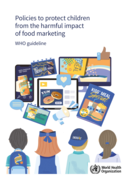
Children continue to be exposed to powerful food marketing, which predominantly promotes foods high in saturated fatty acids, trans-fatty acids, free sugars and/or sodium and uses a wide variety of marketing strategies that are likely to appeal to children. Food marketing has a harmful impact on chi
...
AidData has developed a set of open source data collection methods to track project-level data on suppliers of official finance who do not participate in global reporting systems. This codebook outlines the version 1.1 set of TUFF procedures that have been developed, tested, refined, and implemented
...
The environment in which young people live, learn and play significantly affects their decisions about whether to consume alcohol. Environmental factors are the main risk factors driving alcohol consumption and related harm among young people. Environments that normalize alcohol consumption – term
...
The Infection prevention and control in the context of coronavirus disease 2019 (COVID-19): a living guideline consolidates technical guidance developed and published during the COVID-19 pandemic into evidence-informed recommendations for infection prevention and control (IPC). This living guideline
...

This checklist is an operational tool to help national authorities develop or revise national respiratory pathogen (inclusive of influenza and coronaviruses) pandemic preparedness plans.

In this version of the compendium, each guidance is coded using the International Classification of Health Interventions (ICHI).
The compendium provides a systematic compilation of published guidance from WHO and other UN organizations on health and environment. Guidance on policies and actions a
...
The Haiti Earthquake and Cholera Emergency appeal (MDRHT018) was implemented by the International Federation of Red Cross and Red Crescent Societies (IFRC) in collaboration with the Haitian Red Cross Society (HRCS) following the devastating earthquake on 14 August 2021, and the cholera outbreak on 2
...
Women and children, especially pregnant girls and women, infants and young children and postpartum women, are populations that are extremely vulnerable in emergencies. Breastfeeding provides children with hydration, comfort, connection, high quality nutrition and protection against disease, shieldin
...
The social protection landscape for people affected by TB in the WHO South-East Asia Region
This document serves to provide interim guidance/ recommendations to carry out mpox surveillance activities mainly case investigation, contact tracing and isolation. For the development of this document WHO, UKHSA and CDC guidelines were referred to and adopted within the country context.
asdsad
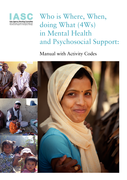
Who is where, when, doing what (4Ws) in mental health and psychosocial support : manual with activity codes
recommended
Humanitarian actors in emergencies often encounter challenges in knowing Who is Where, When, doing What (4Ws) with regard to mental health and psychosocial support (MHPSS). Such knowledge is essential to inform coordination. 4Ws tools are used in many areas of aid to map activities conducted across
...
Joint WHO/ILO guidelines on post-exposure prophylaxis (PEP) to prevent HIV infection.
Report commissioned by the IASC Inter-Agency Humanitarian Evaluations Steering Group as part of the Syria Coordinated Accountability and Lessons Learning Initiative
