
Filter
2608
Text search:
children
with
disabilities
Featured
226
623
Language
2454
84
69
35
34
24
14
12
7
7
6
6
6
4
4
4
4
4
3
3
3
3
3
3
3
3
3
3
3
2
2
2
2
2
2
2
2
1
1
1
1
1
1
1
1
1
1
1
1
1
1
1
1
1
1
1
1
1
1
1
Document type
1680
338
224
127
116
42
41
21
5
5
4
2
1
1
Countries
91
77
75
68
65
59
55
55
49
46
42
42
38
38
38
35
35
32
29
29
29
27
27
26
26
23
20
19
19
18
18
17
17
15
15
14
12
12
12
11
11
11
10
10
10
10
10
9
9
9
8
8
8
8
8
7
7
7
7
6
6
6
6
6
6
5
5
5
5
4
4
3
3
3
3
3
3
3
3
3
3
3
3
2
2
2
2
2
2
2
2
2
2
2
2
2
1
1
1
1
1
1
1
1
1
1
1
1
1
1
1
1
1
1
1
1
1
1
1
1
1
1
1
Authors & Publishers
228
90
85
85
68
63
55
50
48
36
36
32
29
28
25
23
22
21
21
21
21
17
15
14
13
13
13
13
13
12
12
11
11
11
11
11
11
11
10
10
10
9
9
9
9
9
8
8
7
7
7
7
7
7
7
7
7
7
6
6
6
6
6
6
5
5
5
5
5
5
5
5
5
5
5
5
5
5
5
5
5
4
4
4
4
4
4
4
4
4
4
4
4
4
4
4
4
4
4
4
4
4
4
4
4
4
4
4
4
4
3
3
3
3
3
3
3
3
3
3
3
3
3
3
3
3
3
3
3
3
3
3
3
3
3
3
3
3
3
3
3
3
3
3
3
3
3
3
3
3
3
3
3
3
3
3
3
3
3
3
3
3
3
3
3
3
3
3
3
3
3
3
3
3
2
2
2
2
2
2
2
2
2
2
2
2
2
2
2
2
2
2
2
2
2
2
2
2
2
2
2
2
2
2
2
2
2
2
2
2
2
2
2
2
2
2
2
2
2
2
2
2
2
2
2
2
2
2
2
2
2
2
2
2
2
2
2
2
2
2
2
2
2
2
2
2
2
2
2
2
2
2
2
2
2
2
2
2
2
2
2
2
2
2
2
2
2
2
2
2
2
2
2
2
2
2
2
2
2
2
2
2
2
2
2
2
2
2
2
2
2
2
2
2
2
2
2
2
2
2
2
2
2
2
2
2
2
2
2
2
2
2
2
2
2
2
2
2
2
2
2
2
2
2
2
2
2
1
1
1
1
1
1
1
1
1
1
1
1
1
1
1
1
1
1
1
1
1
1
1
1
1
1
1
1
1
1
1
1
1
1
1
1
1
1
1
1
1
1
1
1
1
1
1
1
1
1
1
1
1
1
1
1
1
1
1
1
1
1
1
1
1
1
1
1
1
1
1
1
1
1
1
1
1
1
1
1
1
1
1
1
1
1
1
1
1
1
1
1
1
1
1
1
1
1
1
1
1
1
1
1
1
1
1
1
1
1
1
1
1
1
1
1
1
1
1
1
1
1
1
1
1
1
1
1
1
1
1
1
1
1
1
1
1
1
1
1
1
1
1
1
1
1
1
1
1
1
1
1
1
1
1
1
1
1
1
1
1
1
1
1
1
1
1
1
1
1
1
1
1
1
1
1
1
1
1
1
1
1
1
1
1
1
1
1
1
1
1
1
1
1
1
1
1
1
1
1
1
1
1
1
1
1
1
1
1
1
1
1
1
1
1
1
1
1
1
1
1
1
1
1
1
1
1
1
1
1
1
1
1
1
1
1
1
1
1
1
1
1
1
1
1
1
1
1
1
1
1
1
1
1
1
1
1
1
1
1
1
1
1
1
1
1
1
1
1
1
1
1
1
1
1
1
1
1
1
1
1
1
1
1
1
1
1
1
1
1
1
1
1
1
1
1
1
1
1
1
1
1
1
1
1
1
1
1
1
1
1
1
1
1
1
1
1
1
1
1
1
1
1
1
1
1
1
1
1
1
1
1
1
1
1
1
1
1
1
1
1
1
1
1
1
1
1
1
1
1
1
1
1
1
1
1
1
1
1
1
1
1
1
1
1
1
1
1
1
1
1
1
1
1
1
1
1
1
1
1
1
1
1
1
1
1
1
1
1
1
1
1
1
1
1
1
1
1
1
1
1
1
1
1
1
1
1
1
1
1
1
1
1
1
1
1
1
1
1
1
1
1
1
1
1
1
1
1
1
1
1
1
1
1
1
1
1
1
1
1
1
1
1
1
1
1
1
1
1
1
1
1
1
1
1
1
1
1
1
1
1
1
1
1
1
1
1
1
1
1
1
1
1
1
1
1
1
1
1
1
1
1
1
1
1
1
1
1
1
1
1
1
1
1
1
1
1
1
1
1
1
1
1
1
1
1
1
1
1
1
1
1
1
1
1
1
1
1
1
1
1
1
1
1
1
1
1
1
1
1
1
1
1
1
1
1
1
1
1
1
1
1
1
1
1
1
1
1
1
1
1
1
1
1
1
1
1
1
1
1
1
1
1
1
1
1
1
1
1
1
1
1
1
1
1
1
1
1
1
1
1
1
1
1
1
1
1
1
1
1
1
1
1
1
1
1
1
1
1
1
1
1
1
1
1
1
1
1
1
1
1
1
1
1
1
1
1
1
1
1
1
1
1
1
1
1
1
1
1
1
1
1
1
1
1
1
1
1
1
1
1
1
1
1
1
1
1
1
1
1
1
1
1
1
1
1
1
1
1
1
1
1
1
1
1
1
1
1
1
1
1
1
1
1
1
1
1
1
1
1
1
1
1
1
1
1
1
1
1
1
1
1
1
1
1
1
1
1
1
1
1
1
1
1
1
1
1
1
1
1
1
1
1
1
1
1
1
1
1
1
1
1
1
1
1
1
1
1
1
1
1
1
1
1
1
1
1
1
1
1
1
1
1
1
1
1
1
1
1
1
1
1
1
1
1
1
1
1
1
1
1
1
1
1
1
1
1
1
1
1
1
1
1
1
1
1
1
1
1
1
1
1
1
1
1
1
1
1
1
1
1
1
1
1
1
1
1
1
1
1
1
1
1
1
1
1
1
1
1
1
1
1
1
1
1
1
1
1
1
1
1
1
1
1
1
1
1
1
1
1
1
1
1
1
1
1
1
1
1
1
1
1
1
1
1
1
1
1
1
1
1
1
1
1
1
1
1
1
1
1
1
1
1
1
1
1
1
1
1
1
1
1
1
1
1
1
1
1
1
1
1
1
1
1
1
1
1
1
1
1
1
1
1
1
1
1
1
1
1
1
1
1
1
1
1
1
1
1
1
1
1
1
1
1
1
1
1
1
1
1
1
1
1
1
1
1
1
1
1
1
1
1
1
1
1
1
1
1
1
1
1
1
1
1
1
1
1
1
1
1
1
1
1
1
1
1
1
1
1
1
1
1
1
1
1
1
1
1
1
1
1
1
1
1
1
1
1
1
1
1
1
1
1
1
1
1
1
1
1
1
1
1
1
1
1
1
1
1
1
1
1
1
1
1
1
1
1
1
1
1
1
1
1
1
1
1
1
1
1
1
1
1
1
1
1
1
1
1
1
1
1
1
1
1
1
1
1
1
1
1
1
1
1
1
1
1
1
1
1
1
1
1
1
1
1
1
1
1
1
1
1
1
1
1
1
1
1
1
1
1
1
1
1
1
1
1
1
1
1
1
1
1
1
1
1
1
1
1
1
1
1
1
1
1
1
1
1
1
1
1
1
1
1
1
1
1
1
1
1
1
1
1
1
1
1
1
1
1
1
1
1
1
1
1
1
1
1
1
1
1
1
1
1
1
1
1
1
1
1
1
1
1
1
1
1
1
1
1
1
1
1
1
1
1
1
1
1
1
1
1
1
1
1
1
1
1
1
1
1
1
1
1
1
1
1
1
1
1
1
1
1
1
1
1
1
1
1
1
1
1
1
1
1
1
1
1
1
1
1
1
1
1
1
1
1
1
1
1
1
1
1
1
1
1
1
1
1
1
1
1
1
1
1
1
1
1
1
1
1
1
1
1
1
1
1
1
1
1
1
1
1
1
1
1
1
1
1
1
1
1
1
1
1
1
1
1
1
1
1
1
1
1
1
1
1
1
1
1
1
1
1
1
1
1
1
1
1
1
1
1
1
1
1
1
1
1
1
1
1
1
1
1
1
1
1
1
1
1
1
1
1
1
1
1
1
1
1
1
1
1
1
1
1
1
1
1
1
1
1
1
1
1
1
1
1
1
1
1
1
1
1
1
1
1
1
1
1
1
1
1
1
1
1
1
1
1
1
1
1
1
1
1
1
1
1
1
1
1
1
1
1
1
1
1
1
1
1
1
1
1
1
1
1
1
1
1
1
1
1
1
1
1
1
1
1
1
1
1
1
1
1
1
1
1
1
1
1
1
1
1
1
1
1
1
1
1
1
1
1
1
1
1
1
1
1
1
1
1
1
1
1
1
1
1
1
1
1
1
1
1
1
1
1
1
1
1
1
1
1
1
1
1
1
1
1
1
1
1
1
1
1
1
1
1
1
1
1
1
1
1
1
1
1
1
1
1
1
1
1
1
1
1
1
1
1
1
1
1
1
1
1
1
1
1
1
1
1
1
1
1
1
1
1
1
1
1
1
1
1
1
1
1
1
1
1
1
1
1
1
1
1
1
1
1
1
1
1
1
1
1
1
1
1
1
1
1
1
1
1
1
1
1
1
1
1
1
1
1
1
1
1
1
1
1
1
1
1
1
1
1
1
1
1
1
1
1
1
1
1
1
1
1
1
1
1
1
1
1
1
1
1
1
1
1
1
1
1
1
1
1
1
1
1
1
1
1
1
1
1
1
1
1
1
1
1
1
1
1
1
1
1
1
1
1
1
1
1
1
1
1
1
1
1
1
1
1
1
1
1
1
1
1
1
1
1
1
1
1
1
1
1
1
1
1
1
1
1
1
1
1
1
1
1
1
1
1
1
1
1
1
1
1
1
1
1
1
1
1
1
1
1
1
1
1
1
1
1
1
1
1
1
1
1
1
1
1
1
1
1
1
1
1
1
1
1
1
1
1
1
1
1
1
1
1
1
1
1
1
1
1
1
1
1
1
1
1
1
1
1
1
1
Publication Years
1
694
1687
221
5
Category
978
154
111
85
83
48
5
4
2
Toolboxes
577
321
254
153
89
70
69
66
61
35
29
27
23
22
17
14
8
7
5
4
4
4
2
2
1
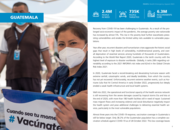
Recovery from COVID-19 has been challenging in Guatemala. As a result of the prolonged socio-economic impact of the pandemic, the average poverty rate nationwide has increased by almost 5%. This rise in the poverty level further exacerbates preexisting vulnerabilities and erodes the limited safety n
...
ets available to vulnerable populations. Year after year, recurrent disasters and humanitarian crises aggravate the historic social gaps that result in high levels of vulnerability, multidimensional poverty, and overall deprivation of essential services among hundreds of thousands of Guatemalans. According to the World Risk Report 2020, Guatemala is the tenth country with the highest level of exposure to disaster worldwide. Globally, it ranks 28th regarding vulnerability according to the 2021 INFORM’s risk index and 62nd in the Global Climate Risk Index 2021.
In 2020, Guatemala faced a record-breaking and devastating hurricane season with extreme rainfall, catastrophic winds, and deadly landslides, from which the country has not yet recovered. Unfortunately, recurrent extreme weather events, such as Hurricane Julia that hit Central America in early October 2022, progressively but deeply eroded a weak health infrastructure and local health systems.
more
Specific action sheets offer useful guidance on mental health and psychosocial support and cover the following areas coordination assessment monitoring and evaluation protection and human rights standards human resources community mobilisation and support health services education dissemination of i
...
nformation food security and nutrition shelter and site planning and water and sanitationthe guidelines include a matrix with guidance for emergency planning actions to be taken in the early stages of an emergency and comprehensive responses needed in the recovery and rehabilitation phases
more
This paper is Oxfam’s essential guide for WASH staff and partners. It describes the processes and standards that Oxfam WASH programmes should follow if they are to be carried out effectively, consistently and in a way which treats affected communities wi
...
th respect.
All WASH staff members are expected to understand and follow these Minimum Requirements. However, it is recognised that in acute emergencies it is preferable to start work on the basics immediately, and build up a comprehensive, quality programme in the following days and weeks. There will, therefore, be some programmes in which certain individual requirements are not appropriate or relevant; in such cases staff members responsible should be able to justify why she/he did things differently, or how the minimum requirement was achieved over time.
more
The Country Cooperation Strategy (CCS) is a document to guide WHO’s work in countries. CCS is a medium-term vision for WHO’s technical cooperation with a given Member State, and supports the country's national health policy, strategy or plan. Th
...
e CCS time frame is flexible to align with national cycles and processes. It is the basis for aligning WHO’s collaboration with other United Nations bodies and development partners at the country level.
more

Following a radiation incident such as an improvised nuclear device (IND) detonation, state and local response authorities will need to establish one or more population monitoring and decontamination facilities to assess
people for radioactive exposure, contamination, and the need for
decontamin
...
ation or other medical follow-up. These facilities are known as community reception centers (CRCs). The basic services offered at a CRC include the following: screening people for radioactive contamination, assisting people with washing or decontamination, registering people for subsequent follow-up, and prioritizing people for further care. This guide
describes the function of each station of a CRC and provides a question bank and other information to guide data collection at each station. A question bank format was chosen to provide the user the ability to tai
lor the data collection tool to fit a particular incident and/or locality.
The CRC data collection tool is designed for CRC staff to fill out the information collected from the individual being assessed.
more
2nd edition
WASH FIT is a risk-based, continuous improvement framework with a set of tools for undertaking water, sanitation and hygiene (WASH) improvements as part of wider quality improvements in health care facilities. It is aimed at small prima
...
ry, and in some instances secondary, health care facilities in low and middle income countries.
An app, for front line data collection is also available in the Android Google Play store or as a web app
more

The aim of the Annual Inspection Report is to present findings of public sector health establishments inspected by the OHSC to monitor compliance with the National Core Standards (NCS) during the 2016/2017 financial year in South Africa.
The NCS de
...
fine fundamentals for quality of care based on six dimensions of quality: Acceptability,Safety, Reliability, Equity, Accessibility, and Efficiency.
The NCS structured assessment tools were used to collect data during inspections across the seven domains namely: Patient Rights; Patient Safety, Clinical Governance and Clinical Care; Clinical Support Services; Public Health; Leadership and Governance; Operational Management and Facilities and Infrastructure. A total of 851 routine inspections were conducted with 201 of these facilities re-inspected. Inspection data was captured on District Health Information System (DHIS) data entry forms and exported for analysis to Statistical Analysis Software (SAS) version 9.4.
more

The Health Sector Policy gives general orientations for the sector which are further developed in the various sub-sector policies guiding key health programs and departments. All health sub-sector policies will be updated in line with this new polic
...
y. The Health Sector Policy is the basis of national health planning and the first point of reference for all actors working in the health sector. The overall aim of this policy is to ensure universal accessibility (in geographical and financial terms) of equitable and affordable quality health services (preventative, curative, rehabilitative and promotional services) for all Rwandans. It sets the health sector’s objectives, identifies the priority health interventions for meeting these objectives, outlines the role of each level in the health system, and provides guidelines for improved planning and evaluation of activities in the health sector. A companion Health Sector Strategic Plan (HSSP) elaborates the strategic directions defined in the Health Sector Policy in order to support and achieve the implementation of the policy, and more detailed annual operational plans describe the activities under each strategy.
more

These are integrated National Guidelines 2013 for Prevention and Management of HIV, STIs & Other Blood Borne Infections in accordance with the last guidelines of the World Health Organization (WHO) published in June 2013 and adapted to the Rwandan n
...
ational context. It thus responds to the need by the Ministry of Health to improve skills of actors in the health sector as well as the quality of care and treatment offered in both public and private health facilities countrywide.
more

Asia-Pacific Disaster Report 2017
The report looks at the extent and impact of natural disasters across the region and how these intersect with poverty, inequality and the effects of violent conflict. But it also shows how scientific and other ad ... vances have increased the potential for building disaster resilience and ensuring that even in the most extreme circumstances people can survive disaster impacts and rebuild their communities and livelihoods.
Disaster resilience is a key element of the 2030 Agenda for Sustainable Development. The Sustainable Development Goals are based on the premise of reaching absolutely everyone. When the drought is assessed, when the flood warnings are broadcast, when the tsunami siren sounds, the aim is to ‘leave no one behind’. more
The report looks at the extent and impact of natural disasters across the region and how these intersect with poverty, inequality and the effects of violent conflict. But it also shows how scientific and other ad ... vances have increased the potential for building disaster resilience and ensuring that even in the most extreme circumstances people can survive disaster impacts and rebuild their communities and livelihoods.
Disaster resilience is a key element of the 2030 Agenda for Sustainable Development. The Sustainable Development Goals are based on the premise of reaching absolutely everyone. When the drought is assessed, when the flood warnings are broadcast, when the tsunami siren sounds, the aim is to ‘leave no one behind’. more
The Joint Response Plan sets out a comprehensive programme shaped around three strategic objectives – deliver protection, provide life-saving assistance and foster social cohesion. The Plan covers all humanitarian sectors and addresses key cross-cutting issues, including protection and gender main
...
streaming. The Plan will also strengthen emergency preparedness and response for weather-related risks and natural disasters, with a focus on community
engagement.
more
This training and guidance module addresses the use of coercive and violent practices in mental health and related services with a particular focus on seclusion and restraint. It aims to promote a greater understanding of why these practices are use
...
d and build practical skills to help end these practices. While the module itself focuses on ending these practices in the health care setting, much of the content can also be applied in other settings where seclusion and restraint occur, for example in the home and in the wider community.
more
This publication seeks to describe the best treatments and practices based on the scientific evidence available at the time of writing as evaluated by the authors and may change as a result of new research. Readers need to apply this knowledge to patients in accordance
...
with the guidelines and laws of their country of practice. Some medications may not be available in some countries and readers should consult the specific drug information since not all the unwanted effects of medications are mentioned.
more
This document presents an integrated strategy for mental health system development that will lead to enhanced service delivery, improved outcomes, and improved human rights for people with mental disorders.
By using the practical guidance provid
...
ed in this document, countries can ensure that their mental health systems are not haphazard, but rather, the products of careful consideration and planning.
more
The aim of this study was to determine the impact of the domestic care environment on the prevalence of potentially traumatic events (PTEs) and posttraumatic stress disorder (PTSD) among orphaned and separated children in Uasin Gishu County, western
...
Kenya.
PLos One March 2014 | Volume 9 | Issue 3 | e89937
more
This toolkit will help you to plan and run an event that helps to change the way that people in your community think about, and behave towards, people with mental health problems
A comprehensive briefing by Half of Syria
April 2020
A comprehensive briefing on the critical challenges of the COVID-19 pandemic to Syrians, as reported by Syrian civil society organisations. These challenges have been collated following extensive interviews
...
with the teams of member and partner organisations working in the field in various sectors: health, child care, education, women’s empowerment, media and culture, research, human rights and accountability, relief and social services, and local governance.
This comprehensive briefing also include concrete recommendations formulated by the Syrian civil society.
more
COVID-19 has turned the world upside down. Everything has been impacted. How we live and interact with each other, how we work and communicate, how we move around and travel. Every aspect of our lives has been affected.
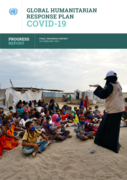
2020 was a year like no other. Amidst on-going humanitarian crises, largely fuelled by conflict and violence but also driven by the effects of climate change – such as the largest locust infestation in a generation – the world had to contend with
...
a global pandemic. In less than one year (March-December 2020), more than 82 million COVID-19 cases and 1.8 million deaths were recorded. In that timeframe, out of the global COVID-19 totals, 30 per cent of COVID-19 cases and 39 per cent deaths were recorded in GHRP countries.
more
UNAIDS calls on governments to live up to their commitment to develop nationally owned and led social protection systems for all, including floors; and scale up and progressively enhance coverage, adequacy and comprehensiveness, thereby improving the responsiveness and quality of interventions to ad
...
dress the needs and vulnerabilities of people living with HIV.
more
